
Naomi Campbell Style: Lessons in Timeless Fashion
 Abdul WadoodLast updated

In 1987, a teenager from Streatham appeared on the cover of British Vogue — the first Black model to do so since 1966. Nearly four decades later, that same woman still walks runways that most models half her age never reach. Naomi Campbell‘s career is a study in longevity, but her style is a study in something rarer: consistency without boredom. She has never chased trends so much as absorbed them and bent them to her own silhouette. Understanding how she does it offers lessons that apply far beyond a runway.
The Architecture of the Look
Campbell’s style rests on a few fixed pillars. Remove any one and the whole structure wobbles.
Long, straight, dark hair. This is the anchor. Whether sleek and center-parted or blown out with volume, her hair has stayed remarkably constant. It frames the face, elongates the neck, and never competes with the clothes. Anyone trying to recreate the effect should study how a straight finish behaves differently from a wavy one — the guides on wavy hair and type 2 strands explain why texture changes the entire proportion of a look.
Height as a design tool. At roughly 5’9″, Campbell dresses for vertical line. Long coats, floor-skimming gowns, column dresses, high waistlines. She rarely breaks the body into horizontal chunks, which is why she photographs so cleanly at any distance.
Skin as the statement. Her makeup philosophy has always been skin-first: luminous, even, minimal color on the eyes, a strong lip only when the outfit is quiet. This is the opposite of maximalist beauty, and it is why her red-carpet images from 1995 still look current.
Structure over softness. Tailoring, sharp shoulders, defined waists. Even her eveningwear tends to have architecture — a corseted bodice, a sculpted hip, a dramatic train.
The Alaïa Years and the Body-Confident Silhouette
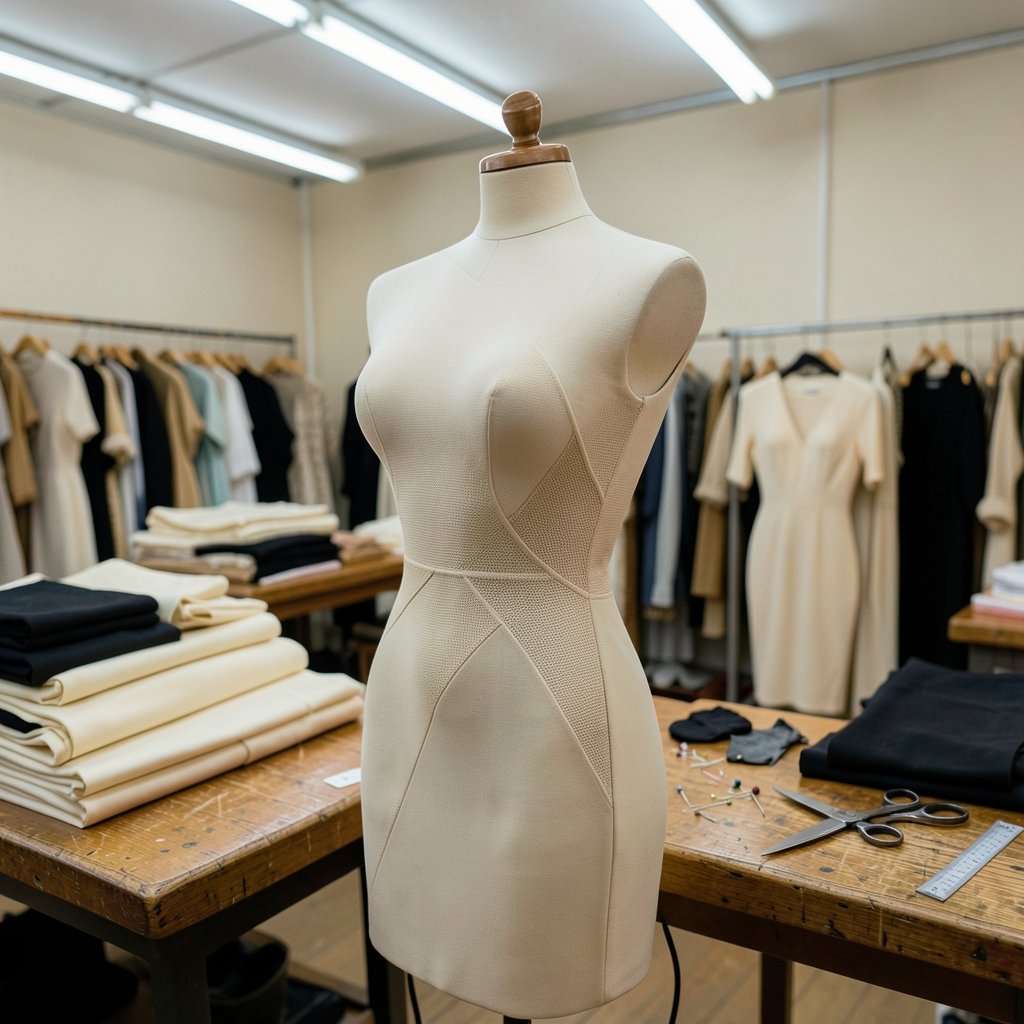
No designer shaped Campbell’s physical vocabulary more than Azzedine Alaïa. The Tunisian couturier was known for cutting fabric to follow the body rather than disguise it, and Campbell became one of his most visible champions. The association matters stylistically: it taught her that a garment could be revealing and rigorous at the same time.
The practical takeaway is a rule anyone can use. Fit beats coverage. A well-cut dress that follows the body will always look more polished than a loose garment worn to hide it. Campbell’s Alaïa moments — the bandage knits, the zipped bodices, the hooded gowns — work because the construction does the work, not the skin.
This is also where people go wrong when copying her. They buy the idea of a body-con dress without the engineering. A cheap stretch fabric clings; a properly boned and seamed garment sculpts. The difference is visible in photographs and obvious in person.
Versace, the Supermodel Era, and the Power of Being Seen
If Alaïa gave Campbell her silhouette, Gianni Versace gave her a stage. She was a fixture of the house in the 1990s, part of the era when models became celebrities in their own right. That period rewrote the rules of fashion visibility: the model was no longer anonymous, and her personal style became a commercial asset.
The 1990s supermodel aesthetic — leather, chainmail, bold color, gold hardware, slick hair — is inseparable from Campbell. But note what she did not do. She rarely wore fussy prints, rarely piled on accessories, rarely let a look get crowded. The glamour came from confidence and a single strong element, not from accumulation.
That restraint is the most transferable lesson in her entire wardrobe. When in doubt, she removes something.
Red Carpet Strategy: Drama With a Straight Line
Campbell’s eveningwear follows a recognizable formula:
| Element | What She Chooses | Why It Works |
|---|---|---|
| Silhouette | Column, mermaid, or high-slit | Extends the vertical line |
| Color | White, black, silver, jewel tones | Photographs cleanly under flash |
| Neckline | Often high or asymmetric | Draws the eye up to the face |
| Hair | Straight, sleek, or slicked back | Keeps the frame uncluttered |
| Jewelry | One statement piece | Avoids visual noise |
| Train or cape | Frequently present | Adds movement in motion |
The through-line is movement. Campbell dresses for the walk, rather than only for the photograph. Capes, trains, and slits exist to create motion, and motion is what makes a still image feel alive. Anyone attending a formal event can borrow this: choose one element that moves when you do.
For readers tracking how runway trends translate to real streets, the Milan Fashion Week street style breakdown shows the same principle at work — the best-dressed people in any crowd are the ones whose clothes respond to their bodies.
Tailoring, Off-Duty, and the Discipline of Simplicity
Campbell’s daytime wardrobe is where the discipline shows. Her off-duty formula tends toward:
- Sharp-shouldered blazers and long coats
- Straight-leg or slim trousers, often cropped
- Plain knitwear in black, cream, or camel
- Pointed-toe boots or clean pumps
- Minimal bags, usually structured and handheld
There is almost no pattern, almost no logo, and almost no layering. The effect is expensive because it is quiet. This is the opposite of how most people dress when they want to look fashionable — they add. She subtracts.
The trap here is mistaking simplicity for ease. A plain black blazer only reads as luxurious if the shoulder is right, the sleeve length is correct, and the fabric holds its shape. Cheap minimalism looks like a uniform; good minimalism looks like intent. Campbell’s tailoring has always been built on fit, and fit is the one thing money can genuinely buy — through alterations, not through price tags.
Her approach to hair fits the same logic. The fluffy hair guide makes the point that texture control is a styling decision, not an accident — and Campbell’s hair has always looked deliberate rather than styled-by-chance.
Hair, Beauty, and the Long Game
Campbell’s beauty signature has barely shifted in thirty years, and that is the point. Long straight hair, defined brows, glowing skin, and a neutral-to-strong lip. She has experimented at the edges — a bob here, a fringe there — but the core has held.
There is a strategic advantage to this. When your beauty look is stable, your clothes can change freely without the whole image feeling chaotic. It is the same reason a person with a signature haircut can wear wildly different outfits and still look like themselves. The hair styles guide for choosing a look that works covers how to identify a cut that survives trend cycles, which is precisely what Campbell’s hair has done.
The practical mistake people make is changing hair and wardrobe at the same time. If both shift, nothing anchors the look. Change one variable at a time.
What Actually Works When You Copy Her
Copying a supermodel is a trap if you copy the surface. Here is what translates, and what does not.
What works:
- Invest in one great coat. A long, structured coat in a neutral color does more for a wardrobe than ten trend pieces. It creates the vertical line that defines her look.
- Fix your tailoring. Take everything to a tailor. Shoulder seams, hem length, and waist suppression matter more than brand.
- Choose one focal point per outfit. Hair, jewelry, or dress — not all three.
- Keep the palette tight. Black, white, cream, camel, and one jewel tone will cover almost every occasion.
- Dress for movement. Test whether a garment looks good when you walk, turn, and sit.
What does not work:
- Buying body-con silhouettes without structure
- Layering accessories to fake glamour
- Copying a specific designer look without adjusting for your proportions
- Treating height as a requirement (it is not — proportion is)
The hair cut versus haircut spelling and style guide is a useful reminder that small details in terminology and technique matter more than people expect — the same is true of a hemline or a shoulder seam.
The Business of a Personal Brand
Campbell’s style is inseparable from her business. She has worked as a model, activist, author, and entrepreneur, and her visual identity has functioned as a brand asset throughout. According to Wikipedia’s profile of Naomi Campbell, her career spans modeling, acting, music, and philanthropy across more than three decades — a range that requires a look flexible enough to survive every context.
That is the underrated insight. A personal style that only works on a red carpet is not a style; it is a costume. Campbell’s look works on a runway, at a gala, in an airport, and on a magazine cover because the underlying rules — vertical line, structure, restraint, one focal point — are context-independent.
For anyone building a wardrobe, that is a more useful framework than any single outfit she has worn. The fashion trends and designer coverage on Voozon tracks how these principles recur season after season, which is exactly the point: the rules outlast the trends.
Conclusion
Naomi Campbell’s style is not mysterious. It is a small set of decisions applied with unusual consistency: long straight hair, structural tailoring, a vertical silhouette, a tight color palette, and one focal point per look. What separates her from imitators is not budget or height but discipline — the willingness to remove rather than add, and to fix fit before buying more.
The lesson for anyone reading this is refreshingly practical. You do not need her wardrobe. You need her rules. Start with one well-tailored coat, a tailor you trust, and a refusal to let an outfit get crowded. That is the whole method, and it has been working for nearly forty years.
FAQ
How would you describe Naomi Campbell’s signature style?
Structural, minimal, and built on a vertical line. Long straight hair, sharp tailoring, column silhouettes, a tight color palette, and one strong focal point per outfit. The glamour comes from fit and confidence rather than decoration.
What hair look is Naomi Campbell known for?
Long, dark, straight hair, usually center-parted or sleeked back. She has experimented with bobs and fringes, but the core look has stayed constant for decades, which is part of why her image is so recognizable.
Can shorter people recreate her style?
Yes. Height is not the mechanism — proportion is. Focus on a continuous vertical line, high waistlines, pointed shoes, and a long coat that ends at a flattering point. Tailoring matters more than your height.
Which designers shaped her look most?
Azzedine Alaïa is the most cited influence for her body-conscious silhouette, and her association with Gianni Versace in the 1990s is closely tied to the supermodel era. Both emphasized construction over decoration.
What is the biggest mistake people make copying her style?
Buying the shape without the structure. A stretch body-con dress is not the same as a tailored, seamed garment. The second mistake is adding accessories instead of fixing fit.
Does her style still influence current fashion?
Yes. The long-coat-plus-slim-trouser formula, the sleek hair, and the single-focal-point approach recur constantly on runways and in street style photography, where the best-dressed attendees follow the same restraint.
The fashion coverage on Voozon regularly returns to this idea of durable style over seasonal noise, and Campbell remains one of its clearest case studies. Her influence now runs through a younger generation of models and stylists who treat her archive as a reference library rather than a costume rack. The final point worth keeping: consistency is not the same as stagnation. She has refined the same formula for decades, adjusting proportion and fabric while leaving the core intact. That is the difference between a signature and a rut — and it is the quiet engine behind everything she wears.