
Fluffy Hair: Causes, Fixes & Styling Tips for 2026
 Abdul WadoodLast updated

Ever caught your reflection on a humid day and wondered why your hair suddenly looks twice its normal size? Fluffy hair is one of the most common hair conditions people deal with, yet it’s also one of the most misunderstood. Some people spend years fighting it. Others pay good money at salons trying to achieve it. The truth is that fluffy hair isn’t a single thing. It’s a catch-all term for several different hair behaviors, and understanding which one you’re dealing with changes everything about how you should treat it. (Hair)
This guide breaks down what fluffy hair actually means, why it happens, and what genuinely works in practice, from washing routines to styling products to the mistakes that make frizz worse.
What Does “Fluffy Hair” Actually Mean?
The term fluffy hair is colloquial, not clinical. Dermatologists and trichologists don’t use it in textbooks. Instead, it describes a visual and tactile quality: hair that looks airy, expanded, and voluminous, often with a soft or slightly fuzzy surface texture rather than a sleek, defined one.
In practice, people use “fluffy” to describe at least four distinct situations:
| What People Mean | What’s Actually Happening | Typical Hair Type |
|---|---|---|
| Frizzy, expanded hair | Cuticle layers lift and absorb moisture from the air | Wavy, curly, or porous hair |
| Fine hair with static | Low hair density plus friction and dry air | Fine, straight hair |
| Curly or coily volume | Natural shrinkage creates a rounded, cloud-like shape | Type 3 and Type 4 hair |
| Heat or chemical damage | Broken cuticles create a rough, puffy surface | Any type, after processing |
Knowing which category you fall into matters because the fixes are different. Someone with natural curl volume shouldn’t be trying to “fix” it, while someone with heat damage has a genuine repair job on their hands. For a broader look at how hair structure affects texture and styling, the Wikipedia entry on hair is a solid starting point.
Why Hair Gets Fluffy: The Science Behind the Frizz
Hair is built from three main layers, and the outermost one, the cuticle, is the key player here. A healthy cuticle lies flat like roof shingles, locking in moisture and reflecting light. When those shingles lift, two things happen: moisture escapes from inside the hair shaft, and humidity from the air sneaks in.
Hair is hygroscopic, meaning it absorbs water from its environment. On a humid day, porous or damaged hair pulls in moisture, swells, and changes shape. Individual strands kink and push against each other, and the whole head expands. That’s the puffiness people call fluffy.
Several factors push the cuticle open:
- Humidity and rain, which force water into the shaft
- Heat styling at high temperatures, which can crack and lift the cuticle
- Chemical processing such as bleaching, relaxing, or perming
- Rough towel drying and aggressive brushing on wet hair
- Harsh sulfates that strip natural oils, leaving hair drier and more porous
- Friction from cotton pillowcases and rough fabrics
Genetics plays a role too. Curly and coily hair types naturally have a more open cuticle structure and fewer protective oils traveling down the shaft, which is why fluffiness shows up most dramatically in textured hair. The American Academy of Dermatology publishes practical guidance on hair care that reinforces a simple principle: gentle handling preserves the cuticle, and a preserved cuticle means less unwanted fluff.
The Everyday Habits That Make Fluffiness Worse
Here’s where most people go wrong. They notice fluffy hair, reach for more product, and accidentally make the problem worse. A few common mistakes show up again and again.
Over-washing. Shampooing daily with a strong sulfate formula strips sebum, the natural oil that coats and smooths the cuticle. Hair then overcompensates by going dry and porous, which is exactly the condition that welcomes humidity in.
Brushing dry, curly hair. Running a brush through dry textured hair breaks up curl clumps and turns defined waves into a frizzy cloud. Curly hair should be detangled wet and with conditioner, ideally using fingers or a wide-tooth comb.
Skipping conditioner or leaving it on too briefly. Conditioner smooths the cuticle and fills gaps in damaged areas. Rinsing it out after ten seconds does almost nothing. Give it two to three minutes, or use a leave-in.
Rubbing hair with a terry towel. That vigorous rub creates friction and roughs up the cuticle. A soft microfiber towel or an old cotton t-shirt, used with a blotting motion, makes a visible difference.
Touching hair throughout the day. Hands transfer oils and disrupt styling. For curly hair especially, hands-off really is the rule.
Cranking up the flat iron. Very high heat without protection can cause bubbling and cracking along the shaft. If you use heat, keep the temperature moderate and always apply a heat protectant.
How to Style Fluffy Hair on Purpose
Plenty of people want more fluff, not less. The “fluffy hair” look, soft, airy, voluminous, with visible texture, has been a consistent trend in editorial styling and on social platforms. The good news is that it’s achievable without damaging your hair.
Start With Texture, Not Heat
Volume that lasts comes from texture. Try these techniques:
- Apply a light sea salt spray or volumizing mousse to damp hair.
- Scrunch sections upward with your hands to encourage wave formation.
- Let hair air-dry, or use a diffuser on low heat and low speed.
- Once dry, gently lift sections at the root with your fingers rather than a brush.
- Finish with a texturizing spray for a soft, piecey finish.
Use the Diffuser Correctly
A diffuser spreads airflow so curls and waves dry without being blasted apart. The common mistake is moving it around constantly. Instead, cup sections of hair in the diffuser bowl, hold for several seconds, then move to the next section. Low speed, medium heat, patience.
Layer Products in the Right Order
Order matters more than people expect. A typical sequence that works:
- Leave-in conditioner on damp hair for moisture
- Curl cream or defining gel to shape and hold
- Light oil only on the ends, after drying, to seal
Heavy products applied to roots weigh hair down and kill the airiness. Keep the root area light.
Refresh Rather Than Restart
Second-day fluffy hair usually needs a refresh, not a full wash. Mist with water mixed with a little leave-in conditioner, scrunch, and let it settle. This preserves moisture balance and avoids the over-washing cycle.
Taming Fluff When You Want Smoothness
If your goal is the opposite, sleek, smooth hair, the strategy is moisture retention and cuticle sealing.
Pre-shampoo oiling with coconut or argan oil, applied thirty minutes before washing, can reduce the amount of water hair absorbs during washing, which limits swelling and subsequent frizz. Deep conditioning once a week helps repair porosity over time. Cold water rinses at the end of a shower help flatten the cuticle temporarily.
For styling, a smoothing serum or anti-humidity spray applied to damp hair before blow-drying creates a barrier. When blow-drying, point the nozzle downward along the hair shaft to align the cuticle rather than ruffling it. A finishing pass with cool air locks the result in place.
One underrated tip: check your pillowcase. Cotton creates friction and absorbs moisture overnight. Satin or silk reduces both, and many people notice less morning fluff within a week or two of switching.
When Fluffy Hair Signals Damage
Sometimes fluffiness is a symptom rather than a style. Warning signs include:
- Hair that feels rough or straw-like even when conditioned
- Split ends that travel up the shaft
- Hair that snaps easily when wet
- A sudden change in texture after coloring or relaxing
In these cases, no product will permanently fix the problem. The cuticle is physically damaged, and the only real solutions are regular trims to remove compromised ends and a protein treatment to temporarily fill gaps in the shaft. Protein treatments should be used sparingly, roughly every four to six weeks, because too much protein makes hair stiff and brittle. Moisture and protein need to stay in balance.
If hair loss accompanies the texture change, or if scalp irritation develops, that’s a matter for a dermatologist rather than a styling routine. The National Institutes of Health maintains consumer health resources that can help you decide when a professional opinion is warranted.
Building a Routine That Actually Sticks
The most effective approach to fluffy hair is consistency, not intensity. A workable weekly structure looks like this:
| Frequency | Step | Purpose |
|---|---|---|
| 2–3 times weekly | Gentle cleanse with sulfate-free shampoo | Remove buildup without stripping |
| Every wash | Conditioner, 2–3 minutes | Smooth cuticle |
| Weekly | Deep conditioning mask | Restore moisture balance |
| Every 6–8 weeks | Trim | Remove damaged ends |
| Daily | Leave-in or light serum | Maintain smoothness |
Adjust based on hair type. Fine hair usually needs lighter products and less frequent conditioning at the roots. Thick, coarse, or curly hair can handle richer formulas and more frequent moisturizing. The International Journal of Trichology publishes research on hair shaft structure and care that supports this moisture-focused approach. (Hair loss)
Practical Tips That Make a Real Difference
A few small changes deliver outsized results, and they cost almost nothing:
- Detangle before washing, not during, using fingers or a comb on dry hair with a little conditioner.
- Apply conditioner from mid-length to ends, avoiding the scalp where it can cause buildup.
- Squeeze, don’t wring, water out of hair after washing.
- Microfiber over cotton for drying, every time.
- Sleep on satin if fluff is a persistent morning problem.
- Keep a refreshing mist in your bag for humidity emergencies.
- Check product ingredients for drying alcohols high in the list, which can worsen porosity over time.
For readers building a broader content or brand strategy around beauty topics, resources like Voozon Media cover how to structure and publish this kind of practical guidance effectively.
Conclusion
Fluffy hair is neither a flaw nor a fixed trait. It’s a description of how hair behaves under specific conditions: humidity, damage, texture, and handling. The people who manage it best aren’t the ones with the most products. They’re the ones who understand their own hair’s porosity, protect the cuticle with gentle habits, and choose styling goals deliberately rather than fighting their natural texture.
Whether you want to amplify volume or smooth it away, the path runs through the same fundamentals: moisture balance, gentle handling, and patience. Start with one change, like swapping your towel or adding a weekly deep condition, and build from there. Hair responds to consistency far more than it responds to any single miracle product.
Frequently Asked Questions
What causes fluffy hair?
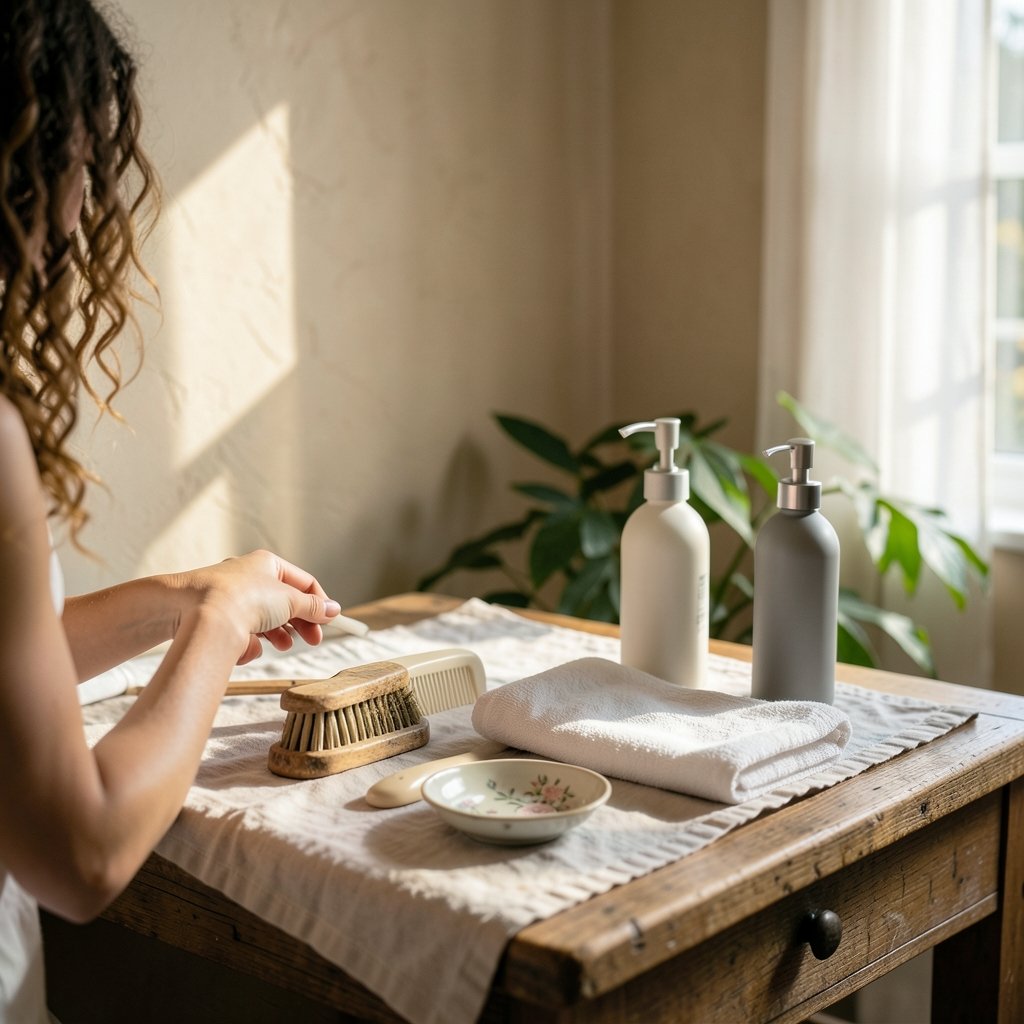
Fluffy hair usually comes from a lifted cuticle. When the outer layer of the hair shaft opens due to humidity, heat damage, chemical processing, or rough handling, moisture enters and hair swells and expands. Genetics also plays a role, since curly and coily hair types naturally have a more open cuticle structure.
Is fluffy hair the same as frizzy hair?
They overlap but aren’t identical. Frizz specifically refers to individual strands kinking and standing away from the main style. Fluffy hair describes overall volume and a soft, expanded appearance. Frizz is one common cause of fluffiness, but natural curl volume and static in fine hair can also create a fluffy look without true frizz.
How do I make my hair less fluffy?
Focus on moisture and cuticle care. Use a sulfate-free shampoo, condition thoroughly, deep condition weekly, dry with a microfiber towel, and apply a leave-in or smoothing serum to damp hair. Avoid brushing dry textured hair and reduce heat styling. Over several weeks, these habits visibly reduce porosity and puffiness.
Can I make my hair fluffier on purpose?
Yes. Apply volumizing mousse or sea salt spray to damp hair, scrunch to encourage texture, and dry with a diffuser on low speed. Lift sections at the root with your fingers once dry, and finish with a texturizing spray. Keeping heavy products away from the roots preserves the airy effect.
Does cutting my hair stop it from being fluffy?
A trim removes damaged, porous ends that absorb moisture and puff up, so it can reduce fluffiness at the lengths. It won’t change the natural texture of hair near the scalp. If fluffiness comes from genetics or curl pattern rather than damage, cutting won’t eliminate it.
How often should I deep condition fluffy hair?
Once a week is a reasonable baseline for most porous or fluffy hair. Very dry or damaged hair may benefit from twice weekly for a few weeks, then a maintenance schedule. If hair starts feeling mushy or overly stretchy, scale back, since that signals too much moisture and a need for a protein treatment instead.