
Imaan Hammam Style: Key Pieces & How to Wear Them
 Abdul WadoodLast updated
Imaan Hammam was born in Amsterdam in 1996 to an Egyptian father and a Moroccan mother, and she was scouted in her home city around 2010 before breaking onto international runways in the early 2010s. Within a few seasons she had become a fixture on the kind of runways and magazine covers that define a generation of models. Yet ask people what they actually remember about her, and the answer is rarely a single show. It is a look: the curls, the tailoring, the sneakers, the gold.
That look has a name in fashion media and social content: Imaan Hammam style. It is not an academic term, and it is not a formal industry category. It is shorthand for a way of dressing that mixes streetwear, sharp tailoring, and vintage references, often with North African and Middle Eastern touches. This article breaks down what that style actually consists of, why it works, and how to borrow from it without turning yourself into a costume.
Why Her Look Matters More Than a Single Outfit
Most model style coverage focuses on red-carpet moments. Hammam’s influence runs differently. Her off-duty looks are photographed constantly, and they tend to be repeatable rather than theatrical: jeans, a blazer, a plain tee, a great bag, hair doing most of the work. That repeatability is exactly why her style travels. A reader can look at a photo of her and think, I could actually wear that on a Tuesday.
There is also a cultural dimension that fashion press frequently notes. Her Dutch, Egyptian, and Moroccan background shows up in her choices: gold jewelry, rich earth tones, embroidered or textured fabrics, and silhouettes that nod to North African dress without being literal. It reads as personal rather than styled by committee.
The Core Building Blocks of the Imaan Hammam Look

Strip away the brand names and a handful of consistent elements remain. These are the pieces that show up again and again.
| Element | What It Looks Like | Why It Works |
|---|---|---|
| Statement hair | Voluminous natural curls, worn big and loose | Frames the face and replaces accessories |
| Sharp tailoring | Oversized blazers, long coats, clean trousers | Adds structure to casual pieces |
| Denim | Straight-leg or relaxed jeans, often vintage-cut | Keeps outfits grounded and wearable |
| Footwear | Sneakers, boots, occasional strappy heels | Signals off-duty versus evening |
| Gold jewelry | Layered chains, hoops, cuffs | Adds warmth and cultural reference |
| Neutral palette with accents | Cream, camel, black, denim, then one rich color | Makes mixing easier |
The through-line is contrast. A soft curl against a hard shoulder line. A humble sneaker under an expensive coat. A plain white tee next to heavy gold. That tension is the whole trick, and it is far easier to copy than a specific designer piece.
Hair Is the Anchor, Not an Afterthought
For Hammam, hair functions as the outfit’s headline. Big, textured curls change the proportion of everything around them, which is why a simple blazer and jeans can look editorial on her and flat on someone else.
If you are building toward this look, the practical starting point is understanding your own texture. Curl patterns behave differently, and styling products that work on one pattern can weigh down another. A guide to wavy hair and type 2 strands is useful if your hair sits between straight and curly, while anyone with a looser S-wave pattern will get more from a dedicated 2c hair guide covering identification, styling, and care.
Two common mistakes show up constantly in practice:
- Cutting curls while dry-blind. Curly hair shrinks dramatically, so a cut that looks right wet can end up far shorter than intended. Always discuss shrinkage before the scissors come out.
- Over-layering product. Heavy creams applied to already-moisturized hair flatten volume. Lighter layers, applied to damp hair, generally hold shape better.
Volume is the goal, not perfection. If your hair tends toward flatness or frizz, the fixes for fluffy hair that misbehaves are mostly about moisture balance and drying technique rather than buying more products.
Tailoring Is What Separates Polished From Sloppy
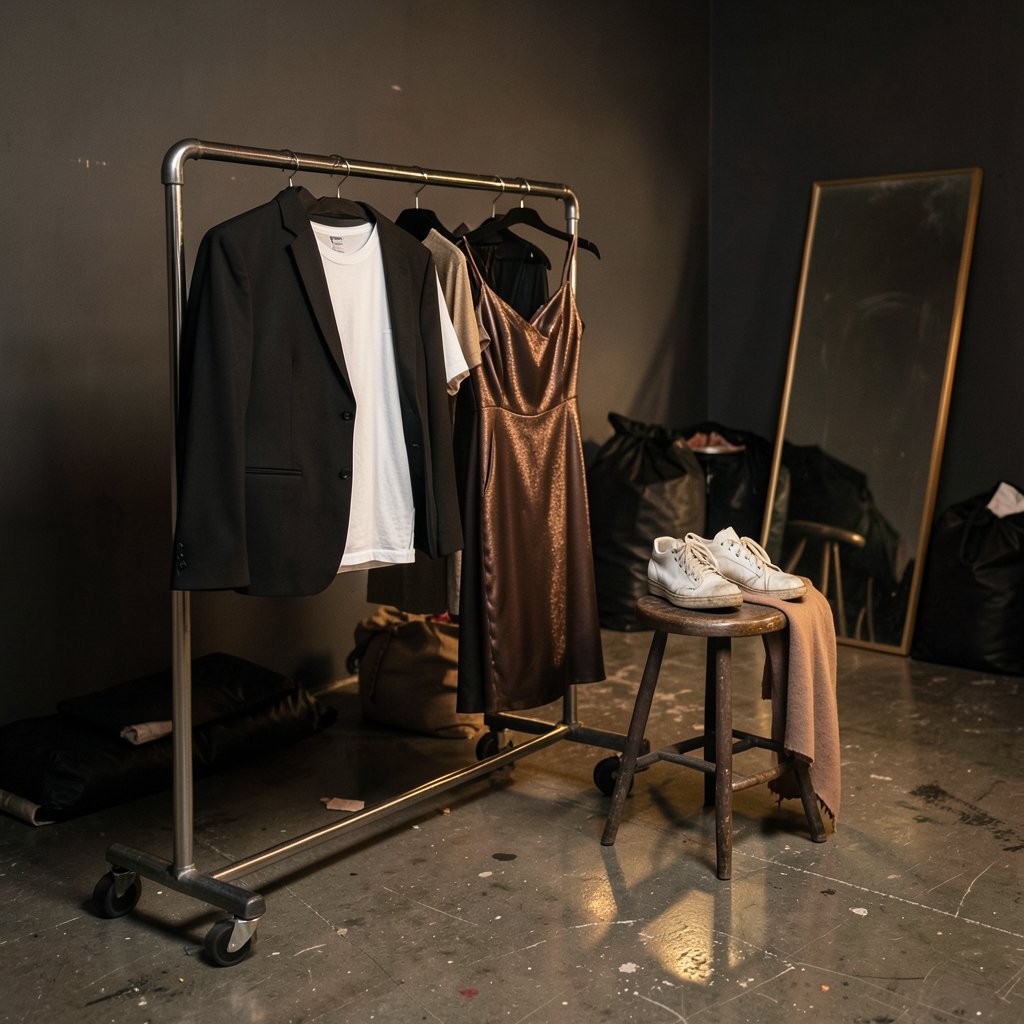
The single most transferable lesson from Hammam’s wardrobe is that one structured piece rescues an entire casual outfit. A relaxed jean plus a plain tee is unremarkable. The same combination under an oversized blazer with strong shoulders becomes a look.
Practical rules that hold up:
- Buy the shoulder, tailor the rest. Shoulder fit is expensive to change; sleeve length and waist are cheap.
- Go long, not tight. Her coats and blazers tend to be roomy and elongated rather than fitted.
- Keep the contrast deliberate. If the top half is sharp, the bottom half can be soft. If both halves are sharp, add a casual shoe.
This is also where most people go wrong. They buy a blazer one size too small because it feels “flattering” in the mirror, then wonder why it never looks relaxed. Oversized means genuinely oversized, with the sleeve hitting at or past the wrist bone.
Streetwear, Sneakers, and the Off-Duty Formula
Hammam’s off-duty outfits borrow heavily from streetwear: hoodies, track pants, bomber jackets, chunky sneakers, baseball caps. The styling trick is that she rarely wears streetwear head to toe. There is almost always one elevated element pulling the look upward, whether that is a leather bag, a tailored coat, or a piece of fine jewelry.
That balance is the same principle visible across the broader street style scene at Milan Fashion Week, where showgoers mix high and low pieces to avoid looking like they tried too hard. The lesson for everyday dressing is simple: pick one anchor item you love, then let everything else stay quiet.
Jewelry, Color, and Cultural Reference
Gold is the signature. Layered chains, large hoops, stacked cuffs, and rings worn in multiples appear throughout her public appearances. The effect is warm and personal, and it photographs beautifully against neutral clothing.
Color follows a similar logic. The base is usually restrained, cream, camel, black, denim blue, olive, and then one saturated accent: a deep red, a burnt orange, a jewel green. That approach makes a small wardrobe feel larger because almost everything coordinates.
There is a real risk of overreach here. Cultural reference in fashion works best when it is worn with knowledge rather than borrowed as decoration. Choosing jewelry from designers with genuine regional roots, or pieces you understand the origin of, keeps the look honest.
Adapting the Look to Real Life
Not everyone has a stylist, a driver, and a photographer waiting outside. The good news is that this aesthetic translates well to ordinary schedules because it is built from basics.
A workable approach, in order:
- Audit what you own. Most people already have jeans, a white tee, and a dark blazer. Start there.
- Fix the fit before buying anything new. A tailor can transform three existing pieces for less than the cost of one new coat.
- Invest in one strong outer layer. A long coat or oversized blazer does more visual work than any other single item.
- Add two or three gold pieces. They do not need to be expensive; they need to be worn together.
- Simplify footwear. One clean sneaker and one solid boot cover most situations.
- Let your hair be the statement. Spend the styling time there rather than on accessories.
For a broader framework on matching a look to your own features and routine, this guide to choosing and maintaining a hairstyle that works pairs well with the wardrobe advice above.
Common Mistakes People Make When Copying Model Style
Copying a model’s look directly rarely works, and the failures tend to follow predictable patterns.
- Buying the exact item instead of the idea. The specific designer coat is not the point; the proportion is.
- Ignoring body proportion. An oversized blazer on a very petite frame needs different sleeve and hem lengths to read the same way.
- Skipping the hair. If the outfit is simple, the hair has to carry weight. Flat hair plus a plain outfit reads as unfinished.
- Over-accessorizing. The look is built on one or two focal points, not five.
- Forgetting maintenance. Curls need regular trims, tailoring needs pressing, and gold needs cleaning. The look is low-effort only after the upkeep.
There is also a spelling trap worth mentioning: her surname is Hammam, not Hamman or Hammam with a single m, and search results vary accordingly. If you are hunting for reference images, try both spellings; a note on how small spelling differences change search results is a surprisingly common issue online, as this explainer on hair cut versus haircut and why spelling shifts meaning illustrates. (Hammam)
What Actually Works in Practice
After stripping out the noise, the elements that consistently deliver the look are unglamorous: good posture, well-fitted basics, healthy textured hair, and a willingness to mix one dressy item with one casual item.
The people who pull this off successfully tend to do three things. They keep a small, tight color palette. They spend on outerwear and shoes rather than trend pieces. And they treat hair as part of the outfit rather than something to deal with after getting dressed. (Drowning)
None of that requires a runway budget. It requires editing.
Conclusion
Imaan Hammam style is less about specific garments than about contrast and confidence: soft curls against sharp shoulders, humble sneakers under a good coat, heavy gold over a plain tee. It works because it is built from pieces most people already own, arranged with more intention than usual. The look rewards fit, maintenance, and restraint far more than spending. Start with the blazer, the jeans, and the hair. The rest follows.
FAQ
What defines Imaan Hammam’s personal style?
Her style is generally described as a mix of streetwear, sharp tailoring, and vintage references, often accented with gold jewelry and North African or Middle Eastern design elements. The defining feature is contrast between casual and polished pieces.
Is Imaan Hammam’s look easy to copy?
Yes, in structure. It relies on basics like jeans, plain tees, oversized blazers, sneakers, and gold jewelry. The difficulty is in fit and upkeep rather than cost, since tailoring and hair maintenance do most of the work.
What hair type does Imaan Hammam have?
She is known for voluminous natural curls worn big and loose. Her hair is a central part of her look and often replaces statement accessories entirely.
How do you get volume like hers without damaging curls?
Focus on moisture balance, lighter layered products applied to damp hair, and drying methods that do not crush the curl pattern. Regular trims prevent weighed-down ends, and avoiding heavy creams keeps volume intact.
What jewelry works best with this style?
Layered gold pieces: chains of varying lengths, large hoops, cuffs, and stacked rings. Wearing several together in a consistent metal creates the warm, personal effect associated with her look.
Can this style work for everyday office wear?
Yes. A relaxed trouser or dark jean with a plain top and an oversized blazer fits most business-casual settings. Swap sneakers for boots or loafers and keep the jewelry simple to stay within dress codes.
The final piece of the puzzle is proportion. Hammam’s outfits tend to balance volume against volume: wide-leg denim under a boxy jacket, or slim trousers under an exaggerated coat. When both halves compete, the silhouette collapses. When one half stays quiet, the other can be as bold as you like. Try the formula on one outfit this week, photograph it, and adjust from there. Style built on contrast, fit, and healthy hair is not a trend you age out of. It is a system you refine, season after season, until it simply looks like you.