
Best Minimalist Phones 2026: Find Your Perfect Dumbphone
 Abdul WadoodLast updated
The average person now checks their phone within minutes of waking up and touches it thousands of times a day. That number is exactly why a small but growing group of buyers is shopping for something radically simpler: a phone that makes calls, sends texts, and then gets out of the way. The minimalist phone market has moved from novelty to a real category, and 2026 is the first year where the choices genuinely differ from each other.
This guide cuts through the marketing. It explains what separates one minimalist phone from another, which models deserve attention, what to check before buying, and the mistakes that send people back to their old smartphones within a month.
What Counts as a Minimalist Phone in 2026?
The term minimalist phone is not standardized, and that is the root of most confusion. Three different product types get lumped together, and they serve very different needs.
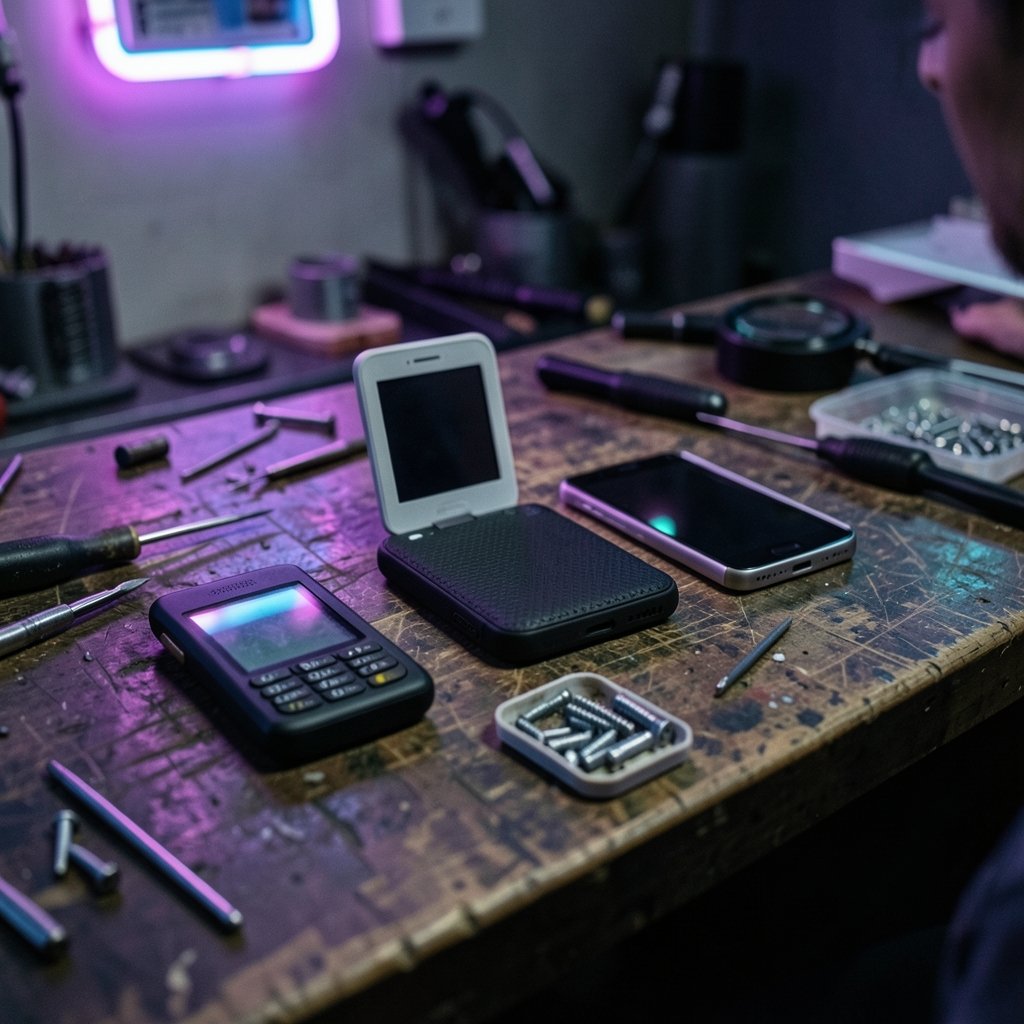
E-ink phones use a paper-like screen that is slow, readable in sunlight, and almost impossible to doomscroll on. Feature phones are the classic flip or candybar designs with a keypad, a tiny color screen, and a fixed set of apps. De-Googled smartphones run a stripped operating system with no app store, no tracking, and only the tools you deliberately install.
Each type solves a different problem. Someone who wants to break a social media habit has different needs than someone who just wants a reliable second phone for weekends. Before comparing models, decide which category matches your goal. A device that is too restrictive gets abandoned; one that is too capable does not change behavior at all.
The Main Contenders Compared

The table below summarizes how the leading approaches differ. Specs and availability shift, so confirm details on each manufacturer’s page before ordering.
| Device type | Screen | Best for | Main trade-off |
|---|---|---|---|
| Light Phone series | E-ink, monochrome | People who want calls, texts, and a few tools | Slow scrolling, limited app support |
| Punkt MP02 | Small color LCD | Voice-first users who want a premium build | Few apps, higher price |
| Mudita models | E-ink | Calm, distraction-free daily use | Small app catalog, few third-party apps |
| Nokia/HMD feature phones | Small color screen | Cheap backup phones and first phones | Basic browser can still pull you in |
| De-Googled smartphones | Full color | People who need maps and messaging but no Google | Setup takes technical patience |
The pattern is clear. E-ink devices win on distraction resistance. Feature phones win on price. De-Googled smartphones win on flexibility. There is no single best pick, only the best fit for how much capability you can remove without wrecking your daily routine.
E-ink Phones: The Purest Minimalist Option
E-ink is the technology that made minimalist phones credible. Because the display refreshes slowly and shows no color, video and social feeds become genuinely unpleasant to use. That is the point. (Copper Hair Color: How to Get, Keep & Love It in 2026)
The Light Phone line has become the reference product in this space. Its pitch is simple: a small set of essential tools, no feeds, no notifications designed to hook you. Punkt’s MP02 takes a different route with a small color screen and a focus on voice calls and messaging rather than apps. (Light Brown Hair: Shades, Care & Styling Guide 2026)
What actually works in practice
Buyers who succeed with e-ink phones tend to follow the same playbook. They keep a smartphone at home on Wi-Fi for banking and maps, and carry the minimalist device as their daily phone. They forward calls and set up text syncing before the switch, not after. They also give themselves a two-week adjustment period instead of judging the device on day one.
Common mistakes
The most frequent failure is buying an e-ink phone expecting it to replace everything. It will not run your banking app, and it will not handle two-factor authentication smoothly. A second common error is skipping the carrier check. Confirm that the model supports your network’s bands before you buy, because compatibility varies by region and model version.
Feature Phones: Cheap, Familiar, and Sneakily Distracting
Classic feature phones from Nokia and HMD remain the cheapest entry point. They are durable, battery life is measured in days, and the learning curve is nearly zero.
But there is a catch that reviewers and owners mention constantly: many feature phones ship with a basic web browser and app store. If the browser is there, the distraction is there. A feature phone only works as a minimalist device if you disable data or choose a model without a browser at all.
For parents buying a first phone, or for anyone who wants a reliable backup device for travel, a feature phone is hard to beat on value. For someone trying to break a serious scrolling habit, it is often too porous.
De-Googled Smartphones: Minimalism Without Giving Up Maps
Not everyone can survive without navigation, ride-hailing, or a messaging app their family actually uses. De-Googled smartphones solve this by removing Google’s apps and the Play Store while keeping a full-color touchscreen.
The trade-off is setup effort. Expect to sideload apps, configure alternative app stores, and troubleshoot the occasional app that refuses to work without Google services. The reward is a phone that does what you choose and nothing more. (Hair Stores Near Me: Find the Right Shop in 2026)
This category suits the technically comfortable buyer. If configuring settings sounds exhausting, an e-ink phone is a better fit. If you want a phone that behaves like a smartphone minus the surveillance and the feed, this is the middle path.
How to Choose Without Regret
Choosing well comes down to a short set of questions. Answer them honestly before you spend money.
- What must the phone do? List the absolute essentials: calls, texts, maps, banking, music. Be ruthless.
- Which apps can you live without for a week? Test this on your current phone by deleting them first.
- Does your carrier support the device? Check network bands and VoLTE support for your region.
- Do you need a companion device? Many minimalist users keep a smartphone at home for admin tasks.
- What is your budget including accessories? Cases, screen protectors, and a second SIM add up.
That third question trips up more buyers than any other. A phone that cannot make calls on your network is not minimalist, it is a paperweight. Verify before you order, and keep the return window open until you have tested a real call.
The practical test that saves money
Before buying anything, run a one-week experiment. Move your social apps off your home screen, turn off all non-human notifications, and set the screen to grayscale. If you feel calmer and more focused, a minimalist phone will probably stick. If you spend the week hunting for workarounds, you have learned something valuable for free.
What Buyers Get Wrong About Going Minimal
The biggest misconception is that a minimalist phone fixes attention problems by itself. It does not. A device removes friction, but habits follow you. People who succeed usually pair the hardware switch with small routine changes, like leaving the phone in another room at night or scheduling a daily window for messages.
A second misconception is that minimalism means deprivation. For most users it means intentionality. They still use maps, still listen to music, still message friends. They simply removed the parts of the phone designed to keep them scrolling. (Minimalism)
A third mistake is going too extreme too fast. Switching from a fully loaded smartphone to a bare-bones device overnight creates panic and a quick relapse. A gradual downgrade, or a companion-device setup, has a much higher success rate.
Battery, Durability, and the Details That Matter
Spec sheets rarely capture what daily use feels like. In practice, three details separate a good minimalist phone from a frustrating one.
Battery life is the headline advantage. E-ink and feature phones routinely last several days between charges, which changes how you think about travel and charging cables.
Build quality matters more than usual because these devices are often carried without a case. Metal frames and replaceable parts are worth paying for.
Text input is the hidden pain point. Typing on a keypad or a small e-ink screen is slower. If you send long messages all day, try the keyboard before committing.
A fourth detail is software updates. A minimalist phone with no security patches is a risk, not a virtue. Check the manufacturer’s update policy before buying. (NIST)
Who Should Actually Buy One
Minimalist phones suit specific people better than others. The best candidates share a few traits: they feel drained by notifications, they can tolerate slower typing, and they are willing to keep a second device for edge cases.
They are a poor fit for anyone whose job depends on real-time apps, heavy camera use, or mobile banking on the go. They are also a poor fit for buyers who want a status object. These phones are tools, and most of them look like it.
The category keeps growing because the problem it solves is real. A phone that does less is not a step backward for everyone. For a lot of people, it is the first time in years they have finished a book, slept through a night without a screen, or had a conversation without a glance at a notification.
Conclusion
The best minimalist phone in 2026 is not the one with the longest feature list. It is the one that removes just enough to change your behavior without breaking your day. E-ink devices offer the strongest distraction barrier. Feature phones offer the lowest cost and the easiest start. De-Googled smartphones offer the most flexibility for people who still need modern tools.
Whichever route you take, do the groundwork first. Confirm carrier support, test your willpower with a one-week experiment, and plan for a companion device if you need one. Minimalism works when it is deliberate, not when it is extreme. Pick the device that matches your real life, and the switch will feel less like sacrifice and more like relief.
Frequently Asked Questions
What is the best minimalist phone for most people?
For most buyers, an e-ink phone from the Light Phone family is the safest starting point. It handles calls and texts reliably, blocks feeds by design, and has enough app support that setup is straightforward. Buyers who need maps or messaging apps should look at de-Googled smartphones instead.
Can a minimalist phone replace my smartphone completely?
Sometimes, but not always. Many users keep a smartphone at home on Wi-Fi for banking, two-factor authentication, and navigation. A companion-device setup is common and works well. Trying to replace everything on day one is the most common reason people give up.
Do minimalist phones work with major carriers?
Compatibility depends on the model and your region. Check the manufacturer’s supported network bands and confirm voice-over-LTE support before ordering. Some models are sold in region-specific versions, and a device bought for one market may not make calls on another network.
Are minimalist phones good for kids?
Feature phones are a reasonable first phone because they are cheap, durable, and easy to monitor. However, many include a basic browser, so disable mobile data or choose a model without one. E-ink phones are a better fit for older kids who need texting but not social media.
How long does the battery last on a minimalist phone?
E-ink and feature phones typically last several days per charge, and some models stretch to a week with light use. Battery life is one of the strongest reasons to switch. De-Googled smartphones behave more like regular phones and usually need daily charging.
Is a minimalist phone worth the money?
It is worth it if notifications are genuinely affecting your focus, sleep, or relationships, and if you are willing to adjust your routine. It is not worth it if you need full app support or expect the device to fix habits on its own. Run a one-week low-notification experiment first to find out which camp you are in.