
Captify Pro Smart Glasses Review: What Buyers Actually Get
 Abdul WadoodLast updated

Smart glasses have moved from sci-fi novelty to a genuine consumer category, with global shipments of wearable devices climbing into the hundreds of millions annually. Yet the market is crowded with look-alike products that promise camera, audio, and translation features at a fraction of flagship prices. The Captify Pro sits squarely in that budget tier, and this review examines what the product claims, what buyers report, and where caution is warranted.
One important note before diving in: the Captify Pro is a low-profile product with limited independent testing. Unlike major-brand smart glasses, there is no widely published lab review, no named-author hands-on test from a major tech outlet, and no confirmed FCC certification record cited in public sources. That absence matters. It does not automatically mean the product is bad, but it does mean buyers should treat marketing claims with more skepticism than usual. This review separates what can be reasonably assessed from what remains unverified.
What Are Captify Pro Smart Glasses?
The Captify Pro is marketed as a pair of smart glasses that combine a wearable camera, open-ear speakers, and Bluetooth connectivity with a smartphone. In concept, that places it alongside better-known audio-and-camera glasses: you wear them like normal eyewear, tap a button to capture photos or short video, and stream audio through small speakers built into the temples.
The category itself is legitimate and growing. Smart glasses have been around in various forms since the early 2010s, and the broader wearable technology sector has matured considerably. But the category’s popularity has also attracted white-label manufacturers who rebrand generic hardware under new names. Many budget smart glasses sold through marketplaces share identical internals and differ only in branding and packaging. (Find Hair Salons Near Me: 2026 Guide to Smart Searching)
That pattern is the single most useful thing to understand before buying the Captify Pro. When a product has no traceable manufacturer, no published certification number, and no independent lab data, the safest assumption is that it belongs to the generic-hardware tier. Buyers should evaluate it on that basis rather than on the strength of its marketing copy.
Design and Build Quality: What to Expect From Budget Smart Glasses
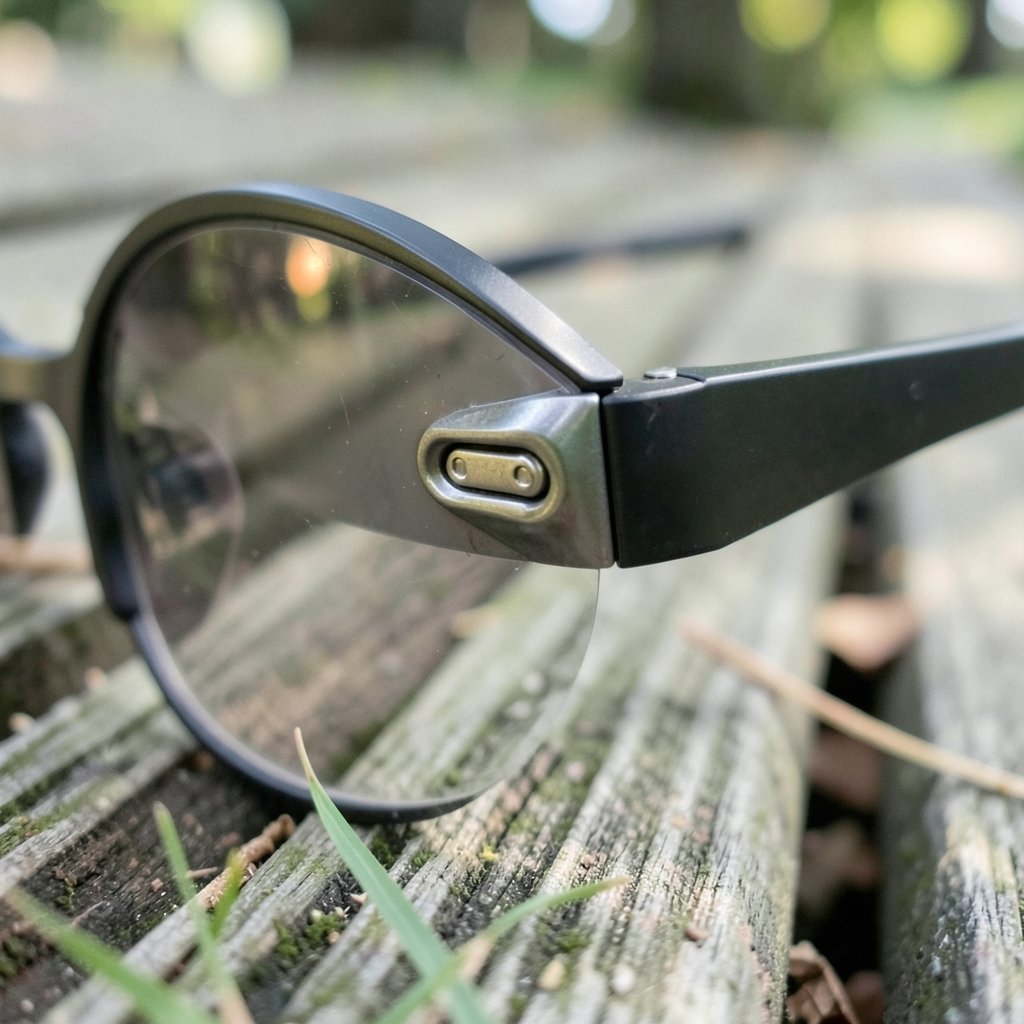
Without a unit in hand, design assessment has to rely on category norms and buyer expectations. Budget smart glasses typically share a predictable profile:
| Feature | Typical Budget Smart Glasses | What to Check on Arrival |
|---|---|---|
| Frame material | Lightweight plastic or acetate blend | Flex at hinges; creaking under pressure |
| Lens | Tinted or clear polycarbonate, often non-prescription | Clarity, coating evenness, scratch resistance |
| Weight | 35–55 grams | Pressure points behind the ears after 30 minutes |
| Temples | Thicker than normal to house electronics | Heat buildup during charging |
| Charging | Magnetic pogo pins or USB-C | Whether the port or pins align reliably |
| Water resistance | Usually none or splash-only | Any IP rating printed in the manual |
The practical lesson here is to inspect the hinges and the charging contacts first. These are the two failure points most commonly reported across budget smart glasses, and they are the hardest to repair. If the frame flexes sharply at the hinge or the pogo pins look misaligned, that is a strong signal about long-term durability.
Fashion-conscious buyers should also consider that these frames are unlikely to match the finish quality of dedicated eyewear. If style matters as much as function, it is worth comparing options against a proper light brown hair and eyewear pairing guide to see how frame color and tone interact with different looks before committing.
Camera, Audio, and Battery: Evaluating the Core Claims
The Captify Pro’s marketing leans on three pillars: camera capture, open-ear audio, and battery life. Each deserves scrutiny.
Camera performance
Budget smart glasses typically use a small sensor in the 5MP to 12MP range, and the number on the box rarely reflects real-world output. Sensor size, lens quality, and image processing all matter more than raw megapixels. Expect usable snapshots in bright daylight and noticeable noise indoors. Video is usually limited to short clips, often capped at 30 to 60 seconds per recording.
A critical practical point: the camera is almost always fixed to the frame’s line of sight, meaning you cannot aim it independently. Composition is guesswork. Buyers who expect to frame shots deliberately will be disappointed; buyers who want quick point-of-view capture will find it adequate.
Audio quality
Open-ear speakers in glasses are inherently limited. They sit outside the ear canal, so bass response is thin and volume is capped to prevent leakage. In quiet rooms, they work for podcasts and calls. On a busy street or in a train carriage, they struggle badly. Anyone expecting headphone-grade sound should adjust expectations downward. (Smartglasses)
Battery life
Realistic figures for this product class land between three and six hours of mixed use, dropping fast with camera use. Charging typically takes one to two hours. The honest framing is that these are supplementary devices, not all-day wearables.
Privacy and Legal Considerations Buyers Often Overlook
This is where budget smart glasses create genuine risk. Camera-equipped eyewear is subject to recording laws that vary significantly by jurisdiction, and several countries have restricted or banned the use of camera glasses in public spaces and on public transport. Recording people without consent can carry civil or criminal consequences depending on where you are.
Beyond law, there is the social dimension. Visible cameras on glasses draw attention and, in some settings, hostility. Practical users learn quickly to switch the device off in changing rooms, medical facilities, schools, and anywhere a reasonable person would expect privacy. The indicator light that signals recording is not a courtesy; it is the minimum standard of respectful use. (Privacy and Security)
Buyers should also think about data handling. Budget smart glasses often pair with a generic app of unclear provenance, and photos may sync to a cloud account with weak security. Checking the app’s permissions before granting access to contacts, location, or storage is a basic precaution that many users skip.
Who Should Consider the Captify Pro, and Who Should Not
The honest answer is that this product suits a narrow set of buyers and frustrates a broader set.
It may suit you if you want a low-cost way to experiment with wearable capture, you mainly shoot in daylight, you value the novelty of audio glasses for podcasts, and you accept that the device is a toy-adjacent gadget rather than a serious tool.
It likely will not suit you if you need reliable image quality, wear glasses for vision correction, expect all-day battery, require water resistance for sport, or need a warranty you can actually enforce. Buyers in that last group should look at established brands with published specifications and service networks.
There is a useful parallel in how shoppers approach other product categories with wide quality variance. The same discipline that helps people avoid mistakes when they buy hair products from an unfamiliar store applies here: check the return policy, verify the seller, read reviews that mention failure over time, and never assume the listing photos match the delivered item.
How to Vet a Low-Profile Smart Glasses Seller Before Buying
Since independent verification for the Captify Pro is thin, the buyer’s job is to do the verification themselves. A practical checklist:
- Search the FCC ID database. Every wireless device sold in the United States requires certification. If the product page lists no FCC ID, or the ID returns no matching record, that is a serious red flag.
- Check the trademark. A searchable trademark filing reveals the legal entity behind the brand and roughly when it was registered. A brand with no traceable entity is hard to hold accountable.
- Read the return policy in full. Confirm who pays return shipping and whether opened electronics are eligible. Marketplace sellers frequently exclude opened items.
- Look for reviews older than six months. Early reviews often reflect novelty. Long-term reviews reveal hinge failures, battery degradation, and app abandonment.
- Check whether the companion app has been updated recently. An app untouched for two years usually means the product line is orphaned, and future phone OS updates may break pairing entirely.
- Test immediately on arrival. Pair it, record video, charge it fully, and wear it for an hour within the return window. Do not wait.
That final point is the one most buyers regret skipping. A gadget that fails in week three is only a problem if you did not test it in week one.
The Verdict: A Cautious, Conditional Recommendation
The Captify Pro is best understood as an entry-point novelty rather than a dependable piece of technology. Its appeal rests on price and curiosity. Its weaknesses are the standard weaknesses of the generic smart glasses tier: unverified specifications, uncertain manufacturer accountability, limited camera quality, thin audio, and short battery life.
For readers who enjoy tinkering and have a clear return path, the risk is manageable and the experiment is inexpensive. For readers who want smart glasses to actually function as daily eyewear with reliable capture, the smarter move is to save for a product with published certification, named reviewers, and a service network.
The broader lesson is about how to shop in fast-moving gadget categories generally. The same skepticism that makes someone a careful buyer of home goods, as explored in guides to designing calmer, better-functioning living spaces, applies to wearables: verify before you commit, and let evidence rather than marketing determine the purchase.
Frequently Asked Questions
Are Captify Pro smart glasses worth buying?
They can be worth it as a low-cost experiment if you accept the limitations: modest camera quality, thin audio, and short battery life. They are not a good choice if you need reliable daily performance, prescription lenses, or enforceable warranty support.
Do Captify Pro smart glasses have a camera?
Yes, the product is marketed as camera-equipped eyewear with built-in speakers and Bluetooth pairing. Buyers should verify the actual resolution and recording limits in the manual rather than relying on listing claims, since budget smart glasses frequently overstate megapixel figures.
Can you wear Captify Pro glasses while driving?
Recording while driving raises legal and safety questions that vary by location, and wearing any unfamiliar eyewear behind the wheel can obstruct peripheral vision. Check local rules on recording devices in vehicles and never operate controls while driving.
How long does the battery last on budget smart glasses?
Most devices in this class deliver roughly three to six hours of mixed use, with camera recording draining the battery fastest. Expect to charge daily, and expect capacity to decline over the first year of regular use.
Is it legal to record people with camera glasses?
Laws differ widely by country and state. Some jurisdictions require all-party consent for audio recording, and several have restricted camera glasses in public spaces. Always check local regulations and obtain consent before recording anyone.
What should I check before buying smart glasses online?
Confirm the FCC ID and its database record, identify the legal entity behind the brand, read the full return policy including opened-item terms, and look for reviews written more than six months after launch. Test every function within the return window.
Conclusion
The Captify Pro smart glasses occupy a familiar position in the wearable market: an affordable, feature-list-heavy product with limited independent verification behind it. That is not a dismissal. It is a description of a category where buyers must supply their own due diligence because the manufacturer has not supplied transparent evidence.
The practical path forward is straightforward. Verify the certification, identify the seller, read the return terms, and test hard within the window. If the product clears those hurdles and you want a cheap way to explore wearable capture, the experiment is reasonable. If it fails any of them, walk away. In a market this crowded, patience is cheaper than regret.