
Vittoria Ceretti Style: Get the Off-Duty Model Look
 Abdul WadoodLast updated
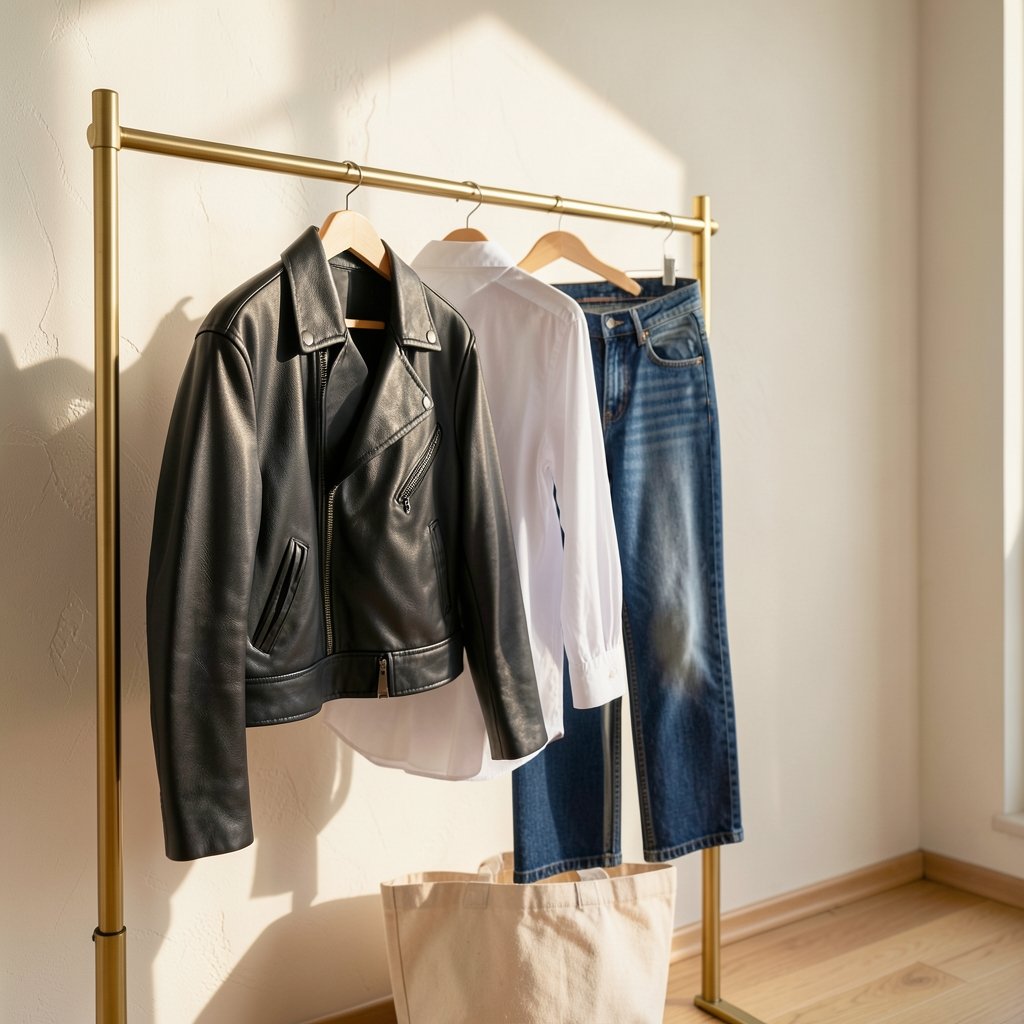
Vittoria Ceretti has walked for nearly every major luxury house in fashion, yet the outfits that get the most attention are the ones she wears between shows. Her off-duty wardrobe, a tight loop of straight-leg denim, black leather, crisp white shirting, and almost no visible logos, has become a reference point for anyone who wants to look expensive without looking like they tried. The interesting part is that this style is less a “look” than a set of rules about restraint, and those rules are easier to copy than most people assume.
Why the Off-Duty Look Gets So Much Attention
Runway modeling is a performance. The clothes belong to the brand, the styling belongs to the show, and the model is the vehicle. Street style flips that. When Ceretti is photographed walking out of a show or crossing a Milan street, the clothes are hers, and the choices read as personal.
That distinction matters for anyone trying to learn from her. The runway gives you spectacle; the sidewalk gives you a wardrobe you can actually build. Fashion media has spent years treating model-off-duty dressing as its own genre, and the reason is simple: it is the closest thing the industry offers to a real-world style syllabus.
Her look also sits in a specific tradition. Italian fashion has long prized sprezzatura, the studied carelessness that makes effort invisible. Ceretti’s public style reads that way. Nothing is fussy. Nothing is over-layered. The hair is usually loose or pulled back, the makeup is minimal, and the outfit does the talking.
The Core Formula: Neutral, Tailored, Understated
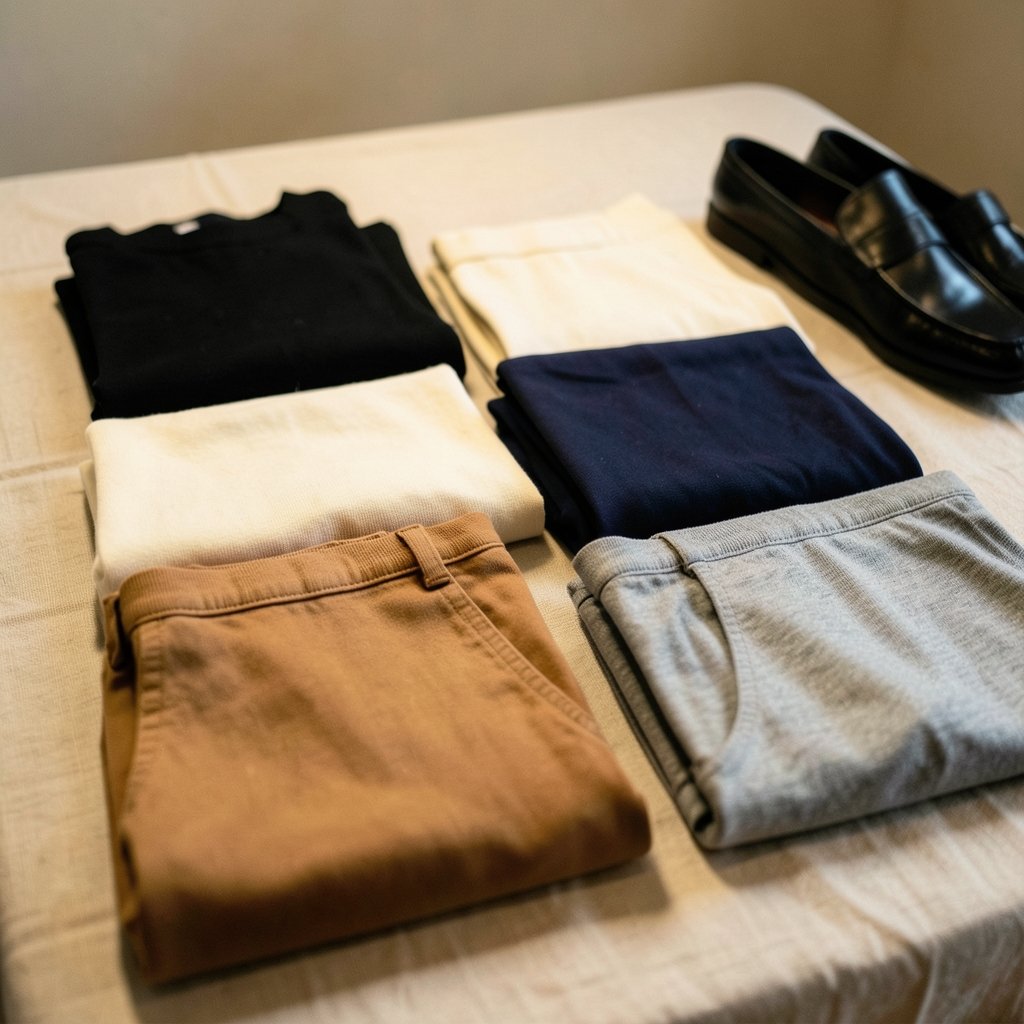
Strip away the paparazzi context and a pattern emerges. Her most photographed outfits rely on a small set of building blocks that repeat with minor variations.
| Element | What It Looks Like | Why It Works |
|---|---|---|
| Denim | Straight-leg or slim, mid-to-high rise, dark or mid-blue wash | Anchors the outfit without competing for attention |
| Leather | Biker jacket, trench, or simple trousers | Adds texture and edge to plain pieces |
| Shirting | White poplin, oversized or crisp | Provides contrast and a clean line |
| Knitwear | Fine-gauge crewnecks, turtlenecks, plain cardigans | Layers without bulk |
| Footwear | Ankle boots, pointed flats, low-profile sneakers | Keeps proportions grounded |
| Accessories | Small shoulder bag, slim sunglasses, minimal jewelry | Finishes the look without noise |
Notice what is missing. There are almost no large logos, no busy prints, and very little color blocking. The palette stays in a narrow band of black, white, cream, navy, camel, and grey. That narrowness is the whole trick. When every piece works with every other piece, getting dressed stops being a decision.
Why the Palette Is So Narrow
A restricted color palette is the single most practical takeaway from her style. It removes the most common source of outfit failure, which is a piece that only works with one other thing in the closet. If you own eight tops and six bottoms that all sit in the same tonal family, you have forty-eight combinations instead of eight.
The practical version of this: pick three neutrals as your base, add one accent you actually wear, and stop buying outside that set for a season. Most people find they wear the same handful of pieces anyway. Ceretti’s wardrobe looks curated because it is curated, not because it is large.
Hair, Makeup, and the Art of Looking Undone
The grooming is where most people get this wrong. The instinct is to add, and the correct move is almost always to subtract.
Her hair is typically worn long and loose with a natural texture, or pulled into a low, slightly imperfect bun. There is no visible styling product, no sharp part, no obvious heat-tool finish. If your hair runs wavy or has natural movement, you are already ahead. A guide to wavy hair types and how to style them is a useful starting point, especially if your texture sits somewhere between straight and curly.
For looser waves in the 2c range, the key is a lightweight hold rather than a heavy cream, which drags the pattern down. A 2c hair care and styling guide covers the wash-and-go approach that produces this kind of texture without looking labored. And if your hair tends to expand rather than fall, the fixes in this guide to managing fluffy hair are worth reading before you reach for another serum.
Makeup follows the same logic. Skin is visible, brows are defined but not drawn, and there is usually a single point of color, often a muted lip or a wash of warm shadow. The overall effect is “she woke up like this,” which requires more skill than a full face but far less product.
Getting the Proportions Right
The most common mistake when copying this style is buying the right pieces in the wrong proportions. A leather biker jacket works because it is cropped to the hip. An oversized blazer works because the shoulders are structured and the sleeves are the right length. Denim works because the rise and hem are correct for the shoe.
A few rules that hold up in practice:
- Match jacket length to rise. A cropped jacket over high-rise denim lengthens the leg. A long jacket over low-rise denim shortens it.
- Keep one element oversized, not two. An oversized shirt with slim trousers reads intentional. An oversized shirt with wide trousers reads like a mistake.
- Show one point of contrast. A sliver of ankle, a visible collarbone, a rolled cuff. The eye needs somewhere to land.
- Choose shoes that match the hem. Straight-leg denim cropped at the ankle wants a pointed flat or a slim boot. Full-length denim wants a shoe with some visual weight.
- Buy the tailor, not the trend. A twenty-dollar alteration on a jacket you already own beats a new purchase almost every time.
That last point is where most wardrobes fail. People buy pieces that fit almost, then wonder why the outfit looks off. Ceretti’s clothes are photographed constantly, which means they are almost certainly altered to fit her precisely. You do not need her measurements, but you do need a good tailor.
Building the Wardrobe Without the Budget
The good news is that this style is unusually affordable to replicate, because the value sits in silhouette and fabric rather than branding. A plain white shirt from a high-street label and one from a luxury house look nearly identical at three paces if the collar sits correctly and the cotton has some weight.
Priorities, in order:
- Outerwear. One black leather jacket and one neutral wool coat will carry more outfits than anything else you own. Spend here.
- Denim. Two pairs, one dark and one mid-wash, both straight-leg. Fit is everything; do not compromise.
- Shirting. Three white shirts in different weights, one of them oversized.
- Knitwear. Fine-gauge merino in black, cream, and one mid-tone.
- Footwear. One ankle boot, one flat, one clean sneaker.
- Accessories. A small structured bag and one pair of slim sunglasses. Stop there.
That is roughly fifteen pieces, and it produces more distinct outfits than most people’s forty-piece wardrobes. The Voozon hair styles guide is a helpful companion here, since the right cut and finish do more for a minimalist outfit than another layer ever will.
What Actually Goes Wrong
A few failure modes come up again and again when people try this look.
Too much black. All-black is easy to reach for and easy to get wrong. Without texture variation, it flattens into a silhouette with no detail. Mix leather with cotton, or matte with a slight sheen.
Over-accessorizing. Layered necklaces, stacked rings, and a statement bag all at once undoes the restraint. Pick one.
Ignoring the shoe. Footwear is where the outfit is decided. A beautiful coat over the wrong shoes reads as unfinished.
Chasing the exact pieces. Ceretti is photographed in specific items that sell out within hours. The pieces are not the point; the proportions and palette are. Copy the logic, not the shopping list.
Forgetting posture and fit. This sounds like a cliché, and it is also true. Tailored clothes on a slouched frame look like someone else’s clothes.
The Street Style Context
Part of what makes her style legible is the environment it appears in. Milan Fashion Week produces some of the most photographed sidewalks in the world, and the outfits that survive that scrutiny tend to be the simple ones. A look at Milan Fashion Week street style shows the same pattern: the people who look best are rarely the most decorated. For a broader view of how the city’s street style has evolved, this Milan street style coverage is a useful reference. (Fashion collections)
That context is worth keeping in mind. A lot of what reads as “her style” is really a photographer’s edit of hundreds of frames, selecting the ones where the light, the posture, and the outfit aligned. The underlying wardrobe is ordinary. The framing is not. If you compare your own mirror to a curated photo feed, you are comparing a draft to a final cut.
Adapting the Look to Real Life
Very few people need to look camera-ready on a Tuesday. The translation is straightforward.
For an office with a relaxed dress code, swap the leather jacket for a structured blazer and keep everything else. For a weekend, the denim-and-knit combination needs nothing added. For evening, a plain black dress with a single piece of jewelry follows the same logic as the daytime wardrobe.
The unifying principle is subtraction. Every time you are tempted to add a layer, an accessory, or a print, ask whether the outfit would be better without it. Most of the time, it would.
Conclusion
Vittoria Ceretti’s style is not complicated, and that is precisely why it works. A narrow palette, a handful of well-fitted staples, minimal grooming, and a refusal to over-decorate produce a look that reads as expensive because it reads as considered. The pieces are replaceable. The discipline is not.
Start with what you already own. Pull out everything in black, white, cream, navy, and grey. See how many complete outfits you can build from that pile alone. Most people find they have more than they thought and need less than they assumed. Then spend money only where the gap is real: outerwear, denim, and shoes. That is the entire method, and it holds up whether you are walking a runway or walking to the shop.
Frequently Asked Questions
What defines Vittoria Ceretti’s personal style?
Her public style is built on neutral tones, tailored basics, and minimal branding. The recurring pieces are straight-leg denim, black leather outerwear, white shirting, and fine knitwear, usually finished with ankle boots or simple flats. The overall effect is restrained rather than decorative.
Is her off-duty look expensive to recreate?
No. The style depends on fit, fabric weight, and proportion rather than logos or labels. A well-tailored plain white shirt and a good pair of straight-leg jeans will do most of the work. The main investment should go to outerwear and shoes, which carry the most visual weight.
What colors should I use to copy this style?
Stick to a narrow neutral base: black, white, cream, navy, camel, and grey. Add one accent color you genuinely wear. Keeping the palette tight means more pieces work together, which is the practical reason the look appears effortless.
How should I style my hair to match?
Loose, natural texture or a low, slightly imperfect bun works best. Avoid heavy product and sharp, deliberate styling. If your hair is wavy, a lightweight hold will preserve the pattern; if it is straight, a little texture spray at the roots keeps it from looking flat.
What is the most common mistake people make with this look?
Over-accessorizing and ignoring fit. Layered jewelry, busy prints, and multiple statement pieces fight the restraint the style depends on. Equally, clothes that fit almost right will always look off, so budget for alterations rather than more purchases.
Can this style work for men?
Yes. The underlying rules are not gendered: neutral palette, correct proportions, quality outerwear, and minimal branding. A plain crewneck, straight-leg trousers, a well-fitted jacket, and clean leather shoes follow exactly the same logic.