
How to Store Fine Knitwear: 2026 Guide to Make It Last
 Abdul WadoodLast updated
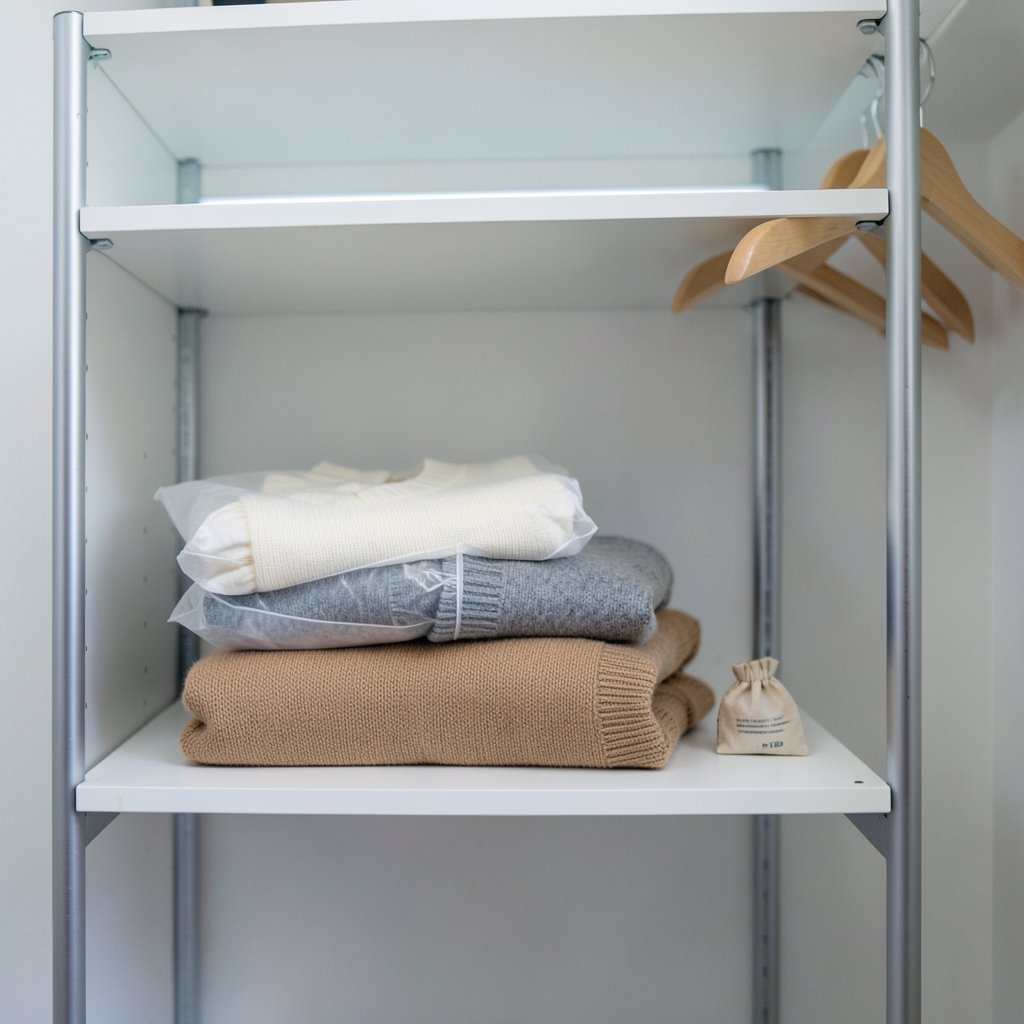
A single cashmere sweater can take a goat herder, a spinner, a knitter, and roughly eight months of work to produce. Yet most people destroy that investment in a single season with a wire hanger and a plastic bin. Wool, cashmere, and alpaca are protein fibers, which means they behave less like cotton and more like hair: they stretch under their own weight, felt when agitated, and attract the same pests that go after a wool coat. Storing fine knitwear well is not about fussiness. It is about understanding a material that remembers everything you do to it.
Why Fine Knitwear Fails in Storage
The failure modes are predictable, and almost all of them happen off the body rather than on it.
Gravity is the first enemy. A wet or heavy knit hung on a hanger will stretch at the shoulders and never fully recover. The fibers slide past one another under load, and the garment takes on a permanent memory of the hanger’s shape.
Moisture is the second. Wool can absorb a surprising amount of water vapor from the air. Fold a slightly damp sweater into a sealed container and you create a microclimate for mildew, which stains protein fibers in a way that is very difficult to reverse.
Pests are the third. Clothes moths and carpet beetles target keratin, the protein in animal fibers. The larvae do the damage, and they prefer dark, undisturbed, slightly soiled fabric, which is precisely what a stored sweater in a guest room closet becomes.
Compression is the fourth. Stacking ten sweaters on top of each other flattens loft, the airy structure that gives a knit its warmth and softness. Once loft collapses, the garment looks tired even when the yarn is intact.
Clean Before You Store, Always

The single most common mistake is storing a sweater that was worn but not washed. Body oils, sweat salts, and food traces are invisible but they are food for larvae, and they also oxidize over months, yellowing light-colored wool. Even a sweater that “smells fine” carries enough residue to attract pests.
Here is a sequence that works for most fine knits:
- Check the care label first, since blends behave differently from pure wool.
- Hand wash in cool water with a pH-neutral wool detergent, or use a machine’s dedicated wool cycle if the label permits.
- Never wring or twist. Press water out between two towels instead.
- Lay flat to dry on a mesh rack, reshaping the garment to its original dimensions while damp.
- Let it air for a full day after it feels dry, because the core of a thick knit holds moisture longer than the surface.
Dry cleaning is a reasonable option for structured pieces and tailored knits, but it is not a substitute for removing surface soil, and repeated solvent exposure can dull natural luster over time. If you are building a wardrobe from scratch and want to know which fibers tolerate this kind of care, a practical guide to choosing a hair store and shopping smart covers how fiber quality and labeling affect long-term maintenance across textile categories. (Hair Store Near Me: Find the Right Shop in 2026)
Fold, Don’t Hang, and Fold Properly
Flat storage is non-negotiable for knits. The interesting part is how you fold.
A fold that runs straight down the center front creates a hard crease that weakens fibers along that line over years. Conservators prefer folding along the side seams so the crease falls where the garment is already constructed to bend. For extra protection, place a sheet of acid-free tissue paper in each fold. The tissue cushions the fiber and prevents a sharp crease from setting.
For very fine gauge pieces, such as a lightweight merino or a delicate cashmere blend, avoid stacking more than three garments high. If shelf space is tight, roll lighter knits instead of folding them flat. Rolling distributes pressure evenly and eliminates crease lines entirely, which is why it is standard practice for travel.
Table: matching storage method to garment type
| Garment type | Best method | Watch out for |
|---|---|---|
| Heavy cable knit | Flat fold, one per shelf layer | Shoulder stretch if hung |
| Fine-gauge cashmere | Flat fold with tissue, or roll | Creasing at center fold |
| Ribbed knit dress | Flat fold, long and loose | Weight pulling the hem |
| Knit cardigan | Fold, button closed | Hanger marks at shoulders |
| Delicate blend | Rolled in a breathable bag | Compression in a vacuum bag |
Choose the Right Container
This is where most storage advice goes wrong. Airtight plastic bins are popular and, for long-term storage of natural fibers, usually the wrong answer. Plastic traps any residual moisture and blocks airflow, creating the humid, still conditions that mildew loves.
Better options, roughly in order of preference:
- Cotton or linen storage bags with a breathable weave, which let fibers breathe while keeping dust and light out.
- Acid-free archival boxes with a loose-fitting lid, the museum standard for textiles.
- Cardboard or canvas boxes lined with acid-free tissue, a good middle ground for home use.
- Vacuum bags, only for short-term transport and never for wool, since compression crushes loft permanently.
If you must use a plastic bin, leave the lid slightly ajar, add a desiccant packet in humid climates, and line the interior with washed cotton fabric so the knit never touches plastic directly.
Pest Control That Actually Works
Cedar chests are the classic recommendation, and the honest answer is that cedar is a mild repellent, not a killer. It may discourage adult moths from settling, but it does nothing to larvae already present, and its effectiveness fades as the oils evaporate. Cedar blocks need sanding every year or two to release fresh aroma.
What works better is a layered approach:
- Clean storage. No body oils, no food residue, no perfume.
- Physical barriers. A tightly woven cotton bag or a sealed archival box stops adults from reaching the fiber.
- Cold treatment. For suspect items, sealing the garment in a bag and freezing it for at least 72 hours kills eggs and larvae. Let it return to room temperature before unwrapping to avoid condensation.
- Pheromone traps. These do not protect a single sweater, but they monitor whether an active infestation exists in the room, which is useful information.
- Lavender and rosemary sachets. Pleasant, mildly repellent, and a reasonable addition, though not a standalone solution.
Store knits in a cool, dark, dry place. Heat and light degrade dye and weaken fibers, and a damp basement is the worst possible location regardless of how good your containers are.
Seasonal Rotation and the Air-Out Habit
Fine knitwear benefits from being aired rather than sealed away for eight months. Once or twice mid-season, take stored pieces out, unfold them, let them sit in indirect light and moving air for a few hours, then refold along different lines. This redistributes stress on the fibers and lets you spot pests or damp before damage spreads.
Rotation also solves a subtler problem: moths prefer undisturbed fabric. A sweater that moves occasionally is a less attractive target than one pressed into the same corner for a year.
If you are building a seasonal wardrobe and want the storage routine to match the way you actually dress, a look at how a single fragrance defines a season makes a useful parallel point about rotation, since both knitwear and scent are best managed as a small, well-kept rotation rather than a hoard.
Travel and Short-Term Storage
For a weekend trip, the rules relax but do not disappear. Pack knits rolled, not folded, and place them at the top of the bag where they will not be crushed by shoes. A cotton pillowcase works as a lightweight protective bag and weighs almost nothing.
Never leave a knit in a hot car or a humid hotel bathroom. Both environments accelerate the two things wool tolerates least: heat and moisture.
Repair Before You Put It Away
A small hole stored for six months becomes a large hole. Moth damage widens as fibers around the break work loose, and a dropped stitch will run. Before seasonal storage, inspect underarms, cuffs, and the front panel where larvae tend to feed. Mend immediately, or set the piece aside in a labeled bag so it does not contaminate clean storage.
This habit pays off disproportionately. A five-minute repair in October prevents a garment from being written off in April.
What to Do About Blends and Synthetics
Not every knit is a natural fiber, and the rules shift with content. A cotton-cashmere blend is more forgiving of folding but still stretches on a hanger. A fully synthetic acrylic knit resists moths entirely but is prone to pilling and static, and it can be stored in a sealed bin without the mildew risk that wool carries. (Cashmere wool)
Check the label, and when in doubt, treat the piece as if it were the most delicate fiber in the blend. The conservative approach never damages a garment; the aggressive one sometimes does.
A Storage Routine That Takes Twenty Minutes
The whole system collapses into a short annual ritual:
- Wash and fully dry every knit before the season ends.
- Inspect for holes, pilling, and pest traces.
- Mend or set aside anything damaged.
- Fold along side seams with acid-free tissue, or roll fine gauge pieces.
- Place in breathable cotton bags or acid-free boxes.
- Add a cedar block and a lavender sachet, and refresh the cedar annually.
- Store in a cool, dark, dry room, never a basement or attic.
- Air and refold once mid-season.
That is genuinely it. No vacuum sealers, no plastic wrap, no wire hangers.
Conclusion
Fine knitwear is one of the few wardrobe categories where careful storage measurably extends life, often by a decade or more. The principles are simple and slightly counterintuitive: clean before storing, fold rather than hang, choose breathable containers over airtight ones, and treat pest control as a layered system rather than a single cedar block. The fibers in a good sweater have already survived a long journey from farm to closet. A twenty-minute routine twice a year is a small price for keeping them intact.
Frequently Asked Questions
Can you store fine knitwear in vacuum-sealed bags?
For short transport, yes, but not for long-term storage. Vacuum compression crushes the loft that gives a knit its warmth and softness, and that structure does not fully spring back. Wool also needs some airflow to avoid trapped moisture, which sealed plastic blocks entirely.
Should knitwear be hung or folded?
Folded, always. Hanging a knit, especially a heavy one, causes the shoulders to stretch under the garment’s own weight, and the distortion is often permanent. The only exception is a very lightweight piece on a wide, padded hanger for a single evening, and even that is a compromise.
Does cedar actually keep moths away?
Cedar is a mild repellent that may discourage adult moths from settling, but it does not kill eggs or larvae already in the fabric, and its effect fades as the oils evaporate. Sand the wood annually to refresh it, and pair it with clean storage and physical barriers rather than relying on cedar alone.
How do you get rid of moths in stored sweaters?
Start by washing or dry cleaning every affected piece, then freeze suspect items sealed in a bag for at least 72 hours to kill eggs and larvae. Vacuum the storage area thoroughly, discard infested tissue or bags, and use pheromone traps to confirm the infestation has cleared before restocking the closet.
How often should stored knitwear be aired out?
Once or twice per season is enough. Unfold the garment, let it sit in indirect light with moving air for a few hours, then refold along different lines. This redistributes stress on the fibers and gives you a chance to catch damp or pest damage early.
Is it safe to store wool sweaters in a plastic bin?
It is workable with precautions but not ideal. Plastic traps residual moisture and blocks airflow, which encourages mildew. If you use a bin, line it with washed cotton, leave the lid slightly loose, and add a desiccant in humid climates so the knit never sits against bare plastic.