
What to Wear to a Private Members Club: Dress Code Guide 2026
 Abdul WadoodLast updated

Quick Answer: What to wear to a private members club?
Most private members’ clubs default to smart casual: a collared shirt, tailored trousers or dark jeans, and closed shoes. Historic gentlemen’s clubs and formal dining rooms often go further, requiring a jacket for men and equivalent smart dress for women, especially in the evening.
Modern creative-industry clubs tend to be looser, but almost all of them still exclude sportswear, shorts, flip-flops, and athletic trainers. Guests should expect a stricter code than members and should ask their host to confirm before arriving.
Before you go, check the club’s published house rules, the room you’re visiting, the time of day, whether you’re a guest or member, and whether the club publishes a separate evening dress code.
Some dress codes date back more than two centuries. London’s gentlemen’s clubs began formalizing house rules in the early 1800s, and a few of those rules survive almost unchanged. That long tail of tradition is exactly why “what to wear” has no single answer — and why a little preparation saves a lot of awkwardness at the door.
Why Private Club Dress Codes Are So Confusing
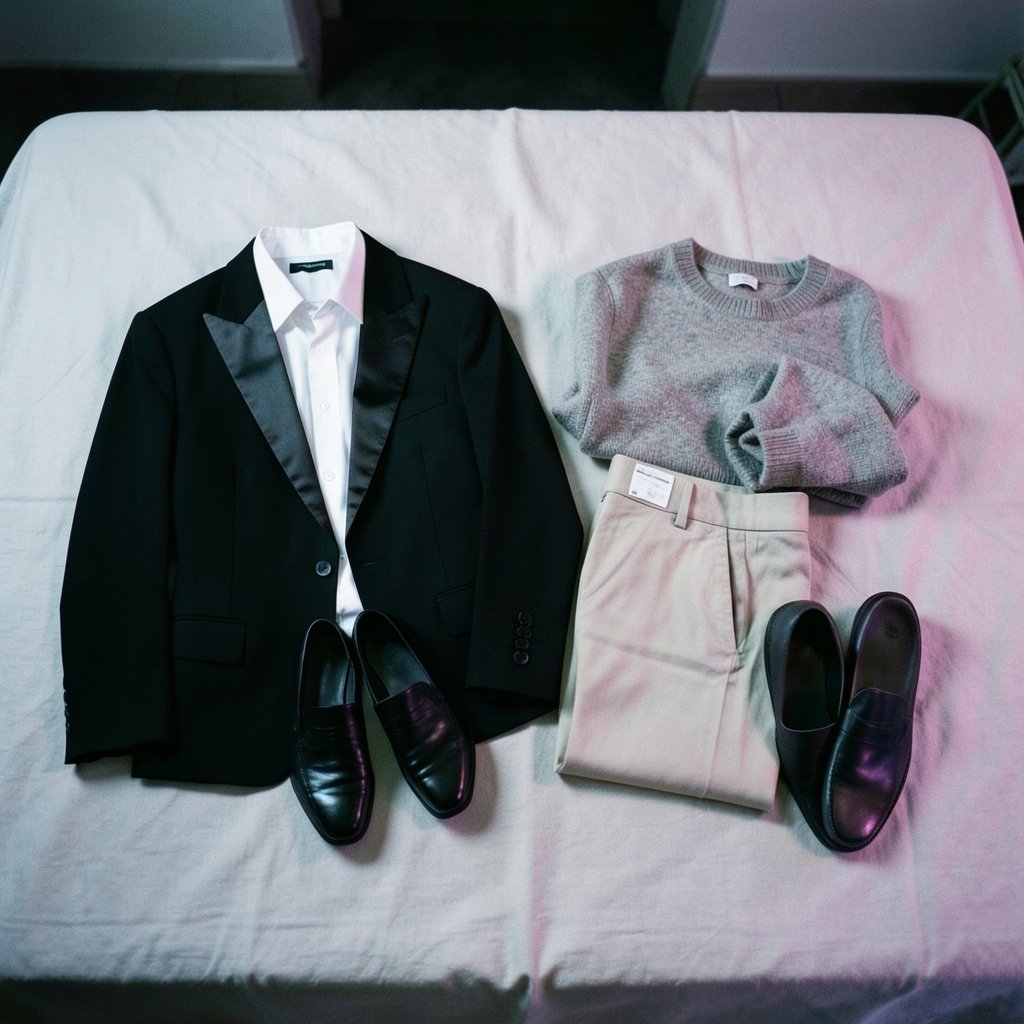
The confusion is structural, not personal. There is no industry-wide dress code for private members’ clubs. Each club writes its own rules, publishes them (or doesn’t), and enforces them at the discretion of staff. Two clubs on the same street can have completely different expectations.
Rules also change. A style guide published three years ago may describe a policy the club has since relaxed or tightened. Undated “what to wear” articles are unreliable for current policy, which is why the club’s own website or membership handbook is always the authoritative source.
The practical takeaway: treat any general advice, including this article, as a starting framework. Then verify against the specific club.
The Three Main Dress Code Tiers
Most private members’ clubs fall into one of three broad tiers. Knowing which one you’re visiting tells you roughly 80% of what you need to know.
| Tier | Typical setting | Men | Women | Commonly excluded |
|---|---|---|---|---|
| Smart casual | Modern creative-industry clubs, rooftop bars, members’ lounges | Collared shirt or fine knit, tailored trousers or dark jeans, closed shoes | Blouse, knit, tailored trousers, dark jeans, smart flats or boots | Sportswear, shorts, flip-flops, gym trainers |
| Smart / business casual | Dining rooms, evening bars, mixed-use clubs | Jacket strongly encouraged, collared shirt, no jeans after a set hour | Tailored dress, blazer, smart separates | Denim, t-shirts, open sandals |
| Formal / traditional | Historic gentlemen’s clubs, formal dining rooms | Jacket and tie, often suit | Equivalent formal dress | Almost everything casual |
The middle tier is where most disputes happen. “Smart” is a spectrum, and a club that says “no denim” in its dining room may happily allow dark jeans in the bar. Read the room-level rules along with the club-wide ones.
Smart Casual: The Default
Smart casual is the most common baseline at London-style private members’ clubs. In practice it usually means:
- A collared shirt, fine-gauge knit, or a good-quality t-shirt under a jacket
- Tailored trousers, chinos, or dark, unripped jeans
- Closed shoes — leather trainers are often acceptable, running shoes usually are not
- Minimal athletic branding
The trap here is over-casualizing the word “casual.” A club’s smart casual is not the same as a pub’s casual. If you’d wear it to the gym, a beach, or a music festival, it almost certainly fails.
Smart and Formal: When a Jacket Is Required
Some clubs enforce jackets for men in certain rooms or after a set hour, typically the dining room and the evening bar. This varies widely and is usually stated explicitly in the house rules — which is why reading them takes two minutes and saves an evening.
Historic gentlemen’s clubs in the St James’s tradition tend to be the strictest. A tie may still be expected in the main dining room. Women’s dress codes at these clubs have modernized considerably, but the expectation of equivalent formality remains.
Modern Creative Clubs: Relaxed but Not Lawless
Modern clubs built around creative industries are often the most relaxed. Jeans, good trainers, and open-collar shirts are frequently fine. But “relaxed” is not “anything goes.” Most still draw a hard line at sportswear, shorts, and beachwear, and many tighten up after 6pm.
The Guest Rule Most People Miss
Guest dress codes can differ from member codes, and hosts are often expected to brief their guests. This is the single most common source of embarrassment at private clubs.
If you’re invited as a guest, ask your host three direct questions:
- Is there a dress code for the room we’re using?
- Does it change after a certain hour?
- What do regulars actually wear?
That third question matters because written rules and lived practice often diverge. Enforcement is typically at the door or by staff discretion, so the written code may be stricter than what you’ll see on the floor — or, occasionally, the reverse.
What Actually Works in Practice
A few habits separate people who glide through club doors from people who get quietly redirected.
Dress one notch above the minimum. If the code says smart casual, wear the smarter end of it. A blazer over a fine knit reads correctly in almost every room of almost every club. It’s the single most useful piece of clothing in this context.
Keep a “club kit” ready. Frequent guests learn to keep one outfit that satisfies the strictest tier they’re likely to encounter: tailored trousers, a collared shirt, a jacket, and clean leather shoes. It removes the guesswork entirely.
Skip the obvious failure points. Athletic trainers with visible branding, shorts, sleeveless tops on men, flip-flops, and ripped denim are the recurring mistakes. So is heavy fragrance in a dining room — not a dress code violation, but a social one.
Check the time as well as the place. Many clubs operate a daytime code and an evening code. A room that welcomes jeans at lunch may expect a jacket at dinner. The hour matters as much as the address.
Ask the door, not the internet. If you’re unsure on arrival, staff would far rather answer a question at reception than turn someone away at the dining room entrance. A quiet word at the door is normal and expected.
What to Wear If You’re Unsure: A Simple Formula
When the club’s rules are vague or unpublished, this formula covers most situations:
- Top: collared shirt or fine-gauge knit; add a blazer if you have one.
- Bottom: tailored trousers or dark, unripped jeans.
- Shoes: closed leather shoes or clean, minimal trainers.
- Outer layer: a jacket that can be removed if the room is relaxed.
- Accessories: understated. Nothing that needs explaining.
This works because it’s modular. You can shed the jacket in a loose members’ lounge and keep it on in a formal dining room. The outfit adapts to the room instead of betting on it.
How Club Dress Codes Compare Across Cities
Dress codes travel poorly. A look that’s perfectly normal in one city can read as underdressed in another, and vice versa.
| City context | General tendency | Practical note |
|---|---|---|
| London (traditional clubs) | Strictest; jackets and ties still common in formal rooms | Assume a jacket is required unless told otherwise |
| London (modern clubs) | Smart casual, evening uplift | Jeans fine by day, jacket after 6pm |
| New York | Smart casual to business casual | Dark denim widely accepted; athletic wear is not |
| Continental Europe | Smart casual with a polished edge | Quality of fabric and fit matters more than formality |
| Asia (major cities) | Business casual leaning formal | Conservative colors and closed shoes are safest |
These are tendencies, not rules. The club’s own published code always overrides any city-level generalization.
Grooming and Grooming-Adjacent Details
Dress codes rarely stop at clothing. Clubs that care about presentation usually care about the whole picture.
Well-groomed hair reads as intentional, and hair color is part of that. If you’re considering a change before a big club visit, shades that photograph as polished and low-maintenance tend to work best in formal rooms — a dirty blonde shade or a rich chocolate brown both sit comfortably in smart settings, while high-contrast fashion colors make more of a statement and may stand out more than you want in a traditional dining room. If you do go bold — say, a blue dye job — treat it as a deliberate choice rather than an accident, and pair it with conservative clothing so the overall look stays intentional.
The broader principle: in a formal room, one statement piece is plenty. Let the rest of the outfit do quiet work.
Common Mistakes and How to Avoid Them
Wearing gym clothes and calling them smart. Technical fabrics, running shoes, and athletic logos fail almost everywhere. Avoid.
Assuming members’ rules apply to guests. They often don’t. Confirm with your host.
Ignoring the room-level code. The bar and the dining room may have different rules under the same roof.
Overdressing out of anxiety. Being the only person in a full suit at a creative club is its own kind of awkward. Match the tier, not the maximum.
Forgetting the shoes. People plan the outfit and neglect the footwear. Scuffed trainers undo an otherwise correct look.
Not checking whether the club has published rules. Most do, somewhere on their website or in membership materials. A two-minute search beats a turned-away evening.
Conclusion
Dressing for a private members’ club is less about fashion than about reading the room before you enter it. The safe default is smart casual with a jacket in reserve; the safe method is checking the club’s own published rules, confirming the room and the hour, and asking your host what regulars actually wear. Historic clubs reward formality, modern clubs reward polish, and every club rewards a guest who clearly made an effort. Get those basics right, and the dress code stops being a hurdle and becomes what it was always meant to be: a small signal of respect for the house you’re visiting.
Frequently Asked Questions
Can I wear jeans to a private members club?
Often yes, but it depends on the club and the room. Dark, unripped jeans are widely accepted in members’ lounges and casual bars at modern clubs. Formal dining rooms and traditional clubs frequently exclude denim entirely, especially in the evening. Check the room-level rules rather than the club-wide summary.
Do I need a jacket as a guest at a private members club?
Not always, but it’s the safest single item to bring. Many clubs require jackets for men in dining rooms or after a set evening hour, and guests are often held to a stricter standard than members. A jacket you can remove covers both the strict and relaxed scenarios.
What should women wear to a private members club?
The same tiers apply: smart casual means a blouse, knit, or tailored top with trousers, dark jeans, or a skirt, plus smart flats or boots. Formal rooms call for a tailored dress, a blazer, or smart separates. The guiding principle is polish and coverage rather than a specific garment.
Are trainers allowed at private members clubs?
Clean, minimal leather trainers are increasingly accepted at modern clubs during the day. Athletic running shoes, heavily branded sneakers, and anything that reads as gym wear are commonly excluded. If in doubt, choose leather over mesh and keep the branding low.
How do I find out a club’s dress code before visiting?
Check the club’s official website or membership materials first — many publish house rules or a dress code page. Then ask your host, who is usually expected to brief guests. Confirm both the room you’ll be using and the time of day, since codes often change in the evening.
What happens if I arrive underdressed?
Staff typically address it at the door or at the entrance to a specific room, and enforcement is usually at their discretion. Some clubs keep spare jackets for guests. The practical move is to ask reception politely before entering a formal room rather than assume — staff would rather help than turn someone away.