
How to Prevent Frizz in Humid Weather: Science-Backed Tips
 Abdul WadoodLast updated

Hair can stretch up to 30% of its length when wet and shrink back as it dries, and every one of those cycles reshapes the fiber’s surface. In humid air, that same swelling process happens slowly, all day long, which is why a sleek blowout can collapse into a halo of flyaways before lunch. The frustrating part is that frizz is not really a styling failure. It is a moisture-management problem, and once you understand the mechanics, preventing it becomes far more predictable.
What Actually Causes Frizz in Humid Weather
Hair is a layered structure. The outer layer, the cuticle, is made of overlapping scales that lie flat when hair is healthy. When the air is full of water vapor, the inside of the hair fiber (the cortex) absorbs moisture faster than the cuticle can keep up. The fiber swells, the scales lift, and the surface turns rough and uneven. That roughness is what the eye reads as frizz.
Two factors make some hair frizz far more than others:
- Porosity. Bleached, heat-styled, or color-treated hair has a raised, porous cuticle. It drinks in humid air quickly and loses moisture just as fast, so it swells and shrinks repeatedly.
- Natural texture. Curly and wavy hair has a naturally more open cuticle and fewer smooth, flat strands to reflect light, so any lifted scale shows up dramatically.
There is also a widely repeated point worth flagging honestly: many hair scientists argue that dew point predicts frizz better than relative humidity, because dew point measures the actual amount of moisture in the air rather than how close the air is to saturation. This is a common claim in hair-science writing, but it has not been standardized into an official threshold. Treat it as a useful rule of thumb, not a law.
The Core Principle: Block, Don’t Chase
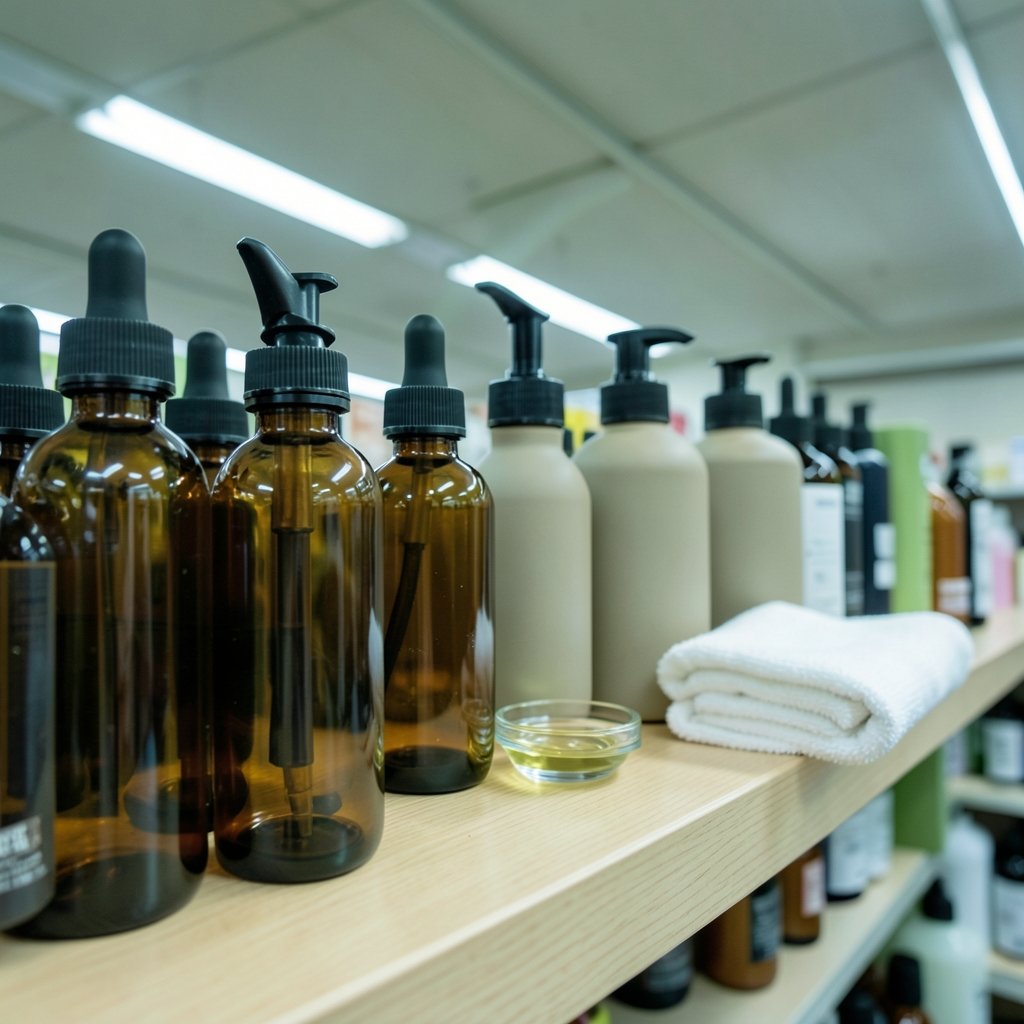
Most people fight frizz after it appears, smoothing a serum over hair that has already swollen. That is chasing. The better strategy is to block moisture uptake before it starts and seal the cuticle flat, then maintain that barrier through the day. Everything below is a variation on that one idea.
If you want the deeper background on why hair reacts this way and how to calm an already-frizzy mane, this guide to frizzy hair, its causes and fixes covers the fundamentals well. (Frizzy hair: Causes and remedies)
Step 1: Fix Your Wash and Conditioning Routine First
No styling product can compensate for chronically dry, damaged hair. Start at the shower.
Use a pH-balanced shampoo. High-pH cleansers swell the cuticle and leave it rougher. Look for formulas described as gentle or sulfate-light if your hair is porous. Wash the scalp, not the lengths, and let the runoff clean the ends.
Condition every single wash. Conditioner does two jobs: it smooths the cuticle physically and it deposits a thin film that resists water uptake. For very porous hair, a weekly deep conditioner or a bond-building treatment helps rebuild the fiber over time.
Rinse with cooler water at the end. This is a modest effect, but cooler water encourages the cuticle to lie flatter, and it costs nothing.
Do not over-wash. Daily shampooing strips the natural oils that help waterproof the fiber. Most people with dry or curly hair do better washing two to three times a week.
A practical, step-by-step version of this routine is laid out in this science-backed routine for fixing frizzy hair, which is worth reading alongside this article.
Step 2: Layer Products in the Right Order
Product order matters more than product brand. The general rule for humid weather is lightest to heaviest, with the moisture-blocking layer last.
| Layer | Purpose | Typical Products | Where to Apply |
|---|---|---|---|
| Leave-in conditioner | Adds moisture and smooths cuticle | Cream or spray leave-in | Mid-lengths to ends |
| Humectant | Draws water into the fiber | Glycerin-based stylers | Damp hair, sparingly |
| Styling hold | Sets the shape and reduces movement | Gel, mousse, curl cream | Even distribution on damp hair |
| Occlusive seal | Blocks humid air from entering | Light oil, silicone serum, wax | Ends and surface, dry hair |
The humectant layer is where people get into trouble. Humectants like glycerin pull moisture from the air into the hair. In moderate humidity that is helpful. In very high humidity, an unsealed humectant can pull in so much water that the hair swells and frizzes more. If you live somewhere swampy, either skip heavy glycerin or make sure you seal it in with an occlusive product on top.
Silicones such as dimethicone and amodimethicone form a hydrophobic film that limits how much water vapor the fiber can absorb. They are one of the most reliable anti-frizz tools available. The “silicone buildup” panic is largely marketing-driven; formulation evidence on real buildup is mixed, and a normal clarifying wash every few weeks handles it.
Step 3: Get Your Drying Technique Right
How you dry your hair in humid weather matters as much as what you put in it.
- Skip the rough towel rub. Wet hair has a raised cuticle and is at its most fragile. Blot and squeeze with a microfiber towel or a cotton T-shirt instead of scrubbing.
- Apply products to damp, not soaking, hair. Hair should be about 50 to 70% dry so products distribute evenly without being diluted.
- Dry with tension and directional airflow. Point the nozzle down the hair shaft, from root to tip. This physically lays the cuticle scales flat in the direction they naturally overlap.
- Finish with a blast of cool air. It sets the cuticle and reduces the residual heat that can leave hair puffy.
- Do not touch it while it dries. Every hand through damp hair disrupts the setting pattern and creates the flyaways you were trying to avoid.
For curly hair, the equivalent is to apply gel to soaking-wet hair, scrunch, and then leave it completely alone until bone dry before breaking the cast. Touching curls mid-dry is the single most common frizz mistake in humid weather.
Step 4: Use Heat and Chemical Smoothing Deliberately
Heat and chemical treatments work by changing how hair responds to moisture, but they come with trade-offs worth understanding.
Flat ironing and blow-drying with tension temporarily rearrange the fiber’s internal bonds. Done on dry hair with heat protection, at moderate temperatures, and not every day, it is a legitimate smoothing tool. Done on damp hair or at maximum heat, it causes cumulative cuticle damage, which makes hair frizzier in the long run.
Keratin-type smoothing treatments can dramatically reduce frizz for weeks or months. However, some formulations have historically contained formaldehyde or formaldehyde-releasing ingredients, which is a genuine health concern that regulators have examined closely. If you are considering one, ask the salon directly what is in the formula and check current official guidance before booking. You can review the US Food and Drug Administration’s consumer information on formaldehyde in hair smoothing products for the regulatory position.
The honest summary: smoothing treatments work, but they are a commitment, they are not risk-free, and they need maintenance as new growth comes in.
Step 5: Build a Humid-Weather Maintenance Habit
Prevention is a daily practice, not a one-time fix.
Refresh, don’t re-wash. On non-wash days, dampen just the surface with a light mist, smooth a tiny amount of serum over the canopy, and re-set with cool air.
Keep a finishing oil in your bag. A few drops of a lightweight oil smoothed over dry hair as a final step is the most widely recommended anti-humidity tactic, even though the evidence behind it is largely based on how these products are formulated rather than on large clinical trials.
Protect hair overnight. A silk or satin pillowcase reduces friction, and a loose braid or a silk scarf keeps the cuticle from being roughed up while you sleep.
Watch for the damage that masquerades as frizz. Rough, broken, or bumpy patches are sometimes not frizz at all but damage or ingrown hairs along the hairline. If you notice small bumps or trapped hairs, this guide to ingrown hair causes, treatment and prevention explains how to stop the cycle before it becomes a recurring problem.
Common Mistakes That Make Humid-Weather Frizz Worse
These come up again and again, and each one is easy to fix:
- Over-applying product. Too much oil or cream weighs hair down and attracts dust, which reads as dullness and roughness.
- Applying oil to soaking-wet hair. Oil and water repel each other; the oil slides off instead of sealing.
- Skipping heat protection. Heat damage raises the cuticle permanently, which makes every future humid day worse.
- Touching hair constantly. Hands transfer oils and disrupt the cuticle’s smooth alignment.
- Assuming expensive equals effective. A basic pH-balanced conditioner plus a silicone serum often outperforms a shelf of boutique products.
- Ignoring porosity. If your hair is highly porous, no surface product will fully compensate; you need conditioning and bond repair underneath.
How to Test Whether a Product Actually Works
A simple at-home check: apply your routine to half your head on a humid day and leave the other half with your usual products. Compare them after four hours outdoors. Frizz control that survives a real afternoon is worth keeping; frizz control that only works in an air-conditioned bathroom is not. (Frizz)
Also read the ingredient list for function, not marketing. Film-formers and occlusives (silicones, waxes, some polymers) block moisture. Humectants (glycerin, honey, some sugars) attract it. Proteins and conditioning agents (hydrolyzed keratin, panthenol, fatty alcohols) smooth and strengthen. Knowing which category a product belongs to tells you where it fits in your layering order.
Conclusion
Preventing frizz in humid weather is not about finding a miracle product. It is about managing moisture on three fronts at once: keeping the hair fiber healthy and conditioned so the cuticle lies flat, layering products so humectants are sealed in rather than left exposed, and drying with tension and cool air so the cuticle sets smooth. Get those three right and humid days stop being a battle. Get them wrong and no amount of serum applied at noon will save the style. Start with the wash routine, add a sealing layer, and be consistent for a few weeks. The difference is usually obvious.
Frequently Asked Questions
Why does my hair frizz more in humid weather than my friend’s?
Porosity and texture are the main reasons. Hair with a raised or damaged cuticle absorbs moisture from the air quickly, swells, and lifts. Curly and wavy hair also has a naturally more open cuticle, so any swelling is more visible. Two people can use identical products and get completely different results because their hair fibers behave differently.
Does glycerin make frizz worse in humidity?
It can, in very humid conditions. Glycerin is a humectant, meaning it pulls water from the air into the hair. In moderate humidity that adds softness, but in heavy humidity an unsealed humectant can draw in so much moisture that the hair swells and frizzes more. The fix is to seal it with an occlusive layer such as a light oil or silicone serum.
Should I apply oil to wet or dry hair to stop frizz?
Dry or nearly dry hair, as a finishing step. Oil and water repel each other, so oil applied to soaking-wet hair tends to slide off rather than form a sealing film. Apply your styling products to damp hair first, dry completely, then smooth a small amount of oil over the surface and ends.
Are silicones bad for frizzy hair?
No, and they are one of the more reliable anti-frizz ingredients available. Silicones like dimethicone form a hydrophobic film that limits how much water vapor the hair absorbs. Concerns about buildup are often overstated; a clarifying wash every few weeks is enough for most people.
How often should I wash my hair in humid weather?
Usually less often than you think. Over-washing strips the natural oils that help waterproof the fiber. Most people with dry, curly, or color-treated hair do best washing two to three times a week, with a water rinse or a light refresh on the days in between.
Do keratin treatments stop frizz for good?
They reduce it substantially for weeks or months, but they are not permanent and they require maintenance as new growth appears. Some formulations have historically contained formaldehyde or formaldehyde-releasing ingredients, which is a real health consideration. Ask the salon exactly what is in the formula and check current regulatory guidance before committing.