
Frizzy Hair: Causes, Fixes & How to Tame It in 2026
 Abdul WadoodLast updated
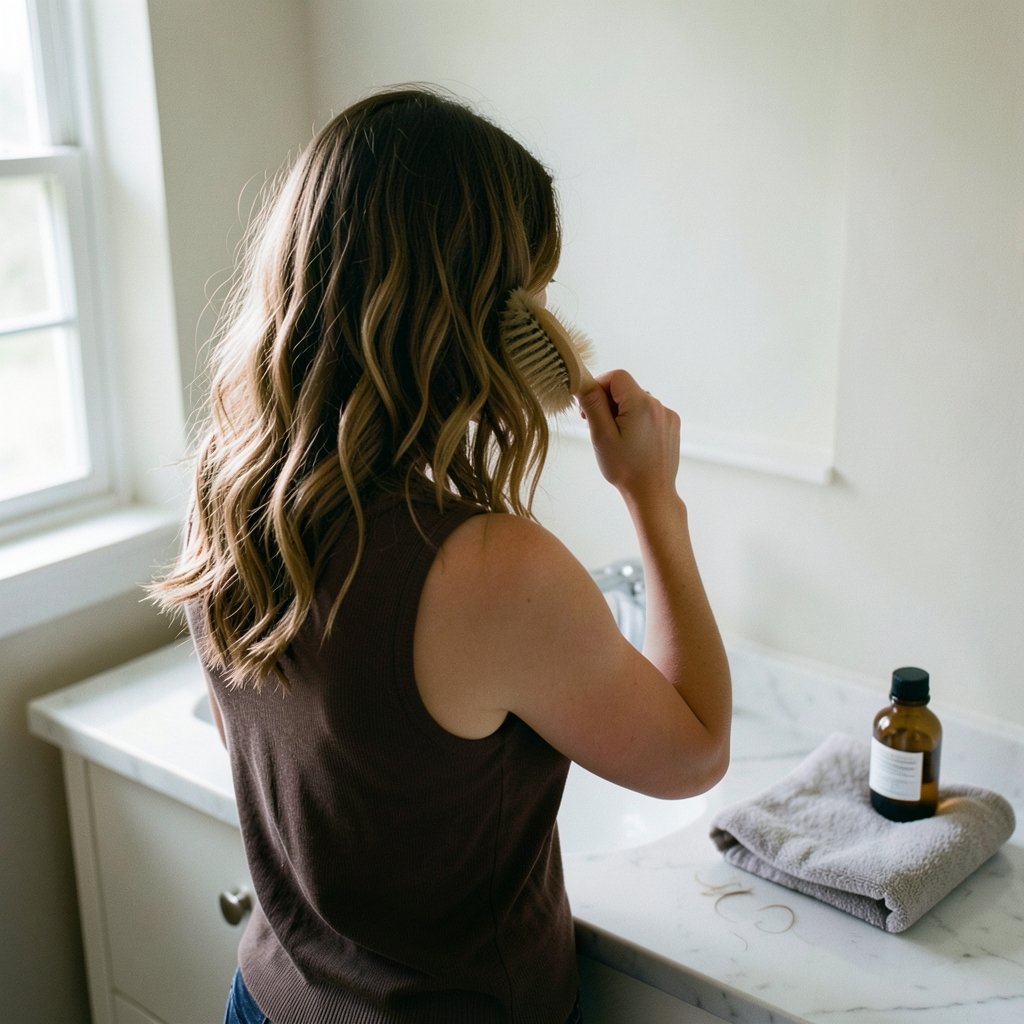
Have you ever stepped out of a steamy bathroom, looked in the mirror, and watched your hair slowly expand like a sponge? One minute it’s smooth. Ten minutes later, it’s a halo of flyaways that seems to have its own weather system. If so, you’re in very good company.
Frizzy hair is one of the most common hair complaints worldwide, and it affects people of every hair type, texture, and age. It isn’t a sign that something is “wrong” with your hair. It’s usually a sign that your hair is reacting to moisture, friction, or damage in a very predictable way. Once you understand that mechanism, taming frizz stops being a guessing game and becomes a set of small, repeatable habits. (Hair loss)
This guide breaks down what frizz actually is, what triggers it, and what genuinely works in practice, including the mistakes that quietly make the problem worse.
What Is Frizzy Hair, Exactly?
Frizzy hair is hair that doesn’t lie smoothly along its natural pattern. Instead, individual strands lift, kink, and separate, creating a rough, uneven texture. The effect is most visible on curly and wavy hair, but straight hair frizzes too, especially when it’s dry or damaged. (Hair loss)
It helps to know the basic structure. Each hair has an outer layer of overlapping scales called the cuticle, and a core called the cortex. When the cuticle sits flat, light reflects evenly and hair looks smooth and shiny. When the cuticle is raised, lifted, or worn away, strands catch on each other, moisture moves in and out unevenly, and the surface looks rough.
That’s the whole story in one sentence: frizz is mostly a cuticle problem, driven by moisture exchange.
It’s worth being precise about terminology. “Frizzy hair” is a descriptive, everyday term, not a clinical diagnosis. Dermatology and trichology literature tends to discuss the same phenomenon under headings like hair shaft weathering, hair shaft damage, and changes to curl pattern. That distinction matters because it points to the real causes: physical wear, chemical damage, and environmental exposure rather than a single “frizz condition.”
Why Does Humidity Make Hair Frizzy?
Humidity is the classic frizz trigger, and the mechanism is straightforward. Dry hair is thirsty. Hair fibers absorb water vapor from humid air, the cortex swells, and the cuticle lifts as the fiber expands. Because hair doesn’t absorb moisture perfectly evenly along its length, different sections swell by different amounts. The result is exactly what you see in the mirror: bends, kinks, and a general loss of shape.
Damaged hair is far more vulnerable here. Hair with a compromised cuticle, whether from bleaching, coloring, heat styling, or everyday friction, lets moisture in and out faster. So the same humid day that makes one person’s hair slightly poufy can turn another person’s hair into a cloud.
There’s a second factor people often miss: porosity. High-porosity hair, which tends to be more porous after chemical processing or long-term heat use, takes on moisture quickly and loses it quickly. That rapid in-and-out cycle is why some hair frizzes in humidity and then feels dry and straw-like an hour later.
Curly and coily hair deserves its own note. These hair types have a more elliptical fiber shape and a natural curl pattern, which means the cuticle is already more exposed at every bend. Add dryness or humidity and frizz appears faster. The Wikipedia overview of hair is a useful starting point for understanding fiber structure if you want to go deeper.
The Real-Life Triggers You’re Probably Missing
Most people blame the weather and stop there. In practice, frizz usually has several contributors stacking on top of each other. Here are the ones that show up again and again.
Rough drying and friction
Rubbing hair vigorously with a terry towel roughens the cuticle. So does brushing dry hair with a fine-tooth comb, or sleeping on a rough cotton pillowcase. Over weeks, this friction adds up to visible weathering. The practical fix is boring but effective: squeeze water out gently, blot rather than scrub, and detangle with conditioner in the shower rather than on dry hair.
Heat without protection
Flat irons and blow dryers used on high heat with no protectant cause small amounts of damage with every pass. That damage shows up later as frizz, especially at the ends. Lower heat and a heat protectant make a real difference over months, not days.
Over-washing and under-conditioning
Shampooing daily strips oils that help keep the cuticle smooth. Many people with frizz-prone hair do better washing less often and conditioning more generously. Conditioner is not optional for dry or curly hair; it’s the main tool for smoothing the cuticle.
Chemical processing
Bleach and permanent color raise the cuticle by design. That’s how they deposit or remove pigment. The trade-off is more porosity and more frizz, which is why after-care matters so much for color-treated hair.
Product buildup
Heavy silicones, waxes, and oils layered without periodic clarifying can weigh hair down in some places and leave it coated and rough in others. Buildup also blocks conditioning ingredients from doing their job.
What Actually Works: A Practical Routine
The good news is that frizz control doesn’t require a ten-step routine or expensive products. It requires consistency and a little understanding of what each step is doing.
| Step | What to do | Why it works |
|---|---|---|
| Cleanse | Wash 2–3 times per week with a gentle, sulfate-light shampoo | Preserves natural oils that smooth the cuticle |
| Condition | Use a rich conditioner every wash; add a weekly deep mask | Smooths the cuticle and improves slip |
| Prep | Apply leave-in conditioner to damp hair | Seals the cuticle before it dries |
| Style | Add a light oil or serum to ends only | Slows moisture exchange with humid air |
| Dry | Air dry or use low heat with a diffuser | Reduces friction and thermal damage |
| Protect | Sleep on silk or satin, or use a loose braid | Cuts overnight friction significantly |
A few practical notes that experienced stylists repeat constantly:
- Apply products to damp, not soaking wet, hair. Hair absorbs leave-in products best when it’s roughly 50–70 percent dry.
- Don’t touch your hair while it dries. Every touch disrupts the forming pattern and creates flyaways. This single habit fixes more frizz than most products.
- Use less product than you think. Start with a pea-sized amount of serum and build up.
- Refresh rather than re-wash. A spritz of water mixed with a little leave-in conditioner revives second-day hair without stripping it.
The Product Categories Explained
Walk down any hair care aisle and the labels blur together. Here’s what the main categories actually do, so you can choose based on your hair’s needs rather than marketing.
| Category | Best for | Watch out for |
|---|---|---|
| Leave-in conditioner | Dry, porous, curly hair | Can weigh down fine hair if over-applied |
| Silicone serum | Frizz control and shine | Needs occasional clarifying to avoid buildup |
| Anti-humectant | Very humid climates | Can feel stiff or tacky if layered too heavily |
| Hair oil (argan, jojoba) | Sealing ends, adding shine | Not a moisturizer on its own; use sparingly |
| Heat protectant | Anyone using hot tools | Only works if you actually use lower heat too |
The key insight is that anti-humectants and occlusives work by slowing moisture exchange, not by “feeding” hair. They form a light film that limits how quickly hair takes on water from the air. That’s why they help most on humid days and matter less in dry climates.
For a broader look at how hair products are regulated and what claims actually mean, the US Food and Drug Administration publishes consumer information on hair products, which is a helpful reality check on label language.
Common Mistakes That Make Frizz Worse
Some well-intentioned habits backfire. These are the ones that come up most often.
Brushing curly hair when dry. This is the single biggest frizz amplifier for wavy and curly hair. It separates curls and roughs up the cuticle. Detangle in the shower with conditioner instead.
Applying oil to dry, parched hair and calling it moisture. Oil seals; it doesn’t hydrate. If hair is genuinely dry, it needs water-based conditioning first, then oil to lock it in.
Cranking up the flat iron to “seal” the cuticle. High heat can create a temporary smooth look, but repeated use causes cumulative damage that shows up as more frizz later. Lower heat, more passes, better results.
Skipping trims. Split ends travel upward. Trimming every 8–12 weeks prevents small splits from becoming frayed sections that no product can fix.
Over-clarifying. While occasional clarifying helps with buildup, clarifying every wash strips the oils that keep hair smooth. Balance matters.
When Frizz Signals Something More
Most frizz is cosmetic and manageable. But a sudden, dramatic change in hair texture, especially brittleness, breakage, or patchy thinning, is worth a conversation with a dermatologist. Hair shaft damage and hair loss have many possible causes, and a professional can distinguish between weathering and a medical issue.
For reliable, non-commercial information on hair and scalp health, the American Academy of Dermatology maintains public guidance on hair care that’s worth bookmarking.
Frizz, Culture, and Expectations
It’s worth acknowledging that “smooth, sleek hair” is a beauty standard, not a biological default. Curly and coily hair naturally has more texture and more visible variation. Much of the modern conversation around frizz has shifted toward accepting and working with texture rather than fighting it. For many people, the goal isn’t zero frizz. It’s hair that’s healthy, defined, and predictable.
The reframing is practical rather than purely philosophical. People who stop trying to force straight-hair behavior onto curly hair tend to get better results, because they stop fighting the fiber’s natural pattern and start supporting it. For wider context on how beauty standards shape hair care, Forbes and Harvard Business Review have both covered the growing textured-hair care market and its consumer behavior.
A Realistic Timeline for Results
One thing nobody tells you: frizz control is not instant. If hair is already weathered, the improvements compound over weeks.
In the first week, better drying and less touching will reduce surface flyaways. Within a month, consistent conditioning and lower heat will start to show in smoother ends. Over two to three months, with regular trims, most people notice a genuine change in how their hair behaves in humidity. The people who see the fastest results are usually the ones who change the smallest habits most consistently, not the ones who buy the most products.
Conclusion
Frizzy hair isn’t a flaw to be eliminated. It’s feedback. It tells you your cuticle is raised, your hair is exchanging moisture with the air, or your routine is creating friction and damage faster than your hair can recover.
The fix is rarely a single miracle product. It’s a combination of gentle cleansing, generous conditioning, smart product placement on damp hair, lower heat, less touching, and regular trims. Get those basics right and humidity stops being an enemy and becomes just another variable you know how to handle.
Start with one change this week. Blot instead of scrub. Stop brushing dry curls. Apply your leave-in to damp hair. Small shifts, repeated consistently, do more for frizz than any bottle promising instant smoothness.
Frequently Asked Questions
Why is my hair frizzy even when it’s not humid?

Humidity is the most visible trigger, but it isn’t the only one. Friction from towels, pillows, and dry brushing, heat damage, chemical processing, and product buildup all raise or wear down the cuticle. If your hair frizzes in dry weather, the cause is more likely mechanical or chemical damage than moisture in the air.
Does cutting my hair stop frizz?
A trim doesn’t stop frizz at the root, but it removes split and frayed ends that make frizz look worse. Split ends travel upward and create rough sections that no product can smooth. Regular trims every 8–12 weeks keep the ends clean and make the whole length easier to manage.
Is frizzy hair a sign of damaged hair?
Often, yes, but not always. Naturally curly and coily hair has more visible texture and can look frizzy even when it’s perfectly healthy. Frizz becomes a stronger signal of damage when it appears alongside dryness, brittleness, roughness, or a sudden change in texture.
Do anti-frizz products actually work?
They work, but not the way most people expect. Serums, oils, and anti-humectants form a light film that slows how quickly hair absorbs moisture from the air. They don’t repair hair or “feed” it. Used on damp hair and in small amounts, they genuinely reduce frizz. Layered too heavily, they cause buildup and stiffness.
Should I stop using heat tools entirely?
Not necessarily. Lowering the temperature, always using a heat protectant, and limiting hot tool use to a few times a week dramatically reduces cumulative damage. Occasional heat styling is fine for most hair. Daily high-heat styling without protection is what causes the long-term frizz.
How long does it take to see less frizz?
Most people notice fewer surface flyaways within a week of gentler drying and less touching. Smoother ends typically take about a month of consistent conditioning and lower heat. A real change in how hair behaves in humidity usually takes two to three months, especially if regular trims are part of the routine.