
Mental Health Tattoos: Meaning, Benefits & Risks in 2026
 Abdul WadoodLast updated

A tattoo needle punches the skin roughly 50 to 3,000 times per minute. That sounds like the opposite of self-care. Yet a growing number of people sit through hours of it deliberately, paying hundreds of dollars for a permanent mark tied to a diagnosis, a loss, a survival story, or a version of themselves they fought hard to become. Mental health tattoos sit at an unusual crossroads: part body art, part coping tool, part public statement, and part private ritual. They are also poorly studied, unevenly regulated, and frequently misunderstood by the people who see them from across a room. (Tattoo)
This article looks at what these tattoos actually are, what the evidence does and does not say, where the practical risks hide, and how to think through a decision that cannot be undone with soap and water.
What Counts as a Mental Health Tattoo?
There is no standardized clinical definition. The phrase is a popular and community term, not a diagnostic one, and it stretches across several distinct categories:
| Type | What it looks like | Typical intent |
|---|---|---|
| Recovery markers | Dates, semicolons, symbols of survival | Marking time survived or a turning point |
| Scar camouflage | Ink layered over healed self-harm scars | Reducing visibility, reclaiming the body |
| Memorial pieces | Names, portraits, dates of loss | Grieving someone lost to suicide or illness |
| Awareness symbols | Ribbons, specific color codes, text | Public signaling and reducing stigma |
| Identity and self-expression | Abstract designs, personal iconography | Asserting a self not defined by illness |
The overlap matters. A single tattoo can be a memorial, a declaration, and a coping strategy at once. Because the category is fuzzy, research on “tattoos” in general often gets stretched to cover mental health tattoos specifically, which is a mistake worth flagging early.
Why People Choose Them
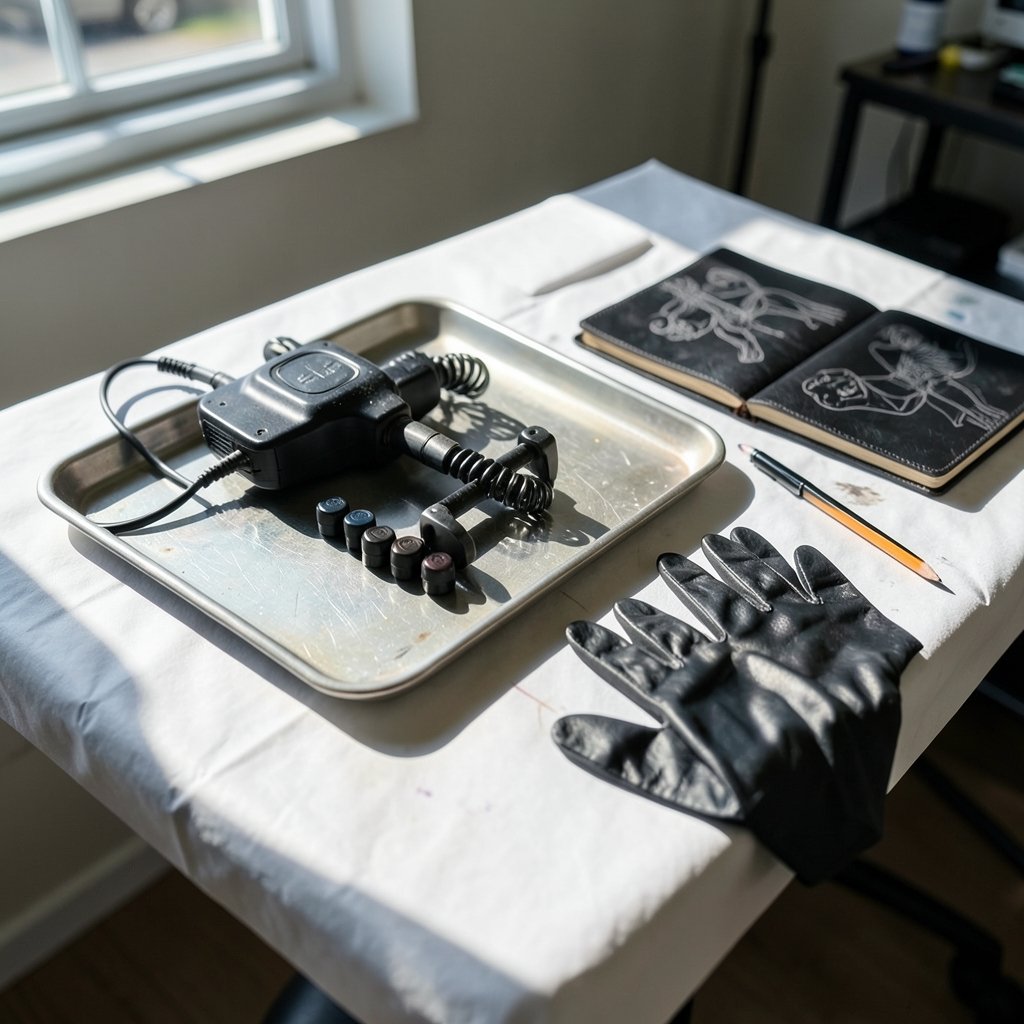
The motivations reported by people who get these tattoos cluster around a few themes.
Marking survival. A visible date or symbol can function as evidence. On hard days, the ink is an argument that the person has already endured something and is still here.
Reclaiming the body. Self-harm and illness can make the body feel like a site of damage or external control. Choosing a design, a placement, and an artist flips that dynamic, at least partly.
Forcing a conversation, or ending one. Some people want the tattoo to invite questions. Others want it to answer them without speaking.
Grief with a body. Memorial tattoos give mourning a physical location, which some people find more useful than a photograph or an urn.
None of these motivations require clinical validation to be real. They do, however, sit alongside genuine risks that deserve the same honesty.
What the Research Actually Supports
This is where caution is warranted. The evidence base for mental health tattoos is thin and largely qualitative, drawn from community accounts, small interviews, and personal essays rather than large controlled studies. Claims that tattoos “improve mental health” should be read as individual testimony, not established clinical finding.
What is better documented is the broader relationship between visible body modification and social perception. Research in social psychology and organizational behavior has repeatedly examined how visible tattoos affect judgments of professionalism and employability, and findings generally point toward persistent, if softening, bias in some settings. That literature concerns tattoos in general, not mental health tattoos, and applying it directly is an overreach. Still, it is a reasonable prompt: anyone planning a highly visible piece should think about the rooms they will walk into.
The honest summary: tattoos appear to work for many people as a personal ritual with psychological weight, while formal evidence that they treat or improve mental illness is essentially absent. That distinction should shape expectations. A tattoo is not therapy. It can be a companion to therapy.
The Scar Camouflage Question
Tattooing over self-harm scars is the most clinically sensitive area, and it is where enthusiasm most often outruns caution.
Dermatological discussion of tattooing over scar tissue raises recurring practical concerns: scar tissue behaves differently from ordinary skin, ink retention can be uneven, texture can show through the design, and healing may be less predictable. The consistent clinical caution is that scarring should be fully healed and settled before any needle goes near it. Fresh or recently active scarring is not a suitable canvas, and no reputable artist should treat it as one.
There is a second layer that gets discussed less. Covering scars changes how a person sees their own body, and that change is not always straightforward. Some people describe relief. Others describe an unexpected grief at losing a marker of their history. Neither reaction is wrong, but it argues for talking the decision through with a therapist before booking, not after.
Practical guidance that experienced artists and clinicians tend to agree on:
- Wait until scarring is fully mature, which commonly means a year or more, and get a medical opinion if there is any doubt.
- Choose an artist whose documented portfolio includes work over scar tissue, rather than relying on general skill.
- Expect a consultation and a test area rather than a same-day booking.
- Plan aftercare carefully, since compromised skin needs more attention, not less.
- Have a plan for how you will feel if the result is imperfect, because it may be.
Regulation, Safety, and the Parts Nobody Mentions
Tattoo regulation is jurisdictional. In the United States, oversight generally runs through state and local health departments rather than a single federal body, which means standards for studio inspection, artist licensing, and bloodborne pathogen training vary considerably from place to place. Ink itself is regulated differently again, and the composition of pigments is not uniform across markets. Anyone researching a studio should check their local health authority’s inspection records rather than relying on reviews alone.
The practical safety checklist is unglamorous but decisive:
- Verify the studio’s licensing and recent inspection status with the local health department.
- Confirm single-use needles are opened in front of you.
- Ask about artist training in bloodborne pathogens and infection control.
- Disclose relevant health conditions, medications, and skin conditions during consultation.
- Follow aftercare instructions precisely, and treat any sign of infection as a medical matter, not an aesthetic one.
For anyone also weighing braiding, piercing, or other body modification as part of a self-care practice, the same principle applies: the ritual carries weight, but hygiene is non-negotiable. A useful parallel read is this guide to braiding hair, styles, techniques and scalp health, which makes the same point about body work done with care versus body work done hastily.
What Goes Wrong in Practice
The most common mistakes are predictable, and most are avoidable.
Getting ink during a crisis. A tattoo decided in an acute low is a permanent decision made under temporary conditions. Most people who regret a mental health tattoo describe exactly this pattern. Waiting is not avoidance; it is the whole point.
Skipping the therapist conversation. Not because a therapist must approve, but because articulating why out loud tends to surface whether the design is a symbol or a substitute.
Choosing an artist on price. Scar work and fine detail are specialist skills. The cheapest option is rarely the right one for sensitive skin or emotionally loaded designs.
Expecting the tattoo to do the work. Ink does not replace medication, sleep, or a support network. People who report the best outcomes describe the tattoo as a reminder of work already underway, not a replacement for it.
Ignoring workplace reality. Visible hand, neck, and face tattoos still attract comment in many professional environments. That is unfair, and it is also true.
Placement, Visibility, and the Question of Audience
A quiet design on a ribcage and a word across the knuckles are different social objects. Before committing, it helps to separate two questions that often get tangled: what does this mean to me and who else will see it and react.
Private placements suit people who want a personal anchor without conversation. Visible placements suit people who want to participate in reducing stigma, which is a legitimate goal. The risk is choosing visibility for the second reason and then discovering the first reason was the real one. A simple test: imagine the tattoo in a job interview, a family dinner, and a hospital appointment. If any of those images produces dread rather than mild discomfort, reconsider the placement, not necessarily the design.
Talking to an Artist About Mental Health Content
Artists are not clinicians, and most are not trained to handle disclosures of self-harm or suicidal ideation. That does not make them unsupportive; it makes them unqualified for a role nobody asked them to fill.
The practical approach is to be specific about what you need without oversharing details you would not want repeated. Say what the design is, what skin the artist will be working with, and what you want the session to feel like. If you are bringing a design tied to a loss, it is fair to say so and to ask for a quieter appointment slot. Good artists appreciate clarity. The ones who do not are telling you something useful.
Conclusion
Mental health tattoos work as ritual, as memory, as reclamation, and as a quiet argument with a past self. What they do not do is replace care, and the evidence does not pretend otherwise. The people who end up happiest with their ink tend to share a few habits: they waited until they were steady, they talked it through with someone qualified, they chose an artist for the specific skill required, and they treated aftercare as seriously as the design. None of that is dramatic. All of it is what separates a mark that helps from one that simply stays. If the tattoo is meant to say something about survival, the decision deserves the same care as the survival itself.
Frequently Asked Questions
Are mental health tattoos a recognized clinical term?
No. The phrase is a popular and community label rather than a diagnostic category, and it covers recovery markers, scar camouflage, memorial pieces, awareness symbols, and personal designs. Because there is no standard definition, research on tattoos generally should not be assumed to apply to mental health tattoos specifically.
Is it safe to tattoo over self-harm scars?
It can be, but only once the scarring is fully healed and settled, which commonly takes a year or more. Scar tissue holds ink unevenly and heals less predictably than ordinary skin, so this work calls for an artist with specific experience and, where there is any doubt, a medical opinion first.
Can a tattoo replace therapy or mental health treatment?
No. There is no credible evidence that tattoos treat mental illness. Many people find them psychologically helpful as a ritual or reminder, but they work best alongside treatment, support, and stable routines rather than instead of them.
When is the wrong time to get a mental health tattoo?
During an acute crisis, in the middle of a depressive episode, or immediately after a loss. Permanent decisions made under temporary conditions are the most common source of regret. Waiting until things are steadier is not avoidance; it is the safeguard.
How do I check whether a tattoo studio is safe?
Contact your local health department, which typically handles studio inspections and licensing, and ask about recent inspection results. At the appointment, confirm that needles are single-use and opened in front of you, and ask about the artist’s bloodborne pathogen training.
Should I tell my tattoo artist about my mental health history?
Share only what affects the session: the condition of the skin being worked on, any relevant medication or skin condition, and how you would like the appointment to feel. Artists are not trained clinicians, so there is no obligation to disclose more than is useful.