
Braiding Hair: Styles, Techniques & Scalp Health
 Abdul WadoodLast updated

What if the secret to a braid that lasts two weeks isn’t the pattern at all, but the tension in the first three minutes? Anyone who has spent an afternoon in a braiding chair knows the truth: beautiful braids are built on technique, preparation, and a little patience. Braiding hair is one of humanity’s oldest styling skills, and it remains one of the most practical. This guide covers the main styles, what actually holds a braid together, how to protect your scalp, and the cultural and legal context that surrounds braided hair today.
What Braiding Hair Actually Means
Braiding (also called plaiting) means weaving three or more strands of hair over and under each other to form a single, stable length. That basic action produces everything from a loose three-strand braid to cornrows, box braids, French braids, and fishtail braids.
The technique is ancient. Braided hair appears in ancient Egyptian art and artifacts, and some sources describe braided wigs and extensions dating to roughly 3000 BCE. Exact dates vary by source, so treat early timelines as approximate. What is not in dispute is reach: braiding shows up across African, European, Indigenous American, and Asian traditions, often with regional patterns passed down through families.
Braiding also carries cultural weight. In many African cultures, braid patterns have been documented as markers of age, marital status, or tribal identity. These claims are widely reported but often repeated without a primary academic source, so read them with care. For the historical and cultural record, the Smithsonian National Museum of African American History and Culture is a strong starting point.
The Main Braid Styles and Who They Suit
Not every braid works for every hair type or lifestyle. Here is a practical comparison.
| Style | How It Works | Best For | Typical Wear Time |
|---|---|---|---|
| Three-strand braid | Three sections crossed over each other | All hair types, everyday wear | 1 day |
| French braid | Sections added along the scalp as you go | Medium to long hair, workouts | 1–2 days |
| Fishtail braid | Two sections with small outer pieces crossed | Long, layered hair | 1 day |
| Cornrows | Rows braided flat against the scalp | Textured and coily hair | 2–6 weeks |
| Box braids | Individual braids with square-shaped parts | Protective styling, all lengths with extensions | 4–8 weeks |
Cornrows run in rows close to the scalp. Historically, they are associated with enslaved Africans in the Americas, where some colonial-era laws reportedly required women to cover their hair. Specific statutes and dates need verification before citation.
Box braids take their name from the box-shaped parts between sections. They became widely popular in the 1990s, partly through pop culture. The exact popularization date is debated, but the style’s staying power is not.
Fishtail braids look complicated and are surprisingly simple: two sections, with small pieces from the outside edge crossed to the opposite side. They hold best on hair with some texture or second-day grit.
Preparation: The Step Most People Skip
Most braiding problems start before the first strand crosses. A few practical habits separate braids that last from braids that frizz out by day three.
- Start with clean, fully dry hair unless you are doing wet styling. Damp hair shrinks as it dries and loosens the pattern.
- Detangle completely with a wide-tooth comb, working from ends to roots. Any knot left in place becomes a mat under tension.
- Section deliberately. Clean, straight parts are not vanity; they distribute tension evenly and make takedown easier.
- Add slip, not weight. A light leave-in or a small amount of oil helps strands glide. Heavy products attract lint and build up at the roots.
- Test tension on the first braid. If the scalp pulls or the skin around the hairline turns pale, the braid is too tight. Redo it before continuing.
A common mistake: braiding too close to the hairline. The strands along the temples and forehead are the finest and most fragile on the head. Leaving a small margin of loose hair there costs nothing visually and protects the most vulnerable follicles.
Tension, Traction Alopecia, and Scalp Care
This is the part of braiding hair that deserves more attention than it usually gets. Dermatology literature links tight braids, especially along the hairline, to traction alopecia, a form of gradual hair loss caused by repeated pulling. The general medical consensus is clear: constant tension damages follicles over time, and the damage can become permanent if the pulling continues for years.
Practical signs that a style is too tight:
- Headache within an hour of finishing
- Small bumps or tenderness at the roots
- White or pale skin pulled taut at the part lines
- Itching that persists past the first day
If any of these appear, take the style down. A braid can always be redone; a follicle cannot always be recovered. For peer-reviewed dermatology research, search PubMed Central for “traction alopecia braids” and read the primary studies directly rather than relying on summaries.
Care between appointments matters too. Keep the scalp clean with a diluted shampoo applied between rows, dry thoroughly, and avoid leaving a style in for months at a time. A rest period of at least a week or two between long-wear styles gives the hairline time to recover.
Extensions, Synthetic Hair, and What to Check
Braiding hair extensions come in three broad categories, and the differences matter for both comfort and longevity.
| Type | Feel | Weight | Reusability |
|---|---|---|---|
| Synthetic (kanekalon type) | Light, slight shine | Low | Usually single use |
| Human hair | Natural, blends with own hair | Heavier | Often reusable |
| Blended | Mixed texture | Medium | Sometimes reusable |
Synthetic fiber is the workhorse of box braids and cornrows because it is light and holds pattern well. Human hair blends more naturally but adds weight, which increases pull on the scalp. A simple test: hold a bundle and check whether it feels heavier than the section of your own hair it will attach to. If it does, use less.
Before installing any extension hair, check for coating or chemical smell. Some fibers arrive with a residue that irritates sensitive scalps. A quick rinse and air-dry before installation solves most of it.
Braiding Your Own Hair: What Works in Practice
Self-braiding is a skill, and the learning curve is real. The techniques that tend to work:
- Braid in sections you can see. Two mirrors, or a phone camera propped up, beats guessing.
- Anchor the start. A small elastic at the root holds the first crossing steady while you find your rhythm.
- Keep hands close to the head. Braiding far from the scalp creates loose, fuzzy sections that fall out first.
- Practice one style at a time. Mastering a three-strand braid before attempting cornrows saves frustration.
- Accept asymmetry at first. Even parts come with repetition, not on the first attempt.
For French and fishtail braids, tension control is everything. Pull each section the same amount on both sides, or the braid will curve. A slight curve is fine; a braid that spirals means one side is consistently tighter.
Braids, Workplaces, and the Law
Braided hair has also become a legal topic. Some U.S. states have passed CROWN Act laws prohibiting hair discrimination based on braids, locs, and similar styles. California passed the first such law in 2019, and a federal version has been proposed. Coverage by state changes over time, so confirm the current status before relying on any count.
U.S. military branches have also revised grooming policies on braids and twists over the past decade. Each branch maintains its own current rules, and those rules have shifted more than once, so check the branch’s official policy rather than secondhand summaries.
For workplace guidance on hair discrimination, the U.S. Equal Employment Opportunity Commission publishes relevant materials. For the statutory text, state legislature sites are the authoritative source; California’s is leginfo.legislature.ca.gov. For a broader overview of the legislation, see the Wikipedia entry on the CROWN Act.
Takedown and Aftercare
Takedown is where many people undo weeks of good care. Rushing it causes breakage at the roots and tangles at the ends.
Work slowly, section by section, and use fingers before combs. Apply conditioner to dry hair before detangling; it adds slip and reduces snapping. Expect some shedding. Losing 50 to 100 hairs a day is normal, and hair that was held in a braid for weeks releases accumulated shed hair at takedown, which can look alarming but usually is not.
After takedown, give the scalp a few days of loose styling, a gentle cleanse, and a light oil massage. If the hairline looks thin or feels tender, extend the rest period before the next install.
Conclusion
Braiding hair rewards preparation more than artistry. Clean, detangled hair, even sections, and honest attention to tension do more for a style than any technique trick. The styles themselves, from a simple three-strand braid to weeks-long box braids, are flexible tools that have served people across cultures for millennia. The one rule that never changes: if it hurts, it is too tight. Loosen it, redo it, and let the scalp recover. Good braids should feel like nothing at all.
Frequently Asked Questions
How long do braids usually last?
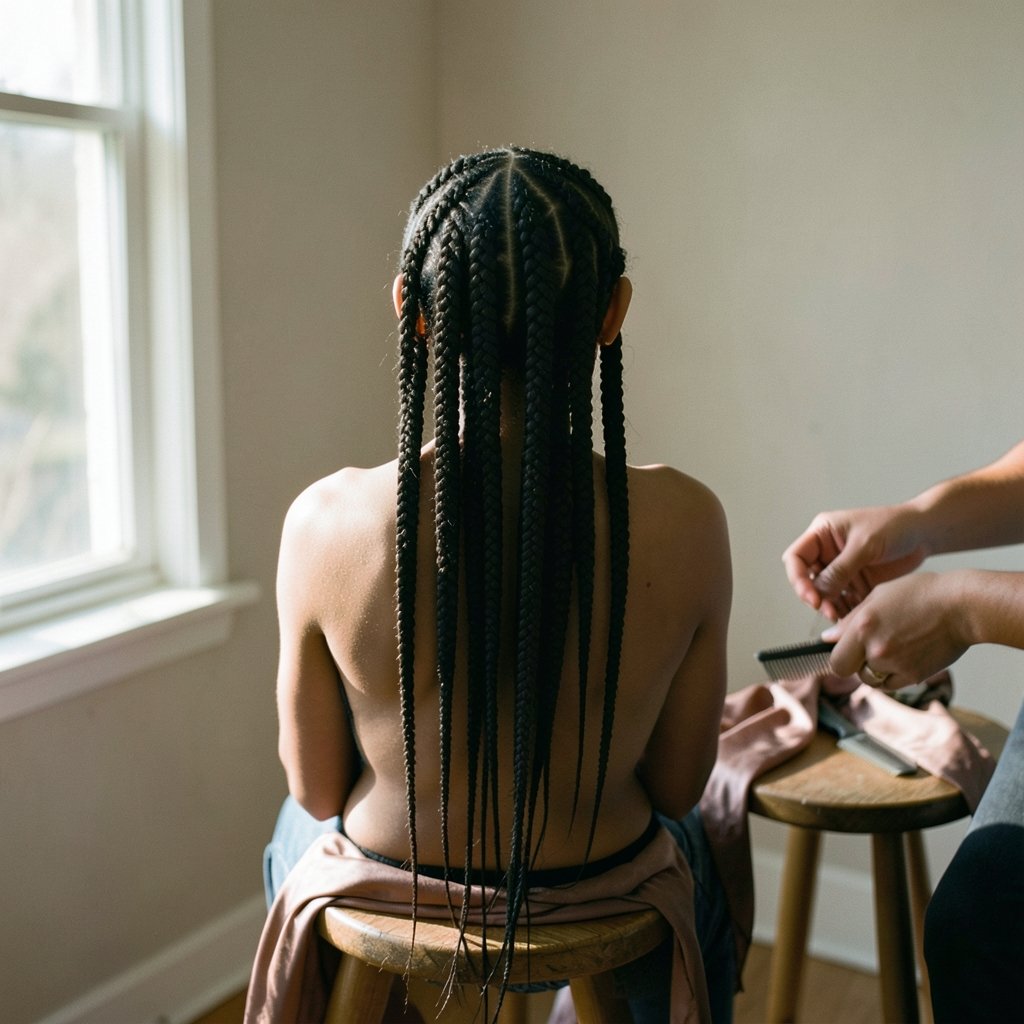
It depends on the style. A basic three-strand or fishtail braid lasts a day or two. Cornrows typically hold two to six weeks, and box braids four to eight weeks. Leaving any style in longer than about eight weeks increases tension, buildup, and matting risk at the roots.
Do tight braids cause permanent hair loss?
They can. Dermatology literature links repeated tight braiding, especially at the hairline, to traction alopecia. Early damage is often reversible if tension stops. Years of continuous pulling can cause permanent follicle damage, which is why tenderness or headaches after braiding should never be ignored.
Can you braid wet hair?
Yes, but with tradeoffs. Wet braiding gives smoother, tighter results and works well for cornrows. The catch is shrinkage: as hair dries, the braid tightens further, which can increase pull. If you braid wet, use less tension than you think you need.
How often should you wash braided hair?
Roughly every one to two weeks for long-wear styles. Dilute shampoo in water and apply it between the rows with a spray bottle or applicator, then rinse thoroughly and dry completely. Trapped moisture and product buildup are common causes of scalp irritation under braids.
Is human hair better than synthetic for extensions?
Neither is universally better. Synthetic fiber is lighter and holds pattern well, which suits long box braids. Human hair blends more naturally and can be reused, but it adds weight and cost. Match the choice to your own hair’s density and your scalp’s tolerance for tension.
Are braids protected by law at work?
In some U.S. states, yes. CROWN Act laws in a number of states prohibit hair discrimination based on braids, locs, and similar styles, with California passing the first in 2019. A federal version has been proposed. Because coverage changes, check your state’s current statute or the EEOC’s guidance before relying on it.
For readers who want a single takeaway from all of this, it is this: treat braiding as a partnership between technique and scalp health. Learn one style well, master your own tension, and build in rest periods as deliberately as you build in sections. Whether you braid for convenience, culture, or craft, the habits that protect your hairline are the same ones that make a braid look its best. Start gently, check often, and take it down the moment something feels wrong.