
Best Work Bags for Professional Women in 2026
 Abdul WadoodLast updated
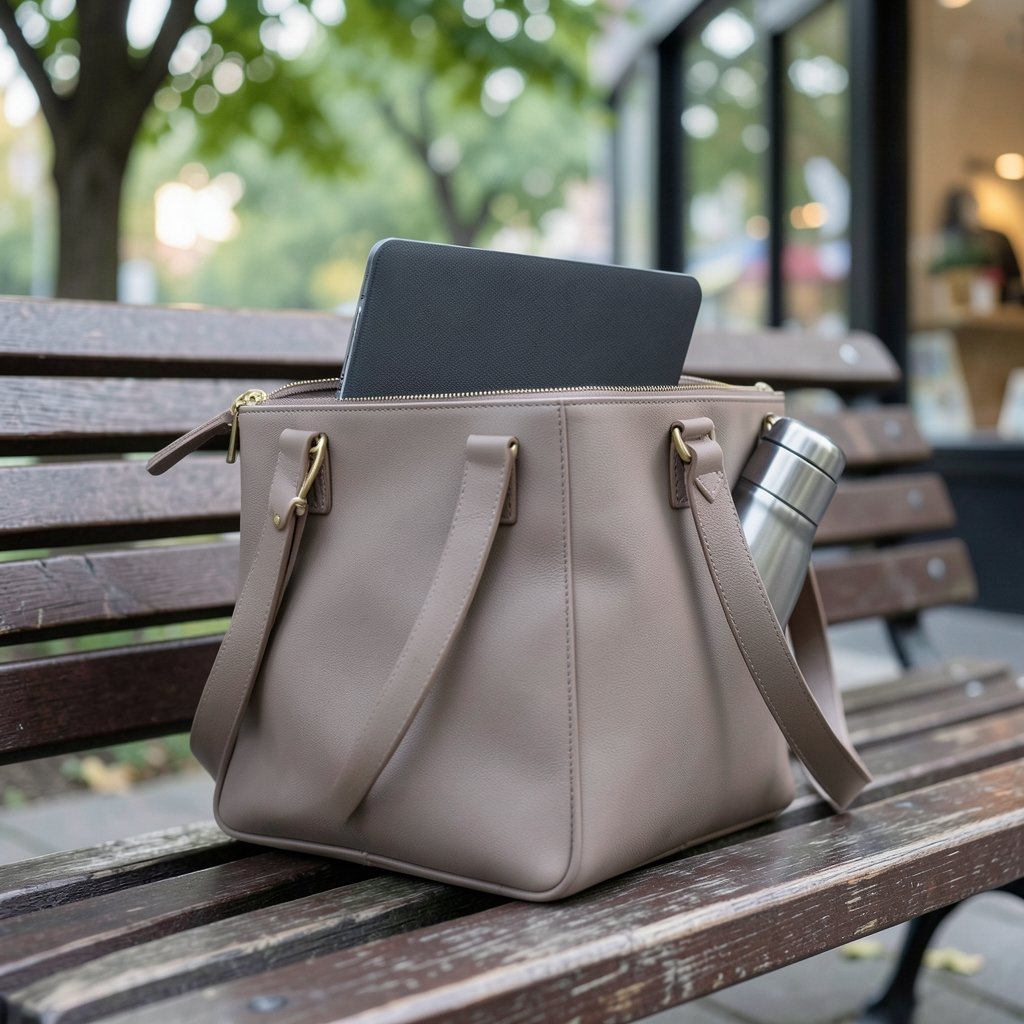
The average American woman’s commute to work takes just over 26 minutes each way, according to U.S. Census Bureau data on travel times. That’s nearly an hour a day with a bag on your shoulder, plus whatever the job itself demands. A work bag isn’t a fashion accessory you admire in a mirror. It’s a daily tool that has to survive train seats, coffee spills, laptop weight, and the awkward sprint between a parking garage and a 9 a.m. meeting.
That’s the lens worth using. Not “which bag looks best in a photo,” but which bag still works in month eight, when the strap has stretched and the lining has been tested by a leaking water bottle. This guide covers what separates a genuinely good work bag from an expensive mistake, plus the styles that hold up across different jobs and commutes.
What Actually Matters in a Work Bag
Most buying advice focuses on looks. The practical stuff gets buried. Here’s what deserves the attention instead.
Laptop fit is not one number
A bag marketed as fitting a 15-inch laptop usually means the sleeve fits a 15-inch device, not that the padded compartment does. Those are different measurements, and the gap is often an inch or more. Before buying, compare the bag’s internal dimensions with your actual laptop’s width and depth, rather than relying on screen size alone. A 14-inch laptop from one brand can be wider than a 15-inch model from another.
Weight when empty
A leather tote that weighs 3 pounds before you put anything in it becomes a 10-pound bag by 9 a.m. If you carry a laptop, charger, lunch, and water, look for bags under 2.5 pounds empty. Nylon, coated canvas, and lightweight leather all work; thick full-grain leather is beautiful but heavy.
Strap drop and attachment
Shoulder straps should have a drop of at least 9 inches to clear a winter coat. More important: check how the strap attaches. Straps sewn directly into the bag body with reinforced stitching outlast straps attached with small metal rings, which are the first thing to fail under laptop weight.
Closure that matches your commute
A zip-top bag is non-negotiable if you take public transit or walk through crowds. An open tote is fine if you drive and the bag rides on a passenger seat. Magnetic snaps look clean but offer no real security.
Interior organization you’ll actually use
Pockets are only useful if they’re the right size and in the right place. A laptop sleeve against the back panel protects your spine and your screen. A slip pocket for a phone near the top opening saves digging. Anything deeper than that is often marketing.
The Main Styles, Compared Honestly

| Style | Best for | Strengths | Watch out for |
|---|---|---|---|
| Structured tote | Office jobs, meetings | Fits laptop plus files, looks polished | Can get heavy; open tops are common |
| Laptop backpack | Long commutes, transit | Even weight distribution, hands free | Less formal in conservative offices |
| Satchel or briefcase | Client-facing roles | Professional shape, secure closure | Limited capacity for extras |
| Convertible tote-backpack | Mixed commutes | Adapts to the day | Straps can be bulky when tucked away |
| Crossbody work bag | Light carry days | Comfortable, secure | Usually too small for a laptop |
Structured totes
The default choice for good reason. A structured tote holds its shape, stands up on its own, and slides under a desk without collapsing. Look for a flat, padded laptop sleeve and a top zip. The trade-off is weight and shoulder strain if you carry it on one side all day.
Laptop backpacks
If your commute involves more than 20 minutes of walking or standing on transit, a backpack wins on comfort. Modern work backpacks have padded laptop compartments, luggage pass-through straps, and clean silhouettes that pass in most offices. The catch is cultural: some client-facing and formal environments still read backpacks as casual. Know your workplace before committing. (Handbag)
Satchels and briefcases
These work best for people who carry a laptop, a notebook, and not much else. The rigid shape protects contents and looks sharp in meetings. Capacity is the limitation; a lunch container and gym shoes usually don’t fit.
Convertible bags
A tote that converts to a backpack solves the “formal office, long commute” problem. The conversion mechanism is where quality shows. Test it in the store: cheap clips bend, and straps that tuck into a pocket add bulk against your back.
Materials: What the Labels Really Mean
Material claims deserve skepticism. “Vegan leather” is a marketing term with no standardized definition; it can mean polyurethane, cactus fiber, or mushroom-based material, and durability varies enormously between them. “Water-resistant” is similarly loose. It typically means the fabric sheds light rain, not that your laptop survives a downpour.
What holds up in practice:
- Coated canvas resists stains and water, stays light, and ages well.
- Ballistic nylon is abrasion-resistant and near-indestructible, though it reads more utilitarian than polished.
- Full-grain leather lasts decades if cared for, but it’s heavy and shows scratches.
- PU leather is light and cheap but tends to peel at stress points within a couple of years.
A practical tip: check the base of the bag. Reinforced, water-resistant bases are the difference between a bag that survives being set on wet pavement and one that doesn’t. For more on how material choices affect long-term wear across different products, the hair clippers buying guide makes a similar point about build quality versus marketing claims.
Matching the Bag to Your Actual Job
The “best” bag depends heavily on what the job looks like day to day.
Corporate and law offices reward structured totes and satchels in neutral colors. Black, navy, cognac, and gray blend with everything and hide wear. Skip anything with prominent logos if you sit in client meetings.
Healthcare and education call for wipeable materials and hands-free carry. A crossbody or backpack in coated canvas beats leather here, because it will meet hand sanitizer and spilled juice boxes.
Creative and tech workplaces tolerate more variety. A clean backpack or a canvas tote with a laptop sleeve reads as intentional rather than sloppy.
Field and travel-heavy roles need a bag with a luggage pass-through, a secure zip, and a shape that fits under an airplane seat. If you travel often, test whether the bag fits under the seat in front of you before you commit.
Whatever the role, the color question matters more than people admit. A bag that matches most of your wardrobe gets used; one that only works with two outfits sits in the closet. If you’re building a work wardrobe around a color palette, the hair color and skin tone guide offers a useful framework for thinking about tones that flatter rather than clash, and the same logic applies to accessories.
Practical Buying Tips That Save Money
Set a realistic budget
Work bags range from under $50 to well over $500. The sweet spot for durability sits around $100 to $250. Below that, hardware and stitching tend to fail within a year or two of daily use. Above $300, you’re often paying for brand name more than added function.
Test these five things before buying
- Put weight in the bag. Ask to load it with a laptop-sized object or bring your own laptop.
- Zip and unzip the main closure five times. Sticky zippers get worse, not better.
- Hold it by one strap and shake gently. If the bag twists badly, the weight distribution is wrong.
- Check the stitching at strap attachments and the base. Loose or single-row stitching is a warning sign.
- Look inside for a lining that’s attached, not loose. Loose linings snag on everything.
Buy for the season you’re in
A bag bought in summer often fails in winter, when a coat changes the strap drop and gloves make small zippers frustrating. If you commute on foot, buy with a coat on.
Care for it from day one
Empty the bag weekly. Crumbs and receipts turn into wear. Condition leather every few months. Wipe nylon with a damp cloth. Store the bag stuffed with paper, not hung by its straps, which stretches them over time. The same principle of consistent maintenance shows up in the short hairstyles care guide, where small routines make the difference between a style that lasts and one that doesn’t.
Common Mistakes Worth Avoiding
Buying for the fantasy job, not the real one. A sleek leather portfolio looks great in a showroom but fails if you carry a lunch, gym clothes, and a water bottle every day.
Ignoring the return window. Buy from retailers with generous return policies and actually test the bag at home with your real load before the window closes.
Overlooking the weight of the bag itself. A heavy empty bag is a daily tax on your shoulders. Weigh it if the listing doesn’t say.
Assuming price equals durability. Plenty of mid-priced bags outlast designer ones because their hardware and stitching are better. Read reviews that mention how the bag held up after a year, rather than only how it looked on arrival.
Skipping the warranty. Many reputable brands offer multi-year warranties on hardware and stitching. A warranty is a signal of confidence in the product.
How to Make Any Work Bag Last Longer
A few habits extend a bag’s life significantly. Rotate between two bags if you can; giving leather a day off lets it dry out and recover its shape. Keep a small pouch inside for loose items so you’re not fishing around the lining. Never overload; a bag rated for a laptop and a notebook isn’t built for a week of groceries. And repair early. A loose stitch fixed in month three costs little; a torn strap in month twelve usually means a new bag. (Ergonomics)
For anyone also managing hair and grooming routines alongside a busy schedule, the hair growth products guide makes a parallel point: consistency and realistic expectations beat expensive shortcuts. Work bags follow the same rule.
Conclusion
The best work bag for professional women isn’t the most expensive or the most photographed. It’s the one that fits your laptop, your commute, and your actual daily load without wrecking your shoulder. Prioritize fit, weight, closure, and strap construction over branding. Test before you buy, care for the bag consistently, and replace it when the hardware fails rather than when a trend does. A good work bag should be boring in the best sense: it does its job every day, quietly, for years. That’s a better return than any status purchase.
Frequently Asked Questions
What size work bag fits a 13-inch laptop?
Look for an internal laptop compartment at least 13 inches wide and 9 inches deep, plus a little clearance. Most bags labeled for 13-inch laptops have compartments around 13.5 by 9.5 inches. Always check the listed internal dimensions rather than the screen size on the label.
Is a backpack or a tote better for a professional woman?
It depends on the commute and the office culture. A backpack distributes weight better and is the practical choice for long walks or public transit. A tote reads more formal and works well for driving commutes and meeting-heavy days. Many professionals keep both and switch by the day.
How much should I spend on a work bag?
Most durable work bags fall between $100 and $250. Below that range, stitching and hardware often fail within a year or two of daily use. Above $300, you’re frequently paying for brand recognition more than added durability, though there are exceptions.
How do I stop my work bag from hurting my shoulder?
Carry less, first. Empty the bag weekly and remove anything you don’t use daily. Choose a bag with a wide, padded strap, or switch to a backpack or convertible style for long commutes. Alternate shoulders if you carry a tote.
Can a work bag be machine washed?
Rarely. Leather and coated canvas should be spot cleaned only. Some nylon bags can be hand washed in cool water and air dried, but check the brand’s care instructions first. Machine washing often damages structure, hardware, and water-resistant coatings.
How often should I replace a work bag?
With daily use, expect three to five years from a well-made bag before hardware, lining, or straps need repair or replacement. Bags that are rotated, cleaned, and stored properly often last longer. Replace when repairs cost more than a comparable new bag.