
Best Sunglasses for Square Faces: Top Frames 2026
 Abdul WadoodLast updated

Roughly one in five people has a square face shape, making it one of the most common facial structures optical retailers see across the counter. Yet square faces are also the ones most often handed the wrong frames, because a strong jaw and broad forehead tend to pull shoppers toward bold, angular designs that end up fighting the face instead of balancing it. The good news is that the fix is simple once you understand the geometry at play.
This guide breaks down which sunglasses genuinely flatter a square face, which ones to leave on the shelf, and how to check fit before you spend a cent. It leans on styling convention rather than hard science, and it says so plainly where that distinction matters. (Sunglasses)
What Counts as a Square Face?
A square face has roughly equal width and length, a broad forehead, and a jawline with visible corners rather than a soft curve. The cheekbones sit wide, and the sides of the face run fairly straight from temple to jaw. Think of a box with slightly rounded corners rather than a true rectangle.
That structure is striking on its own. The goal of eyewear here is not to hide the jaw or shrink the face. It is to add contrast. Curves break up straight lines, and a frame that sits slightly wider than the cheekbones keeps the proportions from looking top-heavy.
A quick self-check: pull your hair back, look straight into a mirror, and trace the outline of your face with a finger. If the widest point is the jaw or the forehead and the two are close in width, you are working with a square shape. If the jaw tapers to a point, you are likely heart-shaped or oval instead, and the advice below will need adjusting.
Why Curves Beat Corners
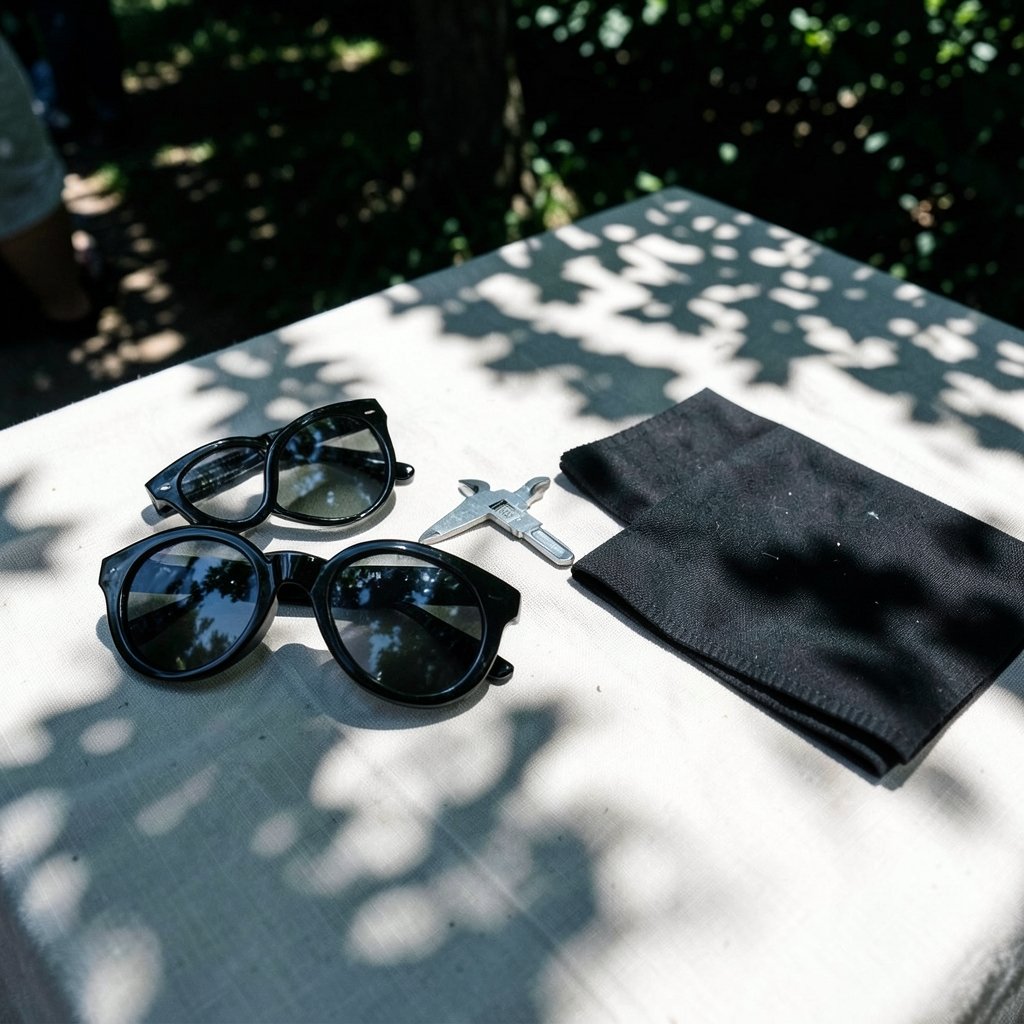
The dominant styling rule for square faces is straightforward: soften the angles. Round, oval, and curved frames introduce arcs that echo nothing on the face, which creates visual contrast. Sharp, boxy frames repeat the jawline’s corners, and the result can read as harsh or overly geometric.
It is worth being honest about the evidence base. The face-shape-to-frame-shape rule is a retail and optical-industry convention, not a conclusion drawn from controlled studies. There is no robust body of peer-reviewed research showing that a specific frame shape reliably improves how a person looks or feels. What the research does support is fit: frame width, bridge position, and temple comfort matter enormously to whether glasses actually get worn. So treat shape matching as a starting point and fit as the deciding factor.
That said, the convention exists because it works often enough to be useful. Stylists, opticians, and fashion editors have converged on the same short list for decades, and the runway talent covered in the new faces redefining the runway frequently wears exactly these silhouettes when photographed in editorial shoots.
The Frame Shapes That Work
Round and Circular Frames
Round sunglasses are the classic answer for a square face. The continuous curve has no corners to mirror the jaw, and the circular lens shape draws the eye toward the center of the face. Small, perfectly round lenses can look severe on a broad face, so look for medium-to-large circles with a thin or medium rim.
Oval Frames
Oval frames do everything round frames do but with a bit more width, which suits square faces that are also wide. They tend to be more forgiving on fit and read as slightly more polished than pure circles. A soft metal rim in oval shape is one of the safest choices a square-faced wearer can make.
Aviators
The teardrop shape of a classic aviator is a strong option. The lens narrows toward the bottom, which visually tapers the lower face, and the curved lower edge breaks the jaw’s horizontal line. Aviators also tend to sit wide, which helps balance a broad forehead.
Cat-Eye Frames
Cat-eye frames lift at the outer corners, pulling attention upward and away from the jaw. On a square face they add a softness that straight-across frames cannot. The key is proportion: a gentle sweep works better than a dramatic, sharply pointed wing, which reintroduces the angularity you are trying to offset.
Softened Rectangles and Wayfarers
Not every square face needs a circle. A rectangle with rounded corners, or a wayfarer with a curved brow line, can work well, especially if the frame is wider than the face. The rule is not “no straight lines.” It is “no sharp corners that mirror the jaw.”
| Frame Style | Why It Works | Watch Out For |
|---|---|---|
| Round | Continuous curve, no corners | Too-small lenses look severe |
| Oval | Curve plus extra width | Overly narrow ovals pinch the face |
| Aviator | Tapers the lower face, sits wide | Very deep lenses can cover cheeks |
| Cat-eye | Lifts the eyeline upward | Sharp wings echo the jaw |
| Rounded rectangle | Structure with soft corners | Boxy versions defeat the purpose |
What to Skip
Small, sharply angular frames are the main offender. Tiny rectangular lenses with hard corners sit inside the width of the face and make a broad jaw look broader by comparison. Oversized square frames do the same thing at the other extreme, swallowing the face and repeating its geometry.
Very narrow frames are another common mistake. If the frame is narrower than the widest part of the face, the temples press inward and the face looks wider than it is. Heavy, dark, thick-rimmed squares compound the problem by adding visual weight exactly where the face already carries it.
One more to watch: heavily embellished frames with angular hardware at the corners. The decoration draws the eye straight to the jaw’s sharpest point.
Fit Matters More Than Shape
Here is where practical experience beats theory. A perfectly “correct” round frame that slides down the nose or pinches at the temples will look worse than a slightly off-convention frame that fits beautifully. Before anything else, check these four points.
- Width. The frame’s total width should roughly match the widest part of the face, usually at the temples or cheekbones. A frame that is a few millimeters wider is generally safer than one that is narrower.
- Pupil position. Look straight ahead. Your pupils should sit near the horizontal center of each lens, maybe a touch inward. If they sit near the outer edge, the frame is too narrow.
- Cheek clearance. The lower rim should not rest on your cheeks when you smile. Constant contact causes smudging and discomfort.
- Temple pressure. The arms should touch gently behind the ears without pressing into the sides of the head. Pressure points cause headaches within an hour.
Bridge fit deserves its own mention. A bridge that is too wide lets the glasses slide; one that is too narrow leaves red marks on the nose. Adjustable nose pads solve this for many people, which is one reason metal frames remain popular for square faces.
Lens Color, Tint, and UV Protection
Shape gets all the attention, but lens quality decides whether you actually want to wear the glasses. Look for a label stating 100% UV protection or UV400, which blocks both UVA and UVB rays. Darker tints do not automatically mean better protection; a clear lens with proper UV coating can outperform a dark one without it.
For square faces, lens color is mostly a style call. Warm tortoiseshell and amber tints soften the overall look, while black and gray read as more architectural. Gradient lenses, dark at the top and lighter at the bottom, add a subtle lift that flatters a strong jaw.
Polarization cuts glare from water, snow, and roads, which matters for anyone who drives or spends time outdoors. It is a functional upgrade, not a cosmetic one, and it is worth the extra cost if you spend long hours in bright conditions.
Face-Framing Details Beyond the Frame
Sunglasses do not sit in isolation. Hair, brow shape, and even hair color change how a frame reads on a square face. Soft, face-framing layers around the jaw add the same kind of curve that round frames provide, and the styling principles in this guide to short hair styles that actually work apply directly: volume and movement near the face soften angular features.
Color placement matters too. A lighter panel of color near the face, whether from a highlighted strand or a warm-toned frame, draws attention inward and upward. The logic behind money piece hair color translates neatly to eyewear: brighten the area around the eyes and cheekbones, and the jaw recedes.
Brow shape is the third lever. A brow with a gentle arch rather than a flat line echoes the curve of a round frame and reinforces the softening effect. Together, frame, hair, and brow form a single composition, and treating them as one is what separates a good look from a great one.
Materials, Weight, and Everyday Comfort
Square faces often carry strong features, and heavy frames can add unnecessary bulk. Acetate is durable and comes in rich colors, but thick acetate blocks can feel weighty on the nose over a long day. Metal frames, particularly titanium, are lighter and hold adjustment better.
Weight distribution matters as much as total weight. Frames with adjustable nose pads spread pressure across two small contact points that you can tune. Frames without them rely on a molded bridge that either fits or does not. If you have a low or wide nose bridge, prioritize adjustable pads.
For anyone who wears prescription glasses, ordering sunglasses with a prescription lens is often the practical choice, since swapping between two pairs all day gets old fast. The same fit rules apply, and the frame shape advice holds.
How to Try Frames Without Wasting an Afternoon
A few habits make the shopping process faster and less frustrating.
- Bring a photo of yourself looking straight at the camera. Comparing frames against a neutral image beats judging in a mirror where you keep tilting your head.
- Try frames in the order of the short list above, round first, then oval, aviator, cat-eye. You will usually know within three pairs which family suits you.
- Check the fit points before you check the mirror. Width, pupils, cheeks, temples. Style comes after comfort.
- Photograph each candidate. Phone cameras flatten perspective slightly, but they reveal proportion problems a mirror hides.
- Buy from a retailer with a real return window. Fit problems often show up on day three, not in the store.
The most common mistake is buying for the trend rather than the face. A frame that is everywhere this season may be exactly the angular shape a square face should avoid. The second most common mistake is sizing up for drama. Oversized works on some faces; on a square one it usually just looks like the glasses are winning.
Conclusion
The best sunglasses for a square face are the ones that introduce curve, sit wide enough to balance the jaw, and stay comfortable for hours. Round, oval, aviator, and gently swept cat-eye frames cover most of the ground, while small boxes and hard angles work against the face’s natural structure. Treat the shape rules as a starting point, not a law. Fit decides more than geometry ever will, and a well-fitted frame in a slightly unconventional shape will always beat a technically correct one that slides down your nose. Start with the short list, check the four fit points, and let comfort make the final call.
Frequently Asked Questions
What sunglasses suit a square face best?
Round, oval, aviator, and soft cat-eye frames are the most reliable choices. They introduce curves that contrast with a strong jawline and broad forehead. A frame slightly wider than the face keeps the proportions balanced.
Should square faces avoid rectangular sunglasses?
Not entirely, but sharp-cornered rectangles are risky. A rectangle with rounded corners and a curved brow line can work well, especially if it is wider than the face. Small, boxy rectangles with hard edges tend to emphasize the jaw.
Do oversized sunglasses work on a square face?
Usually not. Oversized square frames repeat the face’s geometry and can swallow the features. If you want a larger look, choose an oversized round or aviator shape rather than an oversized box.
How do I know if sunglasses fit properly?
Four checks: the frame width should roughly match the widest part of your face, your pupils should sit near the center of each lens, the lower rim should not rest on your cheeks when you smile, and the temples should not press into your head.
Are round sunglasses flattering on everyone with a square face?
Mostly, yes, but size matters. Very small circles can look severe on a broad face. Medium-to-large round frames with a thin or medium rim tend to flatter most square faces, and oval shapes offer a similar effect with a bit more width.
Does lens color matter for a square face?
It is mostly a style choice. Warm tints like amber and tortoiseshell soften the overall look, while gray and black read as more architectural. Gradient lenses add a subtle upward lift that flatters a strong jaw. Whatever the color, confirm 100% UV protection on the label.