
Money Piece Hair: Face-Framing Color Guide 2026
 Abdul WadoodLast updated
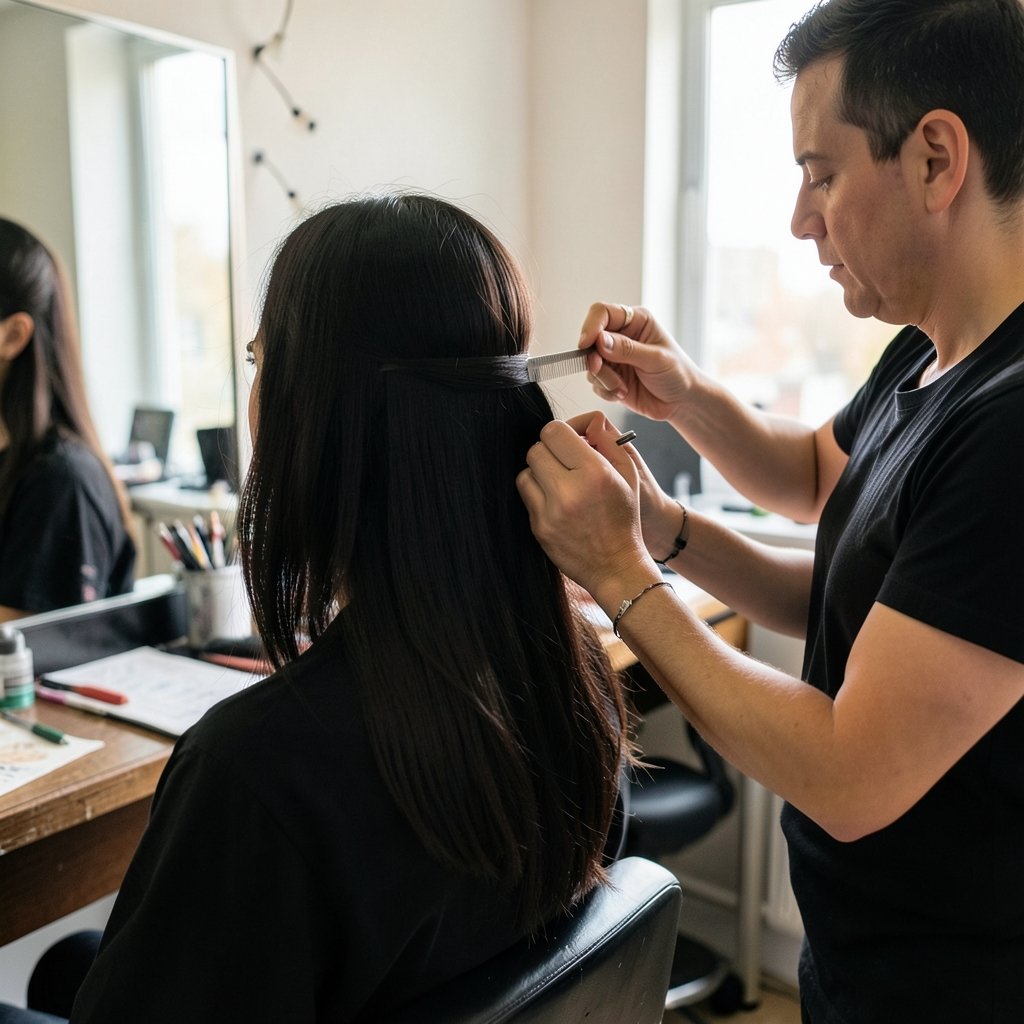
What do you call that bright streak of color right at the front of your hairline, the one that makes your cheekbones pop and your eyes look brighter? Stylists call it a money piece. It is one of those rare color techniques that looks bold in photos but feels surprisingly wearable in real life. Whether you have been eyeing it on social media or your stylist just suggested it, this guide breaks down what a money piece actually is, who it flatters, how to ask for one, and how to keep it looking fresh between appointments.
What Is a Money Piece?
A money piece is a section of lighter or brighter hair placed at the front hairline, usually on both sides of the part. It frames the face the way a highlight would, but instead of blending softly through the whole head, it is concentrated right where light hits first. The result is a contrast effect: a brighter “pop” at the front against a deeper base everywhere else.
The technique sits within the broader family of face-framing color, but it is more deliberate. Traditional face-framing tends to be diffused and blended. A money piece is chunky, visible, and intentional. Some stylists place it as two distinct ribbons on either side of the part; others soften it into a blended gradient. Both count.
The term itself is salon shorthand rather than a technical color classification, and its exact origin is hard to pin down. What matters more for anyone considering it is how the look is built and maintained, because that determines whether it reads as polished or patchy.
Why the Name “Money Piece”?
The nickname is thought to come from the idea that this front section is the part of your hair that “makes you money” — the piece that gets noticed first in photos, on camera, and in person. It is the area that catches light at the hairline, so it draws the eye immediately. In a professional or camera-facing context, that front section does a lot of visual work.
That framing explains why the look spread so fast. It delivers a high-impact result with a relatively small amount of lightener, which makes it a practical ask for clients who want a visible change without committing to a full-head lightening service.
Money Piece vs. Other Highlight Styles
People often confuse a money piece with balayage or standard foil lightening. They are related but not the same. Here is how they compare.
| Feature | Money Piece | Traditional Foils | Balayage |
|---|---|---|---|
| Placement | Front hairline, both sides of part | Even distribution across the head | Hand-painted, often mid-lengths to ends |
| Effect | High-contrast face framing | Overall lightness and dimension | Soft, natural grow-out |
| Maintenance | Frequent root touch-ups at the front | Moderate | Low |
| Best for | Clients wanting a visible, focused pop | Clients wanting all-over brightness | Clients wanting a lived-in look |
| Commitment level | Low placement, high visibility | Medium | Low to medium |
The key distinction is placement versus distribution. A money piece is about where the color goes, not how much of it there is. Two narrow ribbons can transform a whole look.
It also overlaps with the chunky foil trend, which places wider, more visible sections of color rather than fine, blended weaves. If you like the idea of visible contrast but want more coverage than a money piece, chunky foils are the natural next step up.
Who Does a Money Piece Suit?
The honest answer is that almost anyone can wear one, but the details need to be tailored. A few practical guidelines help.
Skin tone and contrast. The goal is contrast, not correction. If your natural base is dark brown or black, a warm caramel or honey money piece creates a striking effect. If your base is light brown or dark blonde, a cooler, brighter shade near the front adds dimension without looking harsh.
Hair texture. On straight hair, a money piece reads as a crisp, graphic ribbon. On wavy or curly hair, it softens into a glow around the face. Curly clients often get a better result when the stylist paints slightly more hair than they think they need, because curls compress and hide thin sections.
Haircut pairing. A money piece pairs naturally with curtain bangs, a middle part, or a long bob. It works less well with a heavy, blunt fringe that covers the front hairline entirely, since the color would be hidden.
Maintenance tolerance. This is the factor people underestimate. Because the money piece sits at the root, it shows regrowth faster than almost any other placement. Clients who cannot commit to frequent front-of-house touch-ups should ask for a softer, more blended version.
How to Ask Your Stylist for a Money Piece
The single biggest mistake clients make is describing the look in vague terms. “I want highlights around my face” can mean five different things. Here is how to get the result you actually want.
- Bring photos, plural. Bring three or four images showing the exact width, brightness, and blend you like. Photos remove ambiguity faster than any description.
- Specify the width. Do you want two thin ribbons or a wider section? Point to the photo and ask, “Is this the width you would use?”
- Name your base color. Tell your stylist whether you want to keep your natural base or go darker for more contrast. Contrast is what makes the money piece read clearly.
- Ask about blend level. Say whether you want a hard, visible line or a soft gradient into the rest of your hair.
- Confirm the maintenance schedule. Ask directly: “How often will the front need a touch-up?” Get a number before you commit.
- Discuss the toner. A money piece usually needs a toner to land on the right shade. Ask what tone they plan to use and how it will fade.
A good stylist will also check your hair’s history. If the front section has been lightened recently, or if there is old color buildup, the plan may need to change. Being upfront about past box dye or previous salon work saves everyone time.
What Actually Works in Practice
Some practical realities only show up after the appointment. These are the points that matter most.
Placement is everything. A money piece placed too far back disappears when you move your part. Placed too far forward, it can look like a skunk stripe. The sweet spot is right at the hairline, following the natural bend of your part.
Less lightener, more precision. Because the section is small, the quality of the application matters more than the volume of product. Overlapping lightener on a narrow section is the most common cause of banding and damage at the front hairline.
The parting decides the look. If you wear a middle part, you need two balanced sections. If you wear a side part, the money piece should follow that side. Tell your stylist how you actually wear your hair day to day, not how you styled it for the appointment.
Toner fade is the real maintenance issue. Many clients focus on root regrowth, but brassiness at the front often shows up first. A purple or blue toning shampoo used once or twice a week helps stretch the time between appointments. Use it sparingly, since over-toning can leave the front ashy or dull.
Heat styling hits the front hardest. The money piece is the section you flat-iron and blow-dry most, because it is the part you style for the face. A heat protectant applied before styling protects the most lightened, most fragile part of your hair.
Blend the back into the front. If the rest of your hair is much darker than the money piece, a soft transition section between the two prevents a hard line. Ask for this deliberately.
Common Mistakes to Avoid
Even with good intentions, a few errors show up again and again.
Going too bright too fast. Jumping several levels lighter in one session on a narrow front section is risky. Staged lightening produces a cleaner, healthier result.
Skipping the consultation. A five-minute chat at the chair is not a consultation. Ask for a proper one with time to discuss placement and tone.
Ignoring the haircut. A money piece on an unshaped cut can look accidental. The color and the cut should be planned together.
Copying a photo without adjusting for base color. A money piece that looks soft on light brown hair may look severe on black hair, and vice versa. The reference photo is a starting point, not a blueprint.
Over-washing the front. Frequent washing strips toner faster. Dry shampoo at the roots and a gentler wash schedule help the front hold its tone.
Maintaining a Money Piece Between Appointments
Maintenance is where most people either love or regret the look. The routine is simple but consistent.
- Touch up the front every four to eight weeks, depending on how fast your hair grows and how visible you want the contrast.
- Use toning shampoo once or twice weekly to manage brassiness.
- Deep condition the front section weekly, since lightened hair loses moisture faster.
- Protect from heat every time you style, especially with hot tools.
- Avoid tight hairstyles that pull on the front hairline, which is already the most stressed section.
- Book the next appointment before you leave so regrowth never gets ahead of you.
For anyone who wants the effect with less upkeep, a shadow root — a slightly darker, blended root at the very top — softens the regrowth line and extends the time between visits.
How Much Does a Money Piece Cost?
Pricing varies widely by salon, location, and the technique used, so there is no single figure worth quoting. What is worth knowing is the structure of the cost. A money piece is usually priced as a partial highlight or a custom color service, not as a full head. Because it uses less product, it often costs less than a full highlight appointment, but it may still require a toner and a blow-dry, which add to the total.
Ask for a quote that separates the lightening, the toner, and the styling. That breakdown makes it easier to compare salons and to understand what you are actually paying for.
Conclusion
The money piece endures because it solves a real problem: how to make a visible change to your color without committing to a full transformation. It is focused, photogenic, and adaptable across hair types and base colors. The catch is maintenance. Because the color sits at the front hairline, regrowth and toner fade show up sooner than with almost any other placement.
Get the consultation right, bring real photos, agree on width and blend before the lightener goes on, and set a realistic touch-up schedule. Do those things and the money piece delivers exactly what its nickname promises: a front section that does the visual work for you. Skip them, and you will spend the next two months fighting brassiness at the part.
Frequently Asked Questions
How long does a money piece last?

The color itself lasts until it grows out or fades, typically four to eight weeks before the front needs a touch-up. Toner fades faster than the lightened hair, often within three to four weeks, so many people book a toner refresh before a full root touch-up.
Can you get a money piece on dark hair?
Yes. Dark hair is actually one of the best bases for a money piece because the contrast is so strong. The front section is lightened to a caramel, honey, or cool blonde shade, then toned. The main consideration is going slowly enough to protect the hair, especially if it has been colored before. (Hair coloring)
Is a money piece the same as face-framing color?
They are related but not identical. Face-framing color is blended around the perimeter of the face. A money piece is a more concentrated, higher-contrast section right at the front hairline, usually on both sides of the part.
Does a money piece damage your hair?
Any lightening process involves some stress on the hair, and the front hairline is a delicate area. The risk is manageable when the stylist uses a gentle formula, avoids overlapping, and stages the lift over more than one session if needed. Weekly deep conditioning and heat protection make a real difference.
Can you do a money piece at home?
It is possible, but it is one of the harder color techniques to do on yourself. Placement is the whole point of the look, and it is nearly impossible to judge width and balance on your own hairline in a mirror. Most people who try it end up paying a stylist to correct the placement.
How often should you touch up a money piece?
Every four to eight weeks is typical. Faster-growing hair and higher-contrast looks push you toward the four-week end. A shadow root or a softer blend can stretch the interval, but the front will always need attention before the rest of your hair does. (Hair Dyes)