
Best Smart Hotel Room Features That Improve Your Stay
 Abdul WadoodLast updated
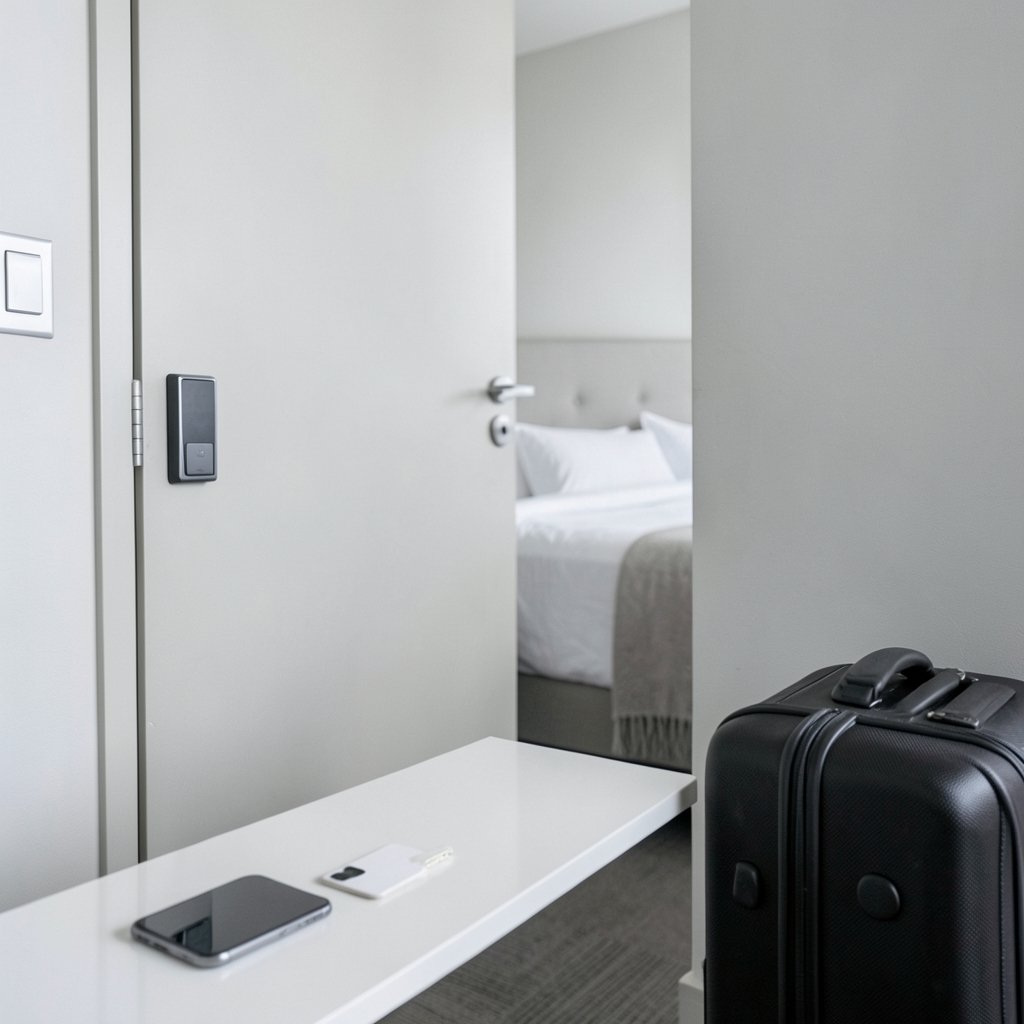
A hotel room key used to be a piece of brass. Now it can be a notification on your phone that arrives before you reach the elevator. That shift says a lot about where hospitality is heading. Smart hotel rooms are no longer a novelty reserved for tech conferences and boutique experiments. They are becoming a baseline expectation, and the features that survive will be the ones that remove friction rather than add spectacle. (American Hotel & Lodging Association)
That distinction matters. A room full of screens and sensors can feel futuristic for five minutes and infuriating by bedtime. Plenty of travelers have stood in a dim hallway waving at a light switch that no longer exists. The best smart hotel room features share one trait: they work quietly, and they work the first time. This guide walks through what those features are, where they genuinely help, and where the industry still stumbles.
What Makes a Smart Hotel Room Feature Actually Good
The hospitality industry has a habit of confusing innovation with improvement. A tablet bolted to the nightstand that controls the curtains is innovation. A light switch that behaves the way every light switch has behaved for a century is improvement. Guests rarely reward the former and almost always notice the absence of the latter.
Good smart features tend to pass three tests. First, they reduce a step rather than add one, so opening a door with a phone beats hunting for a keycard in a coat pocket. Second, they degrade gracefully, meaning the old-fashioned fallback still works when the app crashes or the Wi-Fi drops. Third, they respect privacy without demanding a login for something as simple as turning on a lamp.
Industry reporting has long flagged fragmentation as the central obstacle. Different properties run different vendors, and systems that do not talk to each other create the exact friction smart tech was supposed to eliminate. Interoperability standards have been gaining ground, but a guest still cannot assume their phone will work as a key at every brand they visit.
Mobile Key and Contactless Check-In

Mobile key technology is probably the single most consequential smart room feature, because it touches the moment of arrival, which is where most guest frustration lives. Phone-based door opening has been deployed by major chains since the mid-2010s, using Bluetooth or NFC to communicate with the door lock.
The practical benefit is real. No front desk queue after a delayed flight. No demagnetized keycard after a phone sits next to it in a bag. Some properties push the digital key to a guest’s device hours before arrival, letting them skip the lobby entirely.
The catch is reliability. Guests report that mobile keys sometimes fail at the worst moment, usually late at night with luggage in hand. The best implementations always keep a physical card as backup and make the fallback obvious rather than hidden behind three menu taps.
Contactless check-in kiosks follow the same logic. They work well for business travelers arriving in clusters and poorly for anyone with a complicated booking. Facial recognition check-in exists in some markets, but its legality varies sharply by jurisdiction, and privacy regulators in parts of Europe and several U.S. states have scrutinized biometric systems closely. Travelers should expect to be offered a choice, not steered into one.
Voice Assistants and In-Room Controls
Voice assistants arrived in hotel rooms with enormous fanfare and have since had a bumpier ride. The pitch was simple: ask for the lights to dim, the temperature to drop, and extra towels to appear. The reality has been mixed.
Where voice works, it works because the commands are narrow and predictable. “Turn off the lights” is a good command. Anything requiring the assistant to understand a room number, a brand name, or a regional accent is a gamble. Some operators have removed or limited in-room speakers after guests raised privacy concerns about always-listening microphones.
The features that hold up best are the boring ones:
- Scene lighting that sets a “night” or “reading” preset with one button
- Automated blinds tied to time of day or a single bedside control
- Smart thermostats with occupancy sensing that stop cooling an empty room
- A single bedside panel that consolidates what used to be six switches
Consolidation is underrated. The most common guest complaint about smart rooms is not that the technology is too advanced. It is that basic functions became harder to find.
Smart Thermostats and Energy Claims
Occupancy-sensing thermostats are among the most defensible smart features because they serve both guest comfort and operating cost. A room that knows it is empty can ease off heating and cooling, and a room that knows a guest has returned can restore comfort before they notice.
Here is where a healthy skepticism helps. Energy savings figures for smart HVAC systems are frequently vendor-supplied and rarely independently audited. A hotel brochure claiming a 30 percent reduction is making a marketing statement, not a peer-reviewed one. The underlying logic is sound, since empty rooms do not need conditioning, but the specific percentages deserve scrutiny.
For guests, the practical takeaway is simple. A good smart thermostat never makes a room uncomfortable in the name of efficiency. If the system fights you, the front desk should be able to override it in seconds.
Streaming, Casting, and the Death of the Hotel TV
Ask frequent travelers what they actually want from room technology and casting tops more lists than any voice assistant. The ability to push Netflix, YouTube, or a personal playlist from a phone to the in-room television has become close to expected, especially among guests who travel with children.
The old model, a locked-down TV with a pay-per-view menu and twelve channels, feels increasingly antique. Properties that support casting, or that at least offer a clean HDMI input and a reachable port, earn disproportionate goodwill.
The failure modes are predictable. Casting that requires a separate app download, a room-specific code, and a guest account login is casting nobody will use. The best versions prompt once, connect fast, and wipe the session at checkout so the next guest never sees your watch history.
Sensors, Housekeeping, and the Privacy Trade-Off
Behind the scenes, IoT sensors track occupancy, temperature, and sometimes minibar usage. These systems help housekeeping prioritize rooms and help maintenance catch a failing air conditioner before a guest complains.
They also raise legitimate privacy questions. A sensor that detects presence is one thing. A sensor that logs detailed movement patterns is another. Guests deserve clear disclosure, and properties that skip it risk the kind of headlines no brand wants.
The balance is achievable. Presence detection for energy management is broadly accepted when disclosed. Anything resembling surveillance in a private room is not, and regulators have grown more attentive to the difference.
Robotic Delivery and Other Experiments
Delivery robots that bring towels, toothbrushes, or a late-night snack to the door have been piloted in several markets. They are genuinely charming the first time and genuinely useful when the front desk is slammed at midnight.
Scale remains limited, and the economics are not obvious for every property. Still, the category signals something important: smart hotel features are drifting from the room itself toward the service layer around it. The best ones solve a real bottleneck rather than demonstrating capability.
How Smart Rooms Fit Into a Larger Stay Experience
Room technology does not exist in isolation. A flawless mobile key means little if the lobby is chaotic, and a voice-controlled suite loses its charm if the property feels sterile. The hotels that get this right treat technology as one layer of a broader experience, which is the same principle behind properties designed to feel like a destination rather than a stopover. (National Institute of Standards and Technology)
The same logic applies to the spaces guests move through. Smart lighting and automated climate control work best when the room’s design supports them, an idea that overlaps with the thinking behind smarter spaces and softer living. Technology should disappear into the architecture, not sit on top of it.
For travelers planning a trip around a specific stay, it also helps to research the property rather than assume. Just as a careful search for hair salons near you rewards reading reviews over trusting a listing, choosing a hotel with genuinely useful smart features means checking recent guest feedback, not the marketing page. And for the products you bring along, the same discipline applies, as this guide to shopping smart at a hair store makes clear: verify before you buy.
A Practical Comparison of Common Features
| Feature | Guest Benefit | Common Failure Mode | Worth Prioritizing? |
|---|---|---|---|
| Mobile key | Skips front desk queue | Lock fails, no obvious backup | Yes, with physical fallback |
| Voice assistant | Hands-free lighting and requests | Misheard commands, privacy worry | Situational |
| Casting to TV | Personal streaming on a big screen | Login friction, session not wiped | Yes |
| Smart thermostat | Comfort on arrival, efficiency | Room feels wrong, hard to override | Yes |
| Automated blinds | One-touch privacy and light control | Jams, no manual override | Nice to have |
| Delivery robot | Fast amenity delivery | Limited hours, limited routes | Nice to have |
| Check-in kiosk | Faster arrival at peak times | Poor handling of complex bookings | Situational |
Mistakes Hotels Make With Smart Rooms
The pattern repeats across properties. A hotel installs a flagship technology, removes the analog alternative, and discovers that guests hate it. The fix is almost always the same: keep the old way working.
Common missteps include hiding basic controls behind an app that requires a download, placing a tablet where a light switch belongs, and failing to test systems with actual guests before rollout. Another frequent error is assuming that younger travelers want more technology. In practice, most guests want less friction, which is not the same thing.
Travelers can protect themselves with a few habits. Photograph the room’s control panel on arrival so you remember which switch does what. Ask at check-in whether a physical key is available as backup. And if a smart feature is actively making the stay worse, say so at the desk. Hotels track complaints, and a well-run property will fix the room or move you.
Conclusion
The best smart hotel room features are the ones you stop noticing. A phone that opens a door, a thermostat that has the room comfortable before you walk in, a television that plays your own show without a fight. Everything else is decoration.
The industry is still working through fragmentation, privacy rules, and the temptation to add technology for its own sake. Guests can cut through the noise by asking one question of any feature: does this remove a step, or add one? When the answer is remove, the technology earns its place. When it adds, the light switch was better all along.
Frequently Asked Questions
What are the most useful smart hotel room features?
Mobile key entry, casting to the in-room TV, and occupancy-sensing thermostats top most travelers’ lists. Each removes a small but recurring annoyance. Voice assistants and delivery robots are impressive but less consistently useful across properties.
Are smart hotel rooms a privacy risk?
Some carry risk, particularly always-listening speakers and detailed occupancy sensors. Presence detection for energy management is broadly accepted when disclosed. Guests should look for clear information about what a room’s sensors collect and be wary of systems that require personal logins for basic controls.
Can I still get a physical key at a smart hotel?
Most properties with mobile key systems keep physical keycards available as backup. It is worth asking at check-in, since lock failures do happen. A well-run hotel will offer the card without making you feel like you are rejecting the technology.
Do smart thermostats really save energy in hotels?
The logic is sound, since conditioning empty rooms wastes energy, and occupancy sensing addresses that directly. Specific savings percentages are often vendor-supplied and rarely independently verified, so treat bold efficiency claims with reasonable skepticism.
Why do hotel voice assistants sometimes get removed?
Privacy concerns are the main driver, along with reliability problems. Always-listening microphones in a private room make some guests uncomfortable, and voice recognition struggles with accents, background noise, and unusual requests. Some operators have scaled back deployments as a result.
Is facial recognition check-in legal everywhere?
No. Rules differ sharply by jurisdiction. Biometric check-in is restricted or heavily regulated in parts of Europe and several U.S. states, while other markets permit it with disclosure and consent. Travelers should expect a non-biometric alternative to be available at any property offering it.