
Best Cashmere Pieces for Travel: What Survives the Trip
 Abdul WadoodLast updated
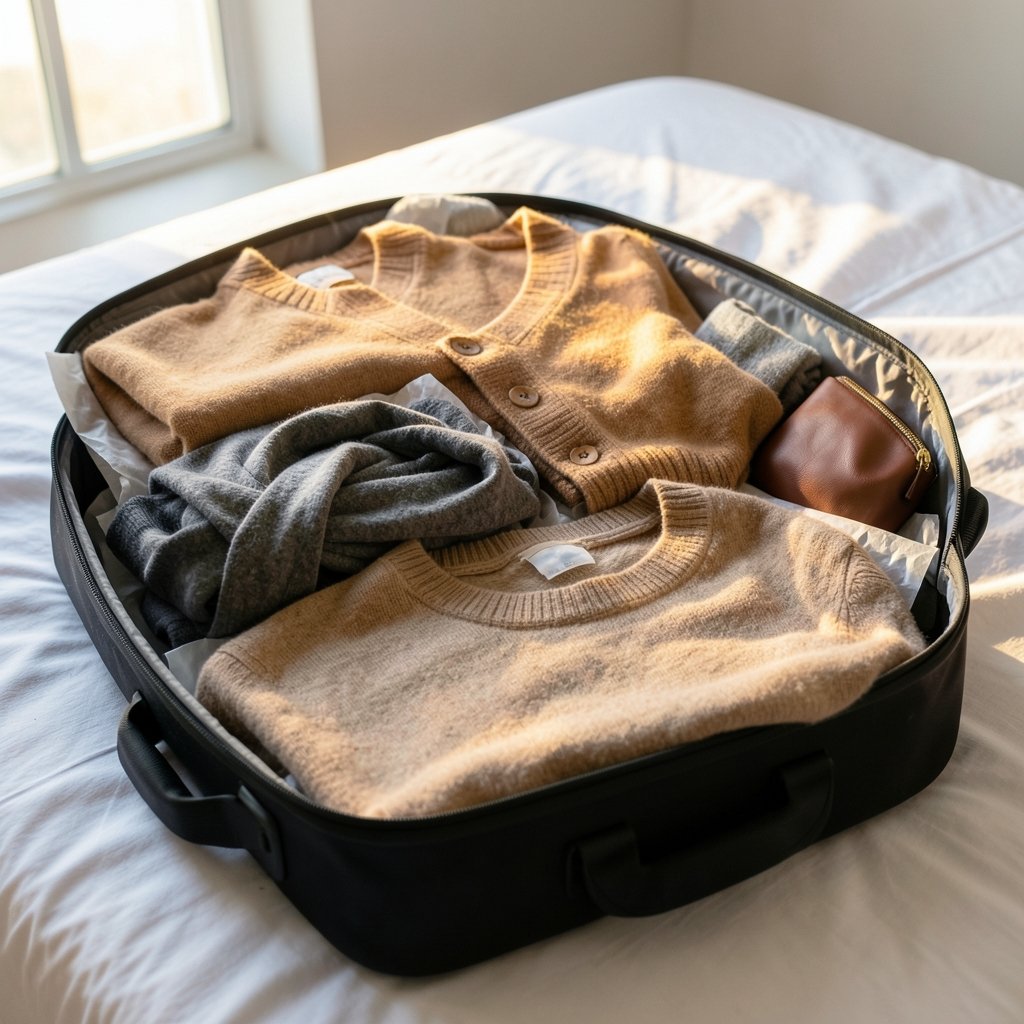
A cashmere sweater can weigh under 300 grams and still keep you warm in a freezing cabin at 35,000 feet. That ratio of warmth to weight is why frequent flyers treat it as a packing essential. But not every cashmere piece is a good travel companion. Some pill after two trips. Some stretch into a shapeless sack in a carry-on. A few cost more than the flight.
This guide focuses on what holds up: which pieces earn their place in a bag, what to look for on the label, and the mistakes that ruin good knitwear on the road.
Why Cashmere Works So Well for Travel
Cashmere comes from the undercoat of cashmere goats, and its fibers are far finer than sheep’s wool. That fineness is the whole point: fine fibers bend easily, which is why good cashmere feels soft against the neck instead of itchy. It also means a thin knit traps a surprising amount of warmth.
For travelers, three practical benefits matter:
- Warmth without bulk. A lightweight crewneck layers under a jacket without adding visible volume.
- Temperature regulation. Cashmere breathes, so it works in a heated airport terminal and a chilly night train alike.
- Compressibility. It packs small and recovers its shape when unpacked, unlike bulky fleece.
There’s a catch, though. The same fine fibers that make cashmere soft also make it prone to pilling, the little fiber balls that form where fabric rubs against itself. On a trip, that rubbing happens constantly: under a seatbelt, against a backpack strap, under a coat. Pilling is the single most common way a travel cashmere piece starts looking tired.
The Pieces Worth Packing

Not every garment style makes sense on the road. These are the categories that consistently earn their luggage space.
A Lightweight Crewneck or V-Neck
This is the workhorse. A fine-gauge crewneck in a neutral color can be worn on the plane, under a blazer at a dinner, and over a T-shirt on a cold morning. Look for a knit that feels dense rather than loose when you hold it up to the light. If you can see clearly through it, it will likely pill faster and lose shape.
A Travel Wrap or Oversized Scarf
A large cashmere wrap is arguably the most versatile item in this list. It becomes a blanket on a red-eye, a scarf in a windy city, and a shawl over an evening outfit. Because it’s worn loosely, it takes less friction than a fitted sweater, so it tends to age well.
A Cardigan for Layering
A button-front cardigan is easier to remove in a warm terminal than a pullover, and it works open over a shirt or closed as a top layer. Choose one with a firm button band; floppy plackets are a sign of loose knitting.
Simple Accessories
A cashmere beanie, gloves, or socks pack into almost no space and add real warmth in cold destinations. Socks are a smart entry point if you’re unsure about the fiber, since they’re inexpensive relative to a sweater and get tested hard.
What to Look For on the Label
Labels tell you more than marketing copy does. Here’s what actually matters.
| Feature | What to Look For | Why It Matters |
|---|---|---|
| Fiber content | 100% cashmere, or a stated blend percentage | Blends with wool or nylon can be more durable; vague labels hide cheap fiber |
| Ply | Two-ply or higher | Two-ply yarn is generally stronger and pills less than single-ply |
| Knit density | Dense, even gauge with no visible gaps | Loose knits snag and stretch |
| Fiber diameter | Finer micron counts feel softer | Finer feels better but can pill more; there’s a real trade-off |
| Country of manufacture | Not a quality guarantee on its own | Origin tells you little without fiber and construction details |
Two things are worth flagging. First, US law requires fiber content by percentage on wool and cashmere labels, so a label that dodges specifics is a warning sign. Second, the “Grade A” or “Grade B” cashmere labels you see in marketing are not a legal standard in the US. They’re promotional terms, and different brands define them differently. Judge the garment by feel, density, and ply instead of a letter grade. (Cashmere wool)
The Micron Trade-Off Nobody Mentions
Here’s the tension that trips up most buyers. Finer cashmere, generally under about 16 microns, feels luxurious against the skin. But finer fibers are more fragile, and a very fine, loosely knit sweater will pill faster than a slightly coarser, denser one.
For travel, that trade-off matters. A sweater that lives in a suitcase and gets worn under a coat is exposed to more abrasion than one worn at a desk. In practice, a slightly denser knit in the 15 to 19 micron range often outlasts an ultra-fine, whisper-light piece, even though the finer one feels nicer in the store.
The practical test: rub a small section of the fabric between your fingers for ten seconds, then look for loose fibers. If the surface already looks fuzzy, expect pilling.
Packing and Care on the Road
How you pack cashmere determines how it looks on arrival. A few habits make a real difference.
- Fold, never hang. Hanging stretches shoulders and lengthens the body. Fold sweaters flat in packing cubes.
- Use a smooth pouch. A fabric cube or a cotton drawstring bag reduces friction against zippers and hard luggage edges.
- Roll soft knits. Rolling a fine-gauge sweater or wrap saves space and limits creasing.
- Pack a small comb or fabric shaver. A travel-size depiller takes up almost no room and rescues a sweater mid-trip.
- Air it out before rewearing. Cashmere doesn’t need washing after every wear. Hanging it in a bathroom during a hot shower releases wrinkles.
For washing, cold hand-wash with a gentle detergent, then roll in a towel to remove water and dry flat. Never wring it out, and never put it in a tumble dryer. Heat and agitation are what turn a good sweater into a felted mini version of itself.
One more habit worth building: keep a cedar block or sachet in your luggage and closet. Moths are the quiet enemy of stored knitwear, and a sweater that sits in a bag for months is a target.
Common Mistakes That Ruin Travel Cashmere
Most disappointing cashmere purchases trace back to a few predictable errors.
- Buying for softness alone. The softest sweater in the store is often the least durable. Feel for density too.
- Ignoring the ply count. A single-ply knit may be cheaper, but it thins and pills faster under travel conditions.
- Over-washing. Frequent washing wears fibers down. Spot-clean and air instead.
- Storing in plastic. Plastic traps moisture. Use breathable cotton bags.
- Wearing a backpack over a fine knit. Strap friction is brutal. Wear a smoother jacket over the sweater, or choose a denser knit for travel days.
- Trusting “grade” labels. They mean little. Fiber content, ply, and construction tell the real story.
Building a Small, Flexible Travel Capsule
You don’t need many pieces. A practical cashmere travel capsule looks like this:
- One fine-gauge crewneck in a neutral tone
- One large wrap that doubles as a blanket
- One cardigan for layering
- One pair of socks or a beanie for cold climates
That’s four items, and together they cover a plane ride, a chilly city walk, a dinner out, and a cold hotel room. Choose colors that work together, and the capsule multiplies: a navy crewneck under a grey cardigan over a neutral wrap covers almost any temperature.
If you’re planning a trip around the packing list, it helps to think about the destination’s climate first. Cold-weather city breaks reward denser knits and a wrap; warm-weather trips with chilly evenings call for a single lightweight layer. Browsing destination guides before you shop can keep you from overbuying for a climate you won’t actually face. A quick look at travel destination guides and ideas is a sensible first step before committing to a capsule.
Style matters too, especially if the sweater needs to work for dinners and photos as well as airports. Face-framing color choices, for instance, can make a single neutral sweater feel far more deliberate in photos than a plain all-over tone. If you’re choosing a color for a trip where you’ll be photographed often, the money piece hair color guide is a useful reference for picking tones that flatter rather than clash.
How Cashmere Compares With Other Travel Layers
Cashmere isn’t the only option, and it isn’t always the right one. Here’s an honest comparison. (Vogue Fashion)
| Material | Warmth-to-Weight | Durability | Packability | Best For |
|---|---|---|---|---|
| Cashmere | Excellent | Moderate; pills with friction | Excellent | Flights, layering, evenings |
| Merino wool | Very good | Good | Very good | Active days, hiking, long wear |
| Cotton | Low | Good | Good | Warm climates only |
| Synthetic fleece | Good | Excellent | Poor (bulky) | Rough outdoor use |
Merino is the stronger choice for days involving a backpack and a lot of walking, because it handles abrasion better and resists odor. Cashmere wins for the polished layer: the plane, the restaurant, the museum. Many frequent travelers carry both.
Conclusion
The best cashmere pieces for travel aren’t the softest or the most expensive. They’re the ones built to take friction: a dense two-ply crewneck, a generous wrap, a well-constructed cardigan, and a small pair of socks or a beanie. Look past the grade labels, check the fiber content and ply, and treat the garment well with cold hand-washing, flat drying, and flat folding in your bag.
Buy fewer pieces, choose denser knits over whisper-thin ones, and pack a depiller. Do that, and a single sweater can earn its place in your carry-on for years of trips.
FAQ
What is the best cashmere weight for travel?
Fine-gauge, two-ply knits in the 15 to 19 micron range tend to balance softness and durability best for travel. They’re light enough to pack and dense enough to resist pilling under a coat or seatbelt.
Does cashmere pill more when you travel?
Yes, generally. Travel exposes knitwear to more friction from seatbelts, backpack straps, and luggage. Pilling is normal on any cashmere, but denser knits and higher ply counts slow it down. A small fabric shaver handles the rest.
Can you wash cashmere in a hotel sink?
Yes, with care. Use cool water and a gentle detergent, gently squeeze rather than wring, roll in a towel to remove moisture, and dry flat. Avoid hot water and never use a dryer, which can shrink and felt the fibers.
Is expensive cashmere always better for travel?
No. Price often reflects brand and fiber fineness, not durability. A moderately priced, densely knit two-ply sweater can outlast a very fine, loosely knit luxury piece on the road. Check construction, not only the price tag.
How many cashmere pieces do you need for a trip?
Three or four cover most trips: a crewneck, a wrap, a cardigan, and a small accessory like socks or a beanie. Choose coordinating neutrals so every piece layers with the others.
How should cashmere be packed to avoid stretching?
Fold it flat and place it in a smooth packing cube or cotton pouch. Never hang cashmere in a garment bag for travel, since hanging stretches the shoulders and lengthens the body over time.