
Fall Capsule Wardrobe for Work: 30-Piece Office Guide
 Abdul WadoodLast updated

The average American spends roughly $1,500 a year on clothing, according to the U.S. Bureau of Labor Statistics Consumer Expenditure Survey, and a surprising share of that goes to pieces worn a handful of times. Meanwhile, most office workers reach for the same small cluster of outfits week after week. That gap between what people buy and what they actually wear is the entire case for a fall capsule wardrobe for work: fewer pieces, chosen deliberately, that combine into dozens of outfits without a single 7 a.m. decision spiral.
A capsule isn’t a minimalist flex or a shopping ban. It’s a system. Get the structure right and autumn dressing becomes almost automatic, even on the mornings when the temperature swings twenty degrees before lunch.
What a Work Capsule Actually Is (and Isn’t)
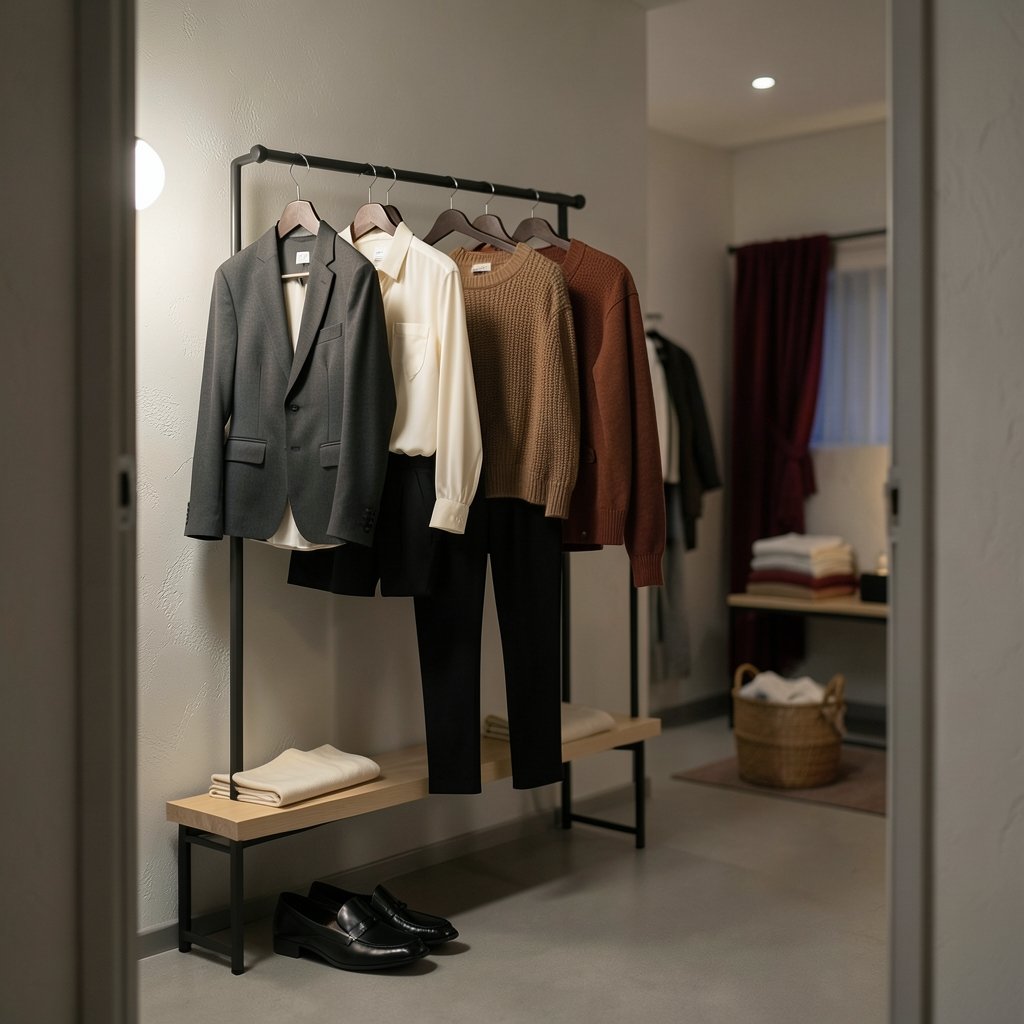
A capsule wardrobe is a small, coordinated set of garments that all work with each other. For office wear, most practical versions land somewhere between 25 and 40 pieces, counting tops, bottoms, layers, shoes, and accessories but usually excluding underwear, gym clothes, and outerwear for extreme weather.
There’s no official standard. Definitions vary widely depending on climate, dress code, and how often someone does laundry. Anyone who claims a precise universal number is selling something.
What a capsule is not: a uniform that erases personality, a reason to throw out everything you own, or a one-time shopping spree. The point is coordination, not deprivation. A well-built fall work capsule still leaves room for the statement blazer or the slightly weird scarf that makes an outfit feel like yours.
Why Fall Is the Best Season to Start
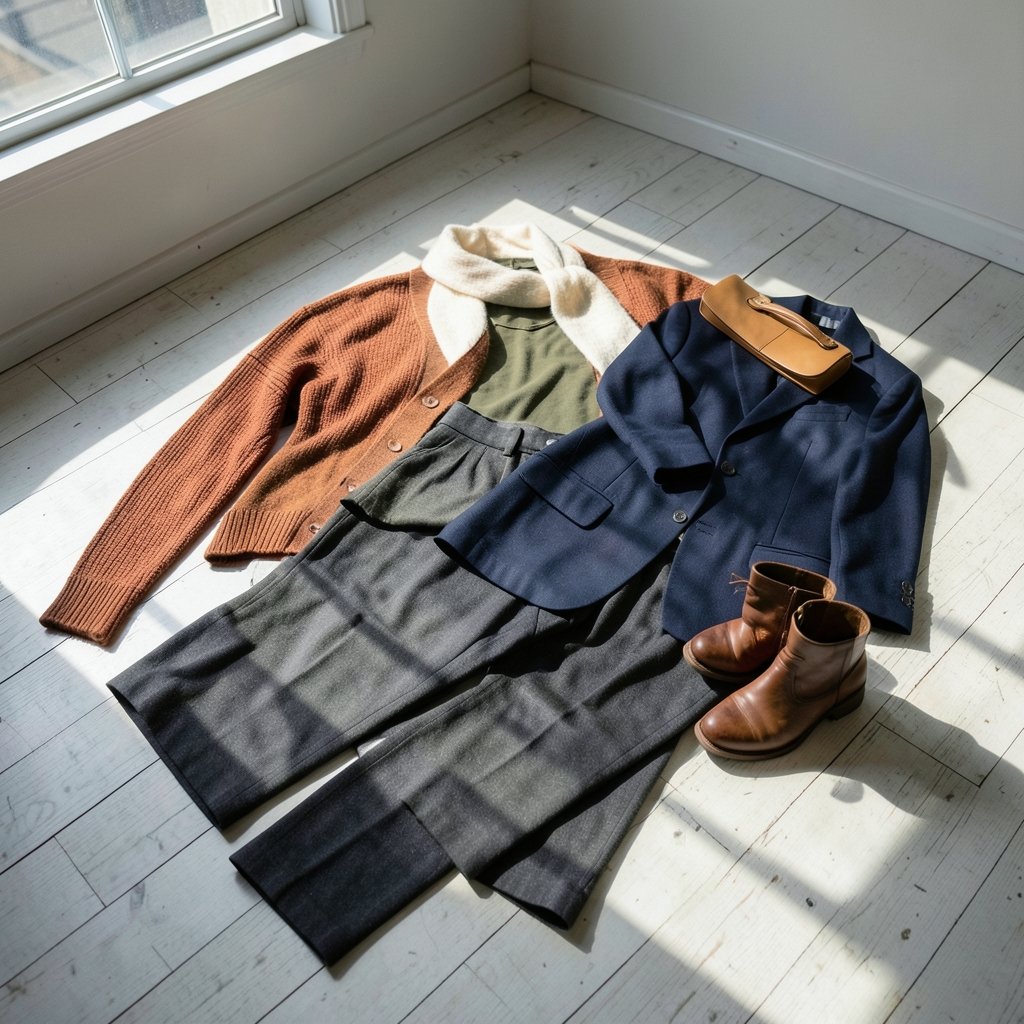
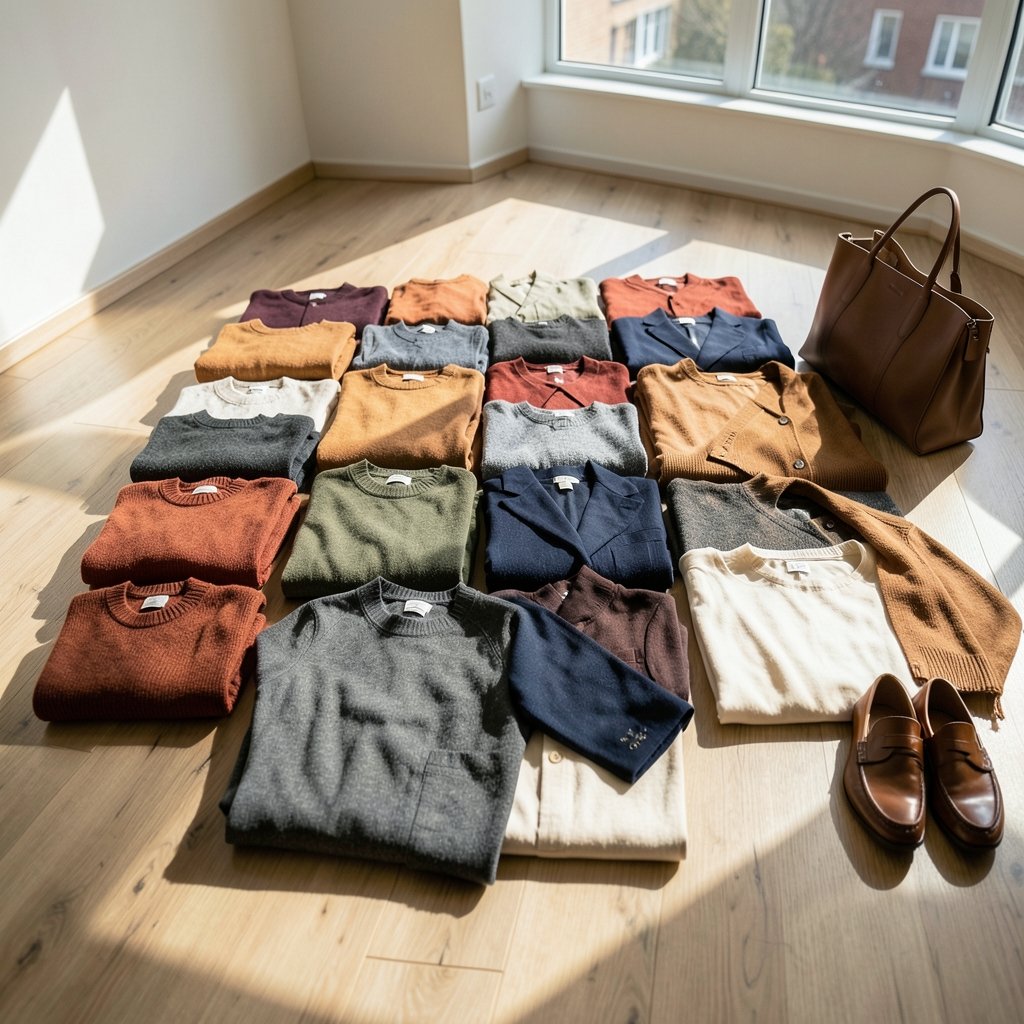
Autumn is genuinely the easiest season to build around, for three reasons.
First, layering is expected. A September morning at 52°F and an afternoon at 71°F are the same day, and nobody blinks at a cardigan over a shell top. Second, the color palette is naturally cohesive. Rust, camel, olive, navy, charcoal, and cream mix with almost no effort, which means fewer pieces coordinate more ways. Third, transitional dressing rewards versatility: the same mid-weight knit works alone in October and under a blazer in November.
The trap is treating fall as a reason to buy a whole new personality. It isn’t. It’s a reason to buy a few pieces that plug gaps in what already works.
The Core Formula: 30 Pieces, Four Categories
A workable fall capsule splits into four buckets. The ratios matter more than the exact count.
| Category | Suggested pieces | What belongs here |
|---|---|---|
| Tops and shells | 8–10 | Fine-gauge knits, button-downs, long-sleeve tees, one silk or satin blouse |
| Bottoms | 5–6 | Two tailored trousers, one dark jean, one midi skirt, one wide-leg or pleated option |
| Layers | 4–5 | Blazer, cardigan, structured overshirt, one lightweight trench or shacket |
| Shoes and accessories | 6–8 | Loafers, ankle boots, one low heel, belt, tote, two scarves |
That’s roughly 25 to 30 items, and the math gets silly fast. Ten tops against five bottoms is fifty combinations before layers enter the picture. Even accounting for the fact that some pairings will feel wrong, most people end up with more genuine outfit options than they had with a closet three times the size.
The practical rule: every top must work with every bottom. If a piece only pairs with one thing, it’s a guest star, not capsule material.
Choosing a Color Story That Survives Real Life
The fastest way to wreck a capsule is a palette that looks beautiful on a mood board and impossible in a laundry basket. Pick a base (navy, charcoal, black, or chocolate brown), a neutral support (cream, camel, gray, or olive), and one or two accents you actually like wearing near your face.
A common mistake: choosing accent colors that only appear in one garment. If the only burgundy item is a single blouse, it isn’t an accent, it’s an orphan. Accents should show up in at least two pieces, even if one is a scarf or a pair of socks.
Skin tone matters here more than trends do. A shade that drains color from the face will sit unworn no matter how good it looked in the store. The same logic that governs hair color ideas that work with your skin tone applies to clothing near the collar: warm undertones tend to carry rust, olive, and cream, while cool undertones often do better with navy, charcoal, and cool gray. Neither is a rule, just a starting filter.
Fabric and Fit: Where Most Capsules Fail
Capsules collapse for two unglamorous reasons: cheap fabric that pills by November, and fit that was “close enough” in the fitting room.
On fabric, prioritize natural fibers and dense knits. Merino and cotton-blend sweaters hold shape better than loose acrylic. Wool-blend trousers resist wrinkling through a commute. Stretch jersey is comfortable but shows every seam line under a blazer. A useful test: hold the fabric up to a light. If you can see your hand clearly through a garment meant for the office, it will show everything else too.
On fit, the shoulders and the waistband decide everything. A blazer that pulls across the back will stay on the hanger. Trousers that need constant adjustment will get replaced by the same dark jeans every day. Tailoring is cheap relative to replacing a mistake, and a $20 hem can rescue a $90 pair of pants.
One more practical note: check the care label before buying. Anything labeled dry-clean-only needs to justify that hassle with real durability, or it becomes closet decoration by mid-October.
Building the Capsule Without Overspending
The instinct is to buy the whole list at once. That’s also the fastest route to a capsule full of regrets.
A better sequence runs in three passes. First, audit what exists: pull out every fall-appropriate work piece, try each one on, and sort into keep, repair, and release. Most people discover they already own 60 percent of a capsule and just haven’t organized it. Second, fill the gaps that block outfits: if nothing goes with the olive trousers, that’s the priority, not another blouse. Third, add one or two anchor pieces once the basics are working, ideally after a few weeks of actually wearing the rotation.
Cost-per-wear reframes the budget conversation. A $180 blazer worn twice a week from September to November lands near $7 per wear. A $45 top worn once costs $45. The cheaper purchase is often the more expensive one. The same long-game thinking behind building a timeless wardrobe applies directly here: buy for the number of wears, not the price tag.
Secondhand and consignment are genuinely strong for capsule building, especially for blazers, wool coats, and structured bags, where older construction often beats new fast-fashion equivalents.
Grooming and Finishing Details That Make It Look Intentional
A capsule makes outfits simpler, which means the details around them get more visible. The same blazer and trousers read very differently depending on hair, grooming, and small finishing choices.
For anyone with shorter hair, a cut that holds shape with minimal styling is a real advantage in a low-decision wardrobe, since it removes a daily variable. A guide to short hairstyles that work for pixies, bobs, and lobs covers which shapes survive a commute and a full workday without restyling. For those maintaining length, hair growth products that actually work is worth reading before spending on anything with a bold claim on the label.
Two more details that quietly matter: keep shoes clean and rotated, since scuffed loafers undercut an otherwise sharp outfit, and invest in one good belt that matches both shoe colors in the capsule. Small things, but they’re the difference between “put together” and “got dressed.”
A Realistic Weekly Rotation
A capsule only pays off if it produces actual outfits. Here’s a sample week from a 30-piece fall rotation, assuming a business-casual office.
| Day | Outfit | Why it works |
|---|---|---|
| Monday | Navy trousers, cream knit, camel blazer, loafers | Structured start, comfortable enough for a meeting-heavy day |
| Tuesday | Dark jean, striped button-down, olive cardigan, ankle boots | Casual but deliberate; layers handle temperature swings |
| Wednesday | Charcoal midi skirt, fine-gauge turtleneck, low heel | Dresses up without effort; the skirt does the work |
| Thursday | Wide-leg trousers, long-sleeve tee, overshirt, loafers | Relaxed silhouette, still office-appropriate |
| Friday | Dark jean, silk blouse, blazer, ankle boots | The blouse adds polish to the most casual bottom |
Notice that no outfit required a decision beyond picking from a coordinated set. That’s the entire payoff.
Common Mistakes That Sink a Capsule
The most frequent failure is buying for the fantasy job. People purchase for the version of themselves who hosts client dinners and travels monthly, then spend most days at a desk. Buy for the actual week.
The second mistake is ignoring the laundry cycle. A capsule sized for a two-week wash interval will run dry by day nine. Either build in enough tops or accept more frequent loads.
The third is skipping seasonal transition pieces. A fall capsule that assumes constant 60°F weather falls apart in a real October. Mid-weight layers, not heavy coats, are the workhorses.
Finally, many people treat the capsule as permanent. It isn’t. Pieces wear out, bodies change, dress codes shift. A capsule is a snapshot that gets revised, usually once or twice a year, and that’s exactly how it should work.
Conclusion
A fall capsule wardrobe for work isn’t about owning less for its own sake. It’s about removing the daily friction of getting dressed while quietly raising the quality of what gets worn. Thirty coordinated pieces, a coherent palette, and fabrics that survive a real commute will outperform a closet five times the size, and they’ll do it every single morning from September through November. Start with an honest audit, fill only the gaps that block real outfits, and let the rotation prove itself before buying anything else. The capsule doesn’t need to be perfect. It just needs to work on a Tuesday.
Frequently Asked Questions
How many pieces should a fall work capsule have?
Most practical versions land between 25 and 40 pieces, counting tops, bottoms, layers, shoes, and accessories but excluding underwear and extreme-weather outerwear. There’s no official standard, and the right number depends on dress code, climate, and how often laundry happens.
How much does building a capsule wardrobe cost?
It varies enormously. Someone who already owns most of the pieces may spend nothing beyond tailoring. A from-scratch build with mid-range quality typically runs several hundred dollars, but spreading purchases across two or three months and prioritizing gap-filling pieces keeps costs manageable.
Can a capsule wardrobe work for a formal office?
Yes, with adjustments. Swap the dark jean for a third pair of tailored trousers, choose structured blazers over cardigans, and keep shoes polished and closed-toe. The coordination principle stays identical; only the formality level shifts.
What’s the difference between a capsule wardrobe and a uniform?
A uniform repeats the same outfit formula daily. A capsule keeps a small set of pieces that combine in many ways, so outfits vary while the underlying wardrobe stays limited. Capsules leave more room for personal style.
How often should a capsule be updated?
Most people revise once or twice a year, usually at seasonal transitions. Replace worn pieces as they fail, and reassess fit after any significant body change. A capsule is a working system, not a permanent commitment.
Do capsule wardrobes actually save money?
Often, but not automatically. The savings come from buying fewer mistakes and wearing pieces far more often, which lowers cost per wear. A capsule built in one impulsive shopping trip can cost just as much as a conventional closet.