
Twiggy 1960s Fashion: How One Model Rewrote Style
 Abdul WadoodLast updated
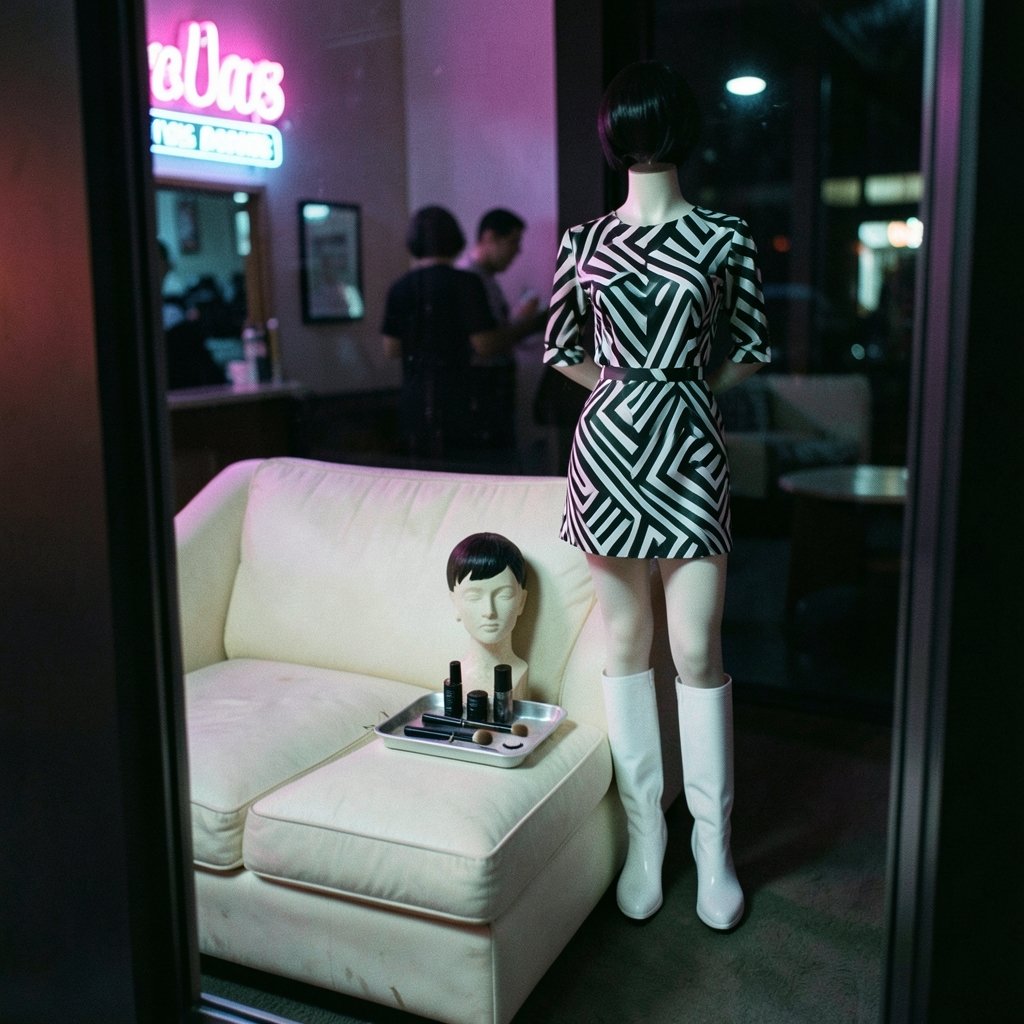
When a 16-year-old schoolgirl from Neasden walked into a Mayfair hair salon in 1966 and asked for a short crop, nobody predicted the outcome. Within months, that haircut, those painted-on lower lashes, and a 5-foot-6 frame weighing around 90 pounds would appear on magazine covers from London to New York. Twiggy modeled 1960s fashion and, in many ways, became its human face — the face of a decade that wanted to look young, sharp, and completely unlike its parents. (Twiggy)
Her story is a useful lens for anyone trying to understand why Sixties style still shapes what we wear today. It is also a case study in how image, commerce, and youth culture can collide at exactly the right moment.
Who Was Twiggy, and Why Does Her Look Still Matter?
Born Lesley Hornby on 19 September 1949 in Neasden, north London, she was renamed “Twiggy” by her boyfriend and manager Nigel Davies, later known as Justin de Villeneuve. The nickname stuck because it described exactly what the fashion world saw: a slender, almost boyish figure that broke every rule of the curvier 1950s ideal.
That contrast is the key to her influence. Post-war fashion had celebrated a fuller silhouette — think hourglass waists and structured bodices. Twiggy represented the opposite: flat-chested, long-limbed, and deliberately androgynous. Designers and photographers were ready for it. The youth market was exploding, and clothing had to move with it.
The broader shift she rode is well documented in fashion history, and the revival of pared-back, minimal dressing that echoes her influence keeps resurfacing — as seen in current discussions of the return of minimalism in modern fashion. Twiggy’s version was not minimalist in the quiet-luxury sense, but it shared the same logic: strip away decoration, let the silhouette do the talking. (Fashion)
The Haircut That Launched a Decade
In 1966, celebrity hairdresser Leonard Lewis cut her hair short at the House of Leonard in Mayfair. The result was a pixie crop — close to the head, gamine, and startlingly modern next to the bouffants and beehives still popular at the time.
A word of caution for anyone repeating this story: sources disagree on the exact month of the Leonard cut. Some accounts place it in early 1966, others later in the year. If precision matters to you, check the original press archives rather than secondary retellings. That kind of small discrepancy is common in Sixties fashion history, where the legend often outruns the paperwork.
“The Face of ’66” and the Breakthrough
The Daily Express ran a feature in 1966 calling her “The Face of ’66,” a label widely credited with launching her career. The precise publication date and exact headline wording are often paraphrased in later sources, so treat the phrasing as approximate.
What is not in doubt is the effect. That single piece of press coverage turned a local model into a national talking point, and the timing was perfect. London was in the middle of the “Swinging London” moment, and the media needed a symbol. Twiggy fit.
The Anatomy of the Twiggy Look

Her style was a system, not an accident. Break it into parts and you can see how carefully constructed it was.
| Element | What It Looked Like | Why It Worked |
|---|---|---|
| Hair | Short, boyish pixie crop | Contradicted the feminine styling of the 1950s |
| Eyes | Heavy upper liner, painted lower lashes | Made the eyes dominate a small face on camera |
| Body line | Slim, flat-chested, androgynous | Suited the straight-drop dresses of the mod era |
| Clothing | Miniskirts, shifts, bold graphic prints | Young, affordable, and made for movement |
| Attitude | Direct, unpolished, youthful | Read as authentic rather than manufactured |
The painted lower lashes deserve special mention. They were a practical trick: drawn-on lashes photographed better than real ones under studio lights and became instantly recognizable as her signature. Copying the look was cheap and easy, which is exactly why it spread so fast among teenagers.
The Miniskirt Question
Twiggy is routinely grouped with the miniskirt, and the garment is commonly associated with Mary Quant. Here is where careful readers should slow down. Attribution of the miniskirt solely to Quant is contested among fashion historians, and other designers and street-level innovators also have claims. Twiggy popularized the look; she did not invent the hemline, and no single person can be credited with certainty.
The honest version of the story is messier and more interesting: a hemline rose, a youth market responded, and a handful of designers and models amplified each other until the change felt inevitable.
From London to the World: The Global Rise
By 1967, Twiggy was working in Paris and New York. She appeared on the cover of American Vogue that year, with UK Vogue coverage around the same period. Exact cover months should be checked against the Vogue archives if you are citing them in any formal context.
Her international success mattered for a structural reason. Sixties fashion was the first moment when a London look could travel globally at speed — through magazines, television, and a booming youth media. A model was no longer just a clothes hanger. She was a brand.
That shift is visible in how the era’s biggest houses built lasting identities, a theme explored in this look at luxury fashion houses and their legacy. Twiggy sat slightly outside that luxury system — she was a pop phenomenon as much as a couture figure — but she benefited from the same machinery.
Merchandise and the Birth of the Model-as-Brand
A Twiggy doll and related merchandise appeared in the late 1960s, confirming her status as a commercial pop-culture figure. Release dates and manufacturers vary by product, so specifics need checking, but the pattern is clear.
This was new. Models had been faces before. Twiggy became a product line. Her image was licensed, reproduced in miniature, and sold to the same teenagers who copied her eyeliner. That template — model as monetizable brand — is now standard practice across the industry, and it is worth remembering that it was not always so.
Her later move into acting, including a starring role in Ken Russell’s The Boy Friend in 1971, showed the same instinct for extending a career beyond a single lane. That is outside the 1960s, but it explains why her fame outlasted the decade that made her.
What Twiggy’s Era Teaches About Getting the Look Right
If you want to reference Sixties style today, there are practical lessons and common mistakes worth knowing.
Practical Tips That Actually Work
- Commit to the silhouette. A pixie crop with a full-skirted dress reads as costume. Pair short hair with straight, clean lines for a modern result.
- Keep the eye graphic but light. Twiggy’s liner worked because the rest of the face was bare. Heavy shadow plus heavy liner just looks heavy.
- Choose one focal point. If the eyes are dramatic, keep lips neutral. If you go for a bold print, keep the makeup simple.
- Buy the era’s shapes, not its exact replicas. A shift dress in a modern fabric will serve you far better than a faithful vintage reproduction that falls apart after two washes.
- Use the palette. White, black, mustard, and primary-color blocking still read as instantly Sixties without a single logo.
Common Mistakes People Make
- Over-accessorizing. The look was stripped back. Layering on bangles, scarves, and hats at once breaks the effect.
- Ignoring fit. Sixties shifts were cut for a straight line. Wearing one that clings in the wrong place reads as dated rather than retro.
- Treating it as fancy dress. The difference between a styled reference and a costume is usually one item too many.
- Assuming the body type is the point. Twiggy’s frame was hers. The attitude — direct, unapologetic, youthful — is the transferable part.
That last point matters. The era’s real legacy is not a specific waist measurement. It is the idea that fashion could be young, cheap, fast, and self-defined. Street style today runs on exactly that logic, a dynamic you can see in coverage of street style at Milan Fashion Week, where personal styling now carries more weight than any single designer’s decree.
The Body Image Conversation
No honest discussion of Twiggy can skip this. Her thin frame became a global ideal, and the consequences were real. Fashion historians and health commentators have long debated the extent to which the Sixties “waif” look contributed to unhealthy body expectations that persist today.
A balanced reading holds two things at once. Twiggy was a teenager navigating an industry that commodified her appearance, and she was also the visible symbol of a beauty standard that excluded most women. Both are true. Modern fashion has moved, unevenly, toward broader representation, and the conversation about model health and sizing is now part of the industry’s mainstream rather than its margins.
For readers exploring the era’s legacy, this context is not a footnote. It is part of why 1960s fashion remains so debated. For a wider view of how the decade’s designers built enduring identities, this piece on luxury fashion houses and their legacy, edition 2 is a useful companion read.
Why the Twiggy Effect Endures
Twiggy’s influence survives because it was built on contrast, not decoration. Short hair against a feminine era. A flat silhouette against a curvy ideal. Drawn-on lashes against natural faces. Every element was a deliberate break from what came before.
That is a repeatable creative strategy, and it is why designers still reference her. You can see the same instinct in modern revivals of stripped-back dressing, including this analysis of the return of minimalism in modern fashion, edition 2, where the appeal of clean lines and strong silhouettes is traced back through several decades.
Her career also demonstrates something practical about image-making: a distinctive, copyable detail beats a perfect but forgettable face. The lower lashes were copyable. The haircut was copyable. That is how a look becomes a movement.
Conclusion
Twiggy’s place in 1960s fashion rests on more than a haircut and a pair of painted lashes. She arrived at the exact moment when youth culture, mass media, and ready-to-wear manufacturing converged, and she gave that convergence a face. Her pixie crop, androgynous silhouette, and graphic eye makeup became a visual shorthand for a decade — and a template for the model-as-brand that the industry still uses today.
The lesson for anyone studying or borrowing from the era is to focus on the logic rather than the replica. Strip it back, pick one focal point, commit to the silhouette, and let attitude carry the rest. Do that, and the Sixties stop being a costume and start being a useful style vocabulary. For a broader view of the people and trends shaping fashion now, the Voozon models profiles and the site’s fashion coverage are good places to keep exploring.
Frequently Asked Questions
Who was Twiggy and why is she famous?
Twiggy is the nickname of Lesley Hornby, born on 19 September 1949 in Neasden, London. She became famous in 1966 after a Daily Express feature called her “The Face of ’66.” Her short pixie crop, slim androgynous figure, and painted lower lashes made her the defining model of 1960s London fashion.
What exactly was the Twiggy look?
It combined a short boyish haircut by Leonard Lewis, heavy upper eyeliner with drawn-on lower lashes, a flat-chested silhouette, and simple mod clothing such as miniskirts and shift dresses. The overall effect was young, graphic, and deliberately unlike the curvier 1950s ideal.
Did Twiggy invent the miniskirt?
No. She popularized the look, but the miniskirt’s origins are contested among fashion historians. It is commonly associated with Mary Quant, though attributing it solely to her is disputed. The hemline rose through a mix of designers, boutiques, and street-level adoption.
When did Twiggy become internationally famous?
She broke through in 1966 in London and was working in Paris and New York by 1967. She appeared on the cover of American Vogue in 1967, with UK Vogue coverage around the same period. Exact cover months should be verified against the Vogue archives.
Did Twiggy have her own merchandise?
Yes. A Twiggy doll and related products appeared in the late 1960s, reflecting her status as a commercial pop-culture figure. Release dates and manufacturers vary by product, so specifics require checking. The merchandise helped establish the model-as-brand model that is now standard.
How can I recreate 1960s Twiggy style today?
Focus on one focal point: graphic eye makeup with a bare face, or a bold print with minimal accessories. Choose clean, straight silhouettes rather than full-skirted costumes, and avoid over-accessorizing. The era’s attitude matters more than an exact replica of any single garment.