
Tribal Tattoos: Meaning, History & How to Wear Respectfully
 Abdul WadoodLast updated
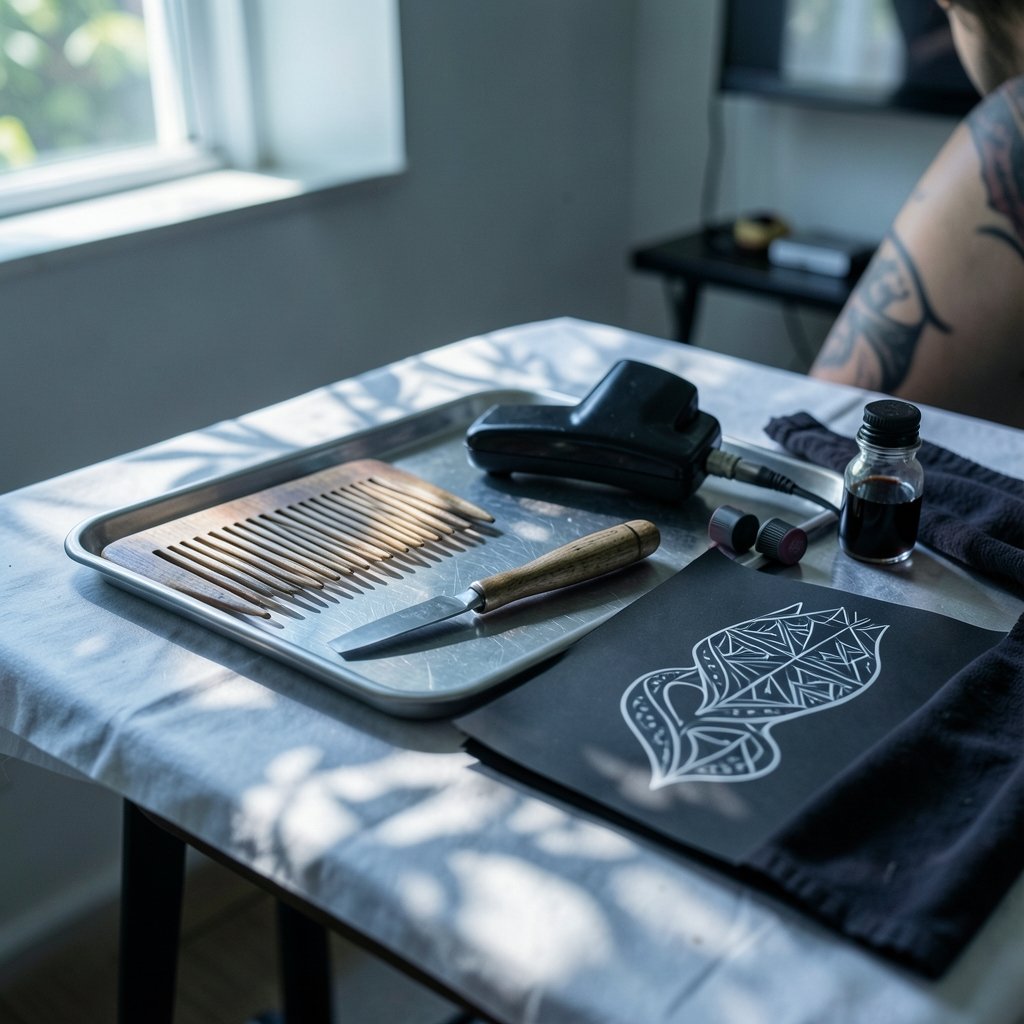
The English word “tattoo” comes from the Samoan word tatau, a term Captain James Cook’s crew recorded during 18th-century Pacific voyages. That single fact explains why the phrase “tribal tattoo” is so loaded: the tradition behind the word is not a style. It is a set of living cultural practices, each with its own rules, tools, and meanings. (Tattoo)
That distinction matters more than ever. Walk into any tattoo shop and you will see flash sheets labeled “tribal” next to geometric blackwork that has no connection to any Indigenous culture. Both get called the same thing. They are not the same thing. This article separates them, explains where the confusion comes from, and offers practical guidance for anyone drawn to this kind of body art.
What “Tribal Tattoo” Actually Refers To
The phrase covers three different things, and mixing them up causes most of the confusion around the topic.
Specific Indigenous traditions. These include Māori tā moko, Samoan tatau, Inuit facial tattoos, Ainu mouth tattoos, and Amazigh (Berber) facial markings in North Africa. Each has its own history, protocols, and in many cases restrictions on who may receive or apply the work.
The modern Western blackwork style. This is the bold, spiky, solid-black design language that peaked in popularity in the 1990s and 2000s. It borrows visual cues from Polynesian and other Pacific art but usually strips away the meaning.
Tattooing in small-scale societies generally. Anthropologists sometimes use “tribal” as a broad category for non-state tattoo practices. It is a convenient label and a clumsy one.
The word itself has a colonial history, which is why many practitioners and writers now avoid “tribal” as a catch-all and name the specific tradition instead.
A Short History of Tattooing Traditions Around the World
Polynesian Tatau and Māori Tā Moko
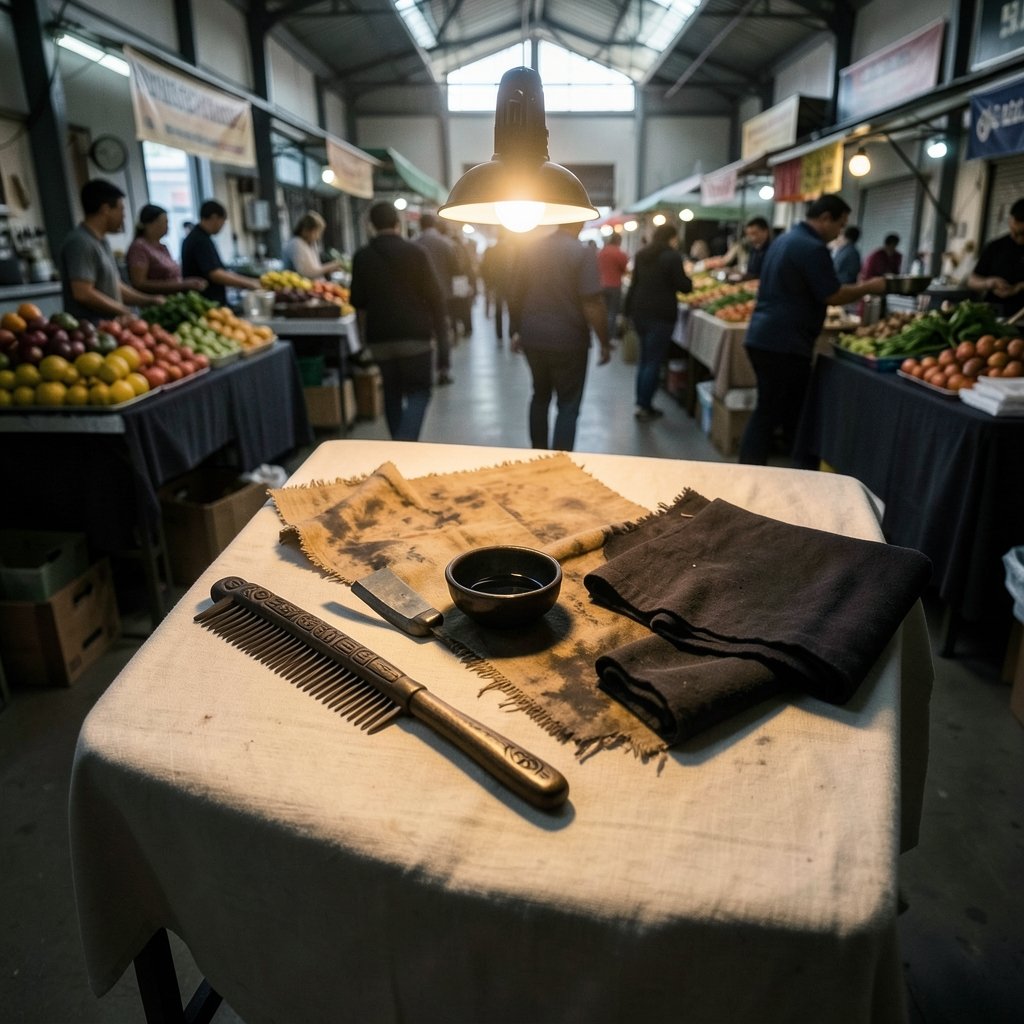
Samoan tatau is among the most documented Pacific traditions, and it is the source of the English word. The process traditionally uses a comb-like tool tapped into the skin rather than a needle, and the resulting marks sit slightly differently on the body than machine work does.
Māori tā moko is distinct. It was traditionally cut with chisels called uhi, which leaves grooved skin rather than a smooth surface. Moko carries information about genealogy and social standing, which is why it is not treated as decorative art. A design that “looks Māori” but means nothing is, to many Māori, a misrepresentation rather than a compliment.
Inuit and Ainu Facial Tattoos
Inuit women’s chin tattoos were largely suppressed by Christian missionaries during the 19th and 20th centuries, and the practice has seen a revival in recent years. Ainu women historically wore tattoos around the mouth, and the Japanese Meiji government banned the practice in 1871 as part of assimilation policies. (Tattoos and Permanent Makeup)
Both cases follow a pattern worth understanding: tattoos were not banned because they were fashionable or unfashionable. They were banned because they marked people as belonging to a culture that a state or church wanted to erase. That context is exactly what gets lost when a design is copied onto a forearm in another country.
Japanese Irezumi and the Modern Revival
Japan outlawed tattooing in the early Meiji period, in 1872, then relaxed the rules and restricted the practice again under Allied occupation in the late 1940s. The result is a tradition that survived partly underground, with strong guild structures and a lasting association between tattoos and organized crime in Japanese public perception.
The Rise of Western “Neo-Tribal”
The modern blackwork style is generally traced to the early 1980s, when artists began combining bold black shapes with contemporary linework. Tattoo-culture sources often credit Leo Zulueta with popularizing what became known as neo-tribal. Note the qualifier: this is a claim from tattoo media, not academic scholarship, and it should be treated as such.
The style spread fast because it was cheap to execute, aged well, and looked striking on skin. It also detached the visual language from its sources almost entirely. That detachment is the root of most appropriation debates today.
Why the Appropriation Conversation Keeps Coming Up
The debate is not abstract. It centers on a few concrete tensions.
Some designs are identity documents, not decoration. Tā moko encodes whakapapa, or genealogy. Wearing a copied moko design is not neutral in the way that wearing a copied floral pattern might be.
Some traditions restrict who can receive the work. Certain Polynesian and Māori designs are not available to outsiders at all, regardless of intent or payment. A tattoo artist who does not know this may sell something that should not be sold.
The borrowing has been one-directional. Western artists built careers on adapted Pacific imagery while the source communities faced suppression of their own practices. That asymmetry is what makes the exchange feel different from ordinary cultural cross-pollination.
The conversation has become more visible. Debates around “tribal” tattoos intensified in the 2010s, particularly regarding Māori and Polynesian designs, and the UN Declaration on the Rights of Indigenous Peoples, adopted on 13 September 2007, is frequently cited in cultural-heritage arguments even though it does not address tattoos specifically.
In New Zealand, the Wai 262 claim before the Waitangi Tribunal, whose report was released in 2011, addressed Māori cultural property including moko. It gives a reference point for understanding how law treats this subject, beyond opinion columns.
A Practical Comparison: Three Categories of “Tribal” Tattoo
| Category | Typical tools and look | Who can get it | Key consideration |
|---|---|---|---|
| Traditional Indigenous (tā moko, tatau, Inuit, Ainu) | Chisel or comb, grooved or textured skin | Often restricted by the tradition itself | Ask the community, not the internet |
| Modern neo-tribal blackwork | Machine, solid black, bold geometry | Generally open to anyone | Understand what the shapes reference |
| Generic “tribal” flash | Machine, spiky or curved black bands | Open to anyone | Usually decorative, often mislabeled |
The middle row is where most people actually land. That is fine, as long as they know it.
What Actually Works in Practice
A few habits separate a good experience from a regret.
Name the tradition, not the vibe. If you want Polynesian-inspired blackwork, say so. If you want a specific Māori design, understand that the answer may be no. Artists who specialize in Pacific work will tell you this directly, and their directness is a service.
Ask about the source of the design. A reputable artist can explain where a motif comes from. If the answer is “I found it online,” that is information you should act on.
Check the artist’s specialty. Blackwork and Indigenous-specific tattooing are different skill sets. A talented generalist may still be the wrong person for a piece with cultural weight.
Expect aging to be part of the design. Solid black holds up well over decades, which is one reason the style persists. Fine detail in blackwork can blur; bold shapes usually do not. Ask to see healed work alongside fresh photos.
Budget for the real cost. Large blackwork pieces take multiple sessions. Cheap work in this style is often cheap because the design was traced rather than drawn.
Do not negotiate on protocol. If a design requires a specific consultation, a specific artist, or a specific permission, that is not an upsell. It is the tradition working as intended.
Common Mistakes People Make
The same errors show up again and again.
- Treating “tribal” as a single style. It is not. The label flattens dozens of distinct traditions into one aesthetic.
- Assuming intent is enough. Good intentions do not change what a symbol means to the people it belongs to.
- Copying a photo without context. Screenshots circulate with no attribution and no meaning attached.
- Confusing suppression with obsolescence. Inuit and Ainu tattoos were banned, not abandoned. Their return is a deliberate act of recovery.
- Ignoring the artist’s own position. Some artists are cultural insiders and some are not, and that difference is relevant to the work.
- Skipping the conversation because it feels awkward. The awkward conversation is the whole point. It is also usually shorter than people fear.
How to Research a Design Before You Commit
A simple sequence works better than scrolling.
- Identify the specific tradition the design resembles, even loosely.
- Find out whether that tradition has published guidance on outsiders receiving the work.
- Look for museums, cultural centers, or community organizations connected to that tradition.
- Ask a tattoo artist who specializes in the region or culture what they would and would not do.
- Decide whether you want a faithful piece, an inspired-by piece, or something original. All three are legitimate choices. Only one of them requires permission.
That last point is the one most people miss. You can admire a tradition without claiming it. An original blackwork design that does not imitate a specific cultural marker is a completely reasonable outcome, and it sidesteps the entire problem.
For broader context on how cultural symbols move between communities and markets, resources on cultural heritage and intellectual property are worth reading before a consultation, not after.
Conclusion
“Tribal tattoo” is a phrase doing too much work. It describes living traditions with rules and owners, a Western style that borrowed from them, and a lazy catch-all that flattens both. The practical takeaway is simple: figure out which one you mean before you sit in the chair.
The traditions themselves are not fragile. They survived bans, missionary campaigns, and centuries of pressure, and several are now in active revival. What they ask for is not deference but accuracy. Name the tradition. Ask the question. Accept the answer, even when it is no. That approach produces better tattoos and fewer regrets, and it costs nothing but a conversation.
Frequently Asked Questions
What is the difference between a tribal tattoo and tā moko?
Tā moko is a specific Māori tradition, traditionally cut with chisels called uhi, that carries genealogical and social meaning and is subject to cultural protocols. “Tribal tattoo” is a broad, imprecise label that can refer to many different traditions or to modern Western blackwork with no cultural meaning attached.
Where does the word “tattoo” come from?
It comes from the Samoan word tatau, recorded during 18th-century Pacific voyages. The English form entered the language through accounts of those voyages, which is why the word itself is a Pacific inheritance rather than a European one.
Is it offensive to get a tribal-style tattoo?
It depends on what you get. Generic blackwork that does not imitate a specific cultural marker is generally not the issue. Copying a design from a tradition that restricts its use, such as tā moko, is where the objections arise, and those objections come from the communities themselves rather than from outsiders.
Can anyone get a Polynesian or Māori tattoo?
Not automatically. Some designs and some traditions are open to outsiders, and others are not. The only reliable way to know is to ask a practitioner or artist connected to that tradition. A specialist will tell you directly, and a “no” is a normal answer rather than a rejection of you personally.
Why were tattoos banned in some cultures?
Bans usually targeted identity rather than aesthetics. The Japanese Meiji government banned Ainu mouth tattoos in 1871 as part of assimilation policy, and Japan restricted tattooing itself in 1872. Inuit facial tattoos were largely suppressed by missionaries. These were efforts to erase markers of belonging, which is why revivals carry weight.
What is neo-tribal tattoo style?
It is a modern Western blackwork style that emerged in the 1980s, often associated with artist Leo Zulueta, combining bold black shapes with contemporary linework. It borrows visual cues from Pacific art but is generally decorative rather than culturally specific, and the origin attribution comes from tattoo media rather than academic sources.