
Rolls-Royce Spectre Review 2026: First Electric Rolls Tested
 Abdul WadoodLast updated

Rolls-Royce has spent more than a century selling one idea above all else: silence. The brand’s own founders built their reputation on cars so quiet that early reviewers resorted to describing them as “a phantom.” So when Rolls-Royce announced its first fully electric production car, the Spectre, it wasn’t really a pivot. It was a homecoming. An electric motor, after all, makes almost no noise at all, and in October 2022 the company confirmed that its first EV would arrive with roughly 577 horsepower, a battery of about 102 kWh, and a price north of $420,000 in the United States.
That combination makes the Spectre one of the most interesting cars on sale. It is staggeringly heavy, spectacularly expensive, and utterly unlike anything else in the electric luxury market. This review walks through what the car actually is, where it shines, where it frustrates, and who should even think about one.
What the Spectre Actually Is
The Spectre is a two-door, four-seat ultra-luxury coupe. Rolls-Royce positions it as the spiritual successor to the Phantom Coupe, which means it sits near the top of the range rather than at the entry point. It is not a converted platform. The company has been explicit that the Spectre was engineered as an electric car from the start, using an aluminum architecture designed to accommodate a large battery pack under the floor. (Rolls-Royce Spectre)
From the outside, it reads unmistakably as a Rolls. The grille is the widest ever fitted to a production Rolls-Royce, and the fastback roofline gives it a sleeker profile than the Cullinan or Ghost. The coach doors, which open rear-hinged, remain. So does the Starlight headliner, the illuminated headrests, and the general sense that you are looking at a piece of furniture that happens to move.
Inside, the Spectre introduces the brand’s first fully digital instrument cluster, paired with a redesigned central display. Purists grumbled. In practice, the screens are integrated into a wood and glass surface in a way that keeps the cabin feeling like a drawing room rather than a cockpit.
The Numbers, Plainly
Rolls-Royce quotes figures that deserve to be read carefully, because the Spectre’s performance story is unusual for an EV.
| Specification | Figure |
|---|---|
| Power | ~577 hp (430 kW) |
| Torque | ~900 Nm (664 lb-ft) |
| 0–60 mph | ~4.4 seconds |
| Battery (usable) | ~102 kWh |
| WLTP range | ~530 km (~329 miles) |
| EPA range | ~291 miles |
| Curb weight | ~2,975 kg (~6,559 lb) |
| Drag coefficient | ~0.25 Cd |
| US price at launch | ~$420,000+ |
Two things jump out. First, the range gap between the European WLTP figure and the American EPA rating is enormous, roughly 329 miles versus 291 miles. That is normal for the two testing regimes, but it matters for buyers who plan long trips. Second, the weight. At nearly three tonnes, the Spectre is heavier than most full-size SUVs, and no amount of clever chassis engineering makes physics disappear.
Driving the Spectre: Refinement Over Drama
The defining characteristic of the Spectre is not speed. It is the way the car isolates you from speed.
Rolls-Royce fits a Planar suspension system that uses more than 14,000 cross-linked functions to manage body movement, along with active roll stabilization and rear-wheel steering. The result is a car that corners far flatter than its mass suggests and steers with a light, unhurried precision. The rear-wheel steering tightens the turning circle at low speed, which is genuinely useful in city centers and hotel forecourts.
What the Spectre does not do is encourage you to drive it hard. The throttle is calibrated for smoothness rather than snap. There is no launch-control theatre, no artificial soundtrack piped through the speakers. You press the pedal, the car gathers speed with a deep, distant hum, and the world outside goes quiet. It is, in the truest sense, a Rolls-Royce experience delivered by a different mechanism.
The ride quality is the standout. Air suspension and extensive sound deadening mean that broken asphalt, tram lines, and expansion joints largely vanish. Road noise is minimal. Wind noise around the A-pillars is minimal. The Spectre is one of the quietest cars on sale, electric or otherwise, and that is precisely the point.
Where it falls short is efficiency. A 102 kWh battery returning around 291 EPA miles works out to roughly 2.8 miles per kWh. That is poor by modern EV standards, and it is a direct consequence of the weight and the enormous frontal area. Owners who treat the Spectre as a daily driver will charge more often than they expect.
Charging, Range, and the Practical Reality
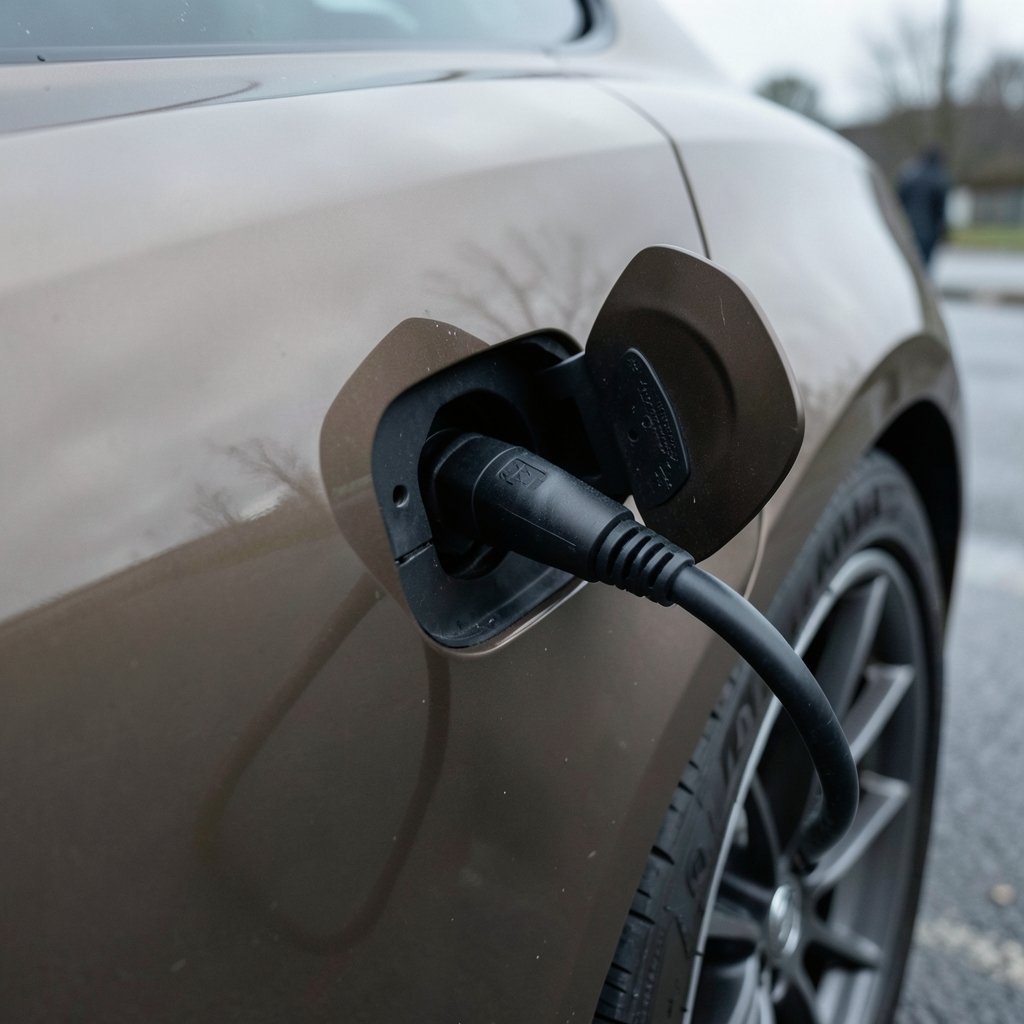
Rolls-Royce quotes DC fast charging at around 195 kW, which can take the battery from roughly 10 to 80 percent in about 34 minutes under ideal conditions. That is competitive but not class-leading. The more relevant number for most owners is home charging: a full overnight charge on a dedicated wallbox covers the vast majority of daily use.
The practical question is whether a 291-mile EPA range is enough for a car like this. For the typical Spectre owner, who likely has other vehicles and rarely drives more than a few hours at a stretch, yes. For anyone planning to use it as a sole long-distance car, the combination of heavy consumption and a charging network that is still uneven in some regions makes it a compromise. Range anxiety is largely a solved problem in 2026 for most EVs, but it is not solved for a three-tonne luxury coupe.
One owner-facing detail worth flagging: the Spectre’s size. It is roughly 5.45 metres long and over two metres wide. It fits in a standard garage, but not comfortably, and it does not enjoy tight underground car parks. If you are scouting storage or planning a trip, the same logic that applies to finding hotels that feel like a destination applies here: check the dimensions before you commit.
Interior and Craftsmanship
This is where the Spectre justifies its price more convincingly than any performance figure. The cabin uses open-pore wood, hand-stitched leather, and a staggering number of individually illuminated stars in the headliner. The seats are firm and supportive over long distances. Rear-seat access is genuinely usable thanks to the coach doors, though headroom in the back is tighter than the Phantom Coupe’s was.
Rolls-Royce’s bespoke program remains the real draw. Buyers can specify nearly anything, from a starlight headliner that mimics a specific night sky to a wood veneer sourced from a particular forest. The Spectre also introduces illuminated door pockets and a redesigned Spirit of Ecstasy that is subtly more aerodynamic.
The trade-off is complexity. The infotainment system is better than previous Rolls-Royce efforts but still not as intuitive as systems from mainstream luxury brands. Physical controls are sparse. The Spectre asks you to learn its language rather than meeting you halfway, and some buyers will find that charming while others will find it tiring.
How It Compares
The Spectre has few direct rivals, because almost nobody else builds a two-door electric ultra-luxury coupe.
| Model | Character | Approx. US price |
|---|---|---|
| Rolls-Royce Spectre | Electric ultra-luxury coupe | ~$420,000+ |
| Bentley Continental GT | Petrol/hybrid grand tourer | ~$250,000+ |
| Mercedes-Maybach EQS SUV | Electric ultra-luxury SUV | ~$180,000+ |
| Lucid Air Sapphire | Electric performance sedan | ~$250,000 |
The Maybach is cheaper and more spacious but lacks the Spectre’s presence. The Lucid is faster and far more efficient but is a different kind of car entirely. The Bentley remains the closest philosophical rival, and it still runs on petrol. In that sense, the Spectre’s real competitor is the idea that a luxury car must make noise to feel special. The Spectre argues, persuasively, that it does not.
What Owners and Reviewers Agree On
Across instrumented tests and long-term reports, a consistent picture has emerged. Praise clusters around ride quality, cabin refinement, and the sheer sense of occasion. Criticism clusters around weight, efficiency, and price. Reviewers have noted that the Spectre’s mass is most obvious under braking and in rapid direction changes, and that the car’s limits are reached earlier than its composure suggests.
There is also a broader context worth remembering. The Spectre arrived as the luxury car market was rethinking what prestige means. The same shift is visible in fashion and beauty, where brands are reworking their identities for a new audience, much as the new faces redefining the runway have reshaped how luxury presents itself. The Spectre is Rolls-Royce’s version of that same move: keep the craft, change the engine. (Rolls-Royce Spectre official model page)
Who Should Buy One
The Spectre makes sense for a specific buyer. Someone who already owns multiple cars. Someone who values silence and craftsmanship over acceleration figures. Someone who charges at home and rarely needs more than 200 miles in a day. Someone who wants the most distinctive electric car on the road and is willing to pay for the privilege.
It makes less sense for a buyer who wants a single do-everything vehicle, who regularly drives long distances through regions with thin charging infrastructure, or who expects efficiency to match the price. The Spectre is not a rational purchase, and Rolls-Royce has never pretended otherwise.
If you are considering one, the practical advice is straightforward. Drive it on a route you actually use, not a curated test loop. Check your garage and your regular parking. Confirm your home charging setup can deliver a full charge overnight. And spend time with the configurator, because at this price the specification matters as much as the car.
For those thinking about the broader ownership picture, from servicing to styling, resources like this guide to finding hair salons near me illustrate how much practical research goes into any luxury purchase, and the same diligence applies here. It is also worth reading up on how modern ownership expectations are shifting, whether that means copper hair color care or light brown hair maintenance in the beauty world or frizzy hair fixes in daily routines. The common thread is that premium products demand informed maintenance.
Conclusion
The Rolls-Royce Spectre is not the best electric car in the world by any measurable metric. It is heavier than it should be, less efficient than rivals, and priced in a category of its own. But it may be the most successful translation of a century-old brand identity into electric power. It preserves the silence, the craft, and the sense of occasion that define Rolls-Royce, and it does so without a single drop of petrol.
That is a genuine achievement. The Spectre proves that electrification does not have to strip the soul out of a luxury car. It can, in the right hands, return the car to its quietest, most essential self. Whether that is worth $420,000 is a question only the buyer can answer, but the engineering behind it is difficult to argue with.
Frequently Asked Questions
How much does a Rolls-Royce Spectre cost?
At launch, the Spectre started at roughly $420,000 in the United States and around £330,000 in the UK before options. Bespoke specification can push the final price considerably higher, and prices vary by market and model year, so current figures should always be confirmed with a dealer.
What is the real-world range of the Rolls-Royce Spectre?
Official figures differ by testing regime. The European WLTP rating is around 530 km (about 329 miles), while the US EPA rating is around 291 miles. Real-world range depends heavily on driving style, temperature, and terrain, and most owners report figures closer to the EPA estimate in mixed conditions.
How fast is the Rolls-Royce Spectre?
Rolls-Royce quotes roughly 4.4 seconds from 0 to 60 mph, with about 577 horsepower and 900 Nm of torque from a dual-motor all-wheel-drive setup. It is the most powerful Rolls-Royce built at launch, though it is tuned for smoothness rather than aggressive acceleration.
How heavy is the Spectre?
The curb weight is approximately 2,975 kg, or about 6,559 pounds. That makes it one of the heaviest passenger cars on sale. Rolls-Royce mitigates the mass with a Planar suspension system, active roll stabilization, and rear-wheel steering, but the weight is still noticeable under hard braking.
Can the Spectre be charged at home?
Yes. The Spectre supports AC home charging via a wallbox, and a full overnight charge covers most daily use. DC fast charging is quoted at around 195 kW, allowing a 10 to 80 percent charge in roughly 34 minutes under ideal conditions.
Is the Rolls-Royce Spectre a good daily driver?
It can be, with caveats. The ride is exceptionally comfortable and the cabin is quiet, but the car’s size makes tight parking difficult, and its efficiency means more frequent charging than most EVs. It works best as part of a multi-car household rather than a sole vehicle.