
Red Light Therapy for Hair Growth: What Evidence Shows in 2026
 Abdul WadoodLast updated
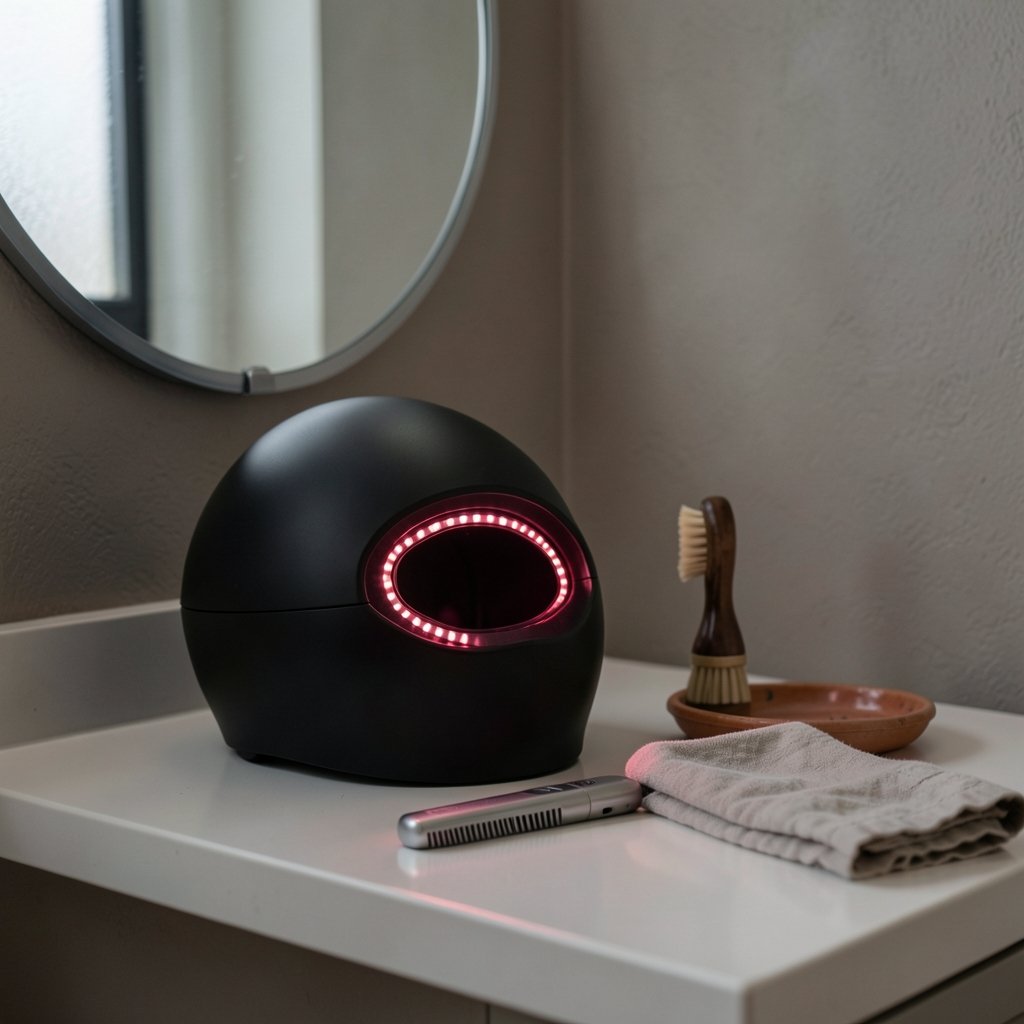
In 2007, a handheld laser comb became the first low-level light device cleared by the U.S. Food and Drug Administration to promote hair growth in men with androgenetic alopecia. Nearly two decades later, drugstore shelves and social feeds are crowded with red light helmets, caps, and panels promising thicker hair. The gap between that single clearance and today’s marketing blitz is where most people get lost. (Low-level laser therapy)
This guide cuts through it. It separates what clinical research supports from what advertising implies, explains who is most likely to benefit, and covers the practical details that decide whether a device helps or just collects dust.
What red light therapy for hair actually is
Red light therapy for hair, often called photobiomodulation (PBM) or low-level laser therapy, exposes the scalp to specific wavelengths of red and near-infrared light. Typical devices use wavelengths around 630 to 670 nanometers for red light and roughly 800 to 850 nanometers for near-infrared. These wavelengths penetrate the scalp without burning it.
The proposed mechanism is mitochondrial. Light energy is thought to be absorbed by cytochrome c oxidase in follicle cells, which may boost ATP production and improve blood flow around the follicle. That is a hypothesis with supporting lab evidence, not settled fact. Researchers still debate how much of the clinical effect, if any, comes from this pathway versus simpler explanations like scalp warming or placebo response.
Two device categories dominate the market, and they are not equal:
- Laser devices use diodes that emit coherent light. The best-studied examples are comb-style devices that received FDA clearance for androgenetic alopecia.
- LED devices use light-emitting diodes, usually in helmets, caps, or bands. They are cheaper and easier to wear but are largely regulated as cosmetic tools rather than medical devices.
That distinction matters more than any spec sheet. Evidence is stronger for FDA-cleared laser devices than for generic LED panels, and marketing frequently blurs the two.
What the clinical evidence supports

Here is the honest summary: the evidence is promising but thin. Most randomized controlled trials are small, short (often 16 to 26 weeks), and frequently funded by device manufacturers. A 2014 systematic review in the Journal of the American Academy of Dermatology found low-quality evidence overall, with some positive results for pattern hair loss.
What does that mean in practice?
| Question | What evidence suggests |
|---|---|
| Does it help androgenetic alopecia? | Some trials show modest increases in hair density and diameter |
| Is it first-line treatment? | No. Major dermatology guidelines generally treat it as an adjunct, not a primary therapy |
| Does it work for alopecia areata? | Evidence is sparse and mixed |
| Does it help chemotherapy-induced hair loss? | Limited data; not a standard recommendation |
| Is it safe? | Generally low-risk, with mild side effects reported |
| Is long-term data available? | No. Most studies stop well short of a year |
The population studied matters enormously. Almost all positive findings come from androgenetic alopecia, the hereditary pattern baldness that affects both men and women. If someone has patchy autoimmune hair loss or shedding from thyroid disease, the research base barely applies.
Who is most likely to benefit
The best candidates share a few traits. They have early-stage pattern thinning rather than long-standing bald patches. They still have visible follicles in thinning areas. And they are willing to use a device consistently for months.
Consistency is the whole game. Photobiomodulation is not a single-treatment fix. Trial protocols typically involve sessions three to five times per week for at least 16 weeks before assessing results. People who use a device sporadically for six weeks and quit are not testing the therapy; they are testing their patience.
Follicles that have been dormant for years are a different story. Once a follicle is fully miniaturized and the scalp is smooth and shiny, light therapy has little to work with. This is why timing matters and why a dermatologist’s assessment of hair loss stage is more useful than any product quiz.
The treatment stack: where light therapy fits
Red light therapy rarely works alone, and reputable clinicians rarely recommend it alone. It sits inside a broader plan.
For pattern hair loss, established options include minoxidil, prescription treatments, and in some cases procedures. Light therapy is best viewed as a supporting layer that may improve density slightly when combined with these approaches. It is not a replacement.
Nutrition and scalp health also play supporting roles. Deficiencies in iron, vitamin D, or zinc can drive shedding, and no amount of light fixes a deficiency. If shedding is the main complaint, a blood panel is a more sensible first step than a device purchase. Readers exploring supportive topical and oral options can find useful context in this guide to hair growth serums that actually work, which covers how to separate clinical ingredients from marketing claims.
Hair color and structural damage are a separate axis but worth noting for anyone also coloring their hair. Frequent chemical processing can cause breakage that mimics thinning. Understanding how different shades and processes affect hair integrity, such as in this overview of light brown hair shades and care, helps people avoid mistaking breakage for follicle loss.
Practical mistakes that waste money and time
First-hand reports and clinician commentary point to the same recurring errors. Avoiding them is worth more than any upgrade in device wattage.
- Buying before diagnosing. Many buyers never confirm what kind of hair loss they have. Pattern loss, telogen effluvium, and alopecia areata need different approaches.
- Choosing a device with no clearance or trial data. A cheap LED cap with no regulatory status and no published protocol is a gamble, not a treatment.
- Skipping the scalp part. Light cannot reach follicles through thick hair without parting or moving the device. Users who part their hair in rows report better results than those who simply put on a cap.
- Quitting at eight weeks. The shedding phase early in treatment scares people off. Temporary increased shedding is a known, usually temporary response.
- Stacking too many actives at once. Combining light therapy, harsh shampoos, and multiple topicals makes it impossible to tell what is working, or what is irritating the scalp.
- Ignoring photos. Take standardized photos in the same lighting every four weeks. Memory is a terrible measuring tool.
For anyone also dealing with hair that is fragile or chemically treated, the same patience principle applies. This piece on red hair dye application and color retention illustrates how much outcomes depend on technique and aftercare rather than the product alone, a pattern that holds for light therapy too.
Safety, side effects, and realistic expectations
Reported adverse events are mild: scalp dryness, itching, redness, and occasional temporary shedding. Long-term safety data are limited simply because most trials are short. People with photosensitivity conditions, those taking photosensitizing medications, and anyone with a history of skin cancer on the scalp should talk to a dermatologist before starting.
Expectations deserve a hard reset. The realistic best case, based on trial averages, is a modest improvement in hair density or thickness over four to six months of consistent use, not a return to a teenage hairline. Some users see nothing. That is a real outcome, and it is not a personal failure.
Cost is the other reality check. FDA-cleared laser devices typically run from a few hundred to over a thousand dollars, and LED helmets span a wide range. Unlike a supplement you can stop after a month, a device demands ongoing time. If the routine does not fit someone’s life, the money is better spent on a dermatology consultation. For a wider view of what supportive products can and cannot deliver, this analysis of MaryRuth hair growth supplements applies the same skeptical lens.
How to evaluate a device before buying
A short checklist separates serious products from noise:
- Regulatory status. Check whether the device has FDA clearance for hair growth and for which condition. Clearance for “cosmetic” use is not the same thing.
- Wavelength and dose. Look for stated wavelengths in the red and near-infrared range and a specified treatment time. Vague claims are a red flag.
- Published protocol. Reputable brands reference trial data or specific dosing schedules.
- Return policy. A 90-day return window matters when results take 16 weeks to judge.
- Fit and comfort. A device that is awkward to wear will not be used five times a week.
Conclusion
Red light therapy for hair growth is a real, researched approach with a modest evidence base, concentrated almost entirely in hereditary pattern hair loss. It is generally safe, occasionally helpful, and consistently oversold. The people who get the most from it tend to have early thinning, a confirmed diagnosis, a cleared device, and the discipline to use it for months while continuing proven treatments alongside it.
The technology is not magic, and it is not nothing. It is a supporting tool that rewards realistic expectations and punishes impulse buying. Anyone weighing it should start with a diagnosis, not a checkout page.
Frequently asked questions
How long does red light therapy take to work for hair growth?
Most trials assess results at 16 to 26 weeks, so four to six months is a reasonable minimum before judging. Early temporary shedding can occur in the first weeks and usually settles. Anyone hoping for visible change in a month will likely be disappointed.
Is red light therapy FDA approved for hair loss?
It is more accurate to say some devices have FDA clearance, not approval. A handheld laser comb received clearance in 2007 to promote hair growth in men with androgenetic alopecia, and other cleared devices followed. Many LED caps and panels on the market are sold as cosmetics and have no such clearance.
Does red light therapy work for receding hairlines?
Evidence is strongest for pattern thinning where follicles are still active. A receding hairline with miniaturized but present hair may respond modestly. A completely smooth area with long-term follicle loss is unlikely to regrow meaningful hair from light alone.
Can you use red light therapy with minoxidil?
Many trial participants and clinicians combine them, and the approaches are generally considered compatible. That said, combining treatments makes it harder to identify which one is helping or causing irritation. A dermatologist can advise on sequencing and timing.
Are LED helmets as effective as laser combs?
Not necessarily. The stronger clinical evidence base belongs to FDA-cleared laser devices, while generic LED devices are largely unregulated as cosmetics. Some LED helmets have their own trial data, but buyers should check for specific clearance and published protocols rather than assuming equivalence.
Is red light therapy safe for everyone?
It is generally low-risk, with mild side effects like dryness and itching. People with photosensitivity disorders, those taking photosensitizing drugs, and anyone with a history of scalp skin cancer should get medical advice first. Pregnant users should also consult a clinician, since data are limited.
The takeaway is simple: red light therapy is a legitimate but limited tool, best used with a diagnosis, a cleared device, and patient expectations. It will not replace proven treatments, and it will not revive follicles that are long gone. Used consistently and alongside a broader plan, it may add a modest layer of support for early pattern thinning. That is the honest promise the marketing rarely makes.
For anyone still deciding, the cheapest useful step is a dermatologist visit, not a device. A proper assessment identifies the type and stage of hair loss, rules out reversible causes like iron deficiency or thyroid dysfunction, and clarifies whether light therapy is even relevant. From there, a cleared device with a published protocol and a generous return window is the sensible purchase, and standardized photos every four weeks are the only honest scorecard. Set a 16-week checkpoint in advance and decide then, not at week six. Approached that way, red light therapy becomes one measured part of a plan rather than another hopeful gadget gathering dust on a shelf. (Low Level Laser Therapy)