
Naomi Campbell Versace Runway: Iconic Fashion Moments
 Abdul WadoodLast updated

When Naomi Campbell stepped onto Gianni Versace’s runway in 1991, flanked by Linda Evangelista, Christy Turlington, and Cindy Crawford, the four women lip-synced to George Michael’s “Freedom! ’90” and changed what a fashion show could be. That single moment, now cemented in fashion lore, captures why the Campbell-Versace partnership matters so much. It was not just a model walking for a designer. It was a cultural collision of music, celebrity, and couture that reshaped the industry’s idea of who belongs on a runway.
Why the Campbell-Versace Partnership Still Matters
Few model-designer relationships carry as much weight as Naomi Campbell and Versace. Their collaboration spans decades, outlasting the tragic death of founder Gianni Versace in July 1997 and continuing under his sister Donatella Versace. For anyone tracing the story of diversity on the runway, this partnership is a natural starting point.
Campbell was one of the most visible Black models in the high-fashion world during the late 1980s and 1990s. Her presence in Versace’s shows was not tokenism. She was a central figure in the house’s most theatrical productions, walking alongside the era’s biggest names and closing shows with the kind of command that made casting directors take notice. (Vogue Runway: Fashion Shows)
The partnership also reflects something practical about how fashion houses build identity. Versace’s brand was built on boldness, sex appeal, and theatrical glamour. Campbell’s runway presence matched that energy perfectly. She brought drama, precision, and a kind of controlled power that photographs well and, more importantly, performs well in a live show.
The 1991 “Freedom! ’90” Moment Explained
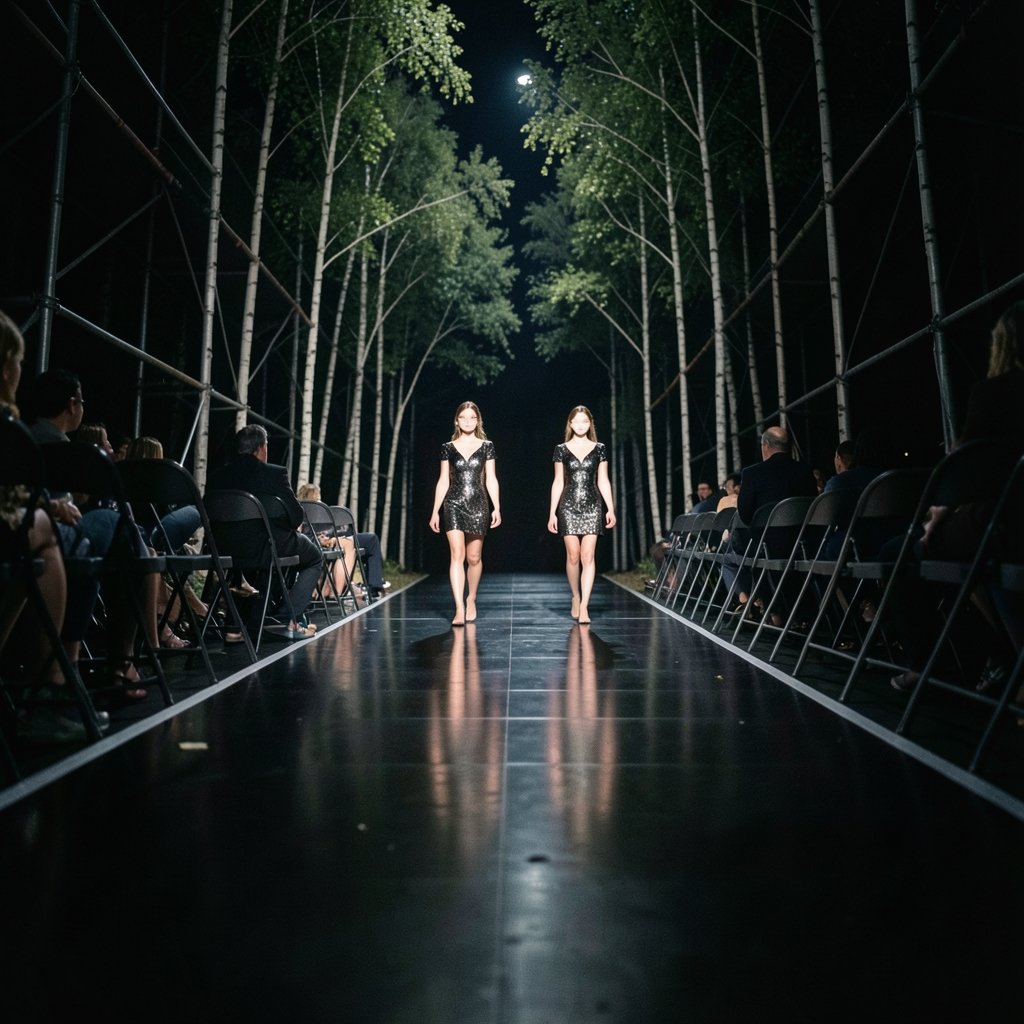
The Fall/Winter 1991 womenswear show is the moment most often cited when people discuss Campbell and Versace. Gianni Versace staged a presentation where Campbell, Evangelista, Turlington, and Crawford appeared together, lip-syncing to George Michael’s hit. The image of the four supermodels together became one of the defining visuals of 1990s fashion. (Naomi Campbell)
Why does this moment endure? Several reasons:
- It merged pop culture and couture. Fashion shows had previously been industry events. This one became entertainment.
- It elevated models to celebrities. The supermodel era was already underway, but this show gave it a visual anthem.
- It set a template. Designers began casting for personality and star power, not just runway technique.
For Campbell specifically, the show reinforced her status as part of an elite group. She was not a supporting figure in that lineup. She was one of the four faces that defined the moment.
Campbell as a Recurring Versace Face Through the 1990s
The 1991 show was not an isolated appearance. Campbell walked Versace’s runway repeatedly through the 1990s under Gianni Versace’s direction. She also appeared in the house’s campaigns, which mattered just as much as the runway. Campaign imagery circulated globally and cemented a model’s association with a brand.
This consistency is worth noting because it shows the relationship was structural, not incidental. Some models appear in a single memorable show. Campbell appeared across multiple seasons, campaigns, and productions. That kind of repeat casting signals genuine creative alignment between designer and model.
What Made the Casting Work
Gianni Versace was known for supporting Black models at a time when many European houses were slow to cast them. Campbell has spoken publicly about his support for her early career. The exact phrasing of her comments varies across interviews, so it is worth reading primary sources rather than relying on secondhand summaries.
From a practical standpoint, the casting worked because of fit. Versace’s clothes were designed for presence. They were body-conscious, metallic, and unapologetically glamorous. Campbell’s runway walk, often described as fierce and deliberate, suited that aesthetic. A designer casting for a specific mood will return to models who deliver it reliably.
Continuing the Legacy After Gianni Versace’s Death
Gianni Versace’s death in July 1997 could have ended the creative thread. Instead, Donatella Versace took over the house and maintained relationships with the models who had defined the brand. Campbell remained part of the Versace world in the years that followed.
This continuity matters for two reasons. First, it shows that the Campbell-Versace connection was bigger than one designer. Second, it kept the house’s archival identity alive. When a brand can call on the same faces across decades, it builds a narrative of permanence that newer labels struggle to match.
In later years, Versace leaned into its archive, staging shows and campaigns that referenced the supermodel era. Campbell’s appearances in those contexts function as living history. She is not just a model returning to a runway. She is a link to a specific period that the brand wants to keep visible.
For a broader look at how new generations of models are reshaping runway casting today, the industry conversation has moved toward fresh faces and global representation, a shift that builds directly on the groundwork laid in the 1990s. (The New Faces Redefining the Runway: Edition 2)
How Campbell’s Versace Work Shaped Runway Diversity
It is easy to overstate a single model’s impact, and equally easy to understate it. A balanced view sits in the middle.
Campbell was not the only Black model working in high fashion during the 1990s. Nor did her presence single-handedly diversify runways. But she was among the most visible, and visibility matters. When a Black model appears in a globally circulated campaign and walks a major house’s show season after season, it normalizes what casting directors see as viable.
There is a practical mechanism here. Casting decisions are often made by comparison. A creative director asks, “Who can carry this collection?” If the reference pool of past successful castings includes Campbell, the pool widens. Over time, that shifts who gets called.
The fashion industry still has documented gaps in representation, and progress has been uneven across houses and regions. But the Campbell-Versace era is a useful reference point because it shows what sustained casting, rather than one-off gestures, looks like in practice.
The evolution of runway casting continues to draw attention, with new faces and new standards emerging each season.
What Actually Works: Practical Lessons From This Partnership
For models, stylists, and brand teams studying this era, a few practical lessons stand out. These are not abstract observations. They reflect how the partnership functioned in practice.
- Consistency beats a single viral moment. Campbell’s association with Versace was built across seasons and campaigns, not one show.
- Fit between model and brand aesthetic matters more than generic “star power.” Versace’s clothes demanded presence, and Campbell delivered it.
- Campaign and runway reinforce each other. A model who appears in both becomes inseparable from the brand in public memory.
- Relationships survive leadership changes. Donatella Versace’s continuation of the Campbell connection preserved the house’s identity.
Common Mistakes People Make When Studying This Era
A few traps come up repeatedly when people research Campbell’s Versace work.
- Conflating show dates and seasons. A “Fall/Winter 1991” collection is not the same as a show that took place in 1991. Season labels and show dates get mixed up constantly.
- Repeating unverified “first” claims. Statements about who was the “first Black model” at a given house are often repeated loosely online. They should be checked against primary sources.
- Relying on secondhand quotes. Interview quotes get paraphrased and reshaped across aggregator sites. Go to the original publication.
- Ignoring the campaign work. Runway gets the headlines, but campaigns shaped public perception just as strongly.
Where to Verify the Details
Because dates and casting details are easy to muddle, anyone writing or researching this topic should check primary sources. The most reliable starting points are the house’s own archives and contemporaneous runway coverage from established fashion publications. Museum records, particularly those held by costume and fashion collections, also document specific garments and show contexts.
For the broader context of Gianni Versace’s career and the house’s history, encyclopedic references provide a solid factual baseline. For the 1997 death and its aftermath, contemporaneous obituaries from major newspapers remain useful primary-adjacent sources.
A practical tip: when a source gives a season (like Fall/Winter 1991) and another gives a calendar date, treat them as separate facts until you can confirm both. This single habit prevents most of the errors that creep into articles about 1990s runway history.
The Enduring Image
Strip away the analysis and what remains is an image: four women on a runway, a pop song playing, a designer watching from the audience. Campbell is part of that picture, and the picture is part of fashion history.
The Campbell-Versace relationship lasted because it was built on more than a single season. It was built on repeated casting, shared aesthetic instincts, and a designer willing to put Black models at the center of his most ambitious productions. That combination is rarer than it should be, which is exactly why the partnership is still studied, cited, and revisited.
Conclusion
Naomi Campbell’s Versace runway story is not a footnote. It is a case study in how model-designer partnerships shape brand identity, how casting decisions ripple outward across an industry, and how a single 1991 show can become a permanent reference point. The 1991 “Freedom! ’90” moment gave the partnership its iconic image. The seasons that followed gave it substance. And the continuation under Donatella Versace gave it longevity.
For readers digging into this history, the takeaway is straightforward. Look at the full arc, not just the highlight reel. Check seasons against dates. Read original interviews rather than summaries. And recognize that sustained casting, not one-off gestures, is what actually moves an industry forward.
Frequently Asked Questions
When did Naomi Campbell first walk for Versace?
Campbell’s most cited early Versace appearance is the Fall/Winter 1991 womenswear show, where she appeared with Linda Evangelista, Christy Turlington, and Cindy Crawford lip-syncing to George Michael’s “Freedom! ’90.” She had been working in high fashion before that, but this show is the moment most closely tied to her Versace association.
Did Naomi Campbell walk for Versace after Gianni Versace died?
Yes. Gianni Versace died in July 1997, and Donatella Versace took over the house. Campbell remained connected to Versace in the years that followed, including appearances tied to the brand’s archival and anniversary projects.
Was Naomi Campbell the first Black model to walk for Versace?
Claims like this are repeated often online but are difficult to verify. It is safer to describe Campbell as one of the most visible Black models in Versace’s shows during the 1990s rather than assigning a “first” title without primary-source confirmation.
Why is the 1991 Versace show so famous?
The show combined four of the era’s biggest models with a hit pop song, turning a fashion presentation into a cultural event. It captured the supermodel era at its peak and gave the industry a lasting visual reference for what a runway show could be.
What made Campbell a good fit for Versace’s aesthetic?
Versace’s designs emphasized boldness, glamour, and body-conscious silhouettes. Campbell’s runway presence, known for its power and precision, matched that mood. Casting directors return to models who reliably deliver a brand’s intended energy.
How can I verify details about Campbell’s Versace shows?
Check the house’s official archives, contemporaneous runway coverage from established fashion publications, and museum costume collections. Be careful to separate season labels from calendar dates, since these are commonly confused in secondary sources.
That distinction between documented fact and circulating claim is worth carrying into any further reading on the subject. The Campbell-Versace partnership rewards careful attention precisely because so much of its record lives in photographs, show footage, and contemporaneous press rather than in tidy summaries. Viewed as a whole, it stands as one of the clearest examples of how a model and a house can build meaning together over time, and why that shared history continues to shape how runways are cast and remembered today.