
Model Off-Duty Denim Outfits: The Effortless Look
 Abdul WadoodLast updated
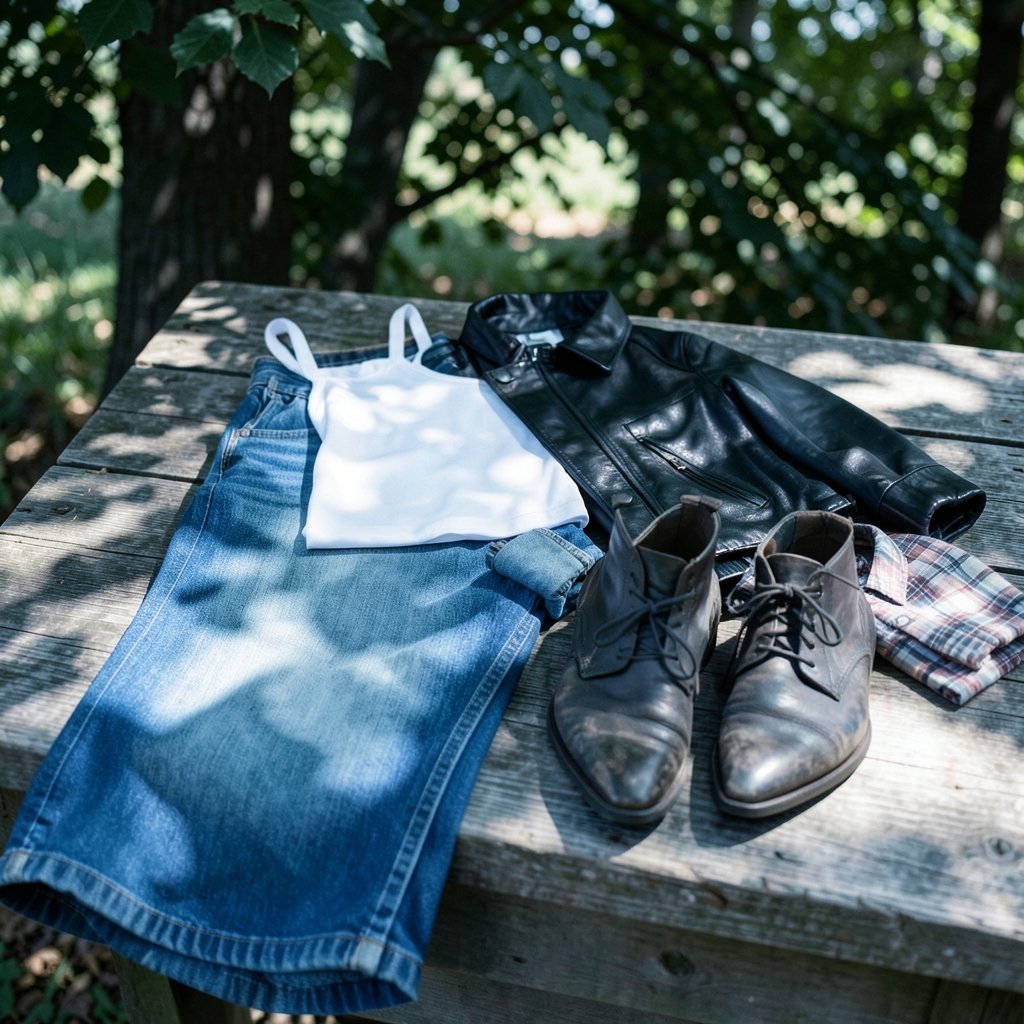
Few looks in fashion have shown the staying power of the off-duty model uniform. Its core ingredients have barely changed in decades: a pair of jeans, a plain tee or tank, a leather jacket, and something slightly unexpected, whether that’s a vintage band shirt or a pair of pointed boots. What has changed is how the look gets assembled, photographed, and copied. Street-style images now travel from a backstage corridor to a shopping app in hours, and denim is almost always the connective tissue. (Fashion)
The appeal is easy to understand. Off-duty denim outfits promise something rare in fashion: a formula that looks effortless, works across seasons, and doesn’t require a stylist. The catch is that “effortless” is doing a lot of work in that sentence. The best versions of the look are carefully edited, and the difference between “model leaving a show” and “person who got dressed in the dark” comes down to a handful of decisions about fit, proportion, and restraint.
What “Model Off-Duty” Style Actually Means
The term describes what models wear between jobs, not on the runway. It grew out of candid photography: models photographed arriving at shows, grabbing coffee, or moving between castings in clothes that were practical but still sharp. Denim became the backbone of that wardrobe because it travels well, photographs well, and layers easily over whatever a model wore to the gym or under whatever coat the weather demanded.
Crucially, off-duty style is a performance of casualness. The clothes look thrown on, but the proportions are deliberate. A cropped jacket over a longer shirt. A wide-leg jean breaking over a chunky boot. A plain white tank tucked just enough to show a belt. None of it is accidental, and that’s the point worth internalizing before you start shopping.
The Denim Pieces That Do the Heavy Lifting
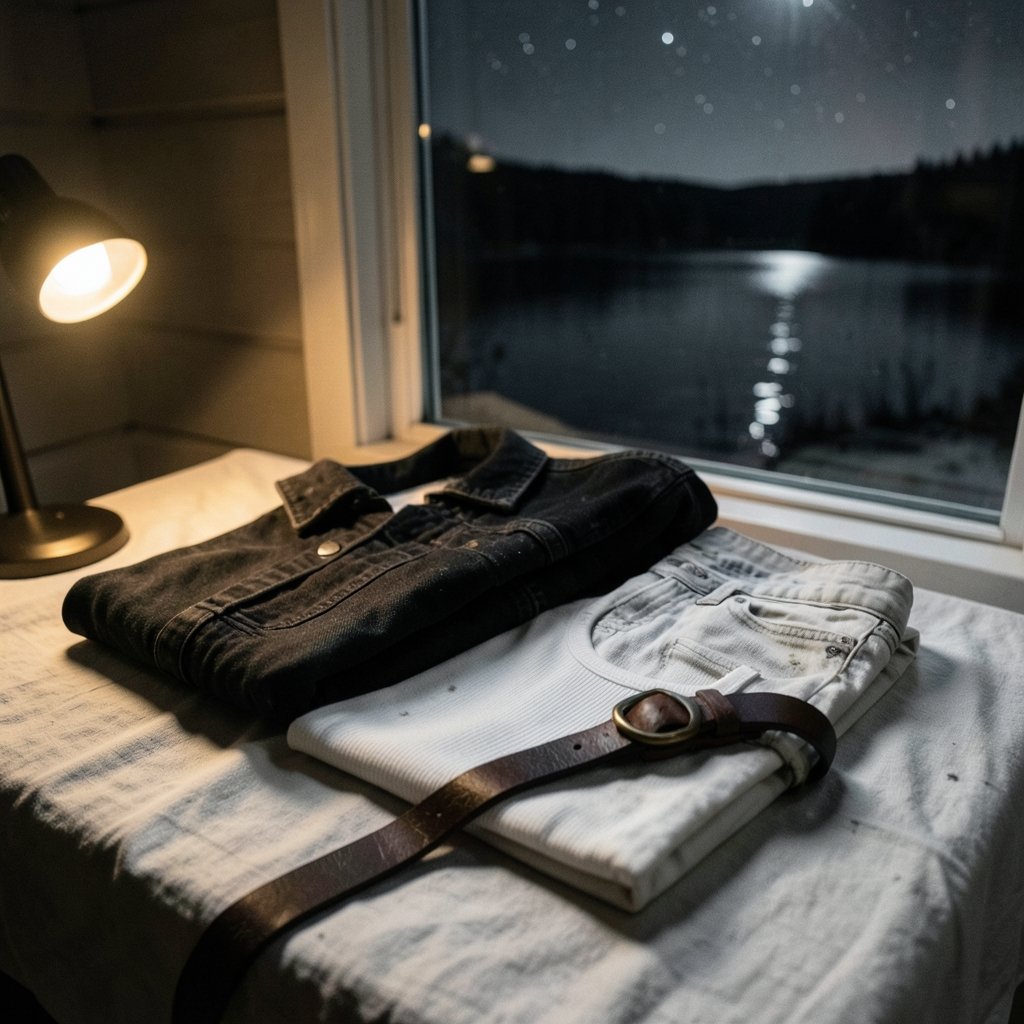
Most off-duty denim looks are built from a short list of garments. You don’t need all of them, but you do need to understand what each one contributes.
| Piece | What it adds | Best worn with |
|---|---|---|
| Straight-leg jeans | Clean line, works with everything | Sneakers, loafers, ankle boots |
| Low-rise or mid-rise jeans | Relaxed, slightly retro proportion | Cropped tops, fitted tees, belts |
| Oversized denim jacket | Structure and a layering anchor | Slip dresses, hoodies, knitwear |
| Denim midi or maxi skirt | Softness and movement | Plain tanks, boots, leather jackets |
| Denim shirt | Easy base layer or light outer layer | Tailored trousers, shorts, slip skirts |
The straight-leg jean is the workhorse. It reads as modern without being trendy, and it flatters more body types than skinny or ultra-wide cuts. Low-rise denim comes in and out of favor, but in off-duty styling it tends to appear in a specific way: paired with a fitted top and a visible waistband, never with a baggy shirt that swallows the proportion.
Denim on denim, done properly
Double denim is the move most people get wrong. The mistake is matching washes too closely, which flattens the whole outfit into a uniform. The fix is contrast: a dark indigo jacket over pale, faded jeans, or a light chambray shirt tucked into black denim. Vary the weight too. A stiff, structured jacket over soft, broken-in jeans creates texture that a matching set never will.
Building the Look: A Practical Sequence
If you want to replicate the aesthetic rather than approximate it, work in a fixed order. Stylists who dress models for off-duty days tend to start with the base and add outward, not the reverse.
- Choose the jean first. Decide on the silhouette and wash, then let everything else respond to it. A light wash straight-leg pulls the outfit casual; a dark, clean wash pulls it sharper.
- Pick a fitted, plain top. A white tank, a ribbed tee, or a fine-knit crewneck. Logos and graphics fight the denim for attention unless you’re deliberately going for a vintage band-tee look.
- Add one structured layer. A leather jacket, a blazer, or an oversized denim jacket. One, not two.
- Choose footwear that changes the register. Sneakers read sporty, loafers read polished, ankle boots read tough. The same jeans and tank can go three directions depending on this single choice.
- Edit before you leave. Remove one accessory. The look works because it stops just short of styled.
That final step is where most people fail. Off-duty style is defined by what’s missing, not what’s added. A stack of bracelets, a statement bag, a scarf, and sunglasses all at once turns a clean outfit into a costume.
Common Mistakes That Undo the Effect
Practical experience with this look surfaces the same errors again and again.
Buying jeans too long or too short. Hem length determines whether a straight-leg jean looks intentional or borrowed. A slight break at the ankle is usually right; a pool of fabric at the shoe is not.
Over-accessorizing. Models photographed off duty often wear almost no jewelry. The outfit is the statement.
Ignoring the shoe-to-hem relationship. Wide-leg jeans need a substantial shoe to balance them. A delicate flat under a wide leg makes the whole silhouette look bottom-heavy.
Treating “oversized” as “shapeless.” An oversized denim jacket still needs a defined shoulder. If the shoulder seam drops past the edge of your arm, the jacket is too big, not oversized.
Skipping the iron. Denim can be rumpled, but it shouldn’t look slept in. A quick steam on the jacket collar and the jean hem makes a disproportionate difference.
Why Denim Keeps Winning
Denim’s durability is well documented. The fabric’s history as workwear, its association with labor and practicality, and its eventual move into everyday fashion are covered in detail in the history of denim, and that lineage explains much of its appeal in off-duty dressing. It carries a built-in credibility. A denim jacket doesn’t look like it’s trying. (Denim)
There’s a business argument too. Fashion’s trend cycle has accelerated, and consumers have responded by buying fewer, more versatile pieces. Denim fits that shift neatly because a good pair of jeans earns its cost across years rather than a season. Industry analysis of changing consumer priorities, including the move toward durability and cost-per-wear thinking, appears regularly in outlets like Harvard Business Review, which has examined how brands build lasting customer relationships through consistency rather than novelty.
For models specifically, denim solves a logistical problem. A working model changes clothes many times a day, moves between locations, and needs pieces that survive transit. Jeans and a denim jacket pack flat, don’t wrinkle badly, and work for a casting, a coffee, and a flight. The style wasn’t designed to be aspirational. It became aspirational because it was functional.
Adapting the Look to Real Life
Not everyone is walking between shows, and the look needs translation. The good news is that off-duty denim is unusually forgiving.
For offices with relaxed dress codes, swap the tank for a fine-knit sweater and the sneakers for loafers. Keep the straight-leg jean dark and clean.
For colder months, layer a denim jacket under a wool overcoat rather than over it. The denim adds texture at the collar and cuffs without bulk.
For evenings, a dark-wash straight jean with a fitted black top and pointed boots reads as deliberately dressed without a dress. Add one piece of jewelry and stop.
For anyone building a capsule wardrobe, the off-duty formula is close to ideal: two pairs of jeans in contrasting washes, one denim jacket, one white tee, one black tank, one leather jacket, one pair of boots, one pair of sneakers. That’s roughly eight pieces producing dozens of combinations.
If you’re studying how models actually put these combinations together, browsing curated model profiles, fashion and industry coverage is a more useful exercise than scrolling runway images. Off-duty style lives in candid, repeatable outfits, not in show pieces.
Fit Notes by Body and Proportion
Off-duty denim isn’t one silhouette, and the “rules” shift with height and build.
Shorter wearers often do best with a high-rise straight leg that hits just above the ankle, paired with a cropped jacket to raise the visual waist. Taller wearers can carry low-rise and wide-leg cuts that would overwhelm a shorter frame. Curvier figures tend to get the cleanest line from a straight or slightly tapered leg with a higher rise, since the waistband stays put and the leg doesn’t cling.
The universal principle is proportion, not size. A cropped top with a high-rise jean lengthens the leg. A long shirt with a low-rise jean shortens it. Neither is wrong, but you should choose deliberately rather than by accident.
Fit is the difference between a look and a costume.
Caring for the Denim So It Lasts
Off-duty denim looks best when it’s been worn. Faded knees, softened hems, and a slightly collapsed collar are features, not flaws. But there’s a limit.
Wash jeans inside out, in cold water, and sparingly. Spot-clean instead of full-washing when you can. Hang to dry rather than tumble, which breaks down fibers and shrinks hems. For denim jackets, brush the collar and cuffs rather than laundering frequently; the structure depends on stiffness that washing removes.
A useful habit: rotate two pairs of jeans rather than wearing one daily. Denim recovers its shape between wears, and the rotation doubles the lifespan of both pairs.
The Look Beyond the Trend Cycle
Off-duty denim has survived because it isn’t really a trend. It’s a set of proportions and a philosophy of restraint. Trends modify it at the edges, a wider leg here, a lower rise there, but the core remains a jean, a plain top, and one good layer.
That’s also why it’s so widely copied. It requires no special access, no stylist, and no particular budget. It requires only that you buy pieces that fit and then resist the urge to add more.
Restraint is the whole trick.
Conclusion
Model off-duty denim outfits work because they solve a real problem: how to look considered without looking like you tried. The formula is short, the pieces are ordinary, and the execution is entirely in the details. Start with a straight-leg jean that fits at the waist and breaks correctly at the ankle. Add a plain, fitted top. Choose one structured layer and one pair of shoes that set the tone. Then edit, and keep editing until the outfit feels slightly too simple. That’s the point where it starts to look right. Denim has carried this look for decades because it’s durable, versatile, and honest, and those qualities don’t expire with the season.
Frequently Asked Questions
What is a model off-duty outfit?
A model off-duty outfit is what a model wears between jobs, typically captured in candid street photography. It usually combines jeans, a plain top, a leather or denim jacket, and practical footwear. The style is deliberately casual but carefully proportioned, so it looks effortless without being sloppy.
What jeans are best for an off-duty look?
Straight-leg jeans in a mid or light wash are the most versatile choice. They work with sneakers, loafers, and boots, and they suit most body types. Dark, clean washes read slightly more polished, while faded washes read more relaxed. Low-rise and wide-leg cuts also appear in the look but require more attention to proportion.
How do you style denim on denim without looking dated?
Contrast is the key. Pair different washes, such as a dark indigo jacket with pale jeans, and mix fabric weights so the outfit has texture. Avoid matching sets that are identical in color and finish. Keep the rest of the outfit simple, with one plain top and minimal accessories.
Can you wear off-duty denim to the office?
Yes, in workplaces with relaxed dress codes. Choose a dark, clean-wash straight-leg jean, add a fine-knit sweater or a crisp shirt instead of a tank, and finish with loafers or ankle boots. Avoid distressed denim, heavy fading, and oversized jackets in professional settings.
How often should you wash jeans to keep them looking right?
Wash jeans sparingly, inside out, in cold water, and hang them to dry. Many people wash after every five to ten wears, spot-cleaning in between. Frequent washing breaks down fibers and fades the indigo faster than wear does. Rotating two pairs extends the life of both.
What shoes complete an off-duty denim outfit?
Sneakers, loafers, ankle boots, and pointed flats all work, and each changes the outfit’s register. Match the shoe’s visual weight to the jean’s width: wide legs need substantial shoes, while straight and slim legs can carry lighter footwear. Avoid very delicate shoes under very wide jeans.