
Cool Tattoos: Design, Placement & Longevity Guide 2026
 Abdul WadoodLast updated

Somewhere on a glacier between Austria and Italy, a man who died around 5,300 years ago lies frozen with more than 60 tattoos on his body. Ötzi the Iceman’s markings are simple lines and crosses, likely therapeutic rather than decorative, but they prove something useful: humans have been marking their skin deliberately for a very long time. What counts as a cool tattoo has changed enormously since then, and the gap between a design that ages beautifully and one that ends up covered by a shirt for the rest of your life usually comes down to a handful of practical decisions made before the needle ever touches skin.
Why “Cool” Is a Moving Target
Tattoo style trends move in cycles, and the cycle has accelerated. Fine-line botanical work, blackwork geometry, American traditional, neo-traditional, Japanese Irezumi, and illustrative realism all compete for the same square inches of forearm. A design that reads as effortlessly cool in one decade can read as dated in the next — not because the artwork was bad, but because the context around it changed.
The practical takeaway is not “avoid trends.” It is to separate the two questions that people usually collapse into one:
- Does this design look good right now? Trends answer this.
- Will this design still look intentional in fifteen years? Craft, placement, and subject matter answer this.
A tattoo that scores well on both is what most people actually mean by cool. A tattoo that scores only on the first is a commitment to a moment. (Tattoo)
Design Principles That Separate Strong Tattoos From Weak Ones
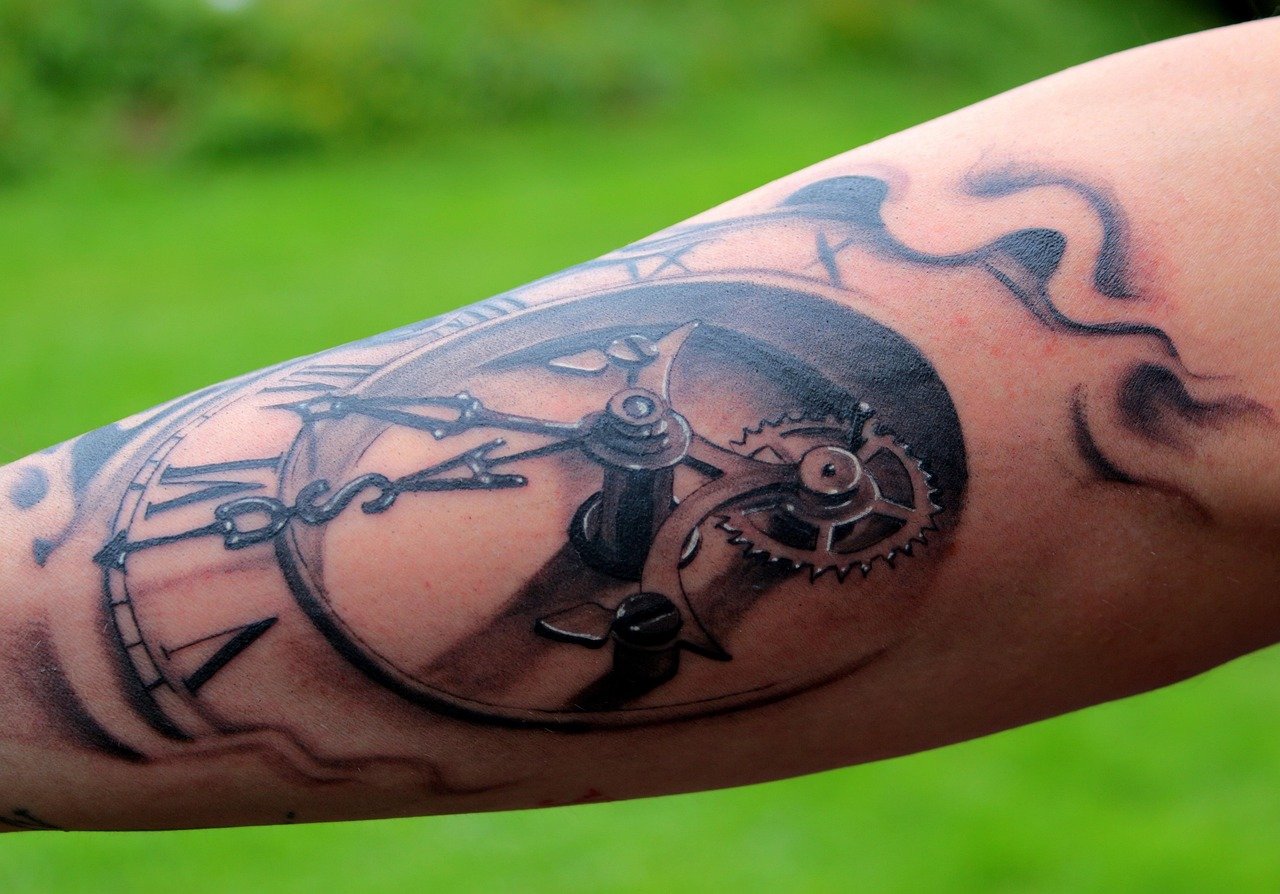
Most disappointing tattoos fail for boring, fixable reasons. Before booking, it helps to understand what artists are actually solving for when they draw.
Contrast and Readability
Skin is not paper. Ink spreads slightly over time, and lines that start crisp thicken. Designs with strong value contrast — clear dark shapes against open skin — hold their shape far better than designs built from many close-together mid-tones. A watercolor piece with fifteen pastel washes may look stunning on day one and like a bruise on day four thousand.
Composition That Fits the Body
A tattoo is not a flat image applied to a flat surface. It wraps around a cylinder, stretches when a muscle flexes, and distorts near joints. Good artists design for the body part: flowing with the curve of a shoulder, following the line of a collarbone, or anchoring a piece so it doesn’t look like a sticker slapped on at a slight angle.
Negative Space
Amateur designs tend to fill every available millimeter. Professional designs leave room to breathe. Negative space — the untattooed skin inside and around a piece — is what makes a composition legible from across a room rather than only from thirty centimeters away.
Line Weight Variation
Uniform line weight looks flat and mechanical. Deliberate variation, thicker lines on the outside of a shape and finer lines inside, creates depth and hierarchy. This is one of the clearest visible differences between an experienced artist and a beginner, and it shows up in photographs immediately.
| Design Choice | Ages Well | Ages Poorly |
|---|---|---|
| Line weight | Varied, intentional | Uniform or extremely fine throughout |
| Color palette | Limited, high-contrast | Many close mid-tones, heavy white highlights |
| Detail scale | Large enough to survive ink spread | Micro-detail smaller than a few millimeters |
| Placement | Follows body contour | Placed across high-friction or high-stretch areas |
| Composition | Uses negative space | Fills every gap with texture |
Placement: The Decision People Regret Most
Ask anyone with tattoo regret what they would change, and placement usually beats design. The most common mistakes are predictable.
Hands, fingers, and necks as a first tattoo. These are visible, high-friction, and fast-fading areas. They are also still stigmatized in many workplaces. Artists frequently refuse them on clients without substantial existing coverage, and that refusal is a service, not gatekeeping.
Inner bicep and ribcage without understanding the pain curve. These areas are genuinely more painful, and a client who flinches produces shakier lines. Knowing this in advance helps you prepare rather than tap out mid-session.
Sun-exposed placement with no aftercare plan. Forearms and lower legs are popular for good reason, but ultraviolet exposure is the single biggest long-term threat to a tattoo’s crispness. A tattoo is essentially permanent ink sitting in the dermis, and sun damage breaks it down gradually. Daily sunscreen on exposed tattoos is not vanity; it is maintenance.
Placement that fights the design. A wide horizontal composition forced onto a narrow vertical limb will always look cramped. Let the artist recommend placement based on the drawing, not the other way around.
Working With an Artist: What Actually Gets You a Better Tattoo
The consultation is where cool tattoos are made. A few habits reliably improve outcomes.
Bring references, not demands. Ten saved images showing a mood, a palette, and a line quality give an artist far more to work with than a screenshot of someone else’s tattoo with “this exact thing” attached. Copying another artist’s custom work is also widely considered bad practice in the tattoo community.
Trust the redraw. If your artist simplifies your concept, they are usually solving a longevity problem you cannot see yet. Ask why rather than pushing back immediately.
Book the right size. Small tattoos are cheaper and faster, but detail has a floor. If a design requires fine detail to read, it needs enough surface area to hold that detail for decades.
Check hygiene without apologizing. Single-use needles, fresh gloves, sealed ink caps, and a clean station are baseline expectations. A studio that resents the question is telling you something.
Eat, hydrate, and skip alcohol beforehand. This is the least glamorous advice in tattooing and the most consistently ignored. Low blood sugar makes sessions harder on everyone.
Color, Blackwork, and the Long Game
The color-versus-blackwork debate is older than most tattoo forums, and both sides have a legitimate case.
Black ink is generally the most stable pigment over time. It fades toward a softer grey-blue rather than shifting hue, and it photographs cleanly. Blackwork and black-and-grey designs also tend to survive sun exposure with less visible degradation than saturated color.
Color tattoos can be spectacular, but certain pigments are less predictable. Reds and yellows are historically the most likely to fade or shift, and some people develop sensitivity to specific pigments over years or after repeated sessions. Anyone with a history of skin sensitivity should raise it during consultation rather than after.
The honest answer is that a well-executed color tattoo maintained with sunscreen will outlast a poorly executed black tattoo every time. Craft beats category.
The Regret Question, Handled Honestly
Tattoo regret is real and common enough that removal has become a substantial industry of its own. But regret is not random. It clusters around a few causes: getting a tattoo very young, choosing a design based on someone else’s opinion, rushing the decision, and picking an artist on price alone.
The countermeasures are almost embarrassingly simple. Wait a few months with the design pinned somewhere you will see it daily. Save properly for the artist you actually want instead of settling for the one with availability this weekend. And accept that some ambivalence later is normal — most people with several tattoos have one they would draw differently now. That is not failure; it is the nature of a permanent decision made by a changing person.
Aftercare That Protects the Investment
A tattoo is an open wound for the first days and a healing wound for weeks afterward. The standard guidance is consistent: keep it clean with mild soap and water, apply a thin layer of recommended ointment, avoid soaking it in baths or pools, do not pick or scratch the peeling stage, and keep it out of direct sun. Heavy sweating, tight clothing over fresh ink, and swimming all increase risk during healing.
Long term, the routine is short: sunscreen on exposed tattoos, moisturizer, and touch-ups when lines soften. A touch-up every several years on a large piece is normal maintenance, not a sign of a bad tattoo.
Conclusion
Cool tattoos are not the ones that chase the current trend hardest. They are the ones built on readable design, sensible placement, honest consultation, and steady maintenance — the same fundamentals whether the piece is a palm-sized line drawing or a full sleeve. Ötzi’s markings have survived five millennia mostly by accident of climate; yours will survive on purpose, through sunscreen and good decisions. Start with the design you will still defend in a decade, find an artist whose portfolio you genuinely admire, and let the craft carry the cool.
Frequently Asked Questions
How much should a good tattoo cost?
Pricing varies widely by city, artist reputation, and size, but the reliable rule is that a skilled artist charges by the hour or by the piece at a rate reflecting years of training. Extremely cheap quotes for complex work usually mean either an apprentice building a portfolio or a shortcut somewhere in hygiene or materials. Budget for the artist you want rather than negotiating down to the one you can afford today.
Does getting a tattoo hurt more in certain spots?
Yes. Areas with thin skin close to bone, dense nerve endings, or high friction tend to hurt more — ribs, sternum, inner bicep, hands, feet, and the ditch behind the knee are commonly cited. Fleshy areas like the outer forearm or upper arm are generally easier. Pain tolerance also varies by person, sleep, hydration, and session length, so one person’s easy spot can be another’s worst.
How do I know if a tattoo studio is hygienic?
Look for single-use needles opened in front of you, fresh gloves changed between steps, sealed ink caps, a clean and uncluttered station, and a sharps container in plain sight. Licensing requirements vary by region, so ask what local health regulations apply. A professional studio will answer these questions without defensiveness.
Will my tattoo fade, and can I prevent it?
All tattoos fade gradually as ink particles break down and are carried away by the immune system, and sun exposure accelerates this noticeably. You cannot stop fading entirely, but daily sunscreen on exposed tattoos, consistent moisturizing, and avoiding prolonged direct sun will keep lines and color sharper for far longer. Touch-ups are a normal part of long-term ownership.
Is it a bad idea to get a tattoo of something trendy?
Not inherently. The risk is less about the trend and more about whether the design is well made and well placed. A trendy subject executed with strong composition and line work will still look deliberate years later. A trend-proof subject executed poorly will look bad immediately. Judge the craft first and the motif second.
Can I get a tattoo if I have sensitive skin or a skin condition?
Sometimes, but it depends on the condition and the pigment. People with a history of eczema, psoriasis, or reactions to specific dyes should consult a dermatologist before booking, and should tell the artist directly. Patch testing is not standard practice in most studios, so the conversation has to happen on your initiative rather than being offered.
Do darker skin tones limit color options? Less than older advice suggests, but pigment choice matters. Saturated color reads differently on deeper skin tones, and some artists favor high-contrast palettes and bold outlines over pale, low-contrast shades that can muddy over time. A portfolio showing healed work on skin similar to yours is the strongest evidence you can ask for. Ask for healed photographs rather than only fresh ones — fresh tattoos flatter every artist.
With those questions answered, the remaining variable is simply time. The best tattoos are rarely decided in a week.