
LED Face Masks vs Laser Treatments: Results, Cost
 Abdul WadoodLast updated
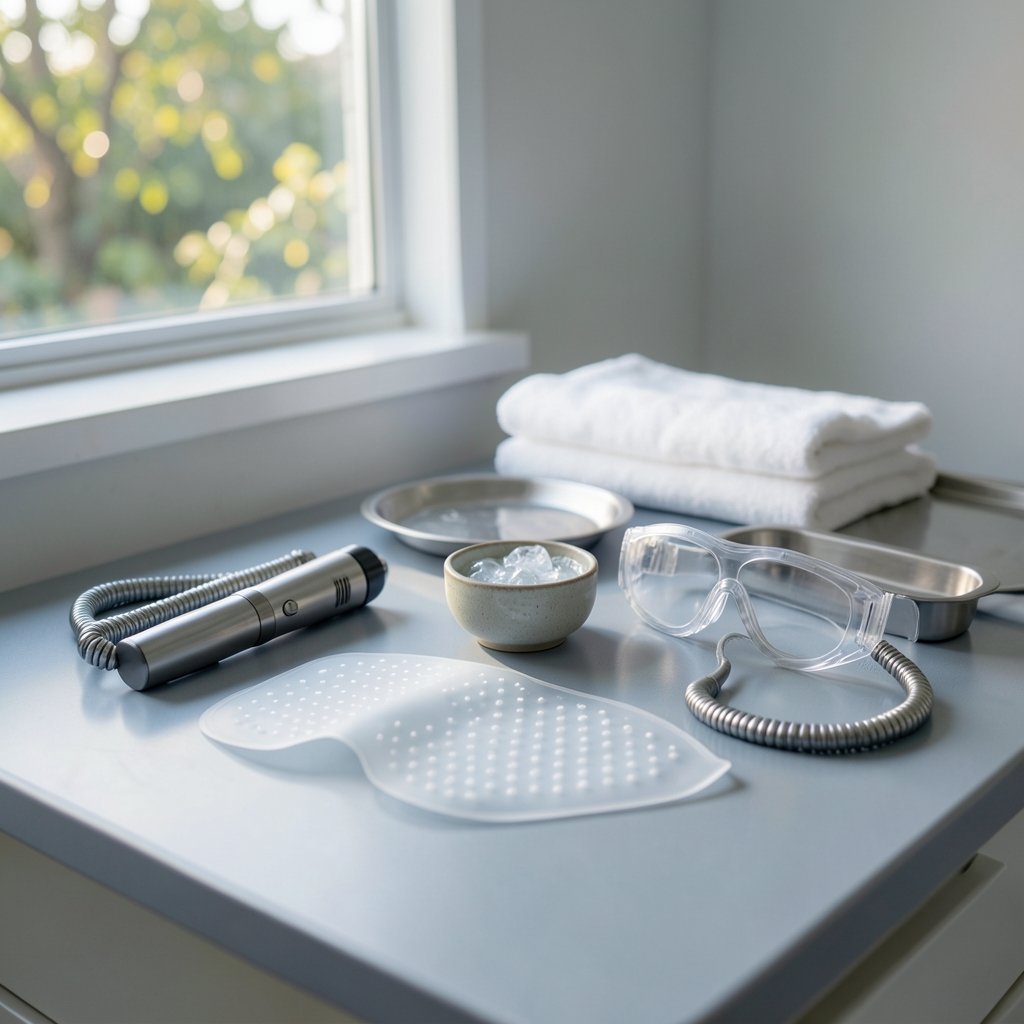
Dermatologists perform millions of light-based skin procedures every year, and the global market for at-home light devices keeps climbing. That popularity has created a genuine dilemma: should you spend a few hundred dollars on an LED face mask you use on the couch, or save up for a laser treatment done in a clinic? The two technologies share a family tree, but they behave very differently on your skin. This guide breaks down the science, the costs, the downtime, and the mistakes people make with both.
What an LED Mask Actually Does
An LED mask floods your face with low-intensity, non-coherent light across a broad area. Most consumer devices use two wavelengths: red light around 630–660 nm and blue light around 415 nm. Red light is studied for its effects on collagen and inflammation; blue light targets acne-causing bacteria. (Light therapy)
The key word is low intensity. At-home masks deliver a fraction of the energy used in a dermatologist’s office, which is why they require frequent sessions over weeks or months. Think of it as a slow, gentle nudge rather than a dramatic intervention.
In the United States, most at-home LED masks are regulated as Class II medical devices through the FDA’s 510(k) pathway, typically cleared for mild acne or mild wrinkle improvement. That clearance means the device is safe and substantially equivalent to a predicate device. It does not mean the results are dramatic.
What LED masks are good at
- Mild inflammatory acne, especially when blue and red light are combined
- Calming redness and post-procedure sensitivity
- A low-risk entry point for people who cannot tolerate acids or retinoids
- Maintenance between in-office treatments
Where LED masks fall short
- Deep wrinkles, significant sun damage, and textured scarring
- Melasma and stubborn pigmentation
- Anyone expecting visible change within a week
What Laser Treatments Actually Do

Lasers emit coherent, high-intensity light at a single wavelength. Some are ablative, meaning they remove the top layer of skin outright. Examples include CO₂ lasers at 10,600 nm and Er:YAG at 2,940 nm. Others are non-ablative or fractional, creating tiny columns of controlled injury while leaving surrounding skin intact to speed healing.
That controlled injury is the point. Your skin responds by rebuilding collagen and replacing damaged cells. It is a genuine wound-and-repair process, which explains both the results and the downtime. If you are weighing options for hair rather than skin, the same logic applies, and a closer look at laser hair removal, what actually works and what it costs, shows how wavelength and operator skill shape outcomes there too. (Mayo Clinic: Laser Hair Removal)
Lasers are clinician-administered for good reason. Energy settings, pulse duration, and cooling all need to be matched to your skin type. Get that wrong and you risk burns or post-inflammatory hyperpigmentation, particularly on Fitzpatrick IV–VI skin.
LED Mask vs Laser: Side-by-Side Comparison
| Factor | LED Mask (at home) | Laser (in clinic) |
|---|---|---|
| Light type | Non-coherent, low intensity | Coherent, high intensity, single wavelength |
| Typical cost | One-time purchase, often $150–$500 | Per session, frequently several hundred dollars each |
| Sessions needed | Regular use, several times weekly | Usually a series of 3–6, spaced weeks apart |
| Downtime | None to minimal | Hours to two weeks depending on type |
| Pain | None | Numbing cream often used; ablative types hurt |
| Best for | Mild acne, redness, maintenance | Wrinkles, scars, pigmentation, texture |
| Who operates it | You | Trained clinician |
| Main risks | Eye strain, photosensitivity reactions | Burns, scarring, infection, pigment changes |
The table makes the trade-off obvious. You are not choosing between a good option and a bad one. You are choosing between low risk with modest reward and higher risk with higher reward.
The Evidence Gap Nobody Talks About
Here is where marketing gets ahead of science. Fractional laser has a deep bench of randomized trials and biopsy studies showing measurable collagen remodeling. At-home LED has smaller trials, often manufacturer-funded, mostly focused on mild acne and mild photoaging.
Head-to-head trials comparing consumer LED masks with laser are scarce. Worse, studies rarely report irradiance and dose in J/cm² in comparable ways, so a “10-minute session” on one device may deliver a completely different dose than another. That is a major confounder, and it is why you should treat dramatic before-and-after photos with skepticism.
A useful parallel: the broader skincare guide on Voozon emphasizes evidence over hype, and the same filter applies here. Ask what a device is cleared to treat, not what an influencer claims it cured.
Practical Mistakes People Make With LED Masks
Having watched this category explode, a few errors come up again and again.
- Skipping eye protection. Most masks ship with goggles. Wear them. Staring into bright red LEDs for twenty minutes is not a neutral act for your eyes.
- Using it on active breakouts with acids layered underneath. Combining light therapy with strong actives can irritate skin. Keep the routine simple on session nights.
- Expecting laser-level results. A mask will not resurface acne scars. If that is your goal, save the money toward a clinical treatment.
- Buying unregulated devices online. A mask without a legitimate regulatory clearance is a gamble on both safety and output.
- Quitting after three weeks. LED benefits build slowly. Consistency over two to three months is where realistic expectations live.
Practical Mistakes People Make With Lasers
- Choosing on price alone. A cheap session with an inexperienced operator is the most expensive mistake in this category. Look for clinics that ask about your skin type and history before quoting a price. A guide to choosing a clinic that gets results covers the questions worth asking, and most transfer directly to facial lasers.
- Ignoring aftercare. Sun protection is non-negotiable for weeks after treatment. Skipping it can undo the results and trigger pigmentation.
- Stacking treatments too fast. Give skin the full healing window before the next session or the next strong active.
- Hiding medications and history. Isotretinoin use, cold sores, and keloid tendency all change the plan. Say so.
- Expecting one session to fix everything. Collagen remodeling takes months. The visible payoff arrives gradually.
Who Should Choose Which
Choose an LED mask if your main concerns are mild acne, redness, or general skin maintenance, your budget is fixed, and you want zero downtime. It also suits people who have completed a laser series and want to protect the investment.
Choose a laser if you have textured scarring, deeper wrinkles, sun damage, or pigmentation that has resisted topicals, and you can accommodate recovery time and a higher price. For pigmentation and texture, laser remains the stronger tool.
Consider both, in sequence. A common sensible pattern: a short series of clinical sessions to make the big changes, then at-home LED several times a week to maintain. That combination matches the strengths of each technology instead of forcing one to do the other’s job.
It also helps to sort out adjacent concerns first. If ingrown hairs or follicle inflammation are part of your picture, understanding why ingrown hairs happen and how to stop the cycle prevents you from blaming a light device for a problem it never addressed.
Cost Reality Check
At-home LED is a one-time purchase with unlimited use, which makes the per-session math attractive. Lasers are priced per treatment, and a full face series can run into four figures. But compare outcomes per dollar, not sessions per dollar. If a $300 mask cannot touch your scarring, the money is better spent toward one properly performed laser session.
There is also a resale and gifting angle to LED masks that lasers lack, plus no travel time. Those conveniences are real. They just should not be confused with clinical potency.
What the Skin Actually Needs After Either Treatment
Both approaches benefit from the same foundation: gentle cleansing, barrier support, and daily sunscreen. Light devices do not replace a basic routine, and lasers make sun protection more important, not less.
If hair is part of your overall grooming routine, note that post-treatment hair needs are their own conversation. A hair mask guide for choosing the right product is a reasonable starting point, and a proven hair loss treatment overview helps separate what works from what is marketed. Skin and hair concerns often travel together, and treating them as one plan saves time and money.
The Bottom Line on Safety
LED masks are among the lowest-risk devices in skincare. Eye protection and awareness of photosensitizing medications cover most of the risk. Lasers carry genuine risks, but those risks are manageable in trained hands and poorly managed in untrained ones. The device is only half the equation; the operator is the other half.
Anyone with a history of keloids, active infection, or recent isotretinoin use should get medical clearance before laser treatment. Pregnant readers should defer to their clinician on elective procedures. These are not formalities. They are the difference between a good outcome and a complication.
Conclusion
LED masks and lasers are not rivals so much as different tools for different jobs. LED offers gentle, low-risk, cumulative support for mild acne and everyday maintenance. Lasers deliver real structural change in exchange for cost, downtime, and operator dependency. The honest answer to “which is better” is: better for what?
If your concern is mild and your priority is convenience, an LED mask is a sensible, low-stakes purchase. If your concern is scarring, texture, or pigmentation, put the money toward a qualified clinician and a proper laser plan. And if you want both, use laser for the heavy lifting and LED to hold the gains. That is the strategy most likely to leave your skin, and your budget, in good shape.
Frequently Asked Questions
Can an LED mask replace a laser treatment?
No. An LED mask delivers low-intensity light that supports mild acne and skin maintenance. It cannot resurface scarring or remove pigmentation the way a clinical laser can. The dose and mechanism are simply not comparable.
How long before I see results from an LED mask?
Most people notice subtle changes in redness or breakout frequency after four to eight weeks of consistent use, several times per week. Deeper collagen effects take longer and are modest. Anyone promising visible wrinkle reduction in days is overselling.
Is laser treatment safe for darker skin tones?
It can be, but device choice and settings matter enormously. Certain wavelengths carry a higher risk of post-inflammatory hyperpigmentation on Fitzpatrick IV–VI skin. An experienced clinician will select a safer device and may patch test first. Never book a laser session with an operator who does not ask about your skin type.
How much downtime does a facial laser involve?
Non-ablative and fractional treatments typically involve redness for a few days, sometimes mild swelling. Ablative resurfacing can mean one to two weeks of visible healing. Plan around events and budget for sun avoidance during recovery.
Can I use an LED mask after laser treatment?
Many clinicians approve LED use during recovery because red light may help calm inflammation, but ask yours first. Timing depends on the laser type and how your skin is healing. Do not assume a device is fine just because it is gentle.
Do I need to wear eye protection with an LED mask?
Yes. Most quality masks include goggles, and you should wear them. Bright light exposure over many sessions is not something to treat casually, even at low intensity. If a device ships without eye protection, that is a warning sign about the product overall.