
High Jewelry vs Fine Jewelry: Key Differences Explained
 Abdul WadoodLast updated

Walk into a jewelry store and ask the difference between high jewelry and fine jewelry, and you may get a shrug. That is not because jewelers are being coy. It is because there is no law anywhere that defines either term. Both are trade and marketing labels, not regulated categories. The word “fine” carries no legal weight, and “high jewelry” is a tier invented by the big houses to describe their most exclusive work. Understanding what those labels signal, and what they quietly leave out, is the difference between buying a piece you love and paying for a word.
The Short Answer: Nobody Regulates These Terms
Most people assume that because jewelry involves precious metals and gemstones, the language around it must be tightly controlled. It is, in places, but not here. The US Federal Trade Commission publishes detailed guides on how gold, silver, platinum, and gemstone treatments may be described in advertising, and those rules are strict about claims. They say nothing about “fine” or “high.” The UK’s hallmarking system, administered under the Hallmarking Act 1973, verifies metal purity at assay offices. It does not rank jewelry into tiers.
That gap matters. It means a retailer can call almost anything “fine jewelry” if it is made of precious metal and set with genuine stones. It also means “high jewelry” is a promise about craft and rarity, enforced by reputation rather than regulation. When you see the phrase, you are reading a house’s self-definition, not a standard.
What “Fine Jewelry” Usually Means
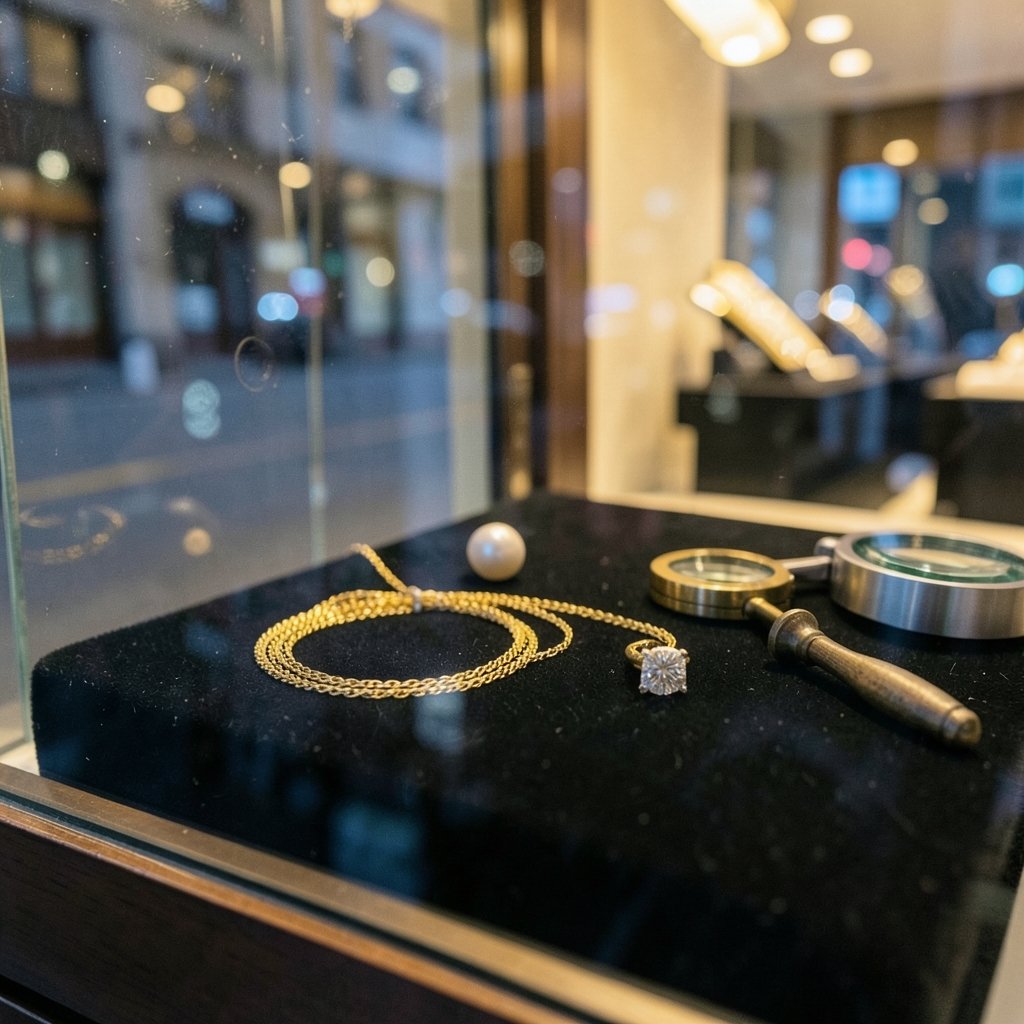
Fine jewelry is the broader, older, more workmanlike category. In practice, the term describes pieces made from precious metals such as gold, platinum, or sterling silver and set with genuine gemstones, as opposed to costume or fashion jewelry made from base metals, plated alloys, and glass or plastic stones.
That is the whole definition, and it is deliberately loose. A $200 gold chain and a $200,000 diamond ring can both sit under the same umbrella. Retailers set their own thresholds. Some will not use the phrase below 14-karat gold. Others apply it to anything with a real pearl. There is no minimum carat weight, no required gemstone grade, and no craftsmanship benchmark.
What fine jewelry does reliably signal is material honesty. If a piece is sold as 18-karat gold, the metal content should be verifiable, and in many markets it is stamped or hallmarked. If a stone is described as a ruby, disclosure rules generally require sellers to reveal treatments like heat or fracture filling. Those protections are real, and they are the practical reason to care about the category at all.
What “High Jewelry” Signals
High jewelry, or haute joaillerie in the French trade tradition, sits at the top of the pyramid. The label typically implies a one-of-a-kind or very limited piece, exceptional stones selected individually, hundreds of hours of handwork, and design that originates inside the house’s own atelier rather than a licensing partner.
The major houses treat high jewelry as a showcase rather than a volume business. Collections are unveiled at private events and couture weeks, often built around a single extraordinary stone or a theme that takes a design team a year to develop. Production numbers are tiny. Many pieces are never publicly priced.
Here is the honest caveat: none of those criteria are codified. A brand could apply the term more loosely, and some do. The label is best read as a claim about intention and craft, backed by the house’s reputation. The reputation is the guarantee, not the phrase.
Side-by-Side Comparison
| Feature | Fine Jewelry | High Jewelry |
|---|---|---|
| Definition | Trade term for precious-metal, genuine-stone pieces | Trade term for a house’s most exclusive, crafted tier |
| Legal status | Unregulated label | Unregulated label |
| Typical materials | 14k–18k gold, platinum, sterling silver, genuine gemstones | Platinum or high-karat gold, exceptional certified stones |
| Production | Often repeatable or seasonal lines | One-of-a-kind or very limited |
| Craft time | Varies widely, from hours to weeks | Frequently hundreds of hours per piece |
| Design origin | May be in-house or licensed | Almost always in-house atelier |
| Price range | Entry level to very high | Typically the top of the market |
| Resale behavior | Mixed; brand and materials matter | Strongest at auction for recognized houses |
The table is a useful map, but read the rows with care. The overlap is enormous. A well-made fine jewelry piece from a respected atelier can outclass a thin high jewelry release from a lesser name.
Why the Line Blurs in Practice
Three forces keep the categories smeared together.
First, brand equity does the heavy lifting. Auction results track names as much as stones. A signed piece from a storied house commands a premium that an unsigned piece of identical materials will not. That premium is reputation, and reputation is exactly what the high jewelry label is selling.
Second, licensing complicates origin stories. Some brands license their names for watches, eyewear, and accessible jewelry lines. Those products can be perfectly good, but they are not atelier work, and the distinction is rarely printed on the box.
Third, marketing inflation is real. As “fine” lost its edge, “high” moved in. Shoppers now encounter the phrase attached to pieces that would once have been called simply well-made. The word has drifted upward in price and downward in precision.
How to Judge a Piece Without Relying on Labels
The practical answer is to ignore the tier words and interrogate the object. A few habits separate confident buyers from confused ones.
- Ask for the metal specification in writing. Karat, weight, and whether plating is involved. A piece described only as “gold tone” is not fine jewelry by any working definition.
- Request gemstone disclosure. Species, treatment status, and whether the stone is natural, lab-grown, or imitation. Reputable sellers answer without flinching.
- Look for hallmarks or stamps. In the UK, assay office marks verify purity. In the US, stamps are voluntary but common. Their absence is not proof of fraud, but their presence is checkable.
- Ask where it was made and by whom. Atelier-made versus contract-manufactured is the single biggest practical difference between the tiers, and it is a fair question.
- Check the setting under magnification. Hand-cut seats, neat prongs, and a smooth underside cost time. Mass-produced settings show tool marks and uneven claws.
A common mistake is treating “high jewelry” as a quality grade that protects the buyer. It does not. Another is dismissing fine jewelry as entry level. Some of the most collectible pieces in the market are technically fine jewelry by material and superlative by execution.
Materials, Ethics, and the Paper Trail
Both tiers now face the same scrutiny on sourcing. The Responsible Jewellery Council sets supply-chain standards that many major houses and their suppliers follow, covering everything from human rights to environmental practice. Buyers who care about origin can ask whether a brand is certified and whether it publishes traceability information for specific stones. (Jewellery)
Lab-grown diamonds have added a new wrinkle. They are genuine diamonds by composition, and they appear increasingly in fine jewelry lines. Their resale value differs sharply from natural stones, which is a financial fact rather than a judgment. Anyone buying at high jewelry prices should confirm, in writing, which category a center stone falls into.
There is a parallel lesson in other premium categories: the label often carries less information than the specification. The same is true of hair care, where porosity matters more than the bottle’s claims, as this guide to high porosity hair and what it really means for care explains. Fragrance works the same way, with seasonal scent choices depending far more on concentration and composition than on marketing language. Jewelry rewards the same skepticism. (2c Hair Guide: Identify, Style & Care for Waves in 2026)
What Buyers Actually Get Wrong
The most expensive error is buying a tier word instead of a piece. A shopper who pays a premium for “high jewelry” without asking about stone certification or atelier origin may end up with ordinary work in an extraordinary box.
The second error is undervaluing craftsmanship in the lower tier. A hand-finished fine jewelry ring with a well-cut stone will hold up better over decades than a rushed high jewelry piece with a poorly set center stone. Craft outlasts category.
The third is ignoring resale reality. Auction houses care about signature, provenance, and stone quality, in roughly that order. If resale matters, buy signed pieces from established houses and keep the paperwork. If it does not, buy what you will wear. (GIA Gem Encyclopedia)
A Note on Price and Expectation
Price is the least reliable signal of tier. Fine jewelry spans a huge range, and high jewelry occasionally includes comparatively modest pieces designed to introduce clients to a collection. What separates them most consistently is not the number on the tag but the decisions behind the object: how the stones were chosen, how long the bench worked, and whether the design came from the house itself.
That is also why two pieces with identical gold weight and similar diamonds can differ by a factor of ten. The buyer is paying for selection, labor, and name. All three are legitimate. None of them are regulated.
Conclusion
High jewelry and fine jewelry are not official ranks. They are trade shorthand, and the gap between them is maintained by reputation rather than law. Fine jewelry describes precious materials and genuine stones, broadly and usefully. High jewelry describes a house’s most rarefied output, defined by rare stones, in-house design, and hundreds of hours of handwork. The words help you orient, but they will not protect you.
The buyers who do well in this market ask plain questions and expect written answers. They check hallmarks, request treatment disclosure, and look closely at the setting. They treat the label as a starting point rather than a verdict. Do that, and the distinction between the two tiers becomes a useful map instead of a sales pitch.
Frequently Asked Questions
Is high jewelry legally different from fine jewelry?
No. Neither term has a legal definition in most jurisdictions. Metal purity and gemstone claims are regulated, but the tier labels themselves are trade and marketing language set by individual houses and retailers.
Is all high jewelry one of a kind?
Mostly, but not always. The label usually implies a one-of-a-kind or very limited piece made in-house with exceptional stones. Because there is no standard, some brands apply it more loosely, so ask about production numbers directly.
Can fine jewelry be a good investment?
Sometimes, but not reliably. Value tends to concentrate in signed pieces from established houses, high-quality stones, and complete paperwork. Most fine jewelry is a pleasure to own rather than a financial instrument, and resale usually returns less than the purchase price.
Does a hallmark prove a piece is high jewelry?
No. A hallmark verifies metal purity, nothing more. In the UK, assay offices apply marks under the Hallmarking Act 1973. A hallmarked piece is confirmed as the stated metal, but its design, stone quality, and tier are separate questions.
Are lab-grown diamonds used in high jewelry?
Increasingly, yes, and they are genuine diamonds by composition. The important step is confirming in writing which type a center stone is, because natural and lab-grown stones behave very differently on resale.
What should I ask before buying an expensive piece?
Ask for the metal specification in writing, full gemstone disclosure including treatments, the country and workshop of manufacture, and whether the brand follows a recognized supply-chain standard. A seller who answers all four clearly is worth your business.