
High Porosity Hair: Causes, Signs & Care Guide 2026
 Abdul WadoodLast updated
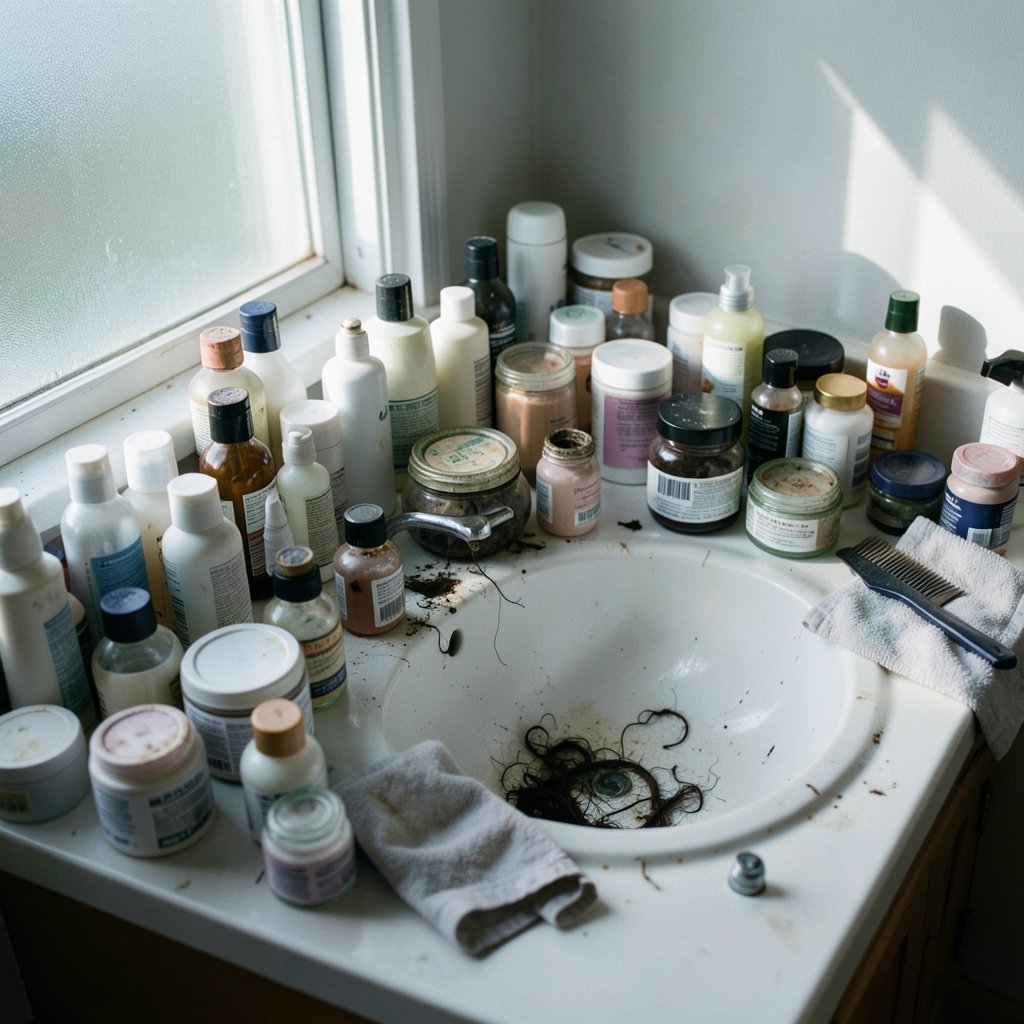
Does your hair soak up conditioner like a sponge in the shower, only to feel bone-dry two hours later? If that sounds familiar, you may have stumbled into the world of high porosity hair — a term that gets thrown around constantly in hair care circles but is rarely explained with any real precision. The concept is useful, but it is also oversold, misdiagnosed, and wrapped in more myth than science. This guide cuts through the noise: what porosity actually describes, why the popular at-home tests are shaky, which habits genuinely help, and which “miracle” fixes are a waste of money. (Hair and scalp care)
What “High Porosity” Actually Describes
Here is the first thing to understand: hair porosity is a consumer and cosmetics term, not a clinical diagnosis. No dermatology textbook lists it as a medical condition, and there is no standardized scientific definition. What the term tries to capture is real, though — the state of the hair’s outer layer, the cuticle.
The most widely accepted scientific framework for understanding this is the two-layer model of hair, described in detail in Robbins’ standard reference, Chemical and Physical Behavior of Human Hair, and refined by researchers such as Yang and Wortmann. In simple terms, hair has a protective outer sheath (the cuticle, made of overlapping scales) and an inner core (the cortex). The integrity of that cuticle governs how quickly water enters the hair and how quickly it escapes. (Hair)
When the cuticle is raised, chipped, or worn away, water rushes in fast and leaves just as fast. That is the entire physical basis of “high porosity.” It is less a personality type for your hair and more a description of cuticle damage and weathering. You can read more about the underlying structure on the Wikipedia entry for hair, which covers the cuticle and cortex layers in accessible detail.
Why High Porosity Hair Loses Moisture So Fast
Think of a healthy cuticle as a roof with tightly overlapping shingles. Water rolls off slowly, and moisture inside the fiber stays put. Now imagine those shingles lifted and cracked. Rain gets in easily — and evaporates out just as easily. That is why high porosity hair tends to feel:
- Fast-drying after washing, sometimes surprisingly so
- Prone to frizz, especially in humid weather
- Dry or rough at the ends within hours of conditioning
- Tangled easily, because raised cuticles create friction between strands
- Dull rather than glossy, since a smooth cuticle is what reflects light
The frustrating paradox is that this hair type often feels both over-moisturized in the shower and under-moisturized afterward. Products seem to “disappear.” That is not your imagination — it is water and conditioning agents entering and leaving quickly through a compromised barrier.
What Causes It: Damage, Not Destiny
Consumer hair literature consistently points to a handful of causes. These are widely repeated claims rather than established clinical findings, so treat them as a practical consensus rather than hard science:
- Chemical processing — bleaching, relaxing, and perming are the biggest culprits. Bleach in particular breaks down the cuticle’s protective structure.
- Heat damage — flat irons, curling wands, and blow dryers used at high temperatures without protection.
- Mechanical wear — aggressive brushing, tight styling, and rough towel-drying.
- Environmental weathering — sun exposure, chlorine, and repeated wetting and drying cycles over time.
Notice what is missing from that list: genetics. Porosity in the high range is overwhelmingly described as acquired through damage and weathering, not something you are simply born with. That is genuinely good news, because damage-related problems respond to better habits.
The Uncomfortable Truth About Porosity Tests
Search for “how to test hair porosity” and you will find the float test: drop a clean strand into a glass of water and see whether it sinks, floats, or hovers. There is also the “slip test,” where you slide a finger up a strand to feel for bumps.
Here is the honest assessment: these tests are widely described as unreliable, and no validated at-home test is known to exist. The float test is confounded by hair’s natural oils, product residue, strand thickness, and simple surface tension. A single strand can float for reasons that have nothing to do with cuticle condition. Cosmetic-science and dermatology sources also disagree on whether “porosity” is a meaningful distinct category at all, or just a continuum of cuticle damage with arbitrary cut-off points.
What works better in practice: observe behavior over time rather than trusting a one-minute party trick. Does your hair dry unusually fast? Does it struggle to hold moisture past midday? Does it feel rough when you run a finger from tip to root? Patterns beat single tests. And if you genuinely need a precise answer, a trichologist or dermatologist can assess cuticle condition far more reliably than a water glass.
How to Care for High Porosity Hair: What Actually Works
The core strategy is simple to state and harder to execute: protect the cuticle, slow moisture loss, and stop doing the things that caused the damage. Here is what holds up in practice.
1. Layer moisture, then seal it
High porosity hair needs a leave-in conditioner or moisturizing cream applied to damp hair, followed by an oil or butter to seal the surface. The order matters enormously. Applying oil to dry hair does almost nothing except sit on top; applying it over a water-based layer traps that moisture where it belongs. This two-step approach is the single highest-impact change most people can make.
2. Rinse cooler than you think
Hot water lifts the cuticle. A cooler final rinse helps the cuticle lie flatter, which measurably improves shine and reduces frizz. It will not repair damage, but it is free and it works.
3. Use protein — carefully
Damaged, high porosity hair often benefits from protein treatments, which temporarily fill gaps in the cuticle. But more is not better. Overuse makes hair stiff, brittle, and prone to snapping. A practical rhythm is a protein treatment every few weeks, balanced with moisturizing deep conditioning in between. If hair feels straw-like after a treatment, you have overdone it.
4. Reduce friction everywhere
Swap rough towel-drying for a soft cotton T-shirt or microfiber towel. Detangle with a wide-tooth comb on conditioned hair, working from ends upward. Sleep on a satin or silk pillowcase if you can. These small changes compound over months.
5. Cut back on heat and chemicals
This is the unglamorous truth nobody wants to hear: if you keep bleaching and flat-ironing, no product will outrun the damage. Lower the heat setting, always use a heat protectant, and stretch the time between chemical services. For context on how heat alters hair structure, the Wikipedia overview of hair styling tools is a reasonable starting point.
6. Trim what cannot be saved
Split ends do not heal. They travel upward and take healthy length with them. Regular trims are not a setback — they are maintenance.
Common Mistakes That Make It Worse
Most people dealing with high porosity hair are not lazy. They are often doing too much, in the wrong order. Watch for these:
| Mistake | Why It Backfires | Better Approach |
|---|---|---|
| Applying oil to dry hair | Seals nothing; sits on the surface | Moisturize first, then seal |
| Daily protein treatments | Causes stiffness and breakage | Space them out; alternate with moisture |
| Very hot water and hot tools | Lifts the cuticle further | Cooler rinses, lower heat settings |
| Heavy silicones to fake shine | Coats without conditioning; buildup dulls hair | Use clarifying shampoo occasionally |
| Trusting the float test | Unreliable and often misleading | Track how hair behaves over a week |
| Over-washing | Strips moisture the cuticle cannot retain | Wash less often, use gentle cleansers |
The pattern across all of these is the same: high porosity hair responds to less aggression and more consistency, not to more products.
What to Realistically Expect
A balanced view matters here. You cannot permanently “close” a damaged cuticle with a product. Cosmetic science is clear that cuticle damage is cumulative and largely irreversible. What you can do is slow further damage, improve how the hair feels and behaves, and protect new growth as it emerges from the scalp.
Improvement typically shows up in a predictable order: less frizz and tangling first, then better shine, then improved length retention as breakage drops. That timeline is measured in weeks to months, not days. Anyone promising instant permanent repair is selling something.
For anyone building a broader routine around textured or damaged hair, resources like Voozon Media cover practical hair and beauty guidance that pairs well with the porosity principles above.
Conclusion
High porosity hair is best understood not as a mysterious hair “type” but as a description of cuticle condition — one shaped mostly by damage and weathering rather than genetics. The popular at-home tests are unreliable, the marketing around “porosity-specific” products is often overblown, and the real solutions are unglamorous: layer moisture before sealing, protect the cuticle from heat and chemicals, use protein thoughtfully, and reduce friction everywhere. Do those things consistently and the difference is real, even if it is gradual. The goal is not to fix damaged hair overnight. It is to stop making it worse and give it the best possible chance to behave.
Frequently Asked Questions
Can high porosity hair become low porosity?
Not truly. Cuticle damage is largely cumulative and irreversible, so hair does not revert to a smoother state once the outer layer is worn. What can happen is that better care makes hair behave more smoothly — less frizz, more shine, less tangling — which is why people sometimes believe their porosity “changed.” New growth emerging from the scalp may well have a healthier cuticle, but the older, damaged lengths will not regenerate.
Is the water float test accurate?
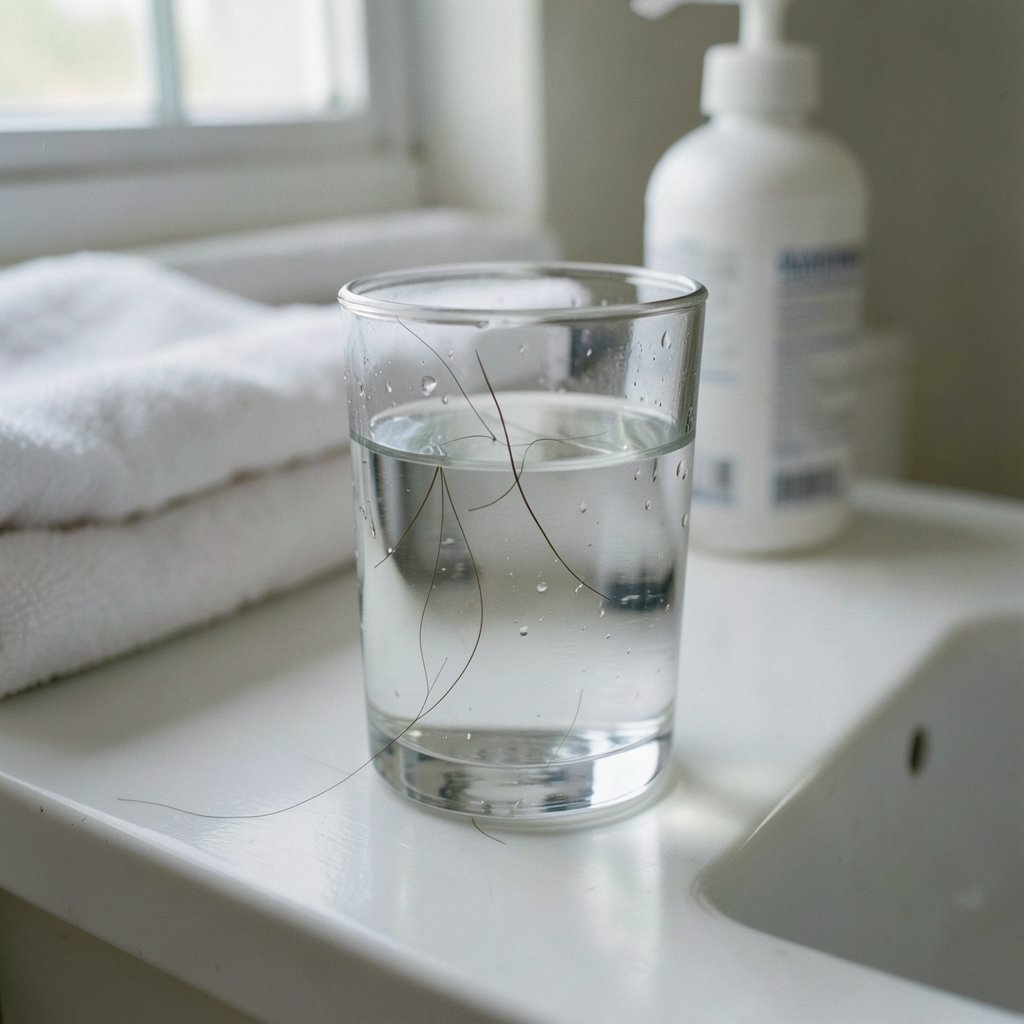
It is widely described as unreliable, and no validated at-home test is known to exist. Results are skewed by natural oils, leftover product, strand thickness, and surface tension. A strand can float for reasons unrelated to cuticle condition. Observing how your hair behaves over a week — drying speed, moisture retention, roughness — gives a far more useful picture than a single glass of water.
How often should high porosity hair be washed?
Less often than you might think, and with gentler cleansers. Every wash cycle swells and dries the hair fiber, and high porosity hair loses moisture quickly afterward. Many people do well washing two to three times per week, or less if scalp oil allows, using a sulfate-free or gentle cleanser and always following with conditioner. If you use heavy styling products, an occasional clarifying wash prevents buildup.
Do protein treatments help or hurt?
Both, depending on frequency. Protein temporarily fills gaps in a damaged cuticle, which can make high porosity hair feel stronger and smoother. But overuse causes stiffness, brittleness, and snapping. A practical rhythm is a protein treatment every few weeks, alternated with moisturizing deep conditioning. If hair feels straw-like after treatment, you have used too much.
Can I use heat styling at all?
Yes, with guardrails. Lower the temperature, always apply a heat protectant, and avoid holding the tool on one section for long. The bigger issue is frequency — daily high-heat styling will outpace any repair product. Stretching the time between heat sessions and between chemical services does more for cuticle health than any single product in your cabinet.
Are porosity-specific products worth buying?
Sometimes, but the label is doing less work than the marketing suggests. What matters is the formula’s function: humectants and conditioning agents to draw in and hold moisture, plus a sealing layer to slow water loss. Plenty of well-formulated leave-in conditioners and oils deliver that without a “high porosity” badge. Focus on ingredients and application order, not the front of the bottle.