
Fine Line Tattoos: What to Expect & How to Choose
 Abdul WadoodLast updated
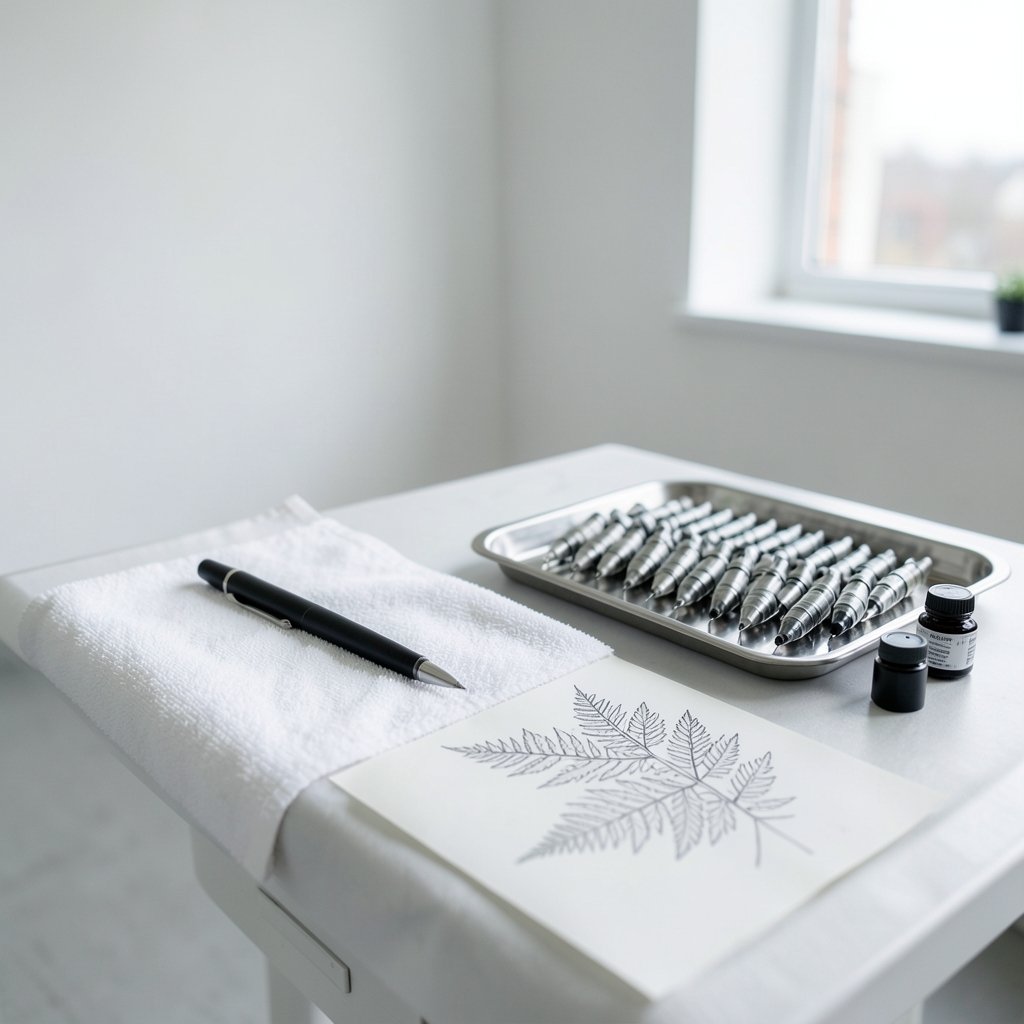
Fine line tattoos look effortless on Instagram: delicate script, whisper-thin botanicals, tiny symbols that seem to float on the skin. In reality, that thin line is one of the least forgiving things a needle can do. A single millimeter of wobble is invisible in bold traditional work and glaring in a fine line piece. That gap between how fine line tattoos look online and how they actually age is where most disappointment begins.
What “Fine Line” Actually Means
Here is the first surprise: “fine line” is not an official category. No regulator defines it, no licensing board certifies it, and no industry body sets a needle-size threshold. It is a marketing and studio term that generally describes tattoos made with very thin needles (often single-needle or three-needle configurations) and minimal line weight, usually in black or grey ink. (Tattoos: Understand risks and precautions)
Because the term is informal, two artists can advertise “fine line” and mean completely different things. One may mean a 1RL needle and hairline script. Another may mean a delicate but still substantial outline. Before booking, ask specifically about needle size, expected line weight, and how the design will hold up in five years. An artist who can answer that clearly is usually an artist who has watched their own work age.
The style’s modern popularity is widely dated to the mid-2010s, driven largely by social media. That timeline matters: most fine line tattoos in circulation are still relatively young, so long-term evidence about how the style ages is thin on the ground. Much of what circulates as fact is artist-reported experience rather than controlled study.
Why Fine Line Tattoos Are Harder Than They Look

A bold line hides small mistakes. A fine line amplifies them. Several practical factors make this style technically demanding:
- Skin is a moving target. Lines are drawn on stretched skin and heal on relaxed skin. A line that looks straight on a taut forearm can settle unevenly once the tissue relaxes.
- Depth control is everything. Ink must sit in the dermis. Too shallow and it fades or patches out during healing; too deep and it spreads, creating the soft blur known as blowout.
- Thin needles bend and dull fast. A single-needle configuration is less rigid, so consistent pressure is harder to maintain across a long session. Fatigue shows up in the line.
- Healing is less predictable. Fine lines have less ink volume to spare, so any patchy healing is more visible than it would be in a saturated bold line.
None of this makes fine line work a bad choice. It makes artist selection the single biggest variable in the outcome.
How Fine Line Compares to Other Styles
| Factor | Fine Line | Bold Traditional | Script/Lettering |
|---|---|---|---|
| Typical needle | 1RL to 3RL | 5RL to 9RL or larger | 1RL to 3RL |
| Line weight | Hairline to thin | Heavy, uniform | Varies with letter size |
| Healing visibility | High (small flaws show) | Low (bold lines mask variation) | High on small text |
| Longevity | Good with skilled work; fades faster | Very good | Good if sized generously |
| Best body areas | Upper arm, thigh, back, calf | Most areas | Larger flat areas |
| Riskiest areas | Hands, feet, ribs, fingers | Fewer restrictions | Fingers, wrists, ribs |
The pattern is consistent: fine line work performs best on broad, relatively flat areas with stable skin. It performs worst on high-friction, high-movement zones.
The Body Areas Artists Often Refuse
Experienced artists frequently decline fine line work on hands, fingers, feet, and ribs. This is not gatekeeping; it is a prediction about healing. Skin on the hands and feet regenerates quickly and takes constant friction, so thin lines blur or drop out faster there. Ribs move with every breath, which makes consistent line depth difficult.
If an artist says no to a fine line finger tattoo, take it as a good sign. A yes from someone who has never discussed aftercare, sizing, or aging is a bigger red flag than a refusal.
Practical Tips That Actually Change the Outcome
Size up, not down. A common mistake is shrinking a design to fit a small space. Tiny text and micro-detail compress until lines merge. Give the design room; a slightly larger piece usually heals sharper and reads better for years.
Ask to see healed work, not fresh work. Fresh tattoos photograph beautifully. Healed photos, taken months later under normal lighting, reveal how an artist’s lines actually settle. Ask directly.
Skip ultra-fine detail on curved surfaces. Wrists, ankles, and fingers curve, and flat stencils distort on curved skin. Simple, open designs survive curvature better than dense ones.
Follow aftercare exactly. Thin lines are less tolerant of picking, sun exposure, and skipped moisturizing. Most fading blamed on the artist starts with a healing phase that went sideways.
Plan for touch-ups. A touch-up is normal in fine line work, not a failure. Build it into your expectations and budget rather than treating it as evidence something went wrong.
For anyone weighing how a very specific aesthetic choice plays out over time, the same logic applies across categories: the details that define a look are usually the details that demand the most care. That holds true whether the subject is a tattoo line, a fragrance that defines a season, or the design details that define a driver’s car. The visible result is the easy part; the craft underneath is what determines whether it lasts.
Ink Safety and Regulation: What You Should Know
Tattoo ink is regulated differently depending on where you live, and the rules mostly cover hygiene and pigments, not needle gauge or line weight.
In the European Union, Regulation (EU) 2020/2081 introduced restrictions on certain substances in tattoo and permanent makeup inks under the REACH framework, with the main provisions applying from 4 January 2022. Some pigments were restricted, while others came under transition periods and later amendments. Fine line work typically uses black and grey inks, which were less affected than brightly colored pigments, but the regulation has been amended since, so anyone with specific pigment concerns should check the current consolidated text on EUR-Lex.
In the United States, the FDA treats tattoo inks as cosmetics and has issued safety communications about contaminated ink and related infections. The CDC has documented outbreaks of nontuberculous mycobacteria linked to contaminated tattoo ink. Both are worth reading before booking, especially if you are choosing a studio with unclear sourcing. (Tattoo)
One honest caveat: peer-reviewed literature on tattoo complications exists in dermatology journals, but fine-line-specific complication rates are not well established. Claims that fine line work is inherently “safer” or “riskier” than other styles are not backed by controlled studies. What is well documented is that hygiene, artist skill, and aftercare drive outcomes far more than line weight.
What Fine Line Tattoos Cost, and Why
Pricing varies enormously by city, artist reputation, and design complexity. Most reputable artists charge by the hour or by the piece, with a shop minimum that often exceeds the actual work time on a tiny tattoo. Two things are worth knowing:
- A low price on micro work is often a warning. Very cheap fine line tattoos usually mean rushed stenciling, minimal consultation, or an artist early in their learning curve.
- You are paying for restraint. The skill in fine line work is knowing when to stop, when to refuse a placement, and how to keep pressure consistent. That is experience, and it is priced accordingly.
If budget is tight, the better move is a smaller number of well-executed pieces rather than several bargain ones that need covering later. Cover-ups of blurred fine line work are common, and they cost more than the original tattoo did.
Aging: The Honest Version
Fine line tattoos age. All tattoos age. The questions are how fast and how gracefully.
Well-executed fine line work on a stable body area, protected from sun, can look crisp for years. Lines may soften slightly, and very fine detail may lose definition. Sun exposure is the biggest accelerant; UV breaks down pigment and blurs edges. Daily sunscreen on exposed tattoos is the single most effective thing you can do.
Blowout is the outcome people fear most, and it is largely a technique issue. It appears as a soft halo around a line, most often from ink placed too deep or from overworking the skin. It is difficult to remove and usually requires laser treatment or a cover-up. Choosing an artist with healed-photo evidence is the practical defense.
There is also a sizing reality worth naming: small tattoos get blurrier faster than large ones, because the same amount of ink spread occupies a smaller visual space. A palm-sized fine line design has more room to stay legible than a coin-sized one.
Choosing an Artist Without Guesswork
A workable checklist, in order:
- Review healed photos as well as fresh ones, and look for consistent line weight.
- Ask what needle configuration they use for your design and why.
- Ask whether they would recommend a different placement or size, and listen to the answer.
- Confirm licensing and hygiene practices, including single-use needles and ink handling.
- Ask about touch-up policy in writing before you pay a deposit.
An artist who pushes back on a bad placement is doing you a favor. The best fine line tattoo is often the one an artist talked you out of.
Style choices ripple across every design field, and the same principle of matching technique to purpose shows up in unexpected places, from how 2c hair is identified and cared for to the engineering decisions behind Northline motoring. Match the method to the material, and the result holds.
Conclusion
Fine line tattoos are neither a shortcut nor a trap. They are a technically demanding style that rewards patience, honest artists, and realistic expectations. The delicate look that draws people in is exactly what makes the work unforgiving: thin lines show every flaw in depth, pressure, and healing. Get the artist right, size the design generously, avoid high-friction placements, and protect the work from the sun, and fine line tattoos can age well. Skip those steps and the blur is not a matter of luck. It is a matter of choices made before the needle ever touched skin.
Frequently Asked Questions
Do fine line tattoos fade faster than other tattoos?
They can appear to fade faster because thin lines carry less ink and small flaws are more visible. Well-applied fine line work on a stable body area holds up reasonably well, but sun exposure and poor aftercare accelerate fading more than line weight does.
Are fine line tattoos more likely to blow out?
Blowout is primarily a technique issue tied to ink depth and overworking the skin, not to line weight itself. That said, thin lines make any blowout more noticeable, so artist skill matters more in this style. There is no reliable published data on fine-line-specific blowout rates.
Is fine line tattoo ink regulated?
Regulation focuses on hygiene, licensing, and pigment safety rather than needle size. In the EU, Regulation (EU) 2020/2081 restricted certain substances in tattoo inks from 4 January 2022, with later amendments. In the US, the FDA regulates tattoo inks as cosmetics and has issued safety communications about contamination.
Which body areas are best for fine line tattoos?
Broad, relatively flat areas with stable skin work best: upper arm, thigh, calf, and back. Hands, fingers, feet, and ribs are riskier because of friction and movement, and many experienced artists decline fine line work there.
How much should a fine line tattoo cost?
Pricing depends on city, artist reputation, and complexity, and most studios set a minimum charge that can exceed the work time on very small pieces. Unusually cheap micro work is often a warning sign. Expect to pay for the artist’s experience, and budget separately for a possible touch-up.
Can a blown-out fine line tattoo be fixed?
Blowout is difficult to reverse. Options usually include laser treatment to lighten the area before reworking it, or a cover-up design that uses the blurred line as part of a larger piece. Prevention through careful artist selection is far easier than correction.