
Couples Tattoos That Age Well: Ideas & Costs 2026
 Abdul WadoodLast updated

Two people walk into a tattoo studio with a shared idea and walk out with permanent marks of their bond. Some of those marks become the story of a lifetime. Others become the reason one partner books a laser removal appointment. The difference rarely comes down to how much love was in the room. It comes down to design choices, placement, and a few honest conversations people tend to skip.
Couples tattoos are matching, complementary, or paired designs that two people get to symbolize their relationship. They range from tiny matching line hearts to large pieces that only make sense when the two partners stand side by side. The concept is simple. The execution is where things get interesting.
Why Couples Choose Matching Ink
People get paired tattoos for reasons that go well beyond romance. Some couples mark a milestone like a wedding or the birth of a child. Others use ink as a private language, a small symbol that means nothing to strangers but everything to the two people wearing it. Long-distance partners sometimes choose designs that reference a shared place or date.
There’s also a practical appeal. A tattoo is a commitment that doesn’t depend on a ring fitting or a piece of jewelry surviving daily wear. It’s always there, and that permanence is exactly what draws some couples in and scares others off.
The smartest approach treats a couples tattoo less like a grand romantic gesture and more like a small design project. You plan it, budget for it, and think about how it will look in twenty years. That framing removes a lot of the pressure and produces better results.
Matching vs. Complementary vs. Paired Designs
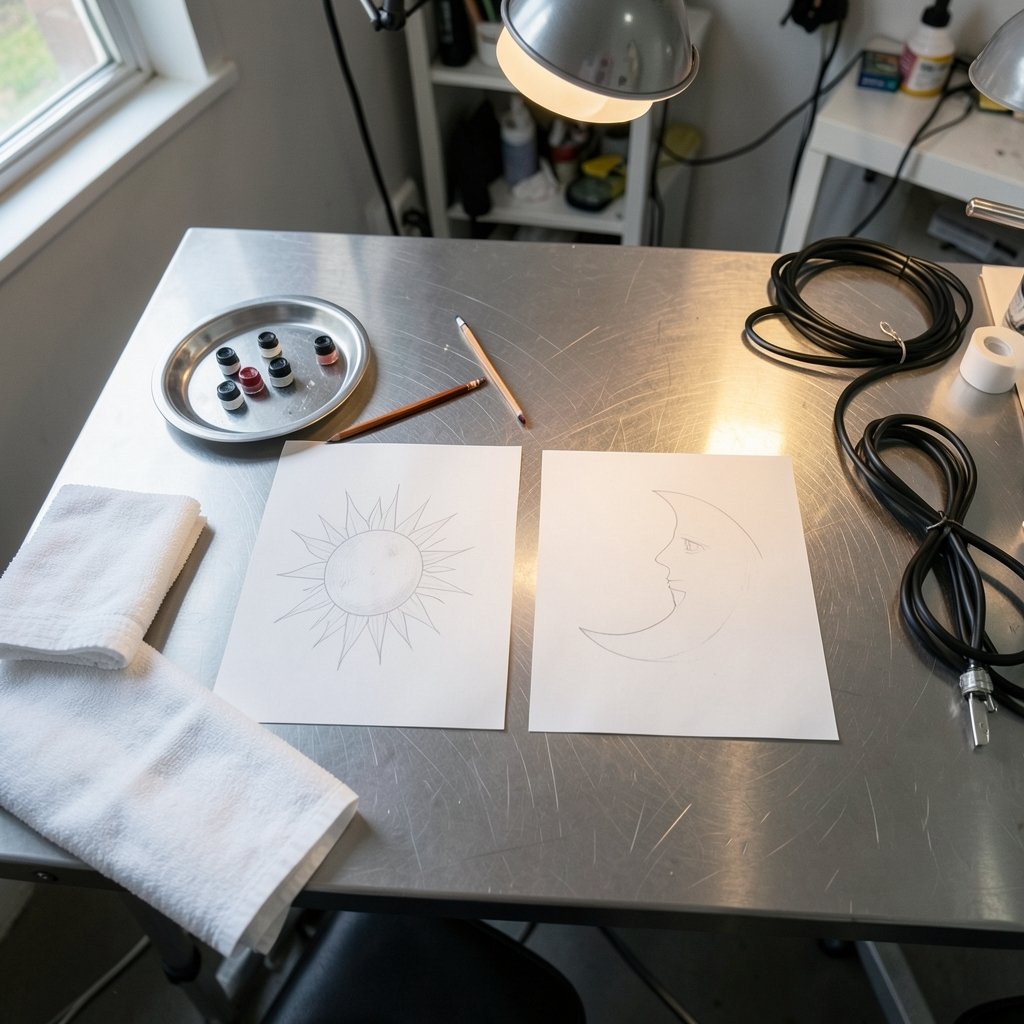
Not all couples tattoos work the same way. Understanding the three main styles helps you pick one that fits your relationship and your tolerance for permanence.
| Style | How It Works | Best For | Main Risk |
|---|---|---|---|
| Matching | Both partners get the identical design in the same spot | Couples who want a clear, visible symbol | Feels dated if the relationship changes |
| Complementary | Two designs that connect, such as two halves of a whole | Couples who want subtlety and a shared secret | The connection is invisible when apart |
| Paired | Two separate but thematically linked designs | Couples with different tastes and pain limits | Requires more design work up front |
Matching tattoos are the most common and the most visible. They’re also the most likely to feel awkward after a breakup, because each person carries a literal copy of the other’s mark. Complementary designs split a single image, like a sun and moon or two puzzle-piece edges, so each person holds half. Paired designs take the loosest approach: one partner might get a small mountain, the other a wave, both referencing a shared trip. (Tattoos: Understand risks and precautions)
For most couples, complementary or paired designs age better. They read as personal rather than as a couple’s accessory, and they survive changes in the relationship with more grace.
Design Ideas That Hold Up Over Time
The best couples tattoo ideas share one trait: they mean something specific to the two people involved. Generic symbols tend to lose their charm. A few directions that tend to work:
- Coordinates of a first apartment, a wedding venue, or a city with personal history, kept small and clean
- Handwriting lifted from a love letter, a wedding vow, or a note from a child
- Line-art halves of a shared image, such as two birds, two constellations, or two interlocking shapes
- Dates in Roman numerals or another understated format
- Small botanical or geometric pairs that look complete on their own but stronger together
- A shared phrase in a language that matters to both partners
What these have in common is restraint. Fine-line and small-scale designs are easier to place, easier to cover later if needed, and less likely to feel heavy or dated. Big, bold, name-heavy designs are the ones people most often regret.
Avoid These Common Mistakes
A few patterns show up again and again among couples who end up unhappy with their ink.
Getting a partner’s name in large lettering. Names are the single most-requested cover-up subject in many studios. If you want a name, keep it small and place it somewhere easy to work around.
Rushing the decision. A spontaneous matching tattoo after a great weekend is a classic setup for regret. Give the idea at least a few weeks to settle before booking.
Ignoring pain and placement differences. One partner may handle a ribcage piece easily while the other finds it unbearable. Matching designs don’t require matching placements.
Skipping the artist consultation. A good artist will tell you when a design won’t work at the size you want. Listen to that feedback.
Forgetting about future careers or climates. Visible hand, neck, and face tattoos still carry stigma in some workplaces. Think about where the design will live for decades.
What Couples Tattoos Actually Cost
Price is one of the most overlooked parts of the planning. Costs vary widely by city, artist, size, and complexity. As a rough guide:
| Factor | Typical Range | Notes |
|---|---|---|
| Small matching design (per person) | $80–$200 | Shop minimums often apply |
| Medium complementary piece (per person) | $200–$500 | Depends on detail and color |
| Large custom paired design (per person) | $500–$1,500+ | Multiple sessions possible |
| Artist consultation | Often free | Some charge a deposit |
| Touch-up session | Usually free or low cost | Confirm shop policy first |
Two people getting tattooed doubles the total. A modest matching pair can easily run $300 to $600 for the couple, and larger custom work climbs from there. Budget for both people, rather than one, and confirm deposit and touch-up policies before booking.
Health, Safety, and Legal Basics
Tattoo safety is not a couples issue specifically, but it matters more when two people are getting work done at the same time. A few practical points:
- Choose a licensed studio and ask to see the artist’s portfolio and hygiene setup
- Confirm that needles and ink caps are single-use and opened in front of you
- Follow aftercare instructions exactly, especially in the first two weeks
- Avoid getting tattooed while sick, sunburned, or on certain medications
- Check local age rules before booking, since minimum ages and parental consent requirements vary by region
Skin reactions and infections are uncommon in reputable studios but not impossible. If either partner has a history of keloids, eczema, or allergies, mention it during the consultation. The Mayo Clinic’s overview of tattoo risks is a reasonable starting point for understanding what can go wrong.
How to Talk About Permanence Before You Book
The conversation before the appointment matters more than the appointment itself. Couples who skip it tend to be the ones who regret the ink later.
A useful structure is to ask three questions out loud, together:
- What does this design mean to each of us separately? If one person sees it as a forever symbol and the other sees it as a fun memory, that gap will cause friction.
- What happens if we break up? Not a fun question, but a practical one. Some couples agree in advance that they’ll keep the tattoo as a memory. Others plan for cover-ups. Knowing the answer reduces anxiety.
- Where will this be in twenty years? Skin changes with age, sun exposure, and weight shifts. Small, well-placed designs handle those changes better than large ones on high-friction areas.
There’s no single right answer. The point is to have the conversation before the needle comes out, not after.
Cover-Ups, Removal, and the Long View
Sometimes a couples tattoo outlives the relationship. That’s a reality, not a failure. The good news is that small, simple designs are far easier to cover or remove than large, dark, or colorful ones.
Laser removal works best on dark ink and lighter skin tones, and it typically requires multiple sessions. Cover-ups work best when the new design is larger and darker than the original. Both options are easier when the original tattoo is small and placed on a relatively flat area.
This is the strongest argument for keeping couples tattoos modest in size and simple in design. You’re not planning for failure. You’re giving yourself options.
Matching Ink Around the World
Tattoo traditions vary enormously across cultures, and couples have been marking their bonds in ink for a very long time. In some Polynesian and Māori traditions, tattoo carries deep genealogical and social meaning and is not treated as a romantic accessory. In Japan, tattooing has a complex history tied to both artistry and, at times, social exclusion. Understanding that context matters if you’re drawing on traditional motifs. The Wikipedia entry on tattooing offers a broad historical overview worth skimming before you borrow a symbol from a culture that isn’t yours. (Tattoo)
The takeaway is simple: respect the source. If a design references a tradition you don’t belong to, do some reading first, or choose something personal instead.
Working With a Tattoo Artist
A good artist is your best ally in getting a couples tattoo that lasts. A few ways to make that relationship work:
- Bring references, not demands. Show what you like, then let the artist adapt it.
- Book a consultation before a session. It’s cheaper to change a design on paper than on skin.
- Ask about healing and touch-ups. Some shops include a free touch-up; others don’t.
- Be honest about budget. Artists would rather adjust size than have you vanish after a deposit.
- Trust the “no” answer. If an artist says a design won’t work at the size you want, believe them.
For couples getting matching work, book sessions back to back so you can support each other and compare aftercare notes. It also makes the experience more fun.
Conclusion
Couples tattoos work best when they’re treated as a small, thoughtful design project rather than a grand romantic statement. Choose a style that fits your relationship, keep the design simple and well-placed, budget for two, and have the honest conversation about permanence before anyone picks up a needle. Do that, and the ink becomes what it’s supposed to be: a quiet, lasting record of something that mattered.
Frequently Asked Questions
What is a couples tattoo?
A couples tattoo is a matching, complementary, or paired design that two partners get to symbolize their relationship. It can be identical on both people, split into two halves, or thematically linked without being visually identical.
Are matching tattoos a bad idea?
Not inherently. Matching tattoos become a problem when they’re rushed, oversized, or placed somewhere hard to cover. Small designs with personal meaning chosen after real conversation tend to age well, even if the relationship later changes.
How much do couples tattoos cost?
Costs vary by city, artist, size, and detail. Small matching designs often run $80 to $200 per person, while larger custom pieces can reach $500 to $1,500 or more per person. Always budget for two people and confirm deposit and touch-up policies.
Can a couples tattoo be removed later?
Yes, though results vary. Laser removal works best on small, dark-ink designs and usually requires multiple sessions. Cover-ups are another option and tend to work better when the new design is larger and darker than the original.
What should couples avoid getting tattooed?
Large partner names, big bold designs in highly visible spots, and anything chosen in a rush are the most common sources of regret. Matching placements are also unnecessary; each person should choose a spot that suits their pain tolerance and lifestyle.
How long should a couple think about a tattoo before booking?
There’s no fixed rule, but giving the idea a few weeks to settle is a reasonable minimum. Use that time to agree on the design, confirm the meaning, discuss what happens if the relationship changes, and book a consultation with an artist.