
Christian Tattoos: What the Bible & Churches Say in 2026
 Abdul WadoodLast updated

Walk into almost any evangelical church in the United States and count the visible tattoos. Odds are you will find several. A generation ago, that same count would have been close to zero. The shift is one of the more striking changes in modern church culture, and it has turned a once-settled question into a live debate. Christian tattoos sit at the intersection of ancient law, modern body art, and personal conviction. Some believers wear a cross on their forearm as a daily witness. Others see any ink as a compromise. Understanding why requires more than a single Bible verse pulled out of context.
The Verse Everyone Argues About
Almost every conversation about Christian tattoos eventually lands on Leviticus 19:28. The verse, in most English translations, forbids making gashes in the flesh for the dead and incising marks on oneself. For centuries, opponents of tattooing read this as a direct, universal ban. Supporters of tattooing read it very differently.
The key issue is context. Leviticus 19 is a holiness code addressed to ancient Israel living among neighboring cultures with specific mourning and religious rituals. The gashing and marking described in the verse appear alongside prohibitions tied to pagan mourning practices and cultic devotion. Scholars debate whether the Hebrew phrase translated as “marks” refers to tattoos in general or specifically to marks made for the dead or in service of foreign gods. That debate is genuine and unresolved, and anyone who claims the verse settles the matter with zero ambiguity is oversimplifying. (Leviticus 19:28)
A practical tip for readers doing their own study: read the full chapter, not just the verse. Leviticus 19 also forbids mixing fabrics and cutting the hair at the temples. Most Christians who cite verse 28 do not apply those neighboring commands literally. That inconsistency is worth thinking through honestly, whichever side you land on.
How Christians Have Historically Read the Bible on Tattoos
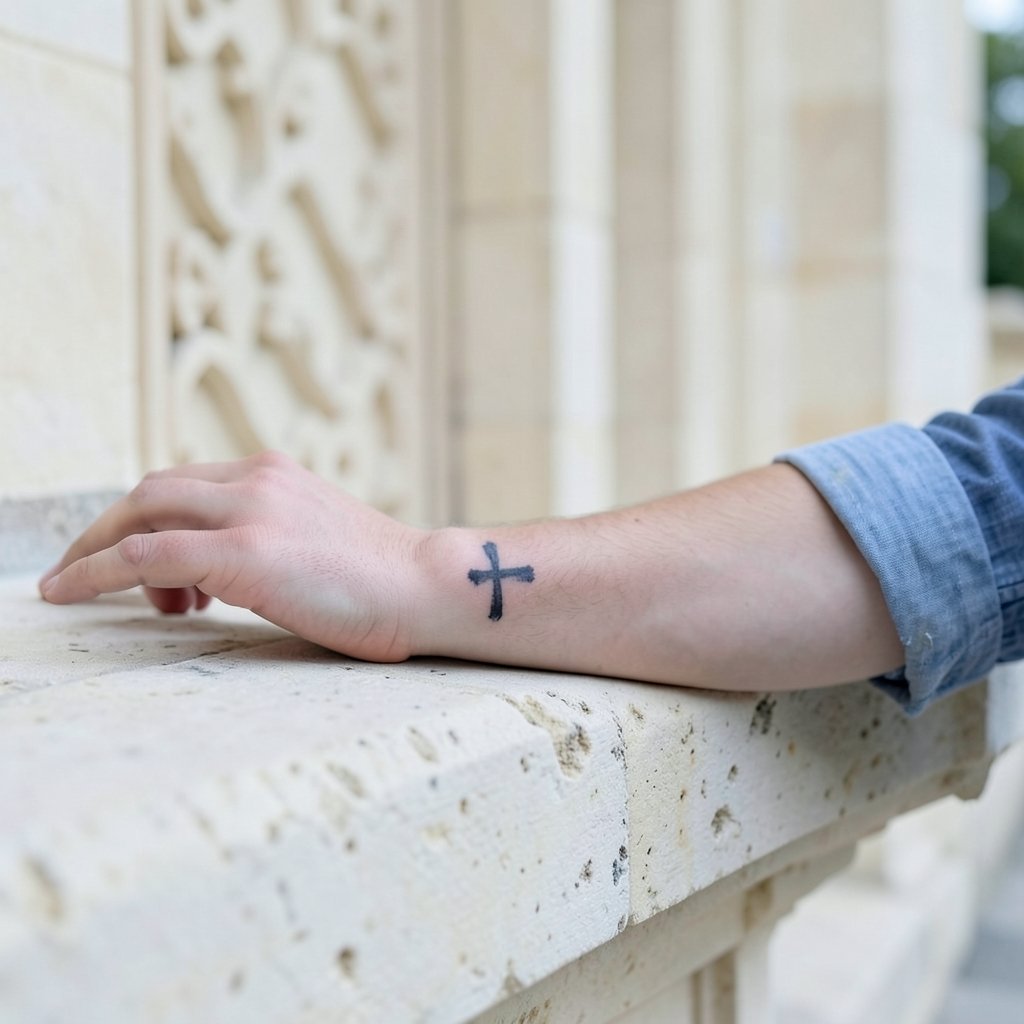
The history is messier than either side usually admits. Tattooing has deep roots in Christian devotional practice. Coptic Christians in Egypt have long worn small cross tattoos on the inner wrist as a permanent mark of faith and identity. Pilgrims to Jerusalem historically received pilgrimage tattoos, and Armenian and other Christian communities maintained that tradition for centuries. In other words, tattooed Christians are not a modern invention.
At the same time, large stretches of Western church history treated tattooing with suspicion, often associating it with sailors, prisoners, and non-Christian cultures. That cultural association, more than careful biblical exegesis, shaped a lot of conservative Christian opinion through the twentieth century.
The Roman Catholic Church has no blanket prohibition on tattoos. The Catechism of the Catholic Church does not address tattooing directly. Catholic moral reasoning tends to focus on broader principles: respect for the body, avoiding mutilation, and avoiding anything that promotes vice or idolatry. Within those principles, a tasteful religious tattoo is generally treated as a matter of personal judgment rather than sin.
Protestant views split widely. Some evangelical and holiness traditions discourage tattoos, citing Leviticus 19:28 and passages like 1 Corinthians 6:19-20, which describe the body as a temple of the Holy Spirit. Other Protestant churches treat the Levitical rule as part of the Mosaic ceremonial law that does not bind Christians, and they see no New Testament command against tattooing. This is a theological disagreement, not a settled fact, and both sides can cite serious thinkers.
What the Body-as-Temple Argument Really Means
The “body is a temple” argument deserves a fair hearing because it is often used loosely. The passage in 1 Corinthians was written to address sexual immorality, not body art. Using it as a blanket ban on tattoos stretches the text. But the underlying idea, that Christians should treat their bodies with care and intention, is a reasonable principle that applies to far more than ink.
In practice, this principle cuts in several directions. It argues against impulsive decisions, against cheap work that risks infection, and against tattoos that celebrate things a person will regret. It does not automatically argue against a well-chosen, well-executed design. Many pastors who personally dislike tattoos still decline to call them sin, precisely because the biblical case for a universal ban is weaker than it first appears.
The Modern Revival of Faith-Based Ink
Something has clearly changed in the last two decades. Tattoo studios report steady demand for religious designs, and a growing number of artists specialize in scriptural lettering, crosses, and devotional imagery. Churches that once asked members to cover up have softened, and some congregations now host tattoo nights or partner with artists for fundraising events.
Several factors drive this. Tattooing has moved from a subculture into the mainstream, so the cultural stigma that once made religious ink feel rebellious has faded. Younger Christians tend to read the Leviticus debate through a grace-centered lens. And social media has made visible, well-designed faith tattoos a form of public witness that resonates with a generation comfortable expressing belief through the body.
The result is a strange middle ground. A Christian tattoo can now read as either deeply sincere or slightly edgy, depending on the setting. In a traditional congregation it may raise eyebrows. In a church plant full of twenty-somethings, it barely registers.
Popular Christian Tattoo Designs and What They Signal
Design choices carry meaning, and some have longer histories than people realize.
| Design | Common Meaning | Notes |
|---|---|---|
| Cross | Sacrifice and salvation | The most common Christian tattoo by far |
| Ichthys (fish) | Early church identity | A discreet, ancient symbol |
| Bible verse reference | Personal conviction | Often just the citation, not the full text |
| Anchor | Hope and steadfastness | Drawn from Hebrews imagery |
| Dove | The Holy Spirit | Popular for memorial and baptism pieces |
| Coptic wrist cross | Devotional identity | A centuries-old practice in Egypt |
A pattern worth noting: the most enduring designs tend to be simple and personally meaningful, not elaborate. The tattoo that ages best is usually the one chosen for a reason the wearer can still explain in twenty years.
Practical Advice Before Getting a Christian Tattoo
First-hand experience from people who have gone through the process points to a handful of lessons that come up again and again. None of this is spiritual law. It is practical wisdom from watching decisions play out.
- Sit with the design for at least a few months. Impulse tattoos and meaningful tattoos age very differently. If the idea still resonates after a season of reflection, that is a good sign.
- Get the text right before the needle touches skin. Verse references and Hebrew or Greek lettering are common sources of regret. Have someone who reads the original language check the spelling and grammar, not just a search engine.
- Choose an artist whose portfolio matches your style. A brilliant realism artist may not be the right person for clean script. Ask to see healed work, not just fresh photos.
- Think about placement and visibility. A wrist verse is a conversation starter at work as well as at church. Decide in advance whether you want that conversation.
- Talk to your pastor if you are unsure. A good pastor will engage the question rather than shut it down. If a church treats a question asked in good faith as a disqualifying failure, that tells you something useful.
- Follow aftercare instructions exactly. Infection and patchy healing are the most common avoidable problems, and they have nothing to do with theology.
The most common mistake is not getting a tattoo at all. It is rushing the decision, choosing an artist on price alone, or picking a design that reflects someone else’s faith rather than your own.
When Christian Tattoos Cause Conflict
Not every story ends well. In some families, a tattoo creates real friction between generations, especially where an older relative reads it as rebellion. In a few countries and communities, visible tattoos still carry a stigma that can affect employment or social standing. A missionary or pastor in a conservative context may find that ink closes doors rather than opens them.
The balanced take is that context matters. A Christian tattoo is a personal expression, but it is also a public one, and public expressions have consequences. Thinking through those consequences in advance is not a lack of faith. It is wisdom.
There is also a subtler risk: turning a tattoo into a performance of piety. Ink can become a way of signaling spiritual seriousness rather than living it. The same critique applies to any visible religious marker, from a bumper sticker to a study Bible. The external sign is only as meaningful as the life behind it.
What Actually Works in Practice
Across the range of Christian opinion, a few practical conclusions hold up well.
The strongest case for a Christian tattoo is a design that carries genuine personal meaning and reflects a settled conviction. The strongest case against one is a wearer who feels pressured, rushed, or unsure. Conviction, not culture, is the better guide.
Churches do best when they treat the question with humility. The biblical evidence is genuinely debated, the historical record is mixed, and the pastoral stakes are real. A congregation that can discuss tattoos without either celebrating or condemning them reflexively is usually a healthier one.
For anyone weighing the decision, the honest answer is that faithful Christians land on both sides. That is not a dodge. It is an accurate description of a debate where sincere people read the same texts differently. What matters more than the ink is the integrity behind the choice.
Conclusion
Christian tattoos are neither a modern fad nor a settled controversy. They sit on top of a genuinely contested Bible verse, a mixed history that includes centuries of devotional tattooing, and a modern church culture that is still working out what to do with them. The Roman Catholic tradition leaves room for personal judgment. Protestant opinion splits along lines of how the Mosaic law applies to Christians. And ordinary believers keep getting inked, often for reasons that have nothing to do with rebellion and everything to do with remembrance, identity, and faith.
The most useful takeaway is not a rule but a posture. Study the texts honestly. Weigh the body-as-temple principle without stretching it beyond what it says. Choose designs and artists with care. And extend grace to the Christian sitting next to you whose conviction on this question differs from your own. That approach holds up whether you leave the studio with new ink or walk past it entirely.
Frequently Asked Questions
Is getting a tattoo a sin for Christians?
Most Christian leaders say no, not automatically. The Bible does not contain a clear New Testament command against tattooing. Leviticus 19:28 is the main Old Testament text, and its meaning is debated. Some churches teach that tattoos are sinful, while others treat them as a matter of personal freedom. The honest answer is that sincere Christians disagree.
What does Leviticus 19:28 actually forbid?
The verse forbids gashing the flesh for the dead and making marks on oneself. Scholars debate whether the “marks” refer to tattoos in general or specifically to marks tied to mourning rituals and pagan worship. Because the surrounding verses address cultic practices, many readers conclude the command targets idolatrous customs rather than all body art.
Do any Christian traditions have a long history of tattoos?
Yes. Coptic Christians in Egypt have worn small cross tattoos on the wrist for centuries as a mark of identity and devotion. Pilgrims to Jerusalem historically received pilgrimage tattoos, and Armenian and other Christian communities kept that practice alive. Tattooed Christians are not a recent phenomenon.
What does the Catholic Church teach about tattoos?
The Catholic Church has no blanket ban on tattoos. The Catechism does not address tattooing directly. Catholic moral reasoning emphasizes respect for the body, avoiding mutilation, and avoiding anything that promotes vice or idolatry. Within those principles, a religious tattoo is generally treated as a personal decision.
What is the most popular Christian tattoo design?
The cross is the most common by a wide margin. Other popular choices include the ichthys fish, Bible verse references, anchors, and doves. Simple, personally meaningful designs tend to age better than elaborate ones, and they are easier to explain years later.
How should someone decide whether to get a Christian tattoo?
Start with honest study of the relevant Bible passages and a conversation with a pastor you trust. Sit with the design for several months before committing. Choose an artist based on healed work rather than price, verify any scriptural text with someone who reads the original language, and think through how visible placement will affect work and family life. Conviction, not pressure, is the better guide.