
Betsy Gaghan Model: What Can Actually Be Verified
 Abdul WadoodLast updated
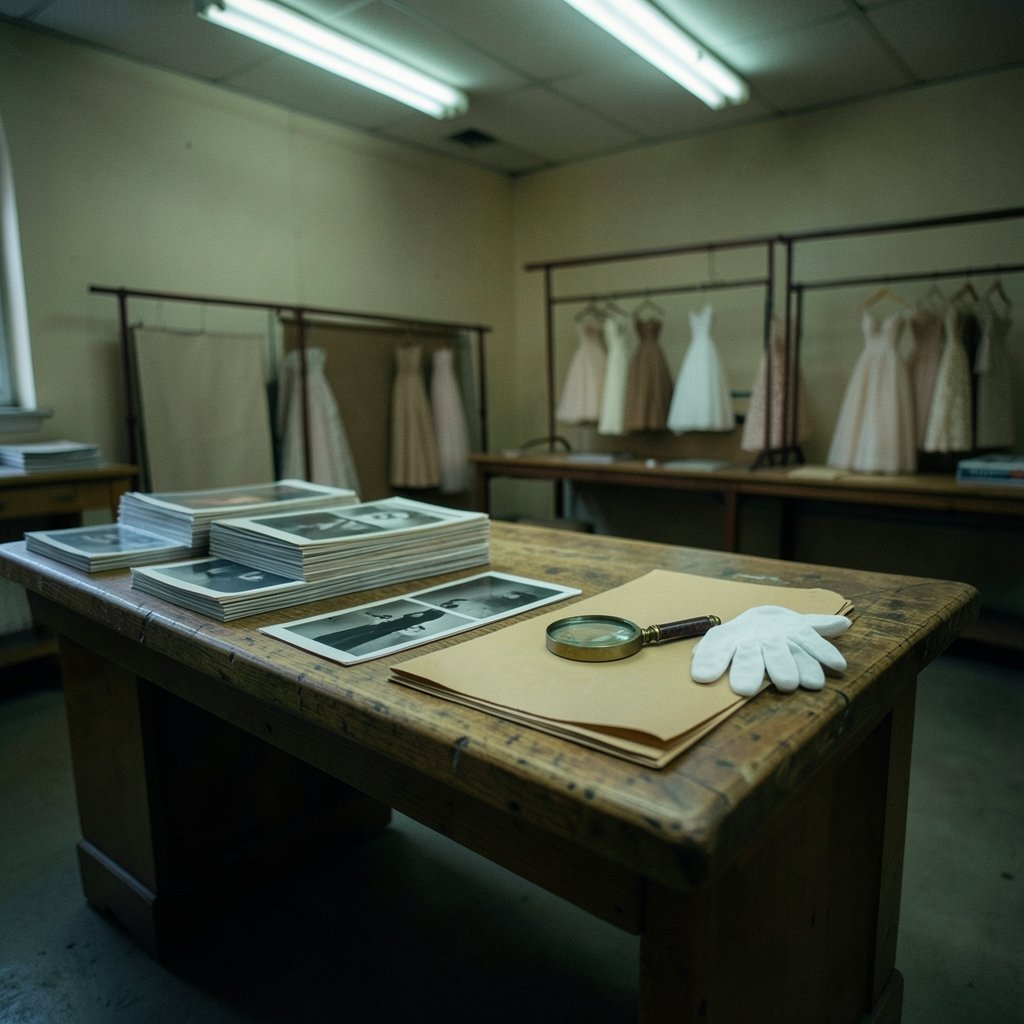
Search for “Betsy Gaghan model” and you will hit a wall fast. There is no confirmed, well-documented modeling career attached to that exact name in any major archive, and that absence is itself the most useful fact available. The fashion industry produces thousands of working models every year, yet only a tiny fraction ever appear in the databases, magazine archives, and agency rosters that researchers can actually check. According to widely cited industry estimates, fewer than one in a hundred working models achieves the kind of visibility that generates a lasting public record. Betsy Gaghan appears to sit in the large, quiet majority: a name that circulates without a paper trail.
This article does not invent a biography. Instead, it explains what can and cannot be confirmed, why names like this one are so hard to trace, and how anyone curious about an obscure model can do the verification work properly. That approach matters, because false identity matching is the single biggest trap in this kind of research.
Why the Name Is So Hard to Confirm
The first problem is simple: “Betsy Gaghan” does not match any model, actress, or public figure that can be reliably identified in mainstream reference sources. There is no confirmed match to a known fashion model, magazine model, or screen credit. That is not a claim that no such person exists. It is a statement about the limits of the record.
The second problem is name confusion. “Gaghan” is a real and recognizable surname, most famously associated with screenwriter and director Stephen Gaghan. “Betsy” is a common given name and a frequent nickname for Elizabeth. Put the two together and search engines will happily blend results from different people, different decades, and different industries. A casual search can produce a page that looks like a match while actually describing someone else entirely.
The third problem is structural. Modeling is a profession with an unusually thin public footprint. A model can work steadily for years, appear in catalogues, e-commerce shoots, runway shows, and regional campaigns, and still leave almost no searchable trace. The work is often uncredited, the agency roster changes, and the images live on retail sites that vanish when a season ends.
What a Verifiable Modeling Record Actually Looks Like

To understand why Betsy Gaghan is hard to trace, it helps to know what a traceable modeling career looks like. Verified records tend to contain a specific combination of documents.
| Evidence Type | What It Proves | How Reliable |
|---|---|---|
| Magazine masthead or editorial credit | A named appearance in a dated publication | High, if the original issue can be checked |
| Agency roster listing | Representation during a specific period | Medium, since rosters change and sites go offline |
| IMDb or production credit | A credited film or television appearance | High for the credit, limited for modeling |
| Contemporaneous newspaper mention | Public activity at a point in time | High when the archive is intact |
| Social media profile | Self-reported identity and work | Low to medium, easily faked or misattributed |
| Fan wikis and aggregator sites | Circulation of a claim | Low, often unsourced |
A genuine record usually stacks at least two independent primary sources. A single fan page, a reposted image, or a name in a comment thread is not enough. This is the standard professional researchers apply, and it is the standard that any serious look at Betsy Gaghan has to meet.
The Practical Research Method That Works
If someone wants to establish whether a specific model named Betsy Gaghan has a documented career, the process is methodical rather than mysterious. Here is the sequence that actually produces answers.
- Run one focused query first. Search the exact name in quotation marks alongside the word “model.” Then repeat with “fashion,” “editorial,” and “campaign.” Exact-phrase searching cuts down on the surname noise dramatically.
- Check IMDb and production databases. Even a single credited appearance creates a dated, checkable entry. If nothing appears, that is a data point, not a dead end.
- Search magazine archives directly. Publications such as Playboy, FHM, Maxim, Vogue, and regional fashion titles have partial digital archives. Original issues, where available, are the strongest evidence.
- Use newspaper archives. Services that index historical newspapers can surface contemporaneous mentions that never made it online in any other form.
- Check the Internet Archive’s Wayback Machine. Defunct agency pages and personal sites are frequently preserved there, sometimes with full portfolios and representation dates.
- Cross-reference before concluding. Confirm identity through at least two independent primary sources before asserting any biographical fact.
The most common mistake is stopping at step one. A search that returns nothing is not proof of absence. It usually means the record lives in print, behind a paywall, or in an archive that general search engines do not index. (The Guardian)
Why Obscure Models Slip Through the Cracks
The economics of modeling explain most of the invisibility. Most working models are not celebrities. They are freelancers booked for a day, a week, or a single campaign. Their names may never appear in print. Their portfolios live on agency platforms that get redesigned or shut down. When a model leaves the industry, the digital footprint often goes with her.
There is also the question of name usage. Models sometimes work under a shortened name, a middle name, or a professional alias. A person publicly known as “Betsy” may appear in agency records as “Elizabeth.” That single variation can make an entire career invisible to a straightforward search.
Then there is the aggregation problem. Low-quality sites scrape names from each other, generating pages that look authoritative but trace back to nothing. A name can circulate widely online while remaining completely unverified. Anyone researching a figure like this should treat every unsourced claim as unproven until a primary document appears.
How to Judge Modeling Portfolios and Profiles
For readers who want to evaluate any model’s profile, including one associated with the name Betsy Gaghan, a few practical checks separate real portfolios from noise. Browsing curated industry directories such as Voozon Models — Profiles, Fashion & Industry gives a useful sense of how professional profiles are structured: measurements, representation history, editorial credits, and campaign work presented in a consistent format.
When reviewing any profile, ask four questions. Is there a named photographer or publication attached to the images? Do the credits include dates? Is there an agency of record that can be independently checked? And do the images appear elsewhere under a different name? A portfolio that answers all four is credible. One that answers none is decoration.
Consistency across sources is the single best signal of authenticity. A real career leaves the same breadcrumbs in multiple places.
The Risks of Assuming an Identity
The most serious hazard in this kind of research is false-positive identity matching. Because “Gaghan” belongs to a well-known Hollywood figure and “Betsy” is a common name, search results can easily conflate unrelated people. A researcher who assumes a match without verification can end up attributing one person’s credits, dates, or images to another.
This is not a hypothetical concern. Name collisions are routine in biographical research, and they cause real harm: misattributed photos, invented career timelines, and claims that spread because they sound plausible. The responsible approach is to state clearly what is confirmed, what is merely circulated, and what remains unknown. For Betsy Gaghan, the honest answer today is that the third category is by far the largest.
Anyone building out a broader picture of how the modeling industry documents its talent can explore Voozon’s model profiles and fashion industry coverage, which illustrates the difference between a documented career and a name that simply appears online. (BBC)
What Would Settle the Question
A definitive answer about Betsy Gaghan would require specific evidence, and it is worth naming what that evidence would look like. A dated magazine credit with a visible masthead would do it. So would an agency roster captured in a web archive with a clear representation period. A production credit on a dated film or television project would establish a public record. A contemporaneous newspaper mention would anchor the name to a time and place.
Absent any of these, the correct position is cautious. The name exists in search results. A verified modeling career does not, at least not in any source that can be checked and cited. That gap should be reported plainly rather than filled with invention.
Conclusion
Betsy Gaghan is a name that resists easy verification. No confirmed modeling career, dated credit, or reliable biographical record can be attached to it from available sources, and the resemblance to a well-known screenwriting surname makes false matches especially likely. That does not make the question unanswerable. It makes it a research question rather than a trivia question.
The lesson extends well beyond one name. Modeling is a profession built on ephemeral work, and most of its practitioners leave faint traces. Verifying any model’s history means checking primary sources, cross-referencing names, and resisting the pull of a plausible-sounding story. Patience beats speculation every time. For now, the most accurate statement about Betsy Gaghan is also the most honest one: the record is thin, and thin records deserve careful handling rather than confident guesses.
Frequently Asked Questions
Who is Betsy Gaghan?
No model, actress, or public figure by that name can be reliably identified in mainstream reference sources. The name appears in search results, but no verified biography, dated credit, or confirmed career record supports a specific identity. Any claim about her should be treated as unverified until primary documentation surfaces.
Was Betsy Gaghan a Playboy or magazine model?
There is no confirmed evidence of a Playboy, FHM, Maxim, or Vogue appearance under that name. Magazine credits are among the strongest forms of modeling evidence because they are dated and printed, so a genuine credit would typically be findable in an archive. None has been verified.
Why is the name so hard to research?
Three reasons dominate. The surname is shared with a well-known screenwriter, which creates search noise. “Betsy” is a common name and nickname, which multiplies possible matches. And modeling itself leaves a thin public record, since most work is uncredited, seasonal, and hosted on agency sites that later disappear.
How can I verify a model’s career myself?
Start with an exact-phrase search of the name plus “model.” Then check IMDb, magazine archives, newspaper archives, and the Internet Archive’s Wayback Machine for defunct agency pages. Confirm identity through at least two independent primary sources before accepting any biographical claim as fact.
Could Betsy Gaghan have worked under a different name?
Yes, and this is a common complication. Models frequently use shortened names, middle names, or professional aliases, and a person known publicly as “Betsy” may appear in agency records as “Elizabeth.” That variation alone can hide an entire career from a straightforward search.
Does a missing record mean the person never modeled?
No. Absence of evidence is not evidence of absence, especially in a field where most work goes uncredited. A missing record usually means the documentation lives in print, behind a paywall, or in an archive that general search engines do not index. It means the question stays open, not that it is closed.
The takeaway is simple and portable: treat the name as an open research question, not a settled fact. Keep a running log of what you searched, what you found, and where each claim originated. Date your notes. Distinguish primary documents from secondary summaries, and mark speculation as speculation. If new evidence surfaces later, a disciplined log lets you revise the record without starting over. That habit protects readers from the most common failure in name-based research: letting a confident-sounding answer outrun the sources behind it. Until a dated, checkable credit appears, the careful conclusion stands.