
Best Winter Fragrances for Cold Weather: Top Picks 2026
 Abdul WadoodLast updated
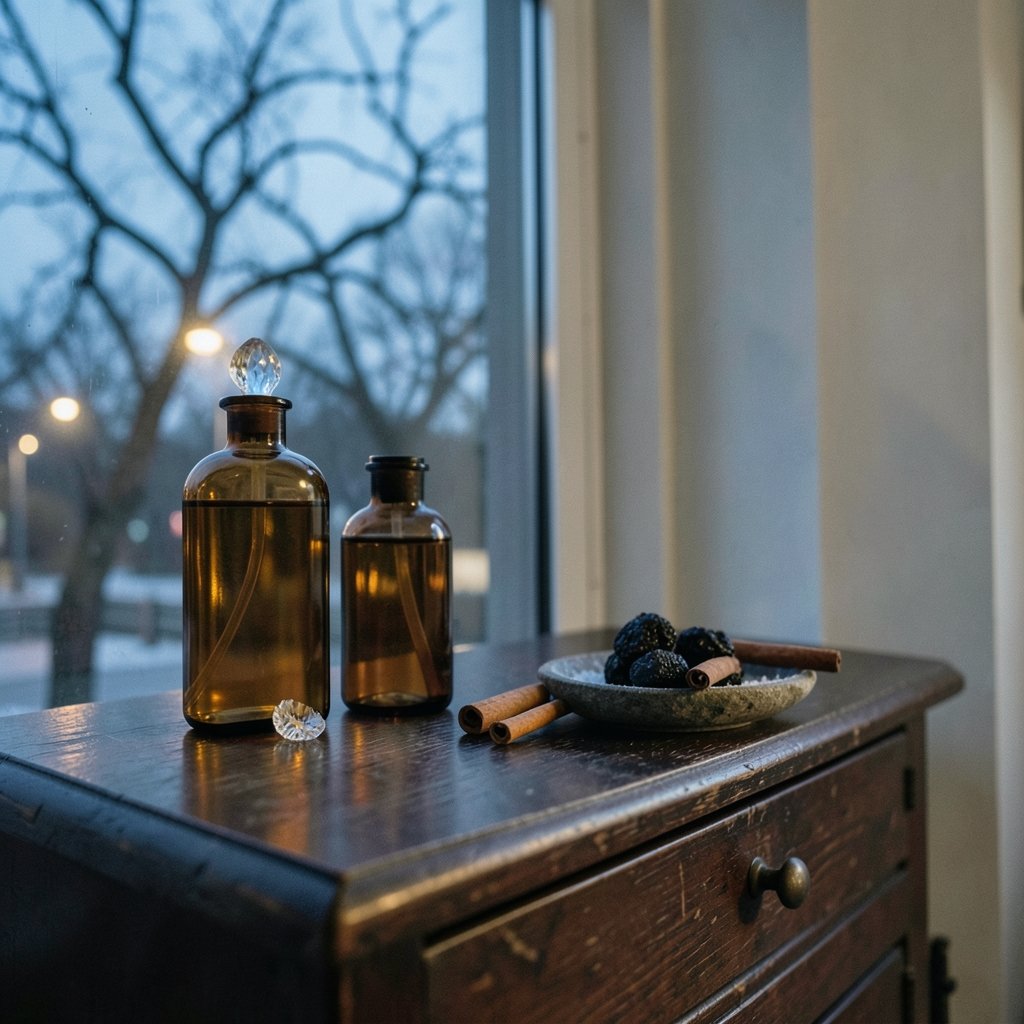
Cold air changes how a fragrance behaves. Ask anyone who has sprayed a bright citrus cologne in July and then worn the same bottle in January: the scent seems to vanish within an hour. Perfumers and fragrance writers have long argued that low temperatures and dry winter air flatten the projection of light, fresh compositions while dense, resinous materials hold their ground. That is why the search for the best winter fragrances for cold weather keeps circling back to the same families: amber, woods, spice, vanilla, leather, and incense. (National Weather Service)
This guide explains why those notes work, which specific fragrance styles deliver the best cold-weather performance, and the practical mistakes that make even a good winter scent fall flat.
Why cold weather demands a different fragrance strategy
Fragrance performance depends on how volatile molecules escape from skin. Light molecules, such as citrus oils and aquatic aromachemicals, evaporate quickly. Heavy molecules, such as resins, woods, and musks, evaporate slowly and cling to skin and fabric.
Cold air slows evaporation on the surface, but low humidity also means dry skin, and dry skin holds scent poorly. The result is a trade-off: heavy base notes last longer in winter, while top notes fade faster than they do in summer. The practical takeaway is simple. In cold weather, build the fragrance around the base, not the opening spray.
Climate matters too. A “winter” fragrance designed for a damp, mild climate behaves very differently from one built for dry freezing air. Anyone shopping across hemispheres should treat seasonal labels as marketing shorthand rather than physics.
The note families that perform best in cold weather
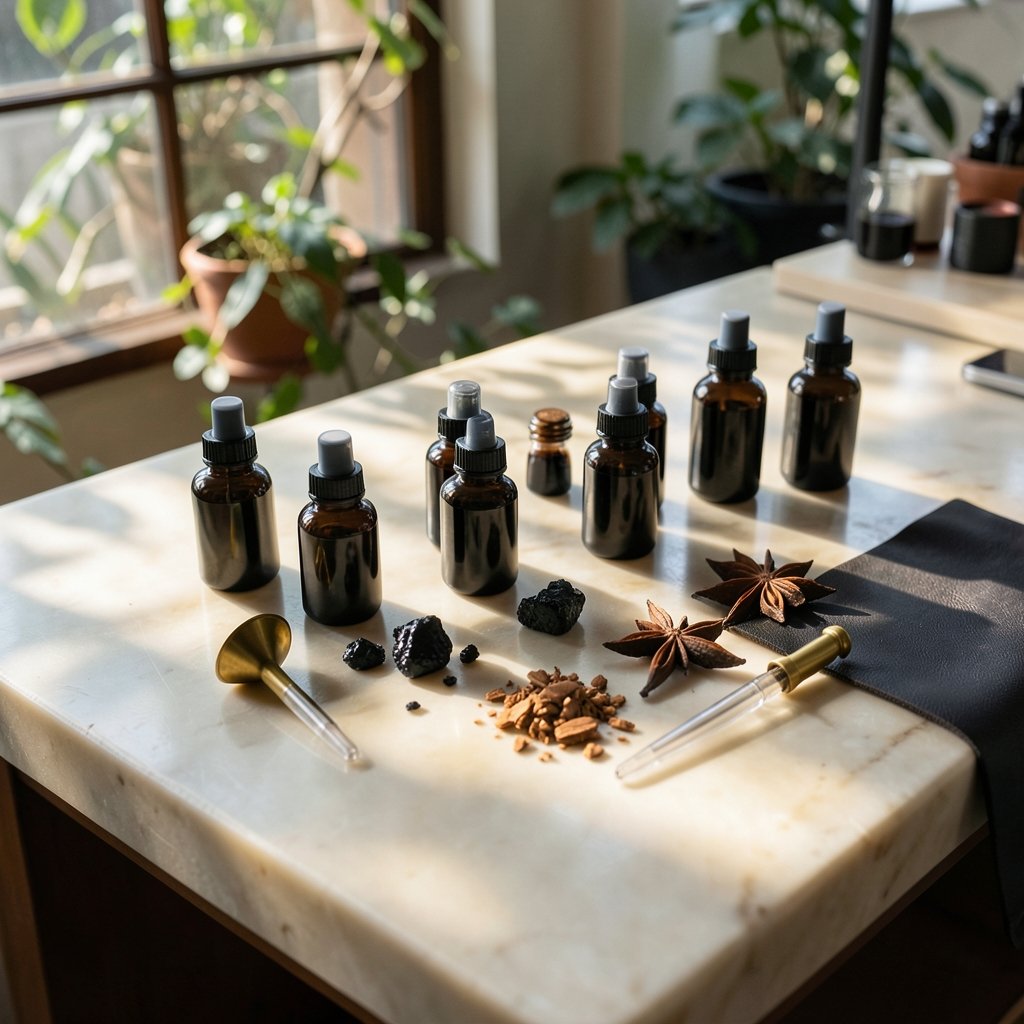
Most successful winter compositions draw from a handful of material families. Each brings a different texture and a different longevity profile.
| Note family | Typical materials | Character | Cold-weather strength |
|---|---|---|---|
| Amber and resins | Labdanum, benzoin, myrrh, frankincense | Warm, balsamic, slightly sweet | Excellent longevity, strong sillage |
| Woods | Sandalwood, cedar, vetiver, oud | Dry, structured, creamy | Very good, especially on fabric |
| Spices | Cinnamon, clove, cardamom, pink pepper | Sharp, warm, festive | Good, but can overwhelm if over-applied |
| Vanilla and tonka | Vanilla absolute, coumarin, tonka bean | Sweet, soft, edible | Excellent, often the anchor of winter scents |
| Leather and smoke | Birch tar, saffron, tobacco, incense | Dark, textural, animalic | Outstanding, but polarizing |
| Gourmand | Praline, coffee, cacao, caramel | Rich, dessert-like | Very good, best in small doses |
The common thread is molecular weight. Heavier, less volatile materials sit closer to skin and release slowly, which is exactly what a cold, dry day rewards.
How to choose a winter fragrance that suits you
Before buying anything, narrow the field by asking three questions.
- What is the climate actually like? A wet, windy coastal winter calls for resins and woods that cut through damp air. A dry, heated indoor winter rewards softer gourmands that do not turn sharp in low humidity.
- Where will you wear it? Office heating, crowded transport, and long indoor hours punish loud projection. A dense amber that smells thrilling outdoors can become suffocating in a meeting room.
- How much do you want to spend per wear? High-concentration extraits last longer but cost more upfront. A well-chosen eau de parfum applied to fabric often delivers better value than a parfum sprayed on dry skin.
For a deeper look at how modern compositions are built and why some scents feel timeless while others date quickly, Inside the Art of Modern Fragrance – Voozon — Discover, Review & Explore is a useful read alongside any shopping shortlist.
The best winter fragrance profiles, ranked by reliability
Rather than naming a single bottle, it helps to rank profiles. A profile travels across price points and houses, so you can find a version that fits your budget and taste.
1. Amber and resin orientals
This is the most dependable winter category. Labdanum, benzoin, and myrrh create a warm, slightly sweet glow that clings to skin and wool alike. Look for descriptions mentioning “balsamic,” “resinous,” or “ambery.” These scents typically project for six to ten hours and smell richer in cold air than in heat.
2. Woody ambers and sandalwood
Sandalwood is the quiet workhorse of winter perfumery. Creamy, milky, and slightly nutty, it pairs with almost anything and rarely offends. Woody ambers push projection further, which makes them ideal for outdoor wear but risky in tight indoor spaces.
3. Spiced gourmands
Cinnamon, cardamom, vanilla, and tonka form the backbone of countless holiday releases. They are comforting and instantly readable, but they are also the easiest category to over-apply. One or two sprays on the chest and one on a scarf is usually plenty.
4. Leather, tobacco, and incense
These are the most distinctive winter options and the least forgiving. Birch tar and tobacco absolute create a smoky, textural effect that reads as sophisticated in small doses and overwhelming in large ones. Test before committing to a full bottle.
5. Winter florals
Rose, iris, and violet work in cold weather when they are grounded by woods or resins. A rose-oud or iris-vetiver pairing gives the elegance of a floral with the staying power of a winter base.
If you want to understand how a single season shapes an entire fragrance wardrobe, Fragrance That Defines a Season – Voozon — Discover, Review & Explore explores the seasonal logic behind these choices in more detail.
Concentration, skin, and application: what actually works
Most winter performance complaints trace back to application, not the juice itself.
Concentration labels are not standardized. Eau de toilette, eau de parfum, and parfum indicate rough oil concentration ranges, but brands interpret them loosely. A strong eau de toilette from one house can outlast a weak eau de parfum from another. Do not assume the label guarantees longevity.
Moisturized skin holds fragrance longer. Dry winter skin sheds scent quickly. Applying an unscented moisturizer before spraying, or spraying onto slightly damp skin after a shower, measurably improves staying power.
Fabric is your ally. Wool, cashmere, and cotton hold fragrance far longer than skin. A single spray on a scarf or coat lining can carry a scent all day. Test on an inconspicuous area first, since resins and oils can stain delicate fabrics.
Placement matters more than quantity. Pulse points on the neck and wrists are traditional, but they are also where fragrance fades fastest. The chest and the back of the neck, under clothing, create a slower, warmer release.
Do not rub. Rubbing wrists together crushes top notes and accelerates evaporation. Spray and let it settle.
Common mistakes that ruin a good winter fragrance
Even a well-chosen scent can disappoint. These are the recurring errors.
- Over-spraying to compensate for cold air. More sprays do not fix poor longevity; they simply create a cloud that overwhelms everyone nearby. Fix the base instead.
- Buying on the opening spray. Top notes are the least representative part of a winter fragrance. Always test on skin and wait at least two hours before deciding.
- Ignoring indoor performance. Most winter wearing happens indoors, in heated rooms. A fragrance that only works outdoors is a fragrance you will rarely wear.
- Storing bottles near radiators or windows. Heat and light degrade fragrance faster than anything else. A cool, dark drawer is ideal.
- Assuming reformulation means ruin. Regulatory standards on fragrance materials are updated periodically, and houses reformulate in response. A scent you loved five years ago may smell different today. That is chemistry and compliance, not imagination.
Building a small, flexible winter wardrobe
A practical winter collection needs only three or four bottles.
One everyday woody amber. Versatile, office-safe, and reliable in cold air.
One rich evening scent. A leather, tobacco, or incense composition for dinners and cold-night events.
One comfort gourmand. Vanilla, tonka, or spiced amber for weekends and quiet days.
One wildcard. A winter floral or a smoky oud that you wear when you want to be noticed.
This structure covers nearly every cold-weather occasion without turning into a collection you cannot finish. It also lets you buy slowly, test thoroughly, and avoid the trap of chasing every seasonal launch.
Conclusion
The best winter fragrances for cold weather are not defined by a single bottle or brand. They are defined by structure: heavy base notes, warm resins, creamy woods, and spices that release slowly in low temperatures. Choose by profile rather than by marketing, test on skin and fabric, moisturize before spraying, and resist the urge to over-apply. Do that, and the same fragrance that felt thin in July will carry you through the coldest weeks of the year with room to spare.
FAQ
What notes are best for winter fragrances?
Amber, resins such as labdanum and benzoin, woods like sandalwood and cedar, spices, vanilla, tonka bean, leather, tobacco, and incense. These heavier, slower-evaporating materials hold up better in cold, dry air than light citrus or aquatic notes.
Do winter fragrances really last longer in cold weather?
Heavy base notes tend to last longer in cold weather because they evaporate slowly, but low humidity and dry skin can reduce overall longevity. Moisturizing skin and spraying on fabric usually makes a bigger difference than the temperature alone.
Is eau de parfum better than eau de toilette for winter?
Not automatically. Concentration labels are not standardized across brands, so a strong eau de toilette can outlast a weak eau de parfum. Judge each fragrance by how it performs on your skin, not by the label on the box.
How many sprays of a winter fragrance should I use?
Two to four sprays is usually enough for a dense winter composition. Apply to the chest and back of the neck, plus one spray on a scarf or coat lining. Over-spraying creates a cloud that overwhelms people nearby without improving longevity.
Can I wear fresh or citrus fragrances in winter?
Yes, if you enjoy them. Fresh scents simply project less in cold air. To make them last, apply to moisturized skin, spray on fabric, and reapply once during the day. Many people prefer to save light citrus scents for warmer months and switch to warmer profiles in winter.
How should I store winter fragrances between seasons?
Keep bottles in a cool, dark place away from radiators, windows, and bathroom humidity. Heat and light break down fragrance molecules over time. A closed drawer or box in a stable room preserves a scent far better than a sunny shelf.
Sample the base, not the story. Ask for a sample or decant before committing to a full bottle, and wear it through an ordinary day rather than a five-minute counter visit. A fragrance that survives a commute, a heated office, and an evening indoors has earned its place.
Rotate, don’t hoard. A small rotation keeps each bottle fresher and makes the shift into spring feel deliberate. When the weather turns, move the heaviest ambers and leathers to the back of the drawer and bring forward lighter woods and florals.
Trust your nose over the notes list. Pyramids are marketing as much as chemistry. If a scent smells warm and enveloping on your skin, it will behave like a winter fragrance regardless of what the copy claims.
Winter is the season when perfume is most rewarding: cold air slows evaporation, wool holds scent, and rich materials finally have room to breathe. Choose structure over hype, apply with restraint, and let the fragrance do the work. (Perfume)