
Best Summer Fragrances for Hot Weather: Top Picks
 Abdul WadoodLast updated
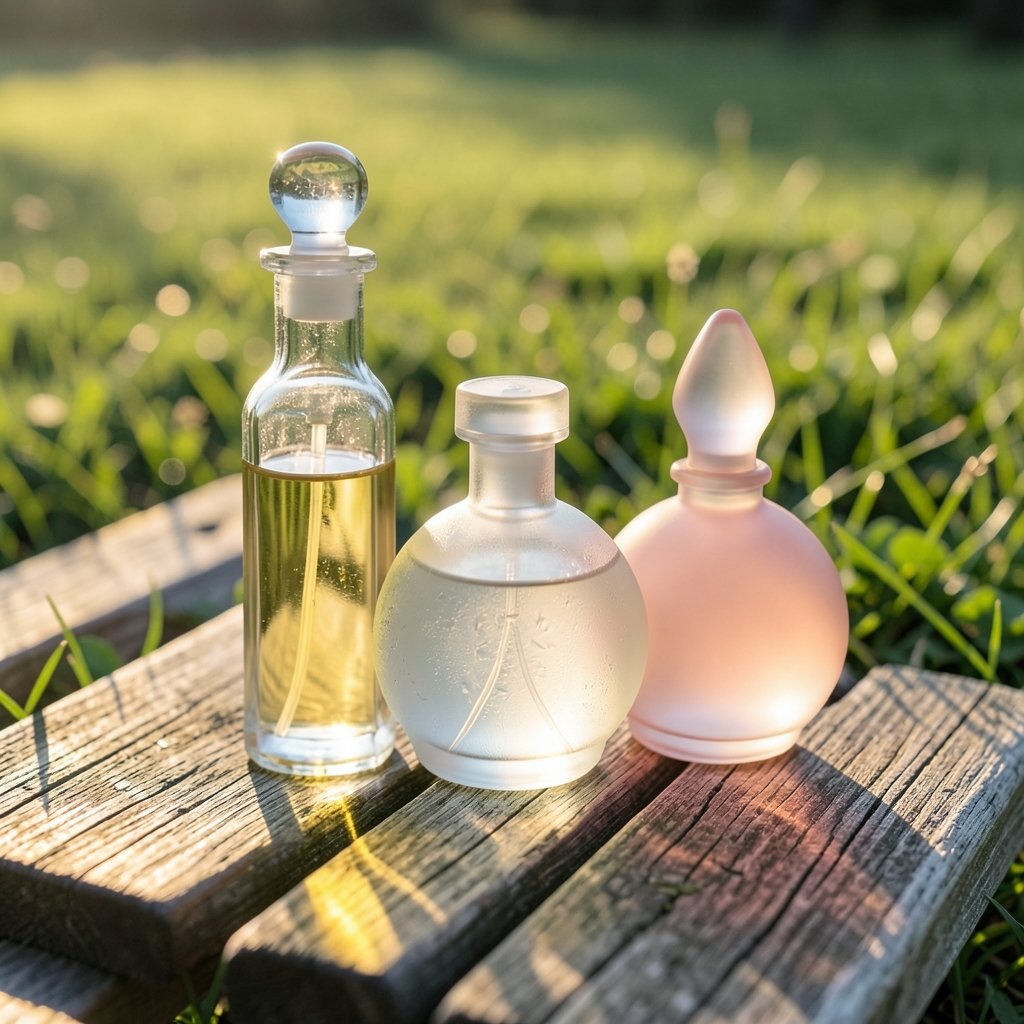
Heat changes perfume. That is not a marketing line; it is chemistry. Every degree of rising skin temperature speeds up how quickly the volatile molecules in a fragrance lift off the skin and reach your nose. A scent that feels perfectly balanced at 18°C (64°F) can turn sharp, sour, or overwhelming at 32°C (90°F). According to Wikipedia’s overview of perfume and fragrance classification, concentration and ingredient volatility are the two biggest variables in how a scent behaves, and summer is the season that exposes both.
So the search for the best summer fragrances for hot weather is really a search for scents built to survive heat, humidity, and sweat. This guide breaks down which fragrance families hold up, which collapse, how concentration changes the game, and the practical habits that separate a scent that lasts all day from one that vanishes by lunch.
Why Heat Rewrites a Fragrance
A perfume is a pyramid of molecules with different evaporation rates. Top notes like citrus, bergamot, and light aldehydes are small and volatile; they flash off in minutes. Base notes like oud, amber, and vanilla are heavy and cling for hours. In hot weather, the whole timeline compresses. The bright opening burns off faster, and the heavy base arrives sooner and louder.
There is also a skin-effect problem. Sweat and sebum change the pH and texture of skin, which alters how fragrance molecules bind and release. Heavier base notes that feel cozy in winter can turn cloying and syrupy in the heat. That is why a fragrance described as “warm and rich” in a winter review often reads as “too much” in July.
The practical takeaway: summer is not about finding stronger perfume. It is about finding perfume with a structure that still makes sense when the clock runs fast. (Perfume)
The Fragrance Families That Hold Up in Heat

Not all “fresh” scents are equal. Some fresh families genuinely perform in high temperatures, while others fade within the hour. Here is how the main categories behave.
| Family | Behavior in heat | Best for | Watch out for |
|---|---|---|---|
| Citrus / hesperidic | Bright, fast-fading opening | Daytime, office, commuting | Needs frequent reapplication |
| Aquatic / marine | Clean, cooling, moderate longevity | Beach days, humid climates | Can smell synthetic if cheaply made |
| Green | Crisp, grassy, natural | Warm but dry weather | Can turn bitter on some skin |
| Light floral | Soft, airy, romantic | Evenings, mild summer nights | Heavy florals (tuberose, gardenia) can overwhelm |
| Musk / skin scents | Subtle, close-wearing | Hot, crowded spaces | Low projection; may be undetectable to others |
Citrus and aquatic families are the workhorses of hot-weather perfumery. They feel cooling because they mimic the sensation of fresh air and water, and they rarely overwhelm a room. Green scents work well when humidity is moderate. Musk-based skin scents are the quiet option: they stay close to the body and avoid the “cloud of perfume” problem on a packed train.
Heavy orientals, gourmands, and oud-forward compositions are the ones to approach with caution. They can still work in summer if applied sparingly, but they fight the climate rather than cooperate with it.
Concentration Matters More Than You Think
One of the most common mistakes shoppers make is assuming “eau de parfum” automatically means “better.” In summer, concentration and performance are not the same thing. The industry convention runs roughly like this: eau de cologne sits around 2–5% fragrance oil, eau de toilette around 5–15%, eau de parfum around 15–20%, and parfum around 20–30%. These are conventions, not fixed standards, but the trend holds.
In hot weather, a high-concentration scent can become a liability. More oil means more base-note weight, and heat pushes that weight forward. A lighter eau de toilette with a well-built citrus-aquatic structure often smells better at 3 p.m. than a heavy extrait that was designed for cold air.
The counterintuitive rule: in summer, choose the lighter concentration and reapply. You get the fresh opening twice instead of dragging a tired base note through the afternoon.
How to Apply Fragrance So It Survives the Heat
Application technique is where most people lose their scent before lunch. The following steps are the ones that consistently make a difference.
- Start on moisturized skin. Dry skin releases fragrance faster. A light, unscented lotion gives molecules something to cling to.
- Target pulse points, not clothing. Wrists, neck, and behind the ears stay warmer and release scent steadily. Fabric holds perfume but can stain and smells stale by evening.
- Do not rub. Rubbing wrists together crushes the top notes and accelerates evaporation. Press, don’t grind.
- Apply to the back of the neck and hair. These areas are cooler and release scent more slowly, giving a longer, subtler trail.
- Carry a travel spray. In heat, reapplication is not a failure; it is the correct strategy.
A common mistake is spraying heavily in the morning to “make it last.” In summer this backfires: the opening is overpowering, then the scent collapses anyway. Two or three sprays, refreshed once, beats eight sprays that overwhelm everyone in the elevator.
Matching Scent to Setting
The “best” summer fragrance depends heavily on where you are wearing it. A scent that shines on a beach walk may be wrong for a shared office.
For outdoor daytime heat, aquatic and citrus scents are the safest choice. They feel cooling and suit bright sun. For humid city days, musk and light green scents work because they stay close and don’t compete with crowded spaces. For summer evenings, a light floral or a fresh woody scent gives more presence without the weight of a winter fragrance. Understanding how fragrance defines a season helps here: the best summer scent matches the mood of the season, rather than the temperature alone.
For air-conditioned offices, go lighter still. Cold indoor air suppresses projection, so a scent that seems subtle outside may be nearly invisible indoors, while a strong one becomes a problem in a meeting room.
Reading Reviews Without Getting Fooled
Fragrance reviews are useful but unreliable in a specific way. Longevity reports are highly skin-dependent and climate-dependent; one person’s “lasts 10 hours” is another’s “gone in 90 minutes.” There is no universal ranking, and “summer fragrance” is a marketing category, not a technical one.
Reformulations add another layer. Brands quietly change formulas, so a five-star review from three years ago may describe a bottle that no longer exists. Before buying, check the batch code and read recent reviews specifically mentioning summer performance. Community databases are excellent for note pyramids and general impressions, but treat longevity claims as anecdotal rather than measured.
The smarter approach is to test on skin in real conditions. Spray on your wrist, go about a hot afternoon, and check at hour three and hour six. That tells you more than any review. For a deeper look at how modern fragrances are composed and why some structures last longer than others, the art of modern fragrance is a useful primer.
Common Mistakes People Make With Summer Fragrance
- Buying for the bottle, not the climate. A gorgeous winter scent can be unwearable in July.
- Over-spraying to compensate for heat. Heat already amplifies; more perfume makes it worse.
- Ignoring humidity. Humid air holds scent closer to the skin, so projection drops while intensity rises. Adjust accordingly.
- Storing perfume in the bathroom. Heat and light degrade fragrance. A cool, dark drawer preserves it far better.
- Assuming expensive means summer-ready. Price does not predict heat performance; structure does.
A Practical Buying Checklist
Before committing to a full bottle, run through these checks:
- Does the opening stay pleasant for at least 30 minutes on your skin?
- Does the dry-down still feel fresh at hour four, or has it turned heavy?
- Does it work in both outdoor heat and air conditioning?
- Can you reapply without the scent becoming cloying?
- Does the concentration match your reapplication habits?
If a fragrance passes all five, it is a genuine summer candidate. If it fails at hour four, it is a winter scent in disguise.
Conclusion
The best summer fragrances for hot weather are not the strongest or the most expensive. They are the ones built with a structure that cooperates with heat: bright citrus and aquatic openings, restrained base notes, and a concentration light enough to refresh rather than overwhelm. Heat compresses a fragrance’s timeline, so the smart strategy is to choose lighter, reapply deliberately, and test on skin in real conditions instead of trusting a review written in December.
Get those basics right and summer becomes the season where fragrance works best, not the season where it falls apart.
Frequently Asked Questions
What fragrance family is best for hot weather?
Citrus, aquatic, and light green families generally perform best in heat. They feel cooling, fade gracefully, and rarely overwhelm. Musk-based skin scents are a good quiet option for crowded or indoor settings.
Does eau de parfum last longer in summer?
Not necessarily in a useful way. Higher concentration means more heavy base notes, which heat pushes forward and can make cloying. A lighter eau de toilette reapplied once often smells fresher through a hot day than a heavy parfum.
Why does my perfume disappear so fast in summer?
Heat speeds evaporation of volatile top notes, and sweat alters how fragrance binds to skin. The opening burns off quickly and the scent can seem to vanish. Moisturized skin and a travel spray for reapplication help considerably.
Should I spray perfume on clothes or skin in hot weather?
Skin is generally better because pulse points release scent steadily and fabric can stain or smell stale. The back of the neck and hair are good compromise spots since they are cooler and release scent more slowly.
How many sprays should I use in summer?
Two or three sprays is usually enough, refreshed once later in the day. Heat amplifies projection, so spraying heavily in the morning creates an overpowering opening followed by an inevitable collapse.
Is it safe to store perfume in the bathroom?
No. Heat, humidity, and light degrade fragrance molecules over time. A cool, dark drawer or cabinet preserves a bottle far better, especially during summer months when bathroom temperatures climb.
One final consideration: skin chemistry. Two people wearing the same citrus-aquatic scent can smell noticeably different, because pH, body temperature, and natural oils all influence how a fragrance develops. This is why testing on your own skin, not on paper strips or a friend’s wrist, is non-negotiable. Paper strips reveal the composition; skin reveals the performance. If a scent turns sharp or sour within an hour on you, no amount of reapplication will fix it.
Seasonal rotation is worth embracing, too. Many enthusiasts keep a small summer wardrobe of three or four fragrances: one bright citrus for daytime errands, one aquatic for beach and pool days, one green or musk for the office, and one light floral or fresh woody for evenings. Rotating keeps your nose from going blind to a single scent and lets each bottle serve the setting it was built for. It also means you are never forcing a winter favorite into July heat out of habit.
Finally, give yourself permission to enjoy the season’s constraints. Summer fragrances are lighter, brighter, and less serious by design. They are meant to be worn, refreshed, and enjoyed rather than rationed. A bottle that runs out by August has done its job. The fragrances that earn a permanent place in your rotation are the ones that made the hottest, most humid afternoons feel a little cooler, and that is a standard worth buying for.