
Best Mid-Size Luxury SUV: How to Pick the Right One
 Abdul WadoodLast updated

What if the biggest problem with buying a mid-size luxury SUV is not finding a good one, but choosing between five or six genuinely excellent ones? That is exactly where most buyers land. The class is packed with capable, comfortable, tech-heavy machines, and every brand claims the crown. The truth is that “best” depends heavily on what you value: a sharp drive, a hushed cabin, family space, low running costs, or simply the feeling you get when you slide behind the wheel.
This guide breaks down what actually separates the leaders, where each one shines, and the mistakes that catch buyers out. It stays practical, avoids hype, and treats the segment the way it deserves to be treated: as a set of real trade-offs rather than a single winner-takes-all contest.
What Counts as a Mid-Size Luxury SUV?
The first thing to understand is that the segment has no strict border. Most publications group two-row premium crossovers such as the BMW X5, Mercedes-Benz GLE, Audi Q8, Porsche Cayenne, Volvo XC90, and Genesis GV80 into the same conversation. Some also fold in three-row models like the Audi Q7, because they share platforms and price brackets with their two-row siblings.
That loose definition matters. If you need seven seats, your shortlist changes. If you want the sportiest chassis, it changes again. Before comparing badges, decide on three things: how many rows you need, whether you want a plug-in hybrid or a pure combustion engine, and what your realistic annual mileage looks like. Those three answers eliminate half the field immediately. (Why Fuel Economy Matters)
The Main Contenders and What Each Does Best
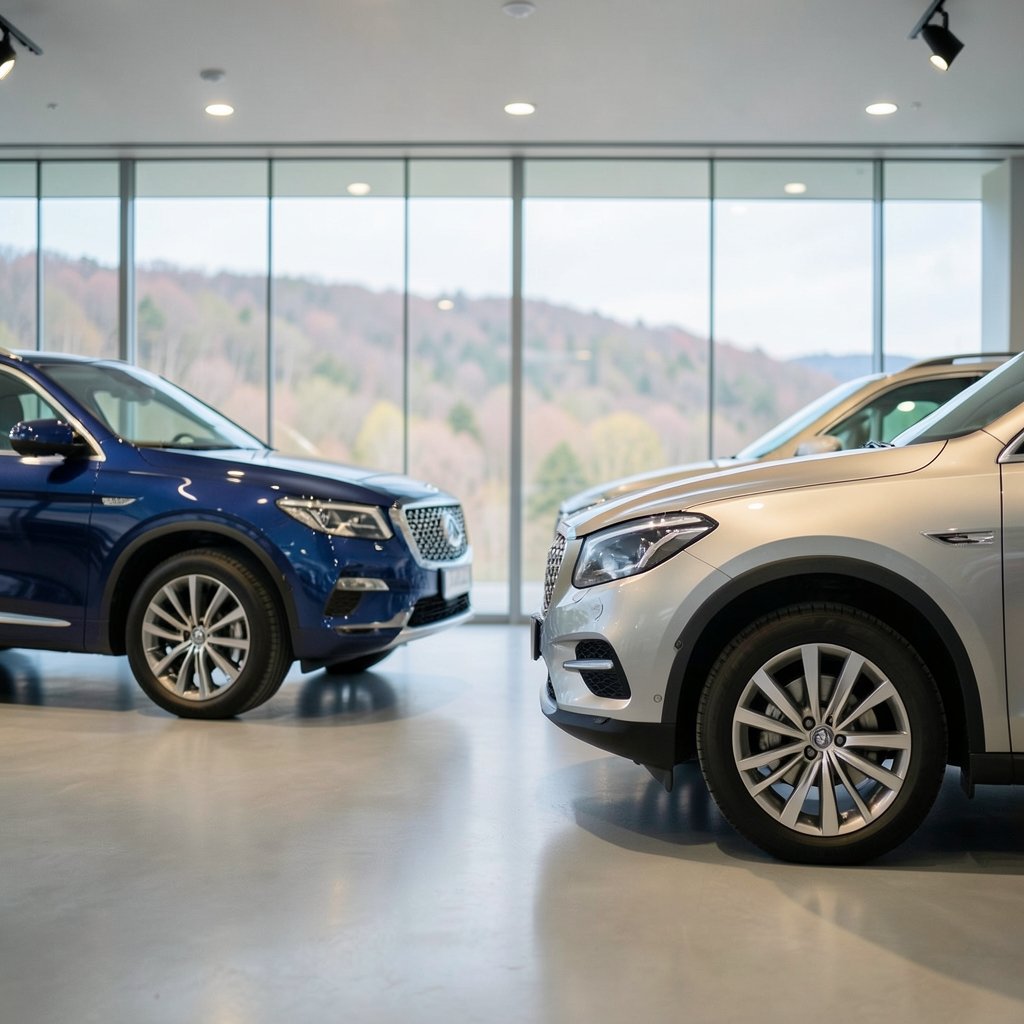
BMW X5: The Driver’s Choice
The X5 has long been the benchmark for driving dynamics in this class. Its current generation launched in 2018 and received a mid-cycle refresh in 2023, and it has consistently ranked near the top of comparison tests for a blend of steering feel, body control, and interior quality. The plug-in hybrid version adds meaningful electric-only range for commuters.
The catch is timing. A next-generation X5 was expected around 2026 to 2027, so anyone shopping late in the decade should confirm exactly which generation is on the dealer floor. Buying the last year of a generation is not automatically bad, but it does affect resale value.
Mercedes-Benz GLE: Comfort First
The GLE, launched in 2019 and facelifted in 2023, leans hard into ride comfort and cabin technology. Its infotainment system is among the most feature-rich in the class, and the optional air suspension smooths rough surfaces in a way that makes long journeys genuinely restful. The plug-in hybrid variant appeals to buyers who want quiet electric running around town.
The trade-off is that the GLE prioritizes calm over engagement. If you want a vehicle that shrinks around you on a winding road, the BMW or Porsche will feel more alive. A refreshed or new generation was anticipated mid-decade, so verify current status before committing. (Sport utility vehicle)
Porsche Cayenne: The Enthusiast’s Pick
The third-generation Cayenne arrived in 2018 and received a major update in 2023. It is routinely described as the sportiest option in the segment, and it is also typically the most expensive to buy and maintain. Porsche confirmed the Cayenne continues alongside the electric Macan, with a fourth-generation Cayenne planned as an EV.
For buyers who care about driving above all else, the Cayenne justifies its price. For everyone else, the running costs are a genuine consideration that deserves a hard look before signing.
Volvo XC90: Safety and Family Practicality
The XC90 has been a safety and family-practicality benchmark since its 2015 launch, and a major 2024 update refreshed its styling and infotainment. It offers three rows, generous space, and a calm, Scandinavian interior that ages well. An all-electric EX90 launched alongside it, giving buyers a choice between combustion and electric within the same basic footprint.
If your priority is protecting a family and carrying their gear without drama, the XC90 remains one of the smartest picks in the class.
Genesis GV80: The Value Play
Launched in 2020 with a coupe-style variant added in 2023, the GV80 is frequently praised as strong value against German rivals. You get similar space, similar materials, and a longer standard equipment list for less money. The weaker points are brand recognition and dealer network coverage in some markets, which matters more than people expect when service time comes.
Audi Q7 and Q8: The Two-for-One
The Q7 offers three rows and the Q8 is the two-row, coupe-styled alternative. Both were due for replacement around mid-decade, so confirm what is actually on sale. Audi’s interior design and all-wheel-drive confidence remain strong selling points.
Side-by-Side Comparison
| Model | Standout Strength | Main Compromise | Best For |
|---|---|---|---|
| BMW X5 | Driving dynamics, interior quality | Generation change approaching | Enthusiast drivers |
| Mercedes-Benz GLE | Ride comfort, cabin tech | Less engaging to drive | Long-distance comfort |
| Porsche Cayenne | Sportiest handling | Highest purchase and running costs | Driving purists |
| Volvo XC90 | Safety, three-row practicality | Less sharp than German rivals | Families |
| Genesis GV80 | Value and standard equipment | Weaker dealer network | Budget-conscious buyers |
| Audi Q7/Q8 | Interior design, all-wheel drive | Replacement timing uncertain | Design-focused buyers |
Plug-In Hybrids Are Reshaping the Decision
One of the biggest shifts in this class is electrification. Plug-in hybrid versions of the X5, GLE, Cayenne, and XC90 now sit alongside fully electric newcomers such as the EX90 and the Macan EV. That means “best” increasingly depends on how you use the car.
If most of your trips are short and you can charge at home, a plug-in hybrid can run largely on electricity while still covering long journeys without range anxiety. If you regularly drive hundreds of miles and cannot charge conveniently, a conventional engine or a mild hybrid may be the more sensible choice.
The practical mistake here is buying a plug-in hybrid without a charging plan. A PHEV that never gets plugged in carries extra weight and complexity for little benefit. Decide on your charging setup before you fall in love with a badge.
Safety Ratings Deserve More Than a Glance
Every model in this class markets itself as safe, and most are. But the details matter, and the details live in official test results rather than brochures. Crash-test ratings and recall histories are published by government agencies and independent testing bodies, and they are worth checking model by model rather than trusting a brand-wide reputation.
Two buyers can look at the same vehicle and reach different conclusions depending on whether they check the official safety rating for that specific model year or rely on general impressions. Do the former.
Running Costs: The Part Buyers Underestimate
Purchase price is the easy number. The expensive ones hide in plain sight: insurance groups, tire replacement on large wheels, servicing intervals, and depreciation. In this segment, depreciation is usually the single largest cost of ownership, and it varies dramatically between models and generations.
A few practical habits help:
- Get an insurance quote before you commit, not after. Premium differences between models in this class can be startling.
- Check tire prices for the exact wheel size on the car you are considering. Large low-profile tires are expensive and easy to damage.
- Ask about servicing costs at the specific dealer you will actually use, not a national average.
- Look at resale values for three- and five-year-old versions of the same model to estimate depreciation.
Buyers who skip these steps often discover that the “affordable” luxury SUV costs more per month than the expensive one.
The Quiet Cabin Factor
Luxury is often described in terms of materials and screens, but the thing owners notice every single day is noise. Road roar, wind buffeting, and tire hum shape how a car feels on a long drive far more than the stitching on the dashboard. Some models in this class are genuinely hushed; others look luxurious but transmit a surprising amount of noise at highway speed.
If calm matters to you, test drive on a coarse-surfaced highway at real cruising speed rather than only on a smooth loop near the dealership. That single test tells you more than an hour of showroom exploration. Buyers who care deeply about this should read up on which luxury cars actually make the cabin silent, because the gap between the quietest and the loudest in this class is wider than most people expect.
Interior Tech: Useful or Overwhelming?
Every brand now offers large screens, digital clusters, and voice assistants. The question is whether the interface works while you are driving. Some systems bury basic functions in submenus; others keep physical controls for climate and volume, which many owners prefer.
When you test drive, deliberately adjust the climate, change the radio station, and set a navigation destination while parked and then again in motion. If it takes your eyes off the road for too long, that is a real safety consideration, not a nitpick. A related idea applies to how you approach the whole purchase: the conscious luxury approach of buying better rather than buying more tends to produce happier owners than chasing every optional extra.
Electric Alternatives Worth Considering
The class is no longer combustion-only. The Volvo EX90 and the Porsche Macan EV represent two very different takes on an electric mid-size luxury SUV, and both sit alongside their combustion siblings rather than replacing them outright.
Electric ownership changes the cost equation. Home charging is cheap; public fast charging is not. Servicing is generally simpler, but tire wear can be higher because of the extra weight and instant torque. If you are weighing an electric option against a plug-in hybrid, the deciding factor is usually your access to charging at home or work, not the badge on the hood.
Buyers who want to understand how a newer electric brand approaches this segment may find a detailed review of the Rivian R1S and what it gets right and wrong genuinely useful, even though the R1S sits a size above this class. It shows how quickly the definition of luxury is shifting toward software, charging speed, and interior calm.
Common Mistakes Buyers Make
A few patterns come up again and again, and they are all avoidable.
The first is buying on badge loyalty without test driving rivals. Brand affection is real, but the gap between models in this class is small enough that a single test drive can change your mind.
The second is over-specifying. Large wheels, panoramic roofs, and every driver-assistance package add cost, weight, and complexity. Some of the most satisfying cars in this class are the mid-trim versions with good seats and a decent sound system.
The third is ignoring the generation cycle. Several models in this class were expected to be replaced or heavily updated between roughly 2025 and 2027. Buying just before a redesign is not a disaster, but it is worth knowing, because it affects both resale value and how outdated the cabin will feel in three years.
The fourth is skipping the extended test drive. Twenty minutes around a dealership tells you almost nothing about seat comfort on hour three of a highway trip. Ask for the car overnight if the dealer allows it.
How to Build Your Shortlist
A simple process beats endless research.
- Decide how many rows you need and whether you want a plug-in hybrid, a conventional engine, or a full EV.
- Set a realistic total budget that covers insurance, servicing, tires, and expected depreciation as well as the sticker price.
- Shortlist three models maximum. More than that and the comparison stops being useful.
- Test drive each on the same route, including a rough highway surface and a tight parking lot.
- Check official safety ratings and recall history for the exact model year you are considering.
- Get insurance and servicing quotes before you negotiate on price.
Following those six steps takes a weekend and saves months of second-guessing. If you want a sense of how the broader luxury market is evolving, from design houses to vehicle lineups, the Valentino brand history from a Rome atelier to global luxury offers an interesting parallel in how heritage brands balance tradition with reinvention.
Conclusion
There is no single best mid-size luxury SUV, and anyone who tells you otherwise is selling something. The BMW X5 rewards drivers, the Mercedes-Benz GLE cossets passengers, the Porsche Cayenne thrills, the Volvo XC90 protects families, and the Genesis GV80 delivers remarkable value. Each one is genuinely excellent at something specific.
The buyers who end up happiest are the ones who define their priorities first and then match the car to them, rather than starting with a badge and working backward. Decide on seats, powertrain, charging access, and budget. Test drive on real roads. Check the official safety data. Then choose the car that fits your life, not the one that wins someone else’s comparison test.
FAQ
What is the best mid-size luxury SUV overall?
There is no universal winner because the class rewards different priorities. The BMW X5 is the most common answer for buyers who value driving dynamics, while the Mercedes-Benz GLE suits those who prioritize comfort and cabin technology. The right choice depends on whether you value handling, ride quality, space, running costs, or value for money most.
Is a plug-in hybrid worth it in this class?
It can be, but only if you can charge regularly at home or at work. A plug-in hybrid that never gets plugged in carries extra weight and complexity with little benefit. If most of your journeys are short and you have a charging point, a PHEV can run largely on electricity and cut fuel costs significantly.
How much does maintenance cost on a mid-size luxury SUV?
Costs vary widely by brand and model, and no single figure applies across the class. The biggest ownership expense is usually depreciation rather than servicing. Before buying, get insurance quotes for the specific model, check tire prices for the exact wheel size, and ask your local dealer for servicing estimates rather than relying on national averages.
Should I buy a model that is about to be replaced?
It depends on your priorities. An outgoing generation often comes with discounts and proven reliability, but it will depreciate faster once the replacement arrives and its technology will feel older sooner. If you plan to keep the car for many years, buying just before a redesign is usually fine. If you change cars every three years, timing matters more.
How important are official safety ratings?
They matter a great deal, and they are more specific than brand reputation. Ratings apply to particular model years and can change with updates. Check the official results for the exact vehicle you are considering rather than assuming a brand’s overall reputation carries across every model and year.
Are electric mid-size luxury SUVs a practical choice yet?
For many buyers, yes, provided they can charge at home. Electric models offer quiet running, low servicing costs, and strong performance, but public fast charging is more expensive than home charging and long journeys need planning. If charging access is limited, a plug-in hybrid or conventional engine remains the more practical option.