
Best Jewelry for Minimalist Outfits: 2026 Styling Guide
 Abdul WadoodLast updated
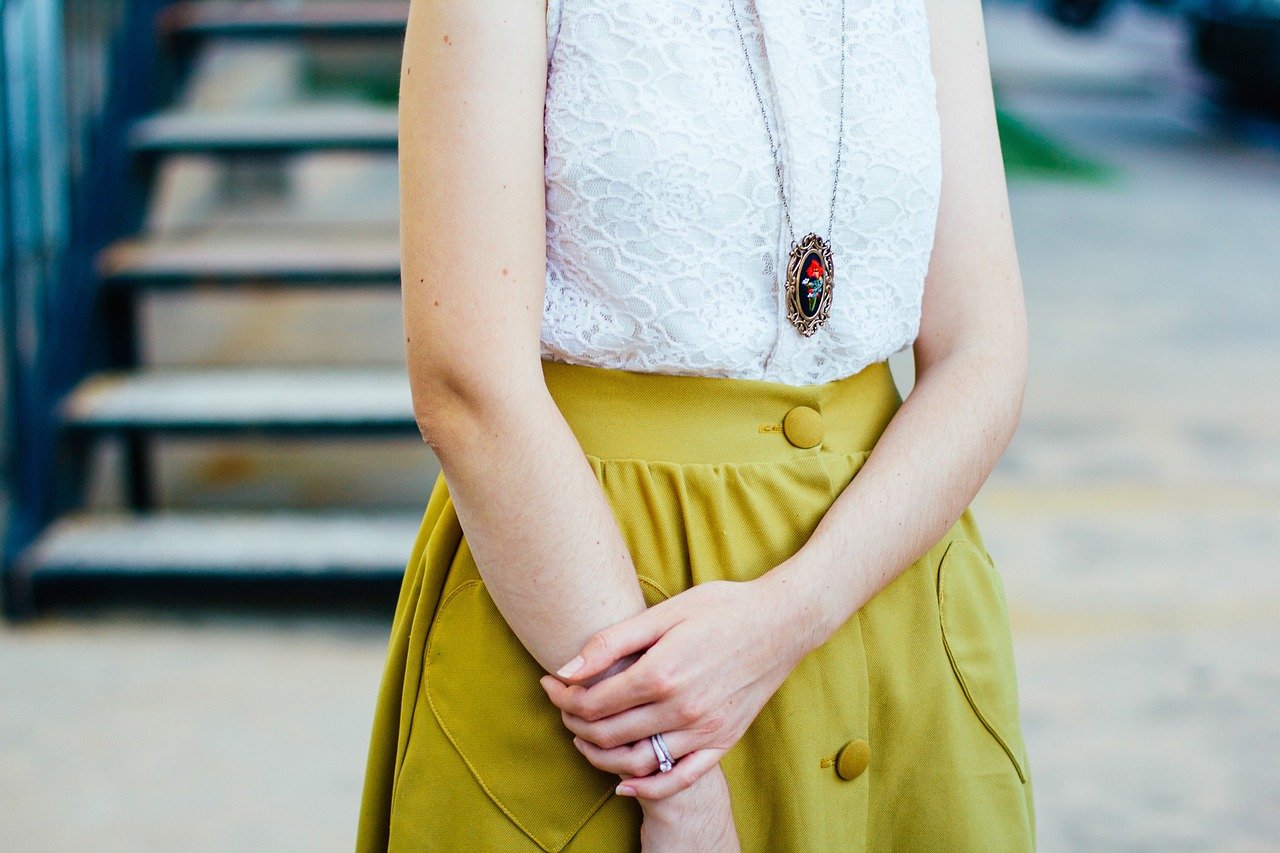
Somewhere in the last decade, the fashion world quietly agreed on something surprising: wearing less jewelry can make more of an impression than wearing a lot. Search interest in capsule wardrobes and pared-back dressing keeps climbing, and jewelry has followed the same logic. A single thin gold hoop or one small stone on a fine chain now reads as more intentional than a layered stack of statement pieces. The shift is practical as much as aesthetic. Fewer, better pieces are easier to style, easier to maintain, and easier to wear every day without thinking about it.
That said, “minimalist jewelry” is a phrase that gets used loosely. It can mean a plain silver band or a carefully chosen set of three pieces that work together. It can mean solid gold that lasts decades or a plated piece that costs a fraction and needs more care. This guide walks through what actually works, what tends to go wrong, and how to build a small collection that fits a quiet wardrobe without becoming boring. (Jewellery collection)
Why Minimalist Outfits Need Jewelry at All
A minimalist outfit, by definition, removes visual noise. Neutral colors, clean lines, few patterns, simple silhouettes. That restraint is the point, but it also creates a problem: with nothing competing for attention, the details you do include carry more weight. A plain white shirt and straight-leg trousers look considered when a single fine chain catches the light. The same outfit with no jewelry can look unfinished, or worse, like a uniform.
The job of minimalist jewelry is therefore not decoration but definition. It draws the eye to the face, the collarbone, or the wrist. It adds a bit of texture or warmth. It signals that the simplicity was a choice. That is a different brief from statement jewelry, which is designed to be the loudest thing in the room. Once you understand the role, the shopping decisions get much easier.
The Core Pieces That Do the Most Work
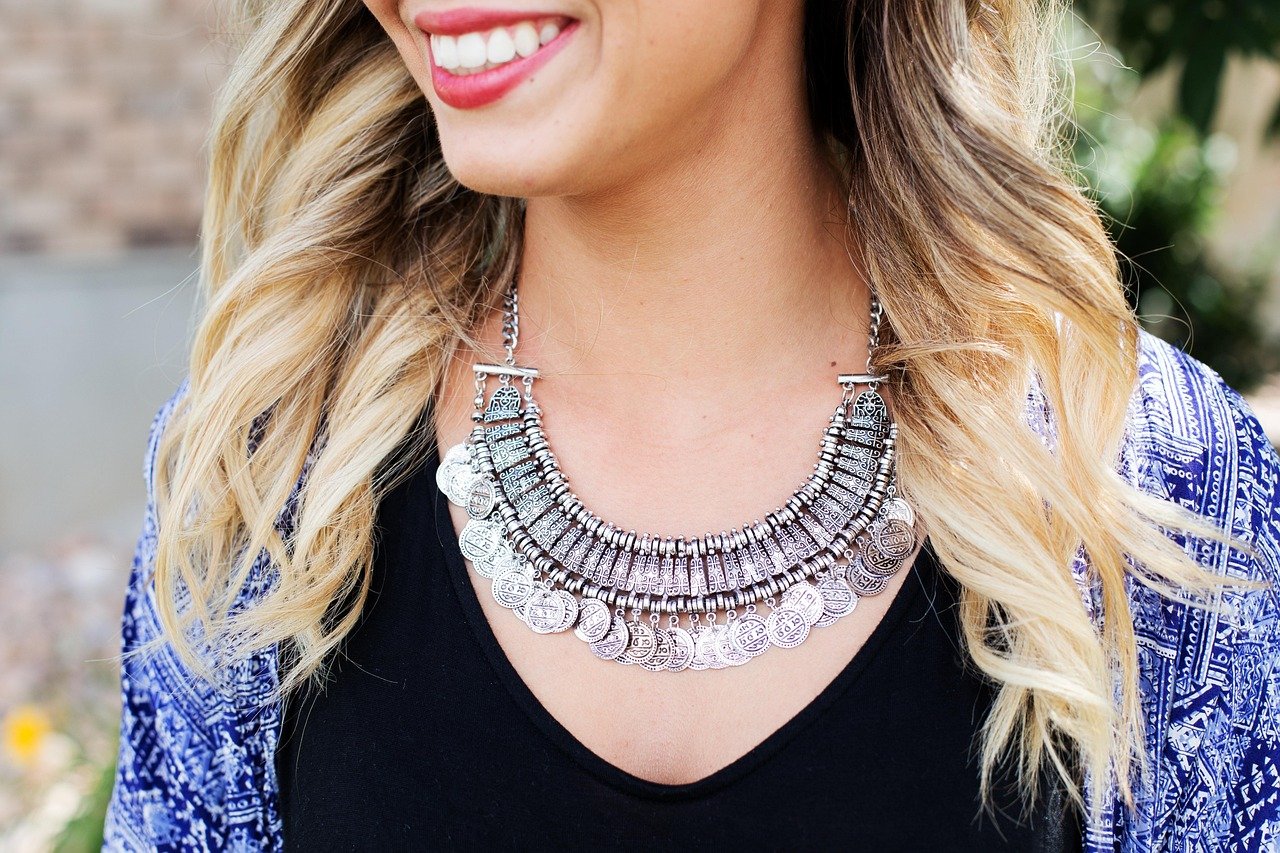
Most minimalist wardrobes rely on a small set of jewelry archetypes. These are the pieces that appear again and again because they solve real problems.
| Piece | Why it works | Best scale |
|---|---|---|
| Small hoop earrings | Frames the face, works with hair up or down | 10–20 mm diameter |
| Single-stone studs | Adds a point of light without competing | 2–4 mm stone |
| Fine chain necklace | Fills the neckline of a plain top | 1–1.5 mm width |
| Simple pendant | Gives the eye a focal point | Under 15 mm drop |
| Thin bangle or cuff | Adds movement at the wrist | 2–4 mm width |
| Plain band ring | Grounds the hand, stacks easily | 1.5–3 mm width |
The pattern here is scale. Minimalist jewelry lives in the small end of the spectrum, but “small” is not the same as “invisible.” A 10 mm hoop is delicate; a 4 mm hoop disappears entirely. Getting the scale right is the single most common stumbling block, and it is worth trying pieces on in person or checking exact measurements online before buying.
Earrings: The Anchor of a Quiet Look
Earrings do more for a minimalist outfit than any other category, because they sit near the face and frame expressions. Small hoops in solid gold or sterling silver are the workhorse. They read as polished with a blazer and relaxed with a t-shirt. Single-stone studs, whether diamond, moissanite, or a colored stone, add a precise point of interest. A useful practical tip: if you have multiple piercings, keep the spacing deliberate. Two tiny studs stacked closely look intentional; three mismatched sizes scattered up the ear look accidental.
Necklaces: Length and Layering
A fine chain at 16 to 18 inches sits at the collarbone and flatters almost every neckline. A slightly longer chain at 20 to 22 inches works over knits and buttoned shirts. The most reliable minimalist technique is layering two or three chains of graduated lengths, each thin enough that they do not tangle into a knot. The old “rule of three” is a convention rather than a law, but it holds up in practice because odd numbers tend to look less symmetrical and therefore more natural.
One mistake people make constantly: layering chains of similar length. Two 18-inch chains will sit on top of each other and fight. The visual separation is what makes layering work, so keep at least two inches between each chain.
Rings and Bracelets: Restraint at the Extremities
Hands move, so jewelry there gets noticed. A single plain band on the index or middle finger, or two thin stacking rings, keeps things clean. Bracelets are trickier because they clink and catch on sleeves. A thin bangle or a fine chain bracelet worn alone is usually enough. Wearing a watch plus two bracelets plus rings on both hands tips a minimalist look into busy territory fast.
Materials: What Lasts and What Doesn’t
Minimalism rewards durability. When you own fewer pieces, each one gets worn more often, so material quality matters more than it would in a large collection. The main options break down roughly like this. (Jewellery)
Solid gold (usually 14k or 18k) resists tarnishing, works for daily wear, and can be repaired or resized. It costs the most upfront. Sterling silver is affordable, durable enough for everyday use, and does tarnish over time, though it polishes back easily. Gold-filled jewelry has a thick layer of gold bonded to a base metal and lasts far longer than plating, often years with care. Gold-plated pieces have a very thin gold layer that wears away with friction, sweat, and perfume, typically within months of daily wear.
A useful rule of thumb: buy solid metal for the pieces you will never take off, and save plated or gold-filled pieces for occasional wear. If a piece is described only as “gold tone,” assume it is plated and treat it accordingly. For anyone building a small collection on a budget, gold-filled is often the smartest middle ground.
How to Mix Metals Without It Looking Messy
Mixing gold and silver used to be treated as a faux pas. That rule has largely dissolved, and mixed-metal styling now appears regularly in fashion editorial. The trick to doing it well in a minimalist wardrobe is to commit to a dominant metal and let the other one appear as an accent. A gold chain with silver studs works. Gold hoops, a silver ring, and a gold bracelet work. What looks accidental is a 50/50 split with no clear lead.
Another approach is a single piece that already mixes metals, such as a two-tone ring or a chain with alternating links. That piece does the coordinating for you and makes the rest of the collection easier to combine.
Building a Small Collection: A Practical Order of Purchase
If you are starting from scratch, buying in a deliberate order prevents the classic mistake of accumulating random pieces that never get worn together. A workable sequence looks like this.
- Start with everyday earrings. One pair of small solid-metal hoops in your dominant metal. Wear them for two weeks before buying anything else.
- Add a fine chain necklace. Choose a length that suits the necklines you actually wear most.
- Add a second chain in a contrasting length so you can layer, or a small pendant for a focal point.
- Add one ring. A plain band in the dominant metal, sized correctly.
- Add a bracelet or second pair of earrings depending on which you reach for more.
- Only then consider accent pieces in the secondary metal or with colored stones.
The two-week test in step one is worth taking seriously. It reveals whether a piece actually fits your daily routine or just looks good in a photograph.
Common Mistakes and What Actually Works
A few problems come up again and again when people try to style minimalist jewelry.
Buying too small. Delicate pieces photographed on models can look almost invisible on a real person at real distance. Check listed dimensions rather than trusting the styling photo.
Over-layering too fast. Three chains bought in one shopping trip rarely sit well together. Build layering gradually so each addition earns its place.
Ignoring the neckline. A choker-length chain vanishes under a turtleneck. A long pendant fights with a deep V. Match necklace length to the tops you own, not to a trend.
Skipping care. Minimalist pieces are worn constantly, so they collect perfume, sweat, and soap residue. Wiping jewelry with a soft cloth after wear and storing pieces separately keeps them looking sharp far longer. Silver in particular benefits from being kept in a tarnish-resistant pouch.
Chasing trends over fit. A trend-driven shape that does not suit your face, wrist, or wardrobe will sit unworn no matter how minimal it looks online.
Does Minimalist Jewelry Have to Be Expensive?
No, but the cheap-versus-expensive trade-off shows up faster in a small collection. Because each piece gets heavy rotation, a plated necklace that fades in three months is a worse investment than a gold-filled one that lasts five years, even at triple the price. The math favors fewer, better pieces almost every time. That said, “better” does not have to mean solid gold. Sterling silver, gold-filled, and well-made stainless steel all hold up for daily wear at moderate prices. What matters is knowing what you are buying and matching the material to how often you will wear it.
There is also a styling argument for restraint that has nothing to do with money. A capsule approach to jewelry, where a handful of pieces cover nearly every outfit, removes daily decision fatigue. You reach for the same three things because they work, not because you have nothing else.
How Minimalist Jewelry Fits a Capsule Wardrobe
The capsule wardrobe concept, usually traced to London boutique owner Susie Faux in the 1970s and popularized by designer Donna Karan’s “Seven Easy Pieces” in the mid-1980s, rests on the idea that a small number of versatile items outperforms a large, scattered closet. Jewelry fits that model neatly. A set of five or six pieces in one or two metals can cover workdays, weekends, and occasional events without a single swap feeling like a compromise.
The practical benefit is combination math. Three necklaces and two pairs of earrings give you six distinct looks from five items. Add a ring and a bracelet and the combinations multiply quickly. That is the quiet advantage of a minimalist jewelry collection: it looks simple, but it is quietly flexible.
Conclusion
The best jewelry for minimalist outfits is not the smallest or the plainest piece you can find. It is the piece that adds a deliberate point of definition to an otherwise quiet look, in a material durable enough to wear constantly. Start with small solid-metal hoops and a fine chain, check actual measurements rather than trusting photos, and build slowly so each addition works with what you already own. Commit to a dominant metal, layer with clear spacing, and match necklace length to the necklines you actually wear. Do that, and a handful of pieces will carry nearly every outfit in the wardrobe.
Frequently Asked Questions
What jewelry works best with a minimalist outfit?
Small-scale pieces with clean geometry work best: thin hoops, single-stone studs, fine chains, plain bands, and slim bangles. The goal is definition rather than decoration, so one or two visible pieces near the face usually do more than a full stack.
Is it okay to mix gold and silver jewelry?
Yes. Mixed metals are widely accepted now. The reliable approach is to pick a dominant metal and use the other as an accent, or to wear a single two-tone piece that ties the look together. An even split with no clear lead tends to look accidental.
How many pieces of jewelry should a minimalist wear at once?
There is no fixed number, but most minimalist looks land at two to four visible pieces. Earrings plus a necklace plus a ring is a common, balanced combination. More than that can still work if the pieces are small and share a metal.
What is the difference between gold-filled and gold-plated jewelry?
Gold-filled jewelry has a thick layer of gold mechanically bonded to a base metal, so it lasts years with normal care. Gold-plated jewelry has a very thin gold layer that wears off relatively quickly with friction, sweat, and perfume. For daily wear, gold-filled is the more durable budget option.
How do I layer necklaces without them tangling?
Keep at least two inches of length between each chain, use chains of similar thinness, and fasten them so the clasps sit at the back rather than drifting to the front. Two or three graduated chains layer more cleanly than several chains of the same length.
Can minimalist jewelry be worn to formal events?
Yes. A single fine chain with a small pendant, paired with small studs or hoops, reads as elegant in formal settings. If you want more presence for an evening, add one slightly larger piece rather than several small ones, and keep the rest of the look restrained.