
Best Instant Cameras for Travel Journals (2026 Guide)
 Abdul WadoodLast updated
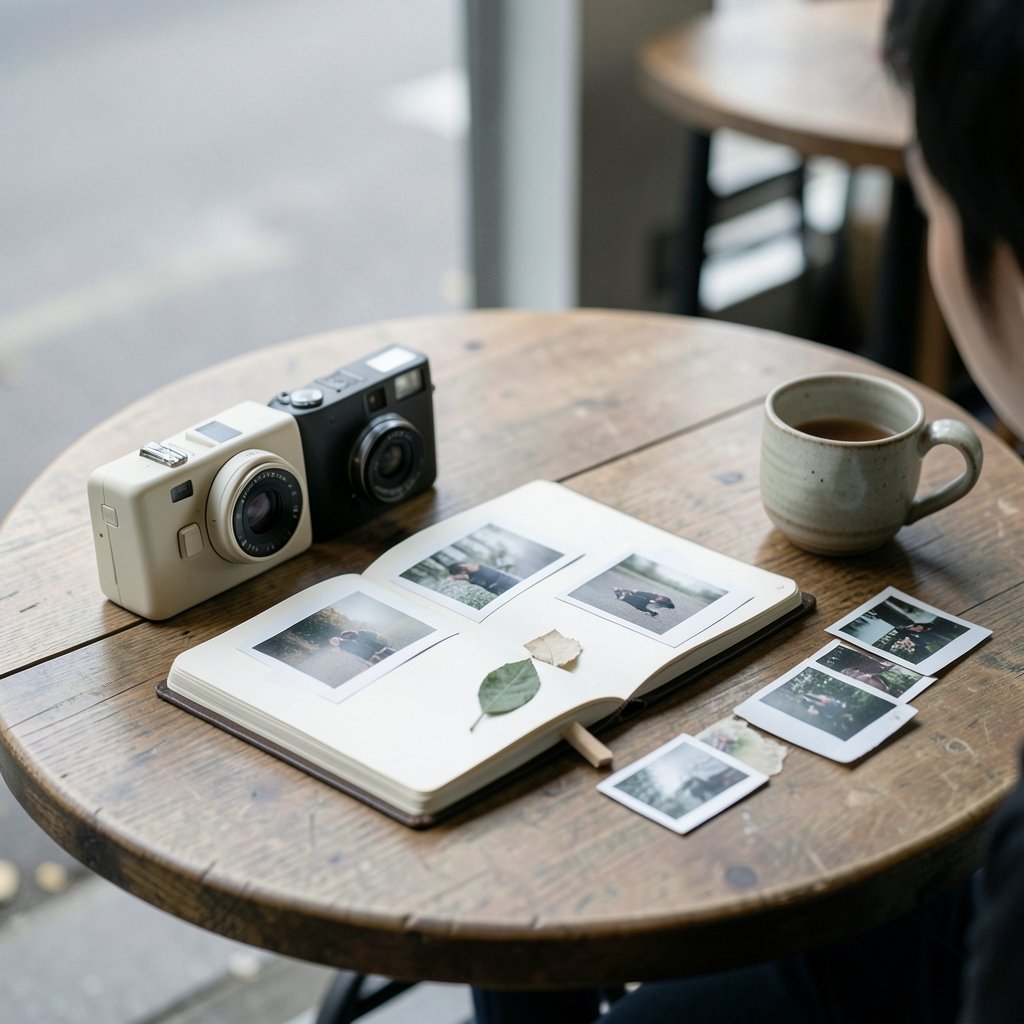
A printed photo can outlast a thousand phone snaps. That is the quiet magic of instant cameras: you press the shutter, the camera whirs, and seconds later a small physical print slides out. You can stick it in a travel journal, hand it to a stranger who gave you directions, or tape it next to a train ticket stub. No cloud, no screen glare, no “I’ll edit it later.”
That tactile appeal is why instant cameras have stayed popular even as phone cameras got absurdly good. But the market is crowded, and the models look similar in photos. This guide breaks down the best instant cameras for travel journals by what actually matters on the road: print size, film cost, portability, creative control, and how the camera behaves in real travel conditions. It focuses on use cases rather than a single “winner,” because the right camera for a backpacking trip is not the right camera for a weekend city break. (Instant camera)
Why Instant Cameras Fit Travel Journals So Well
Travel journals have a problem: they are text-heavy and memory-light. You can describe a sunset, but a small print glued to the page does something words cannot. Instant prints are imperfect by design. They are slightly soft, sometimes overexposed, occasionally crooked. That imperfection is exactly what makes them feel honest.
There is also a social dimension. Instant cameras are conversation starters. In a market in Marrakech or a hostel common room in Lisbon, a camera that produces a physical print in under two minutes draws people in. Many travelers hand the print to the person they photographed, which turns a snapshot into a small gift.
The trade-off is cost and bulk. Every press costs money, and film packs take up space. Understanding those constraints before you buy is the difference between a camera that lives in your bag and one that stays in a drawer.
The Main Contenders at a Glance

Instant cameras split into two broad families: analog instant cameras (light goes straight onto film) and hybrid digital-instant cameras (a digital sensor captures the image, then a built-in printer produces the print). Hybrids offer more control and let you preview before printing, which saves film. Analog models offer a more authentic, unpredictable feel.
| Model | Type | Film Format | Print Size | Best For | Creative Control |
|---|---|---|---|---|---|
| Fujifilm Instax Mini 12 | Analog | Instax Mini | Credit-card sized | Beginners, budget travelers | Low (auto exposure, close-up mode) |
| Fujifilm Instax Mini Evo | Hybrid | Instax Mini | Credit-card sized | Journalers who want control without waste | High (10 lens + 10 film effects) |
| Fujifilm Instax Mini 99 | Analog | Instax Mini | Credit-card sized | Creatives who want analog feel with dials | Medium-high (color effect dial, brightness) |
| Polaroid Now+ | Analog | i-Type / 600 | Larger square | Big-print journal spreads | Medium (app-based creative modes) |
| Polaroid Go | Analog | Polaroid Go | Smallest square | Minimalist packers | Low |
| Kodak Mini Shot series | Hybrid | Kodak 4PASS | Small | Budget hybrid printing | Medium |
A quick note on that table: model generations change, and several cameras have had “Gen 2” refreshes with the same name. Always check the current spec sheet on the manufacturer’s site before buying, because battery type, film compatibility, and dimensions can shift between generations.
Fujifilm Instax Mini 12: The Easy Starter
The Instax Mini 12 is the camera most people picture when they think “instant camera.” It is small, colorful, and almost impossible to misuse. Auto exposure handles most lighting, and twisting the lens barrel switches to close-up mode for shots at roughly 30 to 50 cm.
For travel journals, the Mini 12’s biggest asset is its film ecosystem. Instax Mini film is widely stocked, generally cheaper than Polaroid film, and available in borderless, patterned, and colored-frame versions. Those patterned frames are a small but real joy when you are building a journal page.
The downside is control. You get almost none. In bright sun the camera tends to blow out highlights, and indoors without flash it struggles. If you want to compose a shot rather than just take one, this is not the camera for you. If you want to point, shoot, and stick, it is hard to beat.
Practical tip: keep the camera out of direct heat. Leaving an instant camera on a car dashboard in summer is one of the most common ways travelers ruin film before they even load it.
Fujifilm Instax Mini Evo: The Hybrid That Saves Film
The Mini Evo solves the instant camera’s biggest travel problem: waste. Because it is a hybrid, you can review the digital image on the rear screen before committing to a print. That single feature can cut film consumption dramatically on a long trip.
It also offers a genuinely fun creative system: ten lens effects and ten film effects, which combine into one hundred looks. You turn physical dials on the camera body to cycle through them, which feels tactile rather than menu-driven. A “retro” film effect paired with a soft-focus lens setting produces prints that look like they came from a 1970s shoebox.
The catch is that the Evo is a digital camera at heart. Some purists find that less charming. It is also pricier than the Mini 12 and needs charging via USB rather than running on disposable batteries. For journalers who want a high hit rate and hate throwing away bad prints, though, it is the most practical choice on this list.
Fujifilm Instax Mini 99: Analog With Real Controls
The Mini 99 is the enthusiast’s analog option. It keeps the Instax Mini film format but adds a color effect dial, brightness control, and a more serious body. You can push the image warmer, cooler, or more saturated before you shoot, which means the print that comes out already has a mood.
This matters for travel journals because mood is the point. A slightly green, slightly grainy print of a rainy alley in Kyoto reads differently than a clean digital shot. The Mini 99 lets you lean into that.
It is not a beginner camera. The controls reward experimentation and punish carelessness, and the higher price stings if you are still learning. It also uses the same Mini film, so running costs stay reasonable. If you have already owned an instant camera and want more say in the result, this is the natural upgrade.
Polaroid Now+ and Polaroid Go: Bigger Prints, Bigger Presence
Polaroid’s appeal is the print itself. i-Type prints are noticeably larger and squarer than Instax Mini prints, which makes them better for full-page journal spreads or for pinning to a wall. The Polaroid Now+ includes app-connected creative modes such as light painting, double exposure, and aperture priority, giving you tools that are genuinely hard to find on analog instant cameras.
The Polaroid Go is the opposite bet: it is the smallest instant camera format available, which makes it ideal for travelers who count grams. Prints are tiny, but they suit a pocket journal perfectly.
Two honest warnings. First, Polaroid film costs more per print than Instax Mini film in most markets, so a heavy shooter will feel it. Second, Polaroid’s chemistry is more temperature-sensitive. In cold weather, prints can shift color or develop slowly; keeping the film warm against your body helps. If you are traveling in winter or at altitude, plan for that.
Kodak Mini Shot: The Budget Hybrid Route
The Kodak Mini Shot family uses 4PASS dye-diffusion printing, which produces a different look from Instax or Polaroid: smoother, more like a small photo lab print than a chemical instant print. These are hybrids, so you can preview and reprint.
They are often the cheapest way into instant printing, and the prints are durable and smudge-resistant. The trade-off is character. If you want the slightly unpredictable, chemical look that makes an instant print feel like an instant print, Kodak’s output may feel too clean. If you mainly want small physical photos for a journal at low cost, it is a sensible pick.
What Actually Matters on the Road
After the specs, the practical questions decide whether a camera earns its place in your bag.
Film availability. Instax Mini film is the easiest to find worldwide. Polaroid film is common in cities but thinner in rural areas. If you are traveling for months, buy film in bulk before you leave or confirm you can restock locally. For more destination planning around long trips, the travel guides at Voozon Travel — Destinations, Guides & Ideas are a useful starting point for mapping where you can resupply.
Print size versus journal size. A5 journals suit Mini prints. A4 or larger journals suit Polaroid squares better. Match the print to the page before you buy.
Battery strategy. Most analog Instax and Polaroid models run on disposable batteries, which is convenient because you can buy replacements anywhere. Hybrids like the Mini Evo are rechargeable, which is cheaper long-term but useless if you forget the cable or lose power for days.
Airport security. X-ray scanners can fog undeveloped instant film. Ask for a hand check, keep film in your carry-on rather than checked luggage, and keep it in its original packaging. Security staff are generally familiar with the request.
Heat and cold. Film is a chemical product. Heat fogs it; cold slows development. A padded pouch in your day bag is cheap insurance.
The waste problem. Instant photography produces physical waste, and failed prints are the main source. Hybrids reduce it. So does slowing down: one deliberate print per day beats ten rushed ones.
Common Mistakes Travelers Make
The most frequent error is buying film in the wrong format. Instax Mini, Instax Square, Instax Wide, Polaroid i-Type, Polaroid 600, Polaroid Go, and Kodak 4PASS are all incompatible with each other. Check the box twice.
The second is expecting digital quality. Instant prints are soft, contrasty, and imperfect. Travelers who expect sharpness are always disappointed; travelers who expect character never are.
The third is shooting indoors without flash or in dim bars, then blaming the camera. Instant film needs light. Learn the camera’s limits in the first week of a trip, not the last.
The fourth is forgetting that prints need time. Most instant prints take several minutes to fully develop, and you should not bend or shake them. Tuck them in a pocket and let them finish while you walk.
Conclusion
The best instant camera for a travel journal is the one you will actually carry and actually use. For most travelers, that means the Fujifilm Instax Mini 12 for simplicity and cheap, widely available film, or the Instax Mini Evo if you want to preview shots and stop wasting prints. Creatives who want analog control should look at the Instax Mini 99. Travelers who want large, striking prints for big journal pages should weigh the Polaroid Now+, accepting the higher film cost and temperature sensitivity. Minimalist packers have a strong case for the Polaroid Go.
Whatever you choose, the habit matters more than the hardware. One print a day, annotated with a date and a place, builds a journal that no phone gallery can match. The camera is just the tool that makes the memory physical.
Frequently Asked Questions
Which instant camera is best for beginners?
The Fujifilm Instax Mini 12 is the easiest entry point. Auto exposure and a simple close-up mode mean there is very little to get wrong, and Instax Mini film is the cheapest and most widely stocked instant film format.
Is Instax or Polaroid film cheaper?
Instax Mini film is generally cheaper per print than Polaroid i-Type or 600 film in most markets. Prices vary by region and change over time, so check current retailer pricing before you commit to a format, since film cost compounds over a long trip.
Can I take an instant camera through airport security?
Yes, but ask for a hand check of your undeveloped film. X-ray scanners can fog instant film, and the effect is cumulative across repeated scans. Keep film in your carry-on, leave it in its original packaging, and never put it in checked luggage.
Do instant cameras work in cold weather?
They work, but more slowly. Cold temperatures slow the chemical development process, so prints may look washed out or take longer to appear. Keeping film and prints warm inside a jacket helps considerably.
What is the difference between analog and hybrid instant cameras?
Analog instant cameras expose film directly to light, producing a chemical print. Hybrid cameras capture a digital image first, then print it, which lets you preview and delete shots before wasting film. Hybrids are more economical; analog models feel more authentic.
How many photos can I take with one film pack?
Most Instax Mini and Polaroid film packs contain eight to ten exposures, depending on the format and pack. Budget accordingly: a two-week trip with three prints a day means roughly six to eight packs, which is a meaningful packing consideration.