
Best Beaches in South Carolina: Local Guide 2026
 Abdul WadoodLast updated
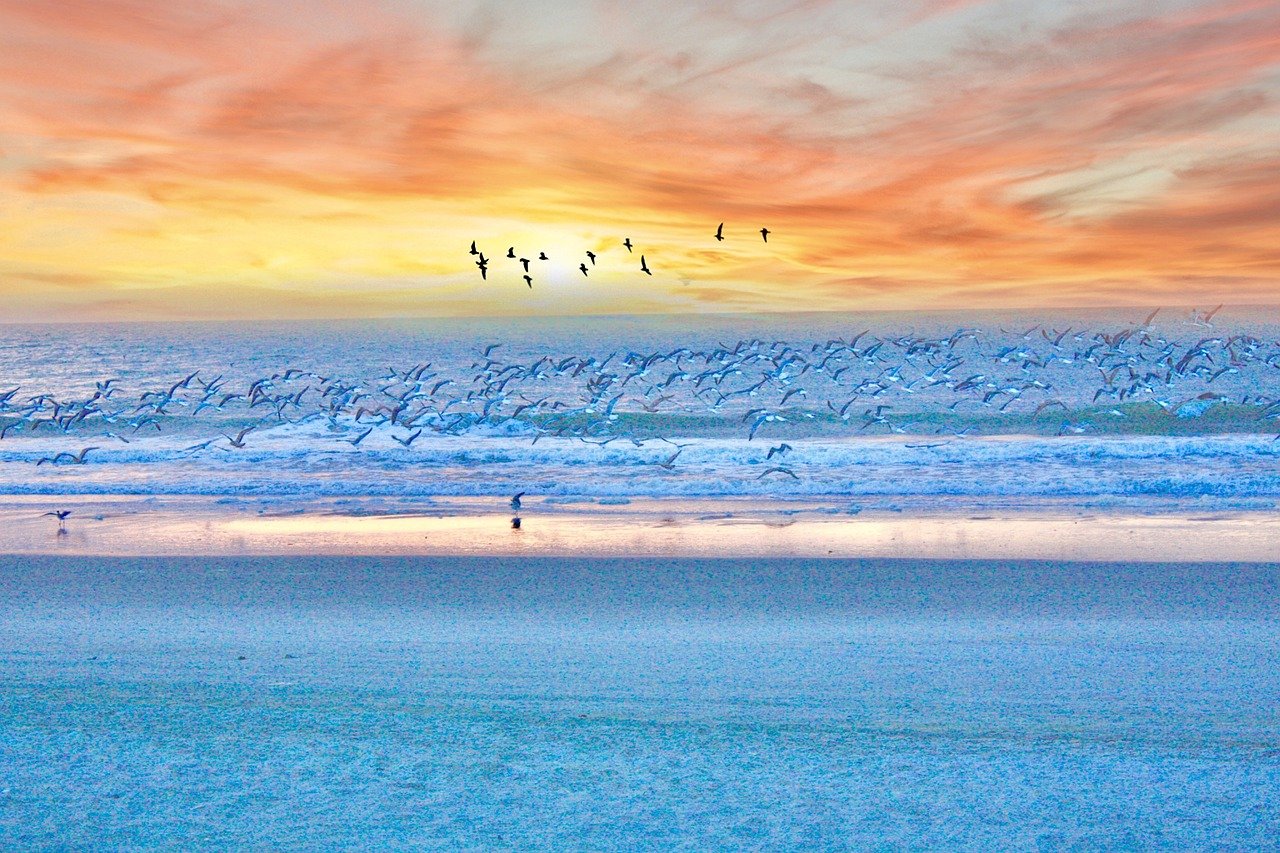
What if the best beach day of your year came down to one decision you could get wrong in about five minutes of scrolling? South Carolina packs roughly 180 miles of coast into a state you can drive end to end in a morning, and every stretch of sand has a different personality. Some beaches are built for families with coolers and canopy tents. Others reward the person who shows up at low tide with a bike, or the one willing to walk fifteen minutes past the last parking spot. (Yoon young bae south korean model who redefined runway)
This guide sorts the coast by what each beach is actually good at, flags the practical traps that catch first-timers, and keeps the hype in check. No single beach wins everything, and anyone who tells you otherwise is probably selling something. (Riding cars boys cast who plays each role it matters)
The Grand Strand: Myrtle Beach and Its Neighbors
Myrtle Beach anchors the Grand Strand, a roughly 60-mile run of continuous shoreline stretching from Little River down to Georgetown. That figure is a long-standing regional tourism estimate rather than an official measurement, so treat it as approximate. What matters practically is that the sand is nearly unbroken, which means you can pick your vibe without picking a different trip.
The north end near North Myrtle Beach and Cherry Grove tends to feel calmer than the neon strip downtown. Families often land there because the beach is wide, parking is less brutal, and the crowds thin out after the high-rise corridor ends. If you want the boardwalk, the SkyWheel, and a hundred restaurants within walking distance, stay central. If you want to hear the waves over the speakers, drive north.
The common mistake here is timing. Summer afternoons on the central strand mean slow traffic on Ocean Boulevard and a long hunt for parking. Locals treat morning like a separate sport: on the sand by eight, off by noon, lunch somewhere with air conditioning. It sounds fussy until you try the alternative.
Huntington Beach State Park: The Quiet Alternative
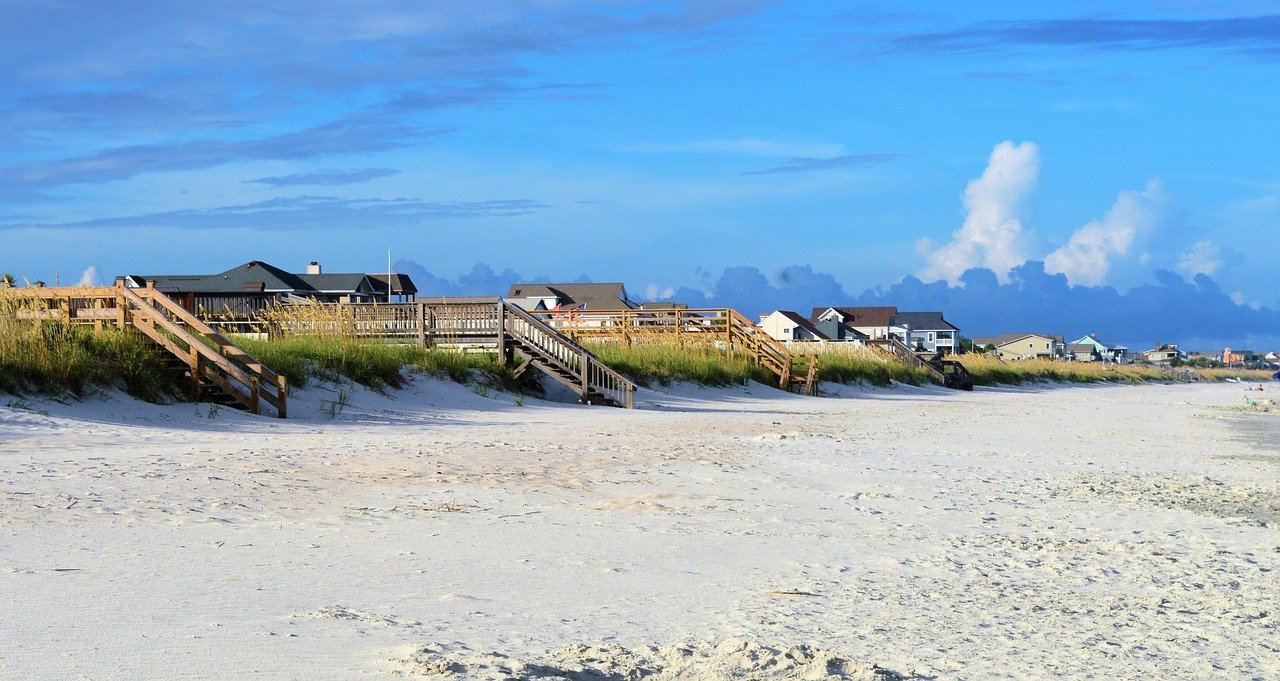
Just south of Murrells Inlet, Huntington Beach State Park is the beach people recommend when they want the Grand Strand’s convenience without its volume. It’s a state-park beach, managed by the S.C. Department of Parks, Recreation & Tourism, and day-use fees apply. Check current rates before you go rather than budgeting from an old blog post. (What is a rip current?)
The draw is the mix: a long, undeveloped beach on one side and the freshwater impoundment at Brookgreen‘s neighbor property on the other, where herons, egrets, and alligators show up depending on the season. The historic Atalaya castle ruin sits right behind the dunes and is worth the short walk even in heat.
Practical tip: bring everything. State-park beaches don’t have the strip-mall backup of a resort town, so forgotten sunscreen means a drive. Also, the beach here is not groomed into a manicured carpet. Expect natural debris, and expect to share the sand with birds.
Hilton Head Island: Hard Sand and Serious Rules
Hilton Head Island faces the Atlantic on its east and southeast edges, and its beaches are famous for hard-packed sand that holds a bicycle tire at low tide. Riding the beach at sunrise is one of the coast’s genuine pleasures, and it’s the kind of thing that sounds like marketing until you try it.
The catch is regulation. The town enforces seasonal rules on beach activities, and restrictions on tents, fires, and dogs change with the calendar. These are local ordinances that get updated, so read the current version rather than trusting a forum post from three summers ago. Nothing ruins a beach morning faster than discovering your canopy is out of season.
Hilton Head is also the least spontaneous beach on this list. Much of the island is gated, public access points are limited, and parking fills early in peak weeks. Plan the logistics before you plan the picnic.
Edisto Beach: The Slow Coast
Edisto Beach sits at the end of a two-lane road that seems designed to lower your blood pressure. The town is small, the commercial strip is short, and the beach is backed by maritime forest rather than high-rises. Edisto Beach State Park offers both oceanfront and forest camping, which makes it one of the few places on the coast where you can fall asleep to surf without booking a hotel.
This is the beach for people who consider “nothing to do” a feature. Bring bikes, bring books, bring a fishing rod. Don’t bring a schedule.
One caution: Edisto’s beach can narrow noticeably at high tide in places, so scope out your spot with the tide chart in mind. Walking out at low tide and getting surprised two hours later is the classic rookie move here.
Folly Beach: Surf, Character, and a Lighthouse Offshore
Folly Beach, twenty minutes from downtown Charleston, has the coast’s most distinct personality. It’s a surfing beach first, a hangout beach second, and a resort beach a distant third. The pier, the low-slung rental houses, and the general air of cheerful disrepair give it a following that borders on loyalty.
The landmark is the Morris Island Lighthouse, which now stands offshore because of erosion. It’s a striking sight and a useful reminder that this coastline is in constant motion. You can’t visit the tower, but you can see it clearly from the beach and from the water.
Folly’s practical quirks: parking near the pier is tight in summer, and the beach gets crowded on weekends with Charleston day-trippers. Go on a weekday if you can, and know that afternoon thunderstorms in July and August are less a threat than a scheduled event.
Kiawah Island’s Beachwalker Park: Public Sand on a Private Island
Beachwalker Park is the public access point on largely private Kiawah Island, and it regularly appears in “best beach” rankings. Here’s the honest framing: those rankings are subjective, they change yearly, and they’re often based on criteria that have nothing to do with your family’s needs. If you cite a ranking, cite the specific list and its year.
What’s not subjective is the setting. The beach is broad, the maritime forest edge is beautiful, and the park has basic facilities. It’s also a county park with limited parking, so arriving mid-morning on a summer Saturday is a gamble.
Nearby, Kiawah‘s neighbor Seabrook Island is similarly private, and Botany Bay on Edisto Island offers a different kind of beach entirely: a boneyard of dead trees on a shoreline that’s eroding fast. Botany Bay is a heritage preserve with restricted hours and no facilities, so check before you drive out.
Hunting Island State Park: The Wild One
Hunting Island State Park is among South Carolina’s most-visited state parks, and the reason is obvious within about thirty seconds of stepping onto the sand. The beach is broad, the palmetto forest runs right up to the dunes, and the historic lighthouse, built in 1859, gives the whole place a sense of scale.
That lighthouse is also the story of the coast in miniature. Erosion has repeatedly threatened it, and the park has run beach renourishment projects over the years. The shoreline you walk today is partly engineered. That’s not a knock, just context for why the sand shifts and why some access points close seasonally.
Hunting Island is the best pick on this list for anyone who wants a beach that feels like a natural setting rather than a venue. It’s also the least convenient: it’s down near Beaufort, the drive is long, and you’ll want a full day.
Sea Turtles, Water Quality, and Other Things Worth Knowing
South Carolina beaches host loggerhead sea turtle nests each summer, roughly May through October. The state’s natural resources agency coordinates nesting monitoring and volunteer programs, and the practical rules are simple: no lights on the beach at night, no holes left in the sand, and no obstacles between a hatchling and the water. If you see a nest marked with stakes and tape, walk around it.
Swimming advisories are a separate system, issued by the state environmental agency based on bacteria sampling. Agency names and advisory pages have shifted with reorganizations in recent years, so confirm the current source before you rely on it. A general rule that holds regardless: skip swimming within 24 hours of heavy rain, when runoff is highest.
How to Choose, in One Table
| Beach | Best for | Watch out for |
|---|---|---|
| Myrtle Beach (Grand Strand) | Amenities, families, boardwalk | Traffic, parking, crowds |
| Huntington Beach State Park | Nature, quiet, castle ruin | Entry fee, few nearby shops |
| Hilton Head Island | Biking at low tide, polish | Seasonal rules, limited access |
| Edisto Beach | Slow pace, camping | Narrow beach at high tide |
| Folly Beach | Surfing, character | Weekend crowds, tight parking |
| Beachwalker Park (Kiawah) | Broad sand, scenery | Small lot, private-island access |
| Hunting Island | Wild coast, lighthouse | Long drive, seasonal closures |
Practical Tips That Actually Matter
First, check the tide chart before you pick a spot, not after. South Carolina’s tidal range is significant, and a beach that looks generous at 9 a.m. can be a narrow shelf by 2 p.m.
Second, arrive early. This is the single most repeated piece of advice about this coast because it’s the single most useful one. Parking is the real bottleneck at almost every public access point.
Third, respect the seasonal rules. Dog restrictions, tent bans, and fire prohibitions vary by town and by month. The town of Hilton Head’s beach rules are a good example of how detailed these get.
Fourth, pack for heat you can’t argue with. July and August afternoons hit hard, and shade is scarce on state-park beaches. A umbrella, extra water, and a plan to leave by early afternoon beats toughing it out.
Fifth, don’t over-plan the drive. If you’re stringing together several coastal stops, the routes between them are part of the trip, and some of the best scenic drives in South Africa remind travelers of the same principle: the road in is half the destination. The same instinct applies closer to home when you’re chasing good sand and better light.
Conclusion
The best beach in South Carolina depends entirely on what you’re optimizing for. If it’s convenience and variety, the Grand Strand wins without much argument. If it’s quiet and a little wild, Huntington Beach and Hunting Island deliver. If it’s a bike at sunrise and dinner reservations at seven, Hilton Head is the answer. And if it’s the feeling that time got slower somewhere around the second stop sign, Edisto is waiting at the end of that road.
Pick by what you want the day to feel like, check the tide and the local rules the night before, and get there early. The sand will handle the rest.
Beyond the headline beaches, the smaller access points reward curiosity: the county parks and town landings scattered between the marquee names often have shorter walks and thinner crowds. Amenities vary wildly, so check before committing. And wherever you land, leave the shell middens and dune grasses alone; the coastline’s resilience depends on them. With tide chart in hand and an early start, South Carolina’s shore delivers whatever kind of day you came for.
, and the locals will thank you for it. One last note on timing: late September and October bring warm water, thinner crowds, and softer light, often at half the peak-season price. Hurricane season runs June through November, so keep an eye on the forecast and buy travel insurance for coastal rentals. Winter, meanwhile, offers empty sand and good walking, though many seasonal businesses close. Whenever you go, the coast rewards flexibility over rigid itineraries.