
Best Scenic Drives in South Africa: 8 Top Routes
 Abdul WadoodLast updated
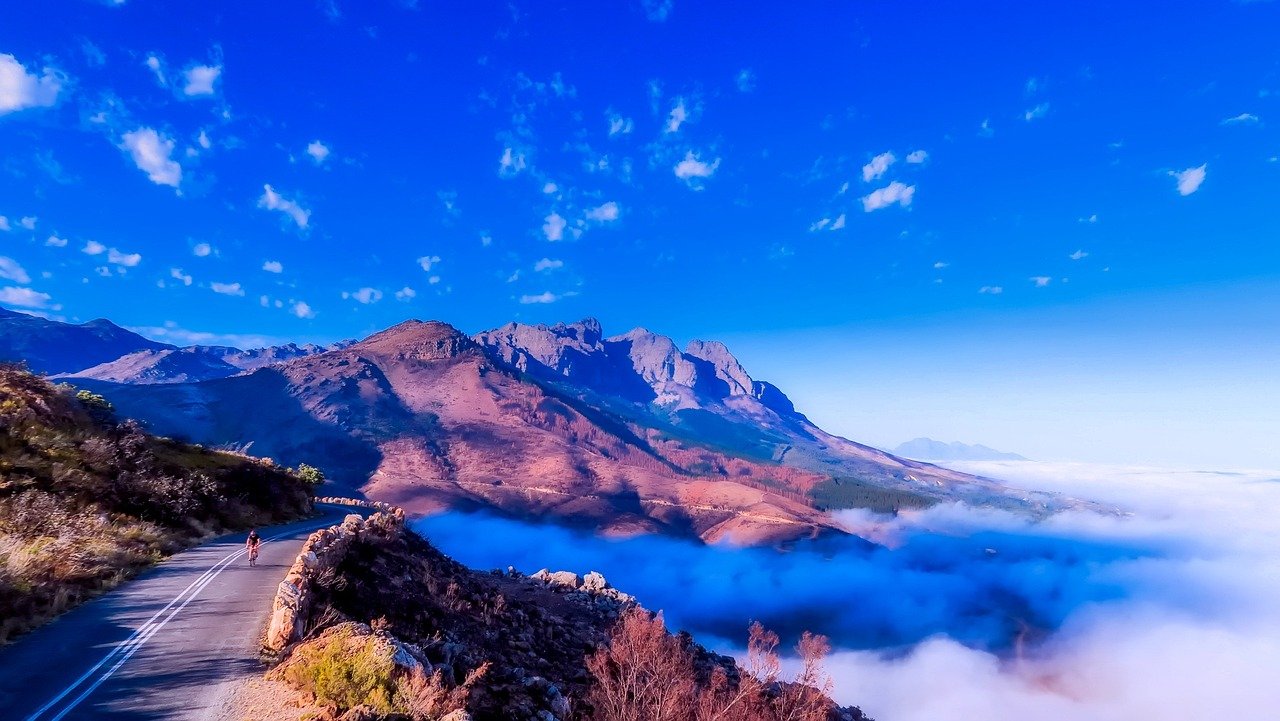
South Africa packs an entire continent’s worth of landscapes into one country, and some of the most spectacular scenery is visible from behind a steering wheel. One cliff-hugging coastal road near Cape Town alone carves 114 curves into a few kilometres of mountainside. The country’s scenic drives range from smooth coastal toll roads to high-altitude gravel passes where a 4×4 is not optional. This guide covers eight routes that consistently earn their reputation, with honest notes on road conditions, tolls and the practical details that trip-planning blogs often skip.
Why South Africa Is a Self-Drive Destination
Unlike many safari destinations where tourists are ferried between lodges, South Africa is built for independent road trips. The N2 highway strings together the Garden Route’s forests and lagoons. The R62 trades speed for wine farms and mountain passes. Rental cars are widely available in Cape Town, Johannesburg and Port Elizabeth, and English-language signage makes navigation straightforward.
The catch is that scenic quality and road quality do not always match. Some of the country’s most beautiful roads are gravel, some coastal routes close without warning after rockfalls, and mountain passes can demand a high-clearance vehicle. The practical rule: check road status before any pass or coastal cliff road, and never assume a route that looks short on a map will be quick.
Chapman’s Peak Drive: Cape Town’s Signature Coastal Road
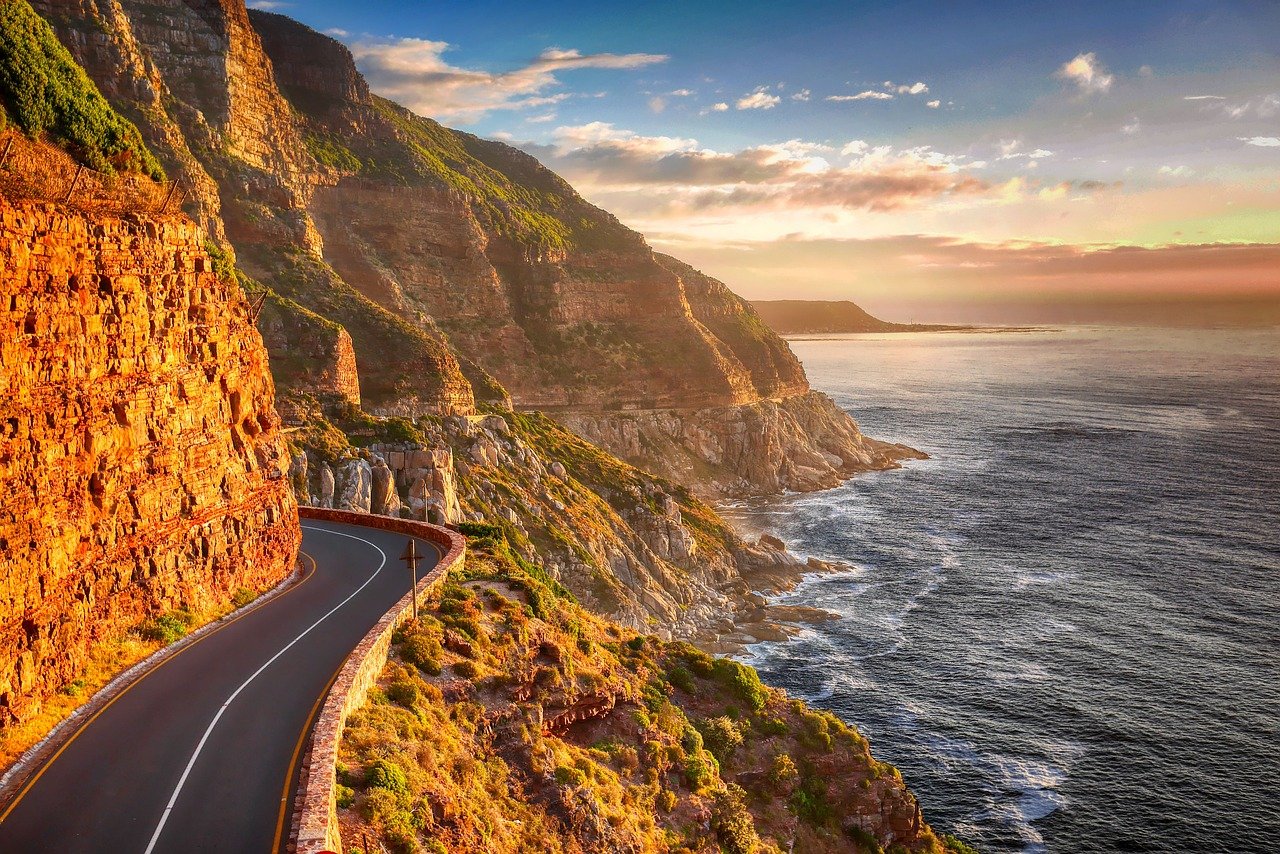
The drive between Hout Bay and Noordhoek on the Cape Peninsula is the one most visitors remember. Chapman’s Peak Drive clings to a cliff face above the Atlantic, with roughly 9 kilometres of road and those famous 114 curves. Built in the early 20th century, it is a toll road, and it closes in bad weather or after rockfalls, so a route that works at noon may be shut by evening.
What actually works in practice: drive it from north to south (Hout Bay toward Noordhoek) so the ocean stays on your left and the pull-offs are easier to enter. Go early. Mid-morning tour buses and sunset crowds both clog the narrow viewpoints. The Chapman’s Peak lookout points are the reason to come, so build in 30 to 45 minutes of stopping time rather than treating it as a transit route.
Common mistake: tacking Chapman’s Peak onto a packed Peninsula day that already includes the Cape of Good Hope. The full loop takes longer than most itineraries admit, and rushing this road defeats its purpose entirely.
Clarence Drive: The Overberg’s Overlooked Coastal Route
The R44 between Gordon’s Bay and Hermanus, known as Clarence Drive, runs along the edge of False Bay beneath the Kogelberg mountains. It is arguably the equal of Chapman’s Peak for drama, with fewer tolls and less traffic. Parts of the route have been affected by rockfalls and closures over the years, so check current conditions before committing.
The appeal here is whales. In season, southern right whales calve close to shore along this stretch, and the roadside pull-offs double as whale-watching platforms. Even outside whale season, the drive pairs naturally with a stop in Betty’s Bay or a stroll through Hermanus, making it one of the easiest scenic drives to fold into a Cape Town itinerary.
Route 62: The Klein Karoo’s Wine-and-Port Alternative
Route 62 runs roughly from Cape Town toward Oudtshoorn, threading through Barrydale and Ladismith in the Klein Karoo. It is marketed as the slower, prettier alternative to the N2, and for good reason: this is wine and port country, with farm stalls, country pubs and mountain backdrops that reward a leisurely pace.
The trade-off is time. Route 62 is not a fast road, and treating it as a shortcut misses the point. The best approach is to break the journey with an overnight stop in Barrydale or Calitzdorp, the latter known for its port-style wines. Drivers who blast through in a single day tend to arrive tired and remember the road as merely long.
The Garden Route: South Africa’s Most Famous Road Trip
The Garden Route along the N2 from Mossel Bay through Knysna to Plettenberg Bay and on to Storms River is the country’s best-known scenic corridor. It stitches together coastal forest, lagoons, and the Tsitsikamma section, where the Storms River mouth cuts dramatically through ancient rock.
The Garden Route’s weakness is its own popularity. Towns like Knysna and Plettenberg Bay fill up in December, and the N2 becomes a slow-moving queue during peak season. Practical advice: travel outside school holidays if possible, and use the route as a spine rather than a destination. The real scenery lies on the side roads, from the Knysna Heads viewpoint to the forest walks around Storms River.
Sani Pass: The High-Altitude Border Crossing
Sani Pass climbs from KwaZulu-Natal into Lesotho and is among the most dramatic mountain roads in southern Africa. The pass is gravel, steep and exposed, and crossing into Lesotho requires passport formalities at the border post at the top.
The essential caution: vehicle requirements and road-surface conditions on Sani Pass have changed over the years, and reports of upgrades mean drivers should confirm current rules rather than rely on older guides. Historically a 4×4 was mandatory; whether that remains strictly enforced is something to verify with the border post or a local operator before setting out. Do not attempt the pass in a standard sedan based on a blog post from five years ago.
The Panorama Route: Canyons, Potholes and God’s Window
In Mpumalanga, the Panorama Route loops past Blyde River Canyon, God’s Window and Bourke’s Luck Potholes, all within easy reach of the southern entrances to Kruger National Park. Blyde River Canyon is frequently described as one of the world’s largest green canyons, and the viewpoints along the rim justify the superlative even if the exact ranking is marketing rather than official.
This is the most family-friendly route on the list. The roads are tarred, the distances between viewpoints are short, and the loop can be driven comfortably in a day from Hazyview or Graskop. The main pitfall is weather: the escarpment clouds over quickly, and God’s Window earns its name only on clear days. Start early and check the forecast.
Swartberg Pass: Gravel, History and Big Skies
Between Oudtshoorn and Prince Albert, the Swartberg Pass climbs through the Swartberg mountains on a historic gravel road that holds national monument status. The pass is famous for its dry-stone retaining walls and switchbacks, and the summit views over the Karoo stretch for enormous distances.
Gravel changes everything. The pass is passable in an ordinary car in good, dry conditions, but rain, washouts and loose surfaces make it a different proposition. Drive slowly, avoid it after heavy rain, and never attempt it at night. The reward is one of the quietest, most atmospheric drives in the country, ending in the charming town of Prince Albert, where the Karoo lamb alone justifies the trip.
Comparing the Routes at a Glance
| Route | Region | Surface | Best For | Watch Out For |
|---|---|---|---|---|
| Chapman’s Peak Drive | Western Cape | Tarred, tolled | Cliffside ocean views | Weather closures, crowds |
| Clarence Drive (R44) | Overberg | Tarred | Whale watching, coastal drama | Rockfalls, closures |
| Route 62 | Klein Karoo | Tarred | Wine, port, slow travel | Long distances, fatigue |
| Garden Route (N2) | Western/Eastern Cape | Tarred | Forests, lagoons, family trips | Peak-season traffic |
| Sani Pass | KwaZulu-Natal/Lesotho | Gravel | High-altitude drama | 4×4 rules, border formalities |
| Panorama Route | Mpumalanga | Tarred | Canyons, viewpoints | Cloud cover |
| Swartberg Pass | Western Cape | Gravel | History, Karoo silence | Rain, washouts, night driving |
Practical Tips That Actually Make a Difference
First, check road status the morning you drive, not the week before. Coastal cliff roads and mountain passes close for weather, rockfalls and maintenance with little warning. Second, fuel up before any pass or remote stretch; petrol stations thin out fast in the Karoo and along the Wild Coast. Third, avoid driving rural roads after dark, when livestock, potholes and unlit vehicles make night driving genuinely risky.
Fourth, build slack into every day. The most common mistake on South African road trips is over-scheduling, which turns scenic drives into deadlines. Fifth, carry cash for tolls and small farm stalls. And sixth, remember that the country’s road network is large: distances that look manageable on a map often take twice as long as expected once you account for stops, passes and slow trucks.
For more travel and route-planning resources, see Voozon Media.
Conclusion
South Africa’s best scenic drives fall into two camps. The tarred classics, Chapman’s Peak, Clarence Drive, the Garden Route and the Panorama Route, deliver world-class views with minimal driving skill required. The gravel passes, Sani and Swartberg, demand more from both driver and vehicle but reward with solitude and a sense of genuine adventure. Whichever route you choose, the formula is the same: start early, check conditions, stop often, and resist the urge to treat a scenic road as a shortcut. The scenery is the destination.
FAQ
Which scenic drive in South Africa is the most famous?
The Garden Route along the N2 is the most famous, running from Mossel Bay through Knysna and Plettenberg Bay to Storms River. Chapman’s Peak Drive near Cape Town is the most iconic short drive.
Is Chapman’s Peak Drive a toll road?
Yes. Chapman’s Peak Drive is tolled and can close in bad weather or after rockfalls. Check its status on the day you plan to drive it.
Do you need a 4×4 for Sani Pass?
Historically a 4×4 has been required for Sani Pass, but vehicle requirements and road conditions have changed over time. Confirm current rules with the border post or a local operator before you go.
Can you drive Swartberg Pass in a normal car?
In dry, good conditions the gravel Swartberg Pass is passable in an ordinary car if driven slowly. Avoid it after heavy rain, when washouts and loose surfaces make it risky, and never attempt it at night.
What is the best time of year for a South African road trip?
Outside the December school holidays is best for the Garden Route, when traffic eases and accommodation is easier to find. Whale season along Clarence Drive falls in the southern winter months.
How many days do you need for the Garden Route?
Most travellers need at least four to five days to drive the Garden Route properly, allowing time for forest walks, lagoon stops and the Tsitsikamma section without rushing.
The through-line across all seven routes is that South Africa rewards drivers who slow down. A scenic drive here is rarely about covering distance; it is about the pull-off you almost skipped, the farm stall where you stopped for coffee and stayed an hour, and the pass you climbed at 40 km/h because the view demanded it. Treat the table above as a planning aid, not a checklist to conquer in one trip. Most visitors pair two or three routes that sit naturally together: Chapman’s Peak and Clarence Drive on a single Cape Peninsula and Overberg swing, Route 62 and the Swartberg Pass on a loop through the Klein Karoo, or the Panorama Route as a gentle warm-up before entering Kruger. Sani Pass and the Garden Route sit in different corners of the country and rarely combine well on a short itinerary. Whichever combination you choose, book accommodation outside peak December dates, keep a paper map as backup where signal drops, and leave room for the unplanned detour. That detour, more often than not, becomes the drive you remember.