
Balayage Hair: What It Is & How It Works
 Abdul WadoodLast updated
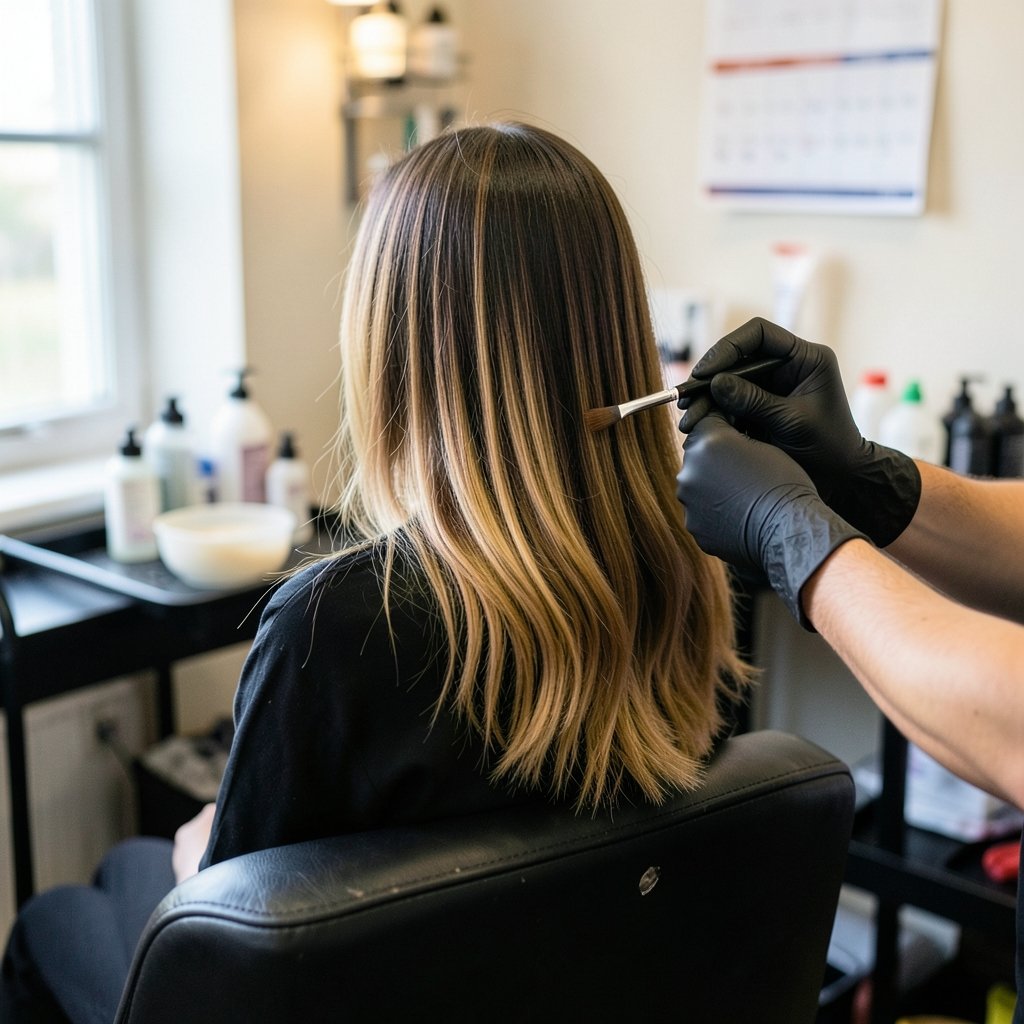
Natural-looking, sun-kissed hair depends less on the color itself than on how it is applied. Balayage hair uses a freehand coloring technique that moved from French salons into the mainstream and stayed there. Instead of sealing color inside foil packets, balayage is painted directly onto the surface of the hair, creating a soft, graduated blend rather than uniform stripes of color. The color looks as if it grew out on its own, and it grows out without a hard line at the roots. (Balayage)
This guide breaks down what balayage actually is, how it differs from other highlighting methods, what it costs in time and money, and how to keep it looking good between appointments.
What Does Balayage Actually Mean?
The word balayage comes from the French verb balayer, which means “to sweep” or “to paint.” That’s a fairly literal description of the technique. A colorist uses a brush to sweep color onto the surface of individual strands, usually starting somewhere around the mid-lengths and tapering the color toward the ends. The color is not enclosed in foil, and it’s not applied in tight, uniform sections.
Because the color sits on the outside of the hair rather than being saturated all the way through, the lift tends to be softer and more diffused. Colorists can control intensity by how much product they load onto the brush, how long it processes, and how finely they feather the transition zone between your natural color and the painted sections. That control is what separates a good balayage from a streaky one.
The technique is often grouped under the broader umbrella of hair highlighting, a category with a long history in salon practice. For context on how highlighting evolved as a craft, the Wikipedia entry on hair highlighting covers the general methods and terminology. (Hair Dyes)
Balayage vs. Foil Coloring: The Real Differences
People often use “balayage” and “highlights” interchangeably, but they produce different results. Here’s a practical comparison:
| Feature | Balayage | Traditional Foil Color |
|---|---|---|
| Application | Freehand painting on hair surface | Color sealed inside foil packets |
| Root effect | Soft, diffused, often left natural | Lifted closer to the root, more uniform |
| Grow-out | Gradual, low-maintenance | Visible root line sooner |
| Placement control | Highly customized per strand | Sectioned and patterned |
| Best for | Natural, lived-in dimension | Maximum lift and brightness |
| Typical maintenance | Every 8–12 weeks or longer | Every 6–8 weeks |
Neither method is objectively better. Foils are excellent when someone wants bright, consistent lift from the root or a very defined contrast. Balayage shines when the goal is subtle dimension, a beachy grow-out, or a low-maintenance routine. Many colorists actually combine the two, using foils for brightness and freehand painting for softness at the perimeter.
A common mistake in practice: clients ask for “balayage” when what they really want is full-head brightness. A good consultation should clarify the goal before any color is mixed. Bringing reference photos helps, but colorists generally prefer photos of hair similar to your own base color and texture, since the same technique reads very differently on dark brown hair than on light blonde.
How a Balayage Appointment Works
Understanding the process makes the experience less mysterious. Most appointments follow a similar arc:
- Consultation. The colorist assesses your natural color, hair history (box dye, previous lightening, chemical treatments), and texture. This step matters more than people expect, because old color can react unpredictably with new lightener.
- Sectioning and painting. Hair is divided into manageable sections. The colorist paints lightener or color onto selected strands, feathering the product so the transition looks gradual.
- Processing. The product develops while the colorist monitors it, sometimes checking strands every few minutes. Timing varies widely based on your starting shade and the desired lift.
- Rinse, tone, and gloss. After rinsing, a toner is often applied to neutralize unwanted warmth and fine-tune the final shade. A gloss adds shine.
- Cut and style. Many clients pair the color service with a trim or shape, then finish with a blowout so they can see the final result properly.
Expect the appointment to run long. A first-time balayage on dark hair can take three to four hours or more, while a refresh on already-lightened hair may take half that. Booking a longer slot than you think you need is one of the most practical tips available, because rushing a colorist rarely improves the outcome.
What Balayage Costs and Why Prices Vary So Much
Pricing is one of the most searched questions about balayage hair, and the honest answer is that it depends heavily on location, the colorist’s experience, and how much hair you have. In major cities, balayage services commonly run well above the price of a basic single-process color, and a senior colorist may charge significantly more than a junior stylist. Rather than quoting a single number, it’s more useful to understand the variables:
- Hair length and density. More hair means more product, more sectioning, and more time.
- Starting color. Going from dark brown to a light, cool blonde requires more lift than refreshing previously lightened strands.
- Colorist seniority. Experience is priced in, and it usually shows in the blend quality.
- Add-ons. Toners, glosses, bond-building treatments, and cuts are often priced separately.
A useful rule of thumb: ask for a full quote during consultation, including toner and any treatment, before the appointment begins. Surprise charges at checkout are a frequent complaint, and a reputable salon will happily break down the estimate.
Who Balayage Suits Best (and Who Should Reconsider)
Balayage is flattering on a wide range of hair types, but it isn’t a universal fit. It tends to work especially well for:
- People who want low-maintenance color. The soft root transition means fewer salon visits.
- Anyone growing out a previous color. Balayage can blend old lightened sections or a root line into something intentional.
- Fine to medium hair seeking visible dimension without heavy, painted-on contrast.
- Curly and wavy hair, where freehand placement can follow the natural curl pattern rather than fighting it.
It may be less ideal for:
- Anyone wanting bright, uniform lift from the root. Foils do this better.
- Very dark hair aiming for platinum. The lift required is aggressive, and multiple sessions may be needed.
- Hair with significant damage or recent chemical straightening. Lightener on compromised hair raises real risk.
That last point deserves emphasis. Hair coloring involves chemical reactions, and the U.S. Food and Drug Administration’s guidance on hair dye safety is worth reading if you have sensitivities, a history of reactions, or questions about ingredients like PPD. A patch test before a first full application is a small step that prevents unpleasant surprises.
The Safety and Licensing Side Most Clients Never See
In the United States, cosmetology and hair coloring are regulated primarily at the state level through licensing boards, not by a single federal standard. That means the training requirements a colorist must meet vary by state. Asking whether your colorist is licensed and how much lightening experience they have is entirely reasonable, and good salons welcome the question.
Occupational exposure is another angle. Professional colorists work with chemicals daily, and the CDC’s National Institute for Occupational Safety and Health publishes broader guidance on workplace chemical exposure that informs how salons should handle ventilation and protective equipment. For clients, the practical takeaway is simple: a salon that ventilates well, gloves properly, and doesn’t rush chemical services is generally a safer bet.
How to Maintain Balayage Hair Between Appointments
Balayage is marketed as low-maintenance, and relative to foils it is, but “low-maintenance” doesn’t mean “no maintenance.” A few habits make a real difference:
- Use a color-safe shampoo. Sulfate-heavy formulas strip tone faster, especially from toned blondes.
- Wash less often. Two to three times a week suits most balayage wearers; dry shampoo bridges the gap.
- Add a weekly mask. Lightened hair is more porous and benefits from protein and moisture treatments.
- Protect from heat and sun. Thermal protectant before styling and a hat in strong sun slow fading.
- Book a gloss around the halfway mark. A quick gloss refreshes tone without a full color service.
The most common mistake is over-washing and under-conditioning. People invest in a beautiful color service and then strip it out within a month with harsh shampoo and daily hot-tool use. The color isn’t the fragile part; the tone and shine are.
What to Bring to a Balayage Consultation
Consultations go better when clients arrive prepared. Practical advice from working colorists tends to converge on a few points:
- Bring two or three reference photos taken in natural light, not filtered.
- Be honest about your color history, including box dye, henna, and any at-home lightening.
- Describe your routine, including how often you wash, heat-style, and how much time you’ll spend on maintenance.
- Ask what happens if you dislike the result, and what the salon’s adjustment policy is.
- Confirm the full price and time estimate before the appointment starts.
For anyone building a broader understanding of salon services and how they’re priced and delivered, resources like Voozon Media cover industry topics in more depth.
Conclusion
Balayage hair works because it respects how hair actually grows. By painting color onto the surface of strands and feathering the transition, colorists create dimension that looks natural on day one and continues to look intentional as it grows out. It isn’t the right choice for every goal, and it isn’t cheap or fast, but for people who want soft, lived-in color with fewer salon visits, it remains one of the most practical options available. The keys to getting it right are a thorough consultation, an honest conversation about your color history, and a maintenance routine that protects the tone you paid for.
Frequently Asked Questions
How long does balayage last?
Balayage typically holds its shape for three to four months, though the tone may fade sooner. Most people book a refresh every 8 to 12 weeks, and a gloss at the halfway point keeps the color looking fresh without a full service.
Is balayage damaging to hair?
Any lightening process involves some degree of stress on the hair, and balayage is no exception. Because the color sits on the surface rather than saturating the full strand, many colorists find it gentler than foil lightening, but the amount of damage depends on the starting color, the strength of the lightener, and your hair’s condition.
Can balayage be done on dark hair?
Yes, but it usually requires more lift and more time. Dark hair often needs multiple sessions to reach a light, cool result without excessive damage, and a toner is almost always part of the process to control warmth.
Can you do balayage on curly hair?
Yes, and it often looks excellent. Curly and wavy hair benefits from freehand placement because the colorist can follow the natural curl pattern, which creates dimension that moves with the hair rather than sitting in rigid stripes.
How is balayage different from ombré?
Ombré is a gradient effect with a deliberate dark-to-light transition, usually horizontal across the head. Balayage is a technique for placing color, and it can be used to create ombré, lighter sections, or a subtle sun-kissed effect. The two terms describe different things: one is a look, the other is a method.
Do you need to tip a balayage colorist?
Tipping norms vary by country and salon culture. In the United States, 15 to 20 percent is a common range for salon services, and because balayage appointments are long and labor-intensive, many clients tip toward the higher end. Check whether your salon includes gratuity in the quoted price.