
Aztec Tattoos: Symbolism & Design Ideas for 2026
 Abdul WadoodLast updated

A single Aztec sun stone can carry more than 500 years of history, yet most people who request one at a tattoo studio are drawn to it for purely visual reasons. That gap between ancient meaning and modern ink is where Aztec tattoos get interesting, and where a lot of bad decisions happen.
This guide walks through what “Aztec” actually means in a tattoo context, which symbols people choose and why, how to design something that ages well, and the practical mistakes that turn a great idea into a cover-up. It is written for people planning a piece and for anyone curious about the art behind it.
What “Aztec” Really Means in Tattoo Culture
The word Aztec is a later label. The people Europeans encountered in central Mexico in the 1500s called themselves Mexica, and many scholars still prefer that term. It is a small distinction with real weight: it separates a modern marketing word from the actual civilization that produced the art people are referencing.
The second thing to understand is that most “Aztec tattoo” designs in circulation are modern interpretations, not copies of documented historical body art. Pre-Columbian Mesoamerican peoples certainly marked their bodies, but the historical record on permanent tattooing specifically, versus scarification, body paint, and ritual marking, is genuinely debated among researchers. Anyone who tells you a specific design is a “traditional Aztec tattoo” with certainty is usually repeating tattoo-shop folklore.
That does not make the style less meaningful. It just means the honest framing is this: Aztec-inspired tattoos draw on Mexica iconography, and the symbolism attached to those icons today is often a modern attribution rather than a documented fact from the era.
The Core Symbols and What They Usually Represent
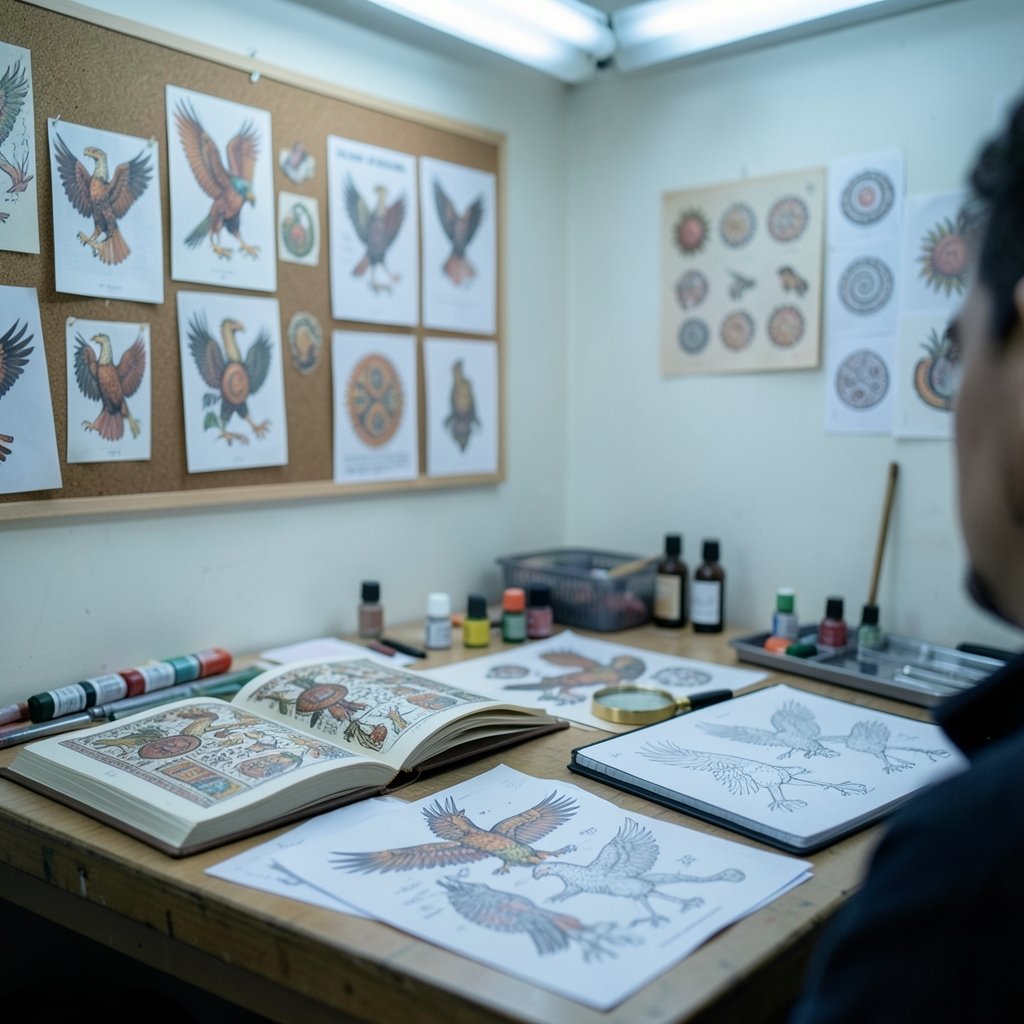
Most designs pull from a shared visual vocabulary. Here is how the common motifs break down, along with a caution about meaning.
| Symbol | Common modern association | Notes |
|---|---|---|
| Sun stone | Cosmic order, cycles, identity | The most requested motif; heavily detailed, needs space |
| Eagle | Warriors, courage, vision | Often paired with a warrior figure |
| Jaguar | Power, night, the underworld | Strong candidate for black-and-grey work |
| Quetzalcoatl | Wind, learning, the feathered serpent | Popular as a full-limb wrap |
| Skull | Death, ancestry, rebirth | Crosses over with general skull tattoo demand |
| Maize and water motifs | Life, sustenance, fertility | Good for smaller, subtler pieces |
A word of honesty about the middle column: eagle equals warrior and similar equations are widely repeated, but they are frequently modern readings. Primary sources such as the codices and colonial-era chronicles should be checked before anyone asserts a specific meaning as historical fact. If a symbol matters to you personally, that is a valid reason to wear it. Just do not let a stranger on the internet tell you it is the “authentic” meaning.
Why the Sun Stone Dominates the Style
The sun stone is the anchor of the whole aesthetic. Its concentric rings of glyphs, central face, and radiating elements give tattoo artists an enormous amount of structure to work with, and that structure is exactly why it works as body art.
It is also why so many sun stone tattoos fail. The design is dense. Shrunk to fit a forearm, the glyphs collapse into a dark smudge within a few years. Artists who specialize in this style almost always push clients toward larger placements, and they are usually right to. A sun stone on a back, chest, or thigh reads as a sun stone. The same design at four inches reads as a blob.
The practical rule: if the design contains fine glyph detail, either scale it up or simplify it deliberately. There is no third option that survives a decade of sun exposure. (Aztecs)
Placement, Scale, and Aging: What Actually Works
First-hand experience in studios points to a few patterns that repeat across thousands of clients.
Black and grey ages better than saturated color for dense glyph work, because the detail lives in contrast rather than in hue. Color can work beautifully, but it demands a lighter, less busy composition.
Joints and hands are hostile to fine line work. Elbows, knees, fingers, and the neck crease all flex and wear. If the design depends on crisp edges, those spots will blur first.
Sun exposure is the silent killer. Any piece with fine detail needs real sun protection to hold up. People who spend their summers outdoors and skip sunscreen are the ones booking touch-ups every few years, and no amount of skill at the needle changes that.
Bigger is usually cheaper long-term. A large piece done well costs more upfront but rarely needs reworking. A tiny, over-detailed piece often ends up as a cover-up, which means paying twice.
For more on how body art intersects with personal branding and visual identity, voozon.media covers design decisions that hold up over time.
How to Design an Aztec-Inspired Piece That Holds Up
A good process matters more than a good idea. Here is a sequence that works in practice.
- Decide the meaning first, the motif second. Know what you want the piece to say before browsing reference images.
- Collect references, then let the artist redraw. Copying a design off a screen produces a stiff tattoo. A skilled artist redraws it for your anatomy.
- Match the design complexity to the body part. Simple shapes for high-wear areas, dense glyph work for broad flat areas.
- Approve the stencil on your skin, not on paper. Paper lies about how a design wraps around a limb.
- Book the session long enough to finish the outline properly. Rushed outlines are the root of most detail problems.
- Plan the aftercare before the appointment, not after. Healing discipline protects the detail you paid for.
The most common mistake is skipping step one. People choose a jaguar because it looks striking, then spend years inventing a meaning for it. Starting with intent produces a piece that still feels right in twenty years.
Respect, Appropriation, and Getting It Right
Aztec-inspired tattoos sit in a complicated space. The imagery belongs to a living culture with descendants in Mexico today, and the visual language has been borrowed heavily by people with no connection to it.
There is no rulebook that settles this. But a few habits separate thoughtful collectors from careless ones. Understanding the difference between Mexica and Aztec matters. Knowing that the sun stone is not simply “a cool calendar” matters. Being able to name the source of a motif, rather than saying “I saw it online,” matters.
Respect is not about permission. It is about knowing what you are wearing.
Many artists now make a point of learning the iconography before tattooing it, and clients who ask informed questions tend to get better work as a result. Curiosity reads well in a consultation. It also protects you from ending up with a design that means something entirely different from what you were told.
Aztec Style vs. Neighboring Mesoamerican Styles
People often use these labels interchangeably, which causes confusion at the studio.
| Style | Visual character | Best suited to |
|---|---|---|
| Aztec (Mexica) inspired | Sun stone, glyph bands, warrior figures, dense geometry | Large flat areas, black and grey |
| Maya inspired | Glyph blocks, stepped pyramids, serpent imagery | Clean geometric layouts |
| Chicano | Fine black and grey, script, cultural portraiture | Forearms, chest, smaller pieces |
| Neo-traditional Mesoamerican | Bold outlines, saturated color, modern composition | Statement pieces, color work |
The overlap is real, and many artists blend them. Knowing which tradition you are actually referencing helps the artist build a coherent design instead of a mashup that fights itself.
Cost, Sessions, and What to Expect
Large Aztec-inspired pieces are multi-session projects. A detailed sun stone on a back or chest commonly runs across several sittings, with healing time between each. Cost depends on the artist’s rate, the size, and the detail level, and rates vary enormously by city and reputation.
The mistake people make here is budgeting for the outline and not the finish. A half-finished back piece is worse than a smaller finished one. Decide the total scope, then commit to it or scale down before the first needle goes in. (Hepatitis)
Aftercare That Protects Fine Detail
Dense glyph work lives or dies on healing. Keep the piece clean, follow the artist’s written instructions exactly, avoid soaking it, and do not pick at scabbing. Once healed, sunscreen becomes the main maintenance tool. A well-executed, well-protected piece can stay crisp for decades. A neglected one will not, regardless of how good the artist was.
For background on the broader visual culture around body art and design, the Wikipedia entry on tattooing provides useful context on how styles travel and evolve across cultures.
Conclusion
Aztec tattoos work best when the wearer understands what they are actually referencing. The Mexica produced a visual language of enormous depth, and modern tattoo culture has built a rich style on top of it, sometimes accurately, often loosely. The people who end up happiest with their ink are the ones who chose meaning before motif, matched design complexity to placement, went bigger rather than denser, and treated the iconography with enough respect to learn it first.
If you are planning a piece, start with the question of what you want it to say. Everything else, from scale to style to session count, follows from that answer.
Frequently Asked Questions
What is the difference between Aztec and Mexica tattoos?
“Aztec” is a later label applied by outsiders. The people who built the civilization called themselves Mexica, and many scholars still prefer that term. In tattoo culture, “Aztec” is the common search word, but “Mexica-inspired” is the more accurate description of the art being referenced.
Are modern Aztec tattoo designs historically accurate?
Mostly no. Contemporary designs draw on Mexica iconography such as the sun stone, eagle, jaguar, and feathered serpent, but they are usually modern artistic interpretations rather than documented historical body art. The historical record on permanent tattooing versus other forms of body marking is genuinely debated among researchers.
What does an Aztec sun stone tattoo mean?
The sun stone is most often associated with cosmic order, cycles, and identity. That said, many meanings attached to specific motifs today are modern attributions rather than documented facts from the era. Personal meaning is a valid reason to choose a design, but it should not be presented as historical certainty.
How big should an Aztec tattoo be?
Big enough that the glyph detail survives. Dense designs shrink into dark smudges when placed at small sizes, so artists usually recommend broad, flat areas like the back, chest, or thigh. If you want a small piece, simplify the design deliberately rather than cramming in detail.
Do Aztec-style tattoos age well?
Black and grey work with strong contrast tends to hold up best, especially on areas that do not flex constantly. Sun exposure is the biggest threat to fine detail, so daily sunscreen after healing makes a real difference. High-wear spots like hands, fingers, and elbows blur fastest.
How many sessions does a large Aztec piece take?
A detailed sun stone or full-limb wrap commonly takes several sittings with healing time between them. The exact number depends on size, detail, and how your skin responds. Budget for the complete project rather than just the outline, since a half-finished large piece is harder to live with than a smaller finished one.