
Luxury Gifts for Women: How to Choose Pieces She’ll Keep
 Abdul WadoodLast updated

What separates a luxury gift that gets worn for decades from one that sits in a drawer with the tags still on? It usually isn’t the price. It’s whether the giver understood the recipient, the materials, and the occasion well enough to choose something that fits her real life. That sounds obvious, yet most gift mistakes happen in exactly that gap between what looks impressive in a store and what a person genuinely reaches for.
This guide walks through what “luxury” actually means in a gifting context, which categories tend to hold up, how to read quality signals, and the mistakes that turn a generous gesture into an awkward one. No vague advice about “spoiling her” — just practical thinking you can act on.
What Makes a Gift “Luxury” in the First Place?
Luxury has no single legal or official definition. It’s a marketing and cultural category more than a technical one, and its boundaries shift by country, income bracket, and decade. A useful working definition for gift-givers: a luxury item is one where a meaningful share of the price reflects materials, craftsmanship, design, and brand heritage rather than pure function. (Luxury goods)
That distinction matters because it tells you where to look for value. A cashmere scarf and a synthetic one both keep a neck warm. The luxury version earns its price through fiber length, weave density, and the fact that it will still look good after ten winters. If you can’t identify what the premium buys, the premium is probably branding alone.
There’s also a practical test worth applying before you buy: would she want this if the logo were removed? If the answer is no, you’re paying for a signal rather than a gift. That’s not automatically wrong — some people love a visible label — but it should be a deliberate choice.
The Categories That Tend to Hold Up
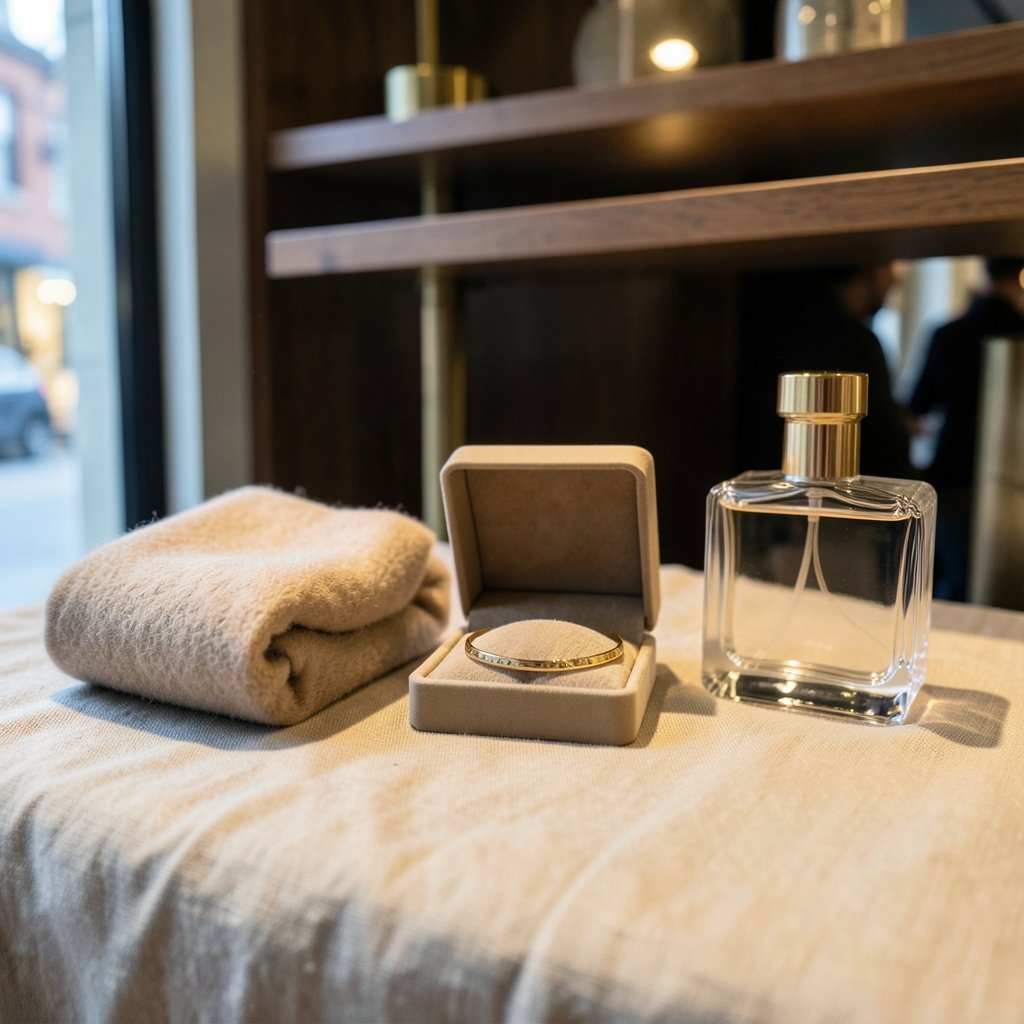
Not all luxury categories age equally well as gifts. Some are near-universal, others are highly personal. Here’s how the main ones compare on risk and staying power.
| Category | Fit Risk | Longevity | Best When |
|---|---|---|---|
| Fine jewelry | Low to medium | Very high | You know her metal and stone preferences |
| Watches | Medium | Very high | She already wears one and has a size preference |
| Cashmere and knitwear | Low | High | You know her size and preferred fit |
| Leather goods | Medium | High | You know her bag habits and daily load |
| Fragrance | High | Medium | You know a scent she already wears |
| Silk accessories | Low | High | She dresses formally or loves color |
| Experiences | Medium | N/A | She values time and travel over objects |
The pattern is clear: the more a category depends on personal taste or fit, the more research it demands. Jewelry and cashmere are forgiving because they don’t require a precise size. Fragrance is the riskiest of the classic luxury gifts because scent sits so close to identity — a perfume she didn’t choose can feel like a comment on how she should smell.
If you’re shopping for a partner and want a starting point that leans on the safer end of that table, a curated look at luxury gifts for her that she’ll actually keep is a reasonable place to narrow the field before you commit.
Reading Quality Signals Without Being an Expert
You don’t need to be a gemologist or a textile engineer to spot a well-made piece. A handful of checks catch most problems.
Jewelry and Precious Metals
Look for a stamp or hallmark. In the United Kingdom, independent assay office hallmarking is a legal requirement for most precious metal items above set weight thresholds, and the mark tells you the metal’s fineness and who tested it. Similar systems exist elsewhere, though the specifics vary. If a piece claims to be solid gold and carries no mark, ask why.
For diamonds, the Kimberley Process Certification Scheme is the international framework designed to curb trade in conflict diamonds. It’s a rough-trade control, not a quality grade — for quality you want a grading report from a recognized laboratory. And be careful with terminology: “cultured” and “natural” pearls are genuinely different products, and marketing language around them is regulated in some markets. If a seller is vague about what a stone actually is, treat that as information.
Textiles
For cashmere, ask about fiber grade and ply. Two-ply knitwear generally holds shape better than single-ply, and longer fibers pill less. Feel matters too, but be skeptical of anything that feels suspiciously soft and heavy — that can signal a blend or a surface treatment rather than better fiber.
Fragrance
Fragrance formulas are subject to safety standards set by the industry body that publishes the IFRA Standards, and in the European Union, cosmetics labeling rules require allergen disclosure on the packaging. Those rules exist because scent ingredients can sensitize skin. Practically: buy from sellers who list ingredients and batch information, and avoid unsealed bottles from resale channels.
Choose a Gift That Fits the Occasion and the Person
The same woman wants different things at a birthday, an anniversary, and a work milestone. Occasion changes the register of the gift as much as the budget.
Birthdays allow personality and playfulness. A bold silk scarf, a piece of jewelry in her favorite color, or a beautifully made notebook all work.
Anniversaries carry symbolic weight. This is where a piece with lasting meaning earns its place — something engraved, something she’ll wear daily. If you’re at that stage, a guide to luxury anniversary gifts that earn their price tag covers the symbolism-versus-substance tradeoff well.
Professional milestones call for restraint. A gift that’s too personal can feel intrusive from a colleague or manager. A well-made leather portfolio, a quality pen, or a beautifully boxed candle stays appropriate. For workplace contexts, luxury corporate gifts that build relationships is a useful sanity check on tone.
Small occasions — thank-yous, hostess gifts, holidays — don’t need big budgets, just good taste. A single excellent item beats a bundle of mediocre ones.
Personalization: The Highest-Return Upgrade
Adding initials, a date, or a short message is often the cheapest way to move a gift from “nice” to “kept.” A monogrammed leather item becomes hers specifically. An engraved jewelry clasp turns a purchase into a memento.
Two cautions. First, personalization is permanent — never engrave a piece you might need to return, and confirm spelling twice. Second, keep it subtle. A discreet monogram inside a wallet ages well; a large name across the front of a bag narrows its use. If you’re weighing whether it’s worth it, this breakdown of personalized luxury gifts and when they’re worth it goes deeper on the tradeoffs.
The Mistakes That Undo a Good Gift
Most gifting failures are avoidable and have nothing to do with budget.
Buying for the imagined version of her. The silk blouse for someone who lives in knitwear. The stiletto for someone who walks everywhere. Watch what she actually wears for two weeks before deciding.
Ignoring sizing and fit. Clothing and rings are the two categories where guessing goes wrong most often. If you don’t know the size, choose an accessory instead, or buy from a seller with a genuinely painless exchange policy.
Confusing expensive with thoughtful. A high price tag does not compensate for a category she doesn’t use. A $40 item in her exact taste beats a $400 item in yours.
Skipping the packaging question. Luxury goods often come with presentation that’s part of the experience. Losing the box, certificate, or care card reduces both the moment and the resale value.
Forgetting aftercare. Fine jewelry needs cleaning, cashmere needs proper washing, leather needs conditioning. Including care instructions — or offering to handle it — signals you thought past the handover.
Overbuying in one direction. A gift so far above the recipient’s own spending that it creates discomfort is a real problem. If you’re unsure, a slightly smaller gift in a better category usually lands better than a showpiece that makes her feel indebted.
Where to Buy, and What to Verify
Authorized retailers and brand boutiques give you the clearest authenticity and warranty position. Resale and vintage can offer extraordinary value, especially for discontinued designs and older craftsmanship, but they demand more diligence.
If you buy secondhand, verify provenance, ask for original receipts or certificates where they exist, and use payment methods with buyer protection. Have anything expensive independently authenticated before the return window closes. The resale market for handbags and watches has grown quickly, and with it the volume of convincing counterfeits — the savings are real, but so is the risk.
One more practical note: check the return window before you buy, and keep every piece of paperwork until you’re certain the gift is staying. Gift receipts are not an insult. They’re a kindness. (Tariffs)
How Much Should You Actually Spend?
There’s no correct number, but there is a correct process. Set a budget before you browse, then spend it where the recipient will notice the difference. For some people that’s materials — better leather, higher-grade wool. For others it’s design, or the experience of unwrapping something beautifully made.
A rough rule that works: spend enough that the quality is unmistakable, but not so much that the gift becomes a story about your spending. If you’re allocating across several people, small but excellent often outperforms large but generic — a principle that applies just as well to luxury stocking fillers and small gifts that carry real weight.
Conclusion
The best luxury gift for a woman is rarely the most expensive thing in the room. It’s the item that fits her actual life, comes from a category she already loves, and shows evidence that someone paid attention. Get the category right, verify the quality signals, personalize lightly, and keep the paperwork. Do those four things and you’ll land far more often than you miss — regardless of what you spend.
Frequently Asked Questions
What counts as a luxury gift for a woman?
There’s no official definition, but in practice a luxury gift is one where a substantial part of the price reflects materials, craftsmanship, design, or brand heritage rather than basic function. Common categories include fine jewelry, watches, cashmere, leather goods, fragrance, silk accessories, and high-end experiences. The label matters less than whether the quality is genuinely there.
Is jewelry always a safe luxury gift?
It’s one of the safer categories because it doesn’t depend on clothing size, but it isn’t risk-free. Metal preference (gold versus silver tones), stone preference, and everyday wear habits all matter. A person who never wears rings won’t start because the ring is expensive. Pay attention to what she already wears, and check for hallmarks or grading documentation before buying.
How can I tell if a luxury item is genuinely high quality?
Look for verifiable signals rather than marketing language. Precious metals should carry hallmarks or stamps. Diamonds should come with a grading report from a recognized laboratory. Knitwear should specify fiber grade and ply. Fragrance should list ingredients and comply with labeling rules. If a seller can’t or won’t explain what the premium buys, that’s a warning sign.
Is it acceptable to buy luxury gifts secondhand?
Yes, and it can be excellent value, particularly for discontinued designs and older craftsmanship. The tradeoff is diligence: verify provenance, request original certificates or receipts, use payment methods with buyer protection, and get expensive items independently authenticated within the return window. Counterfeits in resale channels are common enough that caution is warranted.
Should I personalize a luxury gift?
Personalization usually increases the chance a gift gets kept, because it makes the item specific to the recipient. Keep it subtle — a discreet monogram or engraved date ages better than a large name. Never personalize something you might need to return, and confirm spelling before the work begins, since engraving is permanent.
How do I choose a luxury gift for a colleague or manager?
Favor restraint. Workplace gifts should be useful, tasteful, and not overly intimate. Well-made leather goods, a quality pen, or a beautifully presented candle fit the context. Avoid jewelry, fragrance, and anything sizing-dependent. Keep the value moderate so the gift doesn’t create a sense of obligation.