
Best Beach Umbrella 2026: Wind, Sun & Sand Guide
 Abdul WadoodLast updated
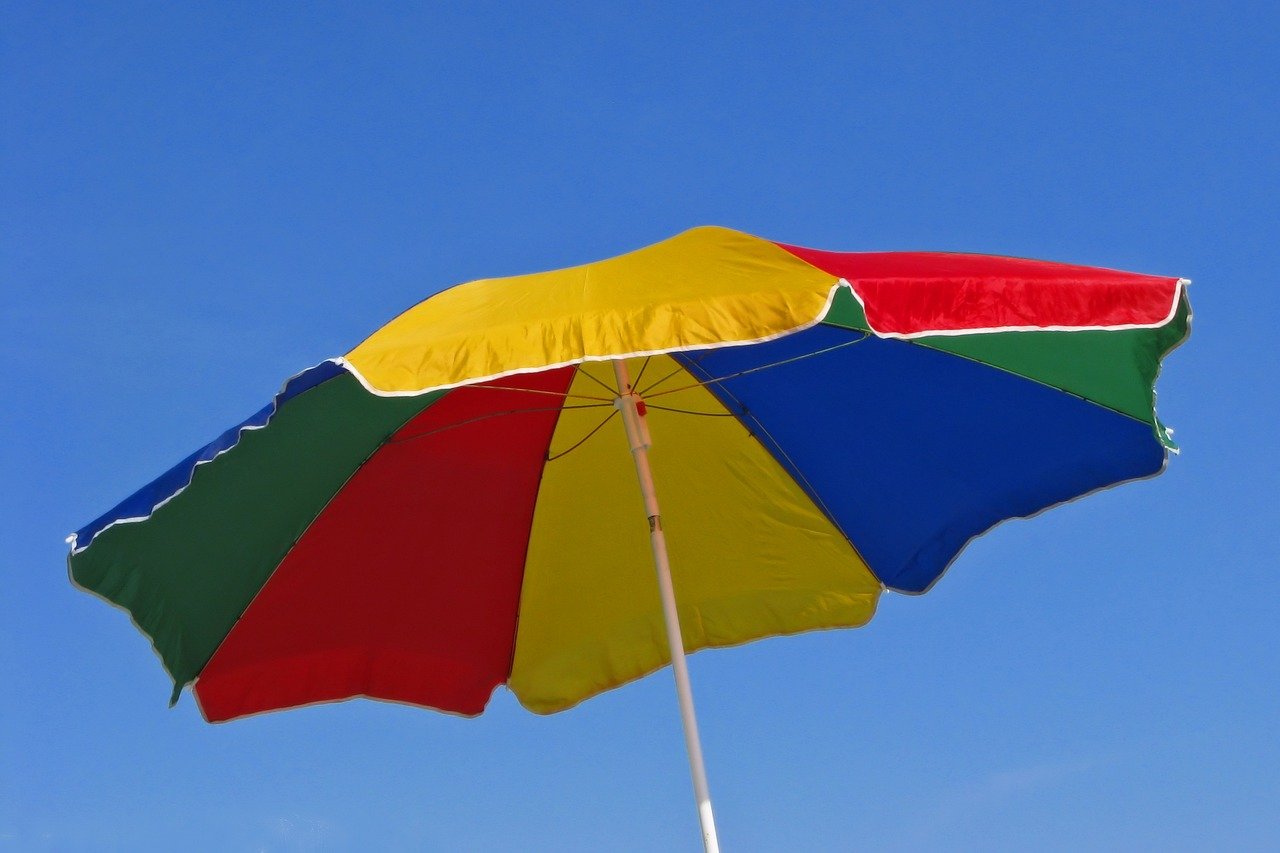
What good is a beach umbrella that flips inside out the moment the sea breeze picks up, or one that leaves you squinting in dappled light because the fabric is thinner than a T-shirt? Anyone who has spent a summer afternoon wrestling a runaway canopy knows the answer: not much. The best beach umbrella is the one that stays put, casts real shade, and doesn’t turn a relaxing day into a cardio session. This guide breaks down what actually matters, from UPF ratings to sand anchors, so the next umbrella you buy earns its spot in the car trunk.
Start With the Fabric, Not the Color
Most shoppers pick an umbrella by pattern. That’s backwards. The fabric is the single most important spec, because it determines how much ultraviolet radiation actually reaches your skin.
UPF, or Ultraviolet Protection Factor, works like SPF for textiles. A UPF 50 fabric blocks roughly 98% of the UV radiation that hits it. Ratings break down into tiers: UPF 15 to 24 counts as good, 25 to 39 as very good, and 40 to 50+ as excellent. The U.S. Federal Trade Commission regulates how sun-protective clothing claims are marketed and explains the labeling rules in its guidance on sun-protective clothing, which is worth a skim before you trust a tag that just says “UV block” with no number.
Two practical details follow from that. First, weave tightness matters more than color, though darker and denser fabrics generally block more UV than loose, light ones. Second, stretched fabric transmits more UV, so a canopy pulled drum-tight across a frame can underperform its rating. Look for a stated UPF number, not a vague promise.
Shade Is Not the Same as Sunscreen
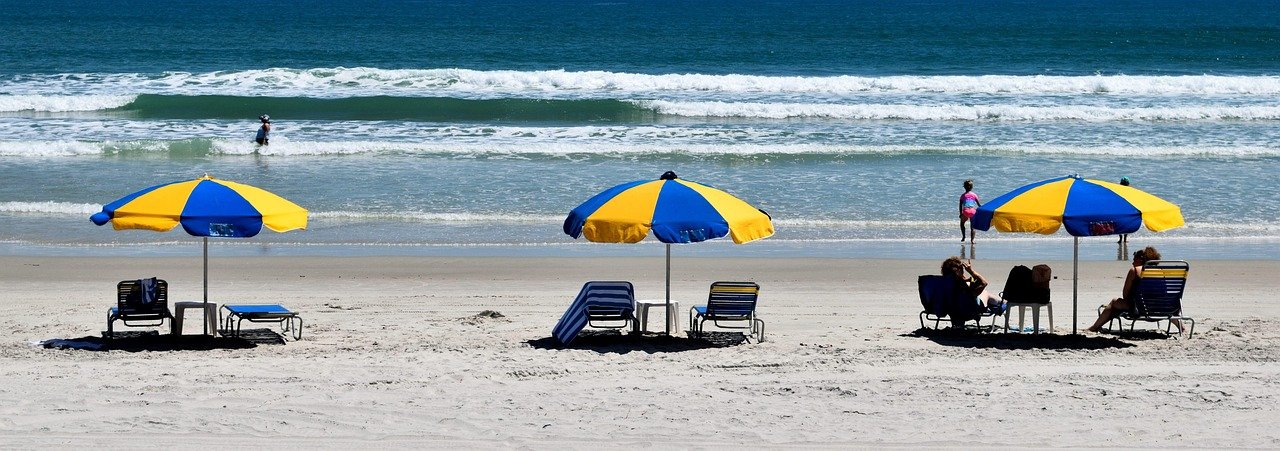
Here’s the mistake nearly everyone makes: treating the umbrella as a force field. It isn’t. UV radiation) scatters and bounces off sand, water, and open sky, so a person sitting under a canopy still absorbs indirect UV from the sides and below. Public-health bodies consistently recommend shade as one layer of protection, paired with sunscreen, a hat, and sunglasses. The World Health Organization’s explainer on ultraviolet radiation covers how UV exposure works and why reflected light matters at the shore. If you want a deeper dive into matching a destination to your setup, the guide to the best beach vacations by coast is a useful companion read.
The takeaway: buy the umbrella for comfort and reduce direct exposure, then apply sunscreen anyway. A UPF 50 canopy plus SPF 30 beats either one alone.
Wind Is the Real Enemy
Ask any lifeguard what goes wrong with beach umbrellas and the answer is wind, not sun. An open canopy is essentially a sail. A sudden gust can yank a poorly anchored umbrella out of the sand and send it tumbling through a crowd, which is why coastal towns issue warnings and sometimes restrict umbrella use during high-wind advisories.
Three design choices reduce that risk:
| Feature | What It Does | Trade-off |
|---|---|---|
| Vented canopy | Lets gusts pass through a top vent, reducing lift | Slightly less rain protection, minor shade loss at the crown |
| Screw-in sand anchor | Buries deep and grips packed sand better than a spike | Heavier, takes more effort to set |
| Smaller or tilting canopy | Lower profile catches less wind; tilt keeps shade where you sit | Less coverage for groups |
A vented top is the most underrated feature on the market. It won’t make an umbrella storm-proof, but it meaningfully cuts the lift that causes flip-outs. Pair it with a screw-type anchor and you’ve solved most of the problem before you ever open the thing.
Size: The Bigger-Is-Better Trap
Canopy diameter is where buyers overshoot. A 9-foot umbrella sounds great until a crosswind hits it. Bigger canopies cast more shade but catch proportionally more wind, so the sweet spot depends on your use.
For a couple on a calm bay beach, a 7-foot canopy is plenty. For a family with kids and gear, 8 feet is a reasonable compromise. Anything beyond that belongs on a windless day or needs serious anchoring. Also check the tilt mechanism: a canopy that tilts lets you track the sun through the afternoon without moving the pole, which effectively extends your shade window without adding sail area.
Weight, Portability, and the Walk From the Car
Be honest about the trek. A sturdy umbrella with a metal pole and a sand auger might weigh 8 to 12 pounds. That’s fine if you park fifty feet from the sand. It’s miserable if you’re hauling it a quarter mile with chairs, a cooler, and a toddler.
Lightweight aluminum poles and fiberglass ribs shave weight, but very light umbrellas tend to flex in gusts. The practical answer for most people is a mid-weight umbrella in the 6-to-9-pound range with a carry bag that has a shoulder strap. If you’re scouting spots within driving distance, the guide to the best beach near me options worth the drive helps you match gear to terrain, since packed sand and soft dunes call for different anchoring.
Setting Up So It Actually Stays
Technique matters as much as hardware. A few habits separate a stable umbrella from a runaway one:
- Dig, don’t stab. Clear a hole about a foot deep before inserting the pole or anchor. Loose dry sand on top won’t hold anything.
- Screw the anchor in fully. Twist until the auger is buried to its base, then pack wet sand around the pole.
- Tilt into the wind, not away from it. Angling the canopy toward the gust lowers its profile and reduces lift.
- Check the forecast and the flag. If the beach is flying a red or double-red flag, leave the umbrella closed.
- Take it down when you leave the sand for a swim. An unattended umbrella is the one most likely to become a projectile.
That last point is the one people skip. A canopy left standing while everyone’s in the water has nobody to catch it when a gust arrives.
What “Best” Really Means
There’s no universal winner, because the best beach umbrella depends on how you use it. A solo reader on a calm lake beach and a family of five on a windy Atlantic shore need different tools. Judge any umbrella on five axes: UPF rating, canopy size and venting, anchor type, tilt capability, and carrying weight. An umbrella that scores well on all five, even without topping any single category, will outperform a flashy one that nails just one.
Regional conditions shift the priorities too. On the best beaches on the East Coast, afternoon sea breezes are reliable, so venting and anchoring move to the top of the list. In calmer Caribbean settings, shade coverage and portability matter more, as the guide to the best Caribbean beaches makes clear. And if your trip lands in the Southeast, the rundown of the best beaches in South Carolina shows how local wind and tide patterns shape what locals actually carry.
Common Mistakes That Ruin a Good Umbrella
Even a well-chosen umbrella fails when used wrong. Watch for these:
- Buying on color alone. A pretty canopy with no UPF rating is decoration.
- Skipping the anchor. The little plastic spike in the box is a starter, not a solution.
- Over-tightening the canopy. Fabric stretched to its limit loses UV performance and stresses the ribs.
- Setting up at the waterline. The tide comes in faster than people expect, and wet sand plus a leaning pole equals a collapse.
- Ignoring the wind forecast. A 15 mph sustained breeze is enough to make a large umbrella unmanageable.
Each of these is fixable with a little planning, which is the whole point of reading up before you buy.
A Quick Word on Maintenance
Salt, sand, and sun destroy gear faster than anything else. Rinse the canopy and pole with fresh water after each trip and let everything dry fully before packing. Sand trapped in the fabric abrades the weave over time, which quietly degrades UV performance. Store the umbrella closed and upright, not crushed under other gear, so the ribs keep their shape. A well-cared-for umbrella can last several seasons; a neglected one might make it through one summer.
Conclusion
The best beach umbrella isn’t the biggest, the cheapest, or the prettiest. It’s the one with a real UPF rating, a vented canopy that sheds gusts, and an anchor that bites into the sand. Add a tilt joint and a weight you can actually carry, and you’ve covered everything that matters. Buy for wind first, sun second, and looks last, and your beach days will be a lot more comfortable and a lot less eventful.
Frequently Asked Questions
What UPF rating should a beach umbrella have?
Look for UPF 40 to 50+, which falls in the “excellent” tier and blocks roughly 98% of UV radiation reaching the fabric. Anything below UPF 25 offers limited protection and shouldn’t be your primary shade source on a bright day.
Are vented beach umbrellas actually better in wind?
Yes, generally. A top vent lets gusts pass through the canopy instead of lifting it, which reduces the flip-out risk that plagues solid canopies. Venting doesn’t make an umbrella storm-proof, so pair it with a proper sand anchor and take it down during high-wind advisories.
What’s the best way to anchor an umbrella in sand?
Use a screw-in sand anchor or auger rather than a straight spike. Dig a hole about a foot deep, twist the anchor in until it’s fully buried, and pack damp sand around the pole. Tilt the canopy into the wind to lower its profile.
Does sitting under an umbrella mean I don’t need sunscreen?
No. UV scatters and reflects off sand, water, and sky, so people in shade still receive indirect radiation. Public-health guidance recommends combining shade with sunscreen, a hat, and sunglasses rather than relying on any single measure.
How big should a beach umbrella be?
For one or two people, a 7-foot canopy is usually enough. Families typically do better with 8 feet. Larger canopies cast more shade but catch more wind, so only size up if you have a solid anchor and calm conditions.
How much should a good beach umbrella weigh?
Most practical umbrellas land between 6 and 12 pounds. Lighter models are easier to carry but flex more in gusts; heavier ones with metal poles and auger anchors hold better. Match the weight to how far you actually have to carry it.
That final question deserves a closing thought on balance. If you walk a long way to reach the sand, a lighter umbrella with a screw anchor and a vented canopy gives you the best compromise; save the heavy-duty model for short carries and exposed, windy shores. Either way, practice setting it up once at home before you rely on it at the beach, because fumbling with an anchor while the wind builds is how most umbrella failures begin. And if you’re still weighing where to take it, matching the umbrella to the coast—windy Atlantic, calm Caribbean, or somewhere in between—matters as much as any spec on the box. Buy for the conditions you’ll actually face, anchor it properly, and take it down when you leave. Do those three things and the umbrella becomes what it should be: quiet, dependable shade that lets you stay out longer without paying for it later. (Umbrella)