
Quiet Luxury Hairstyles: The Polished, Understated Look
 Abdul WadoodLast updated
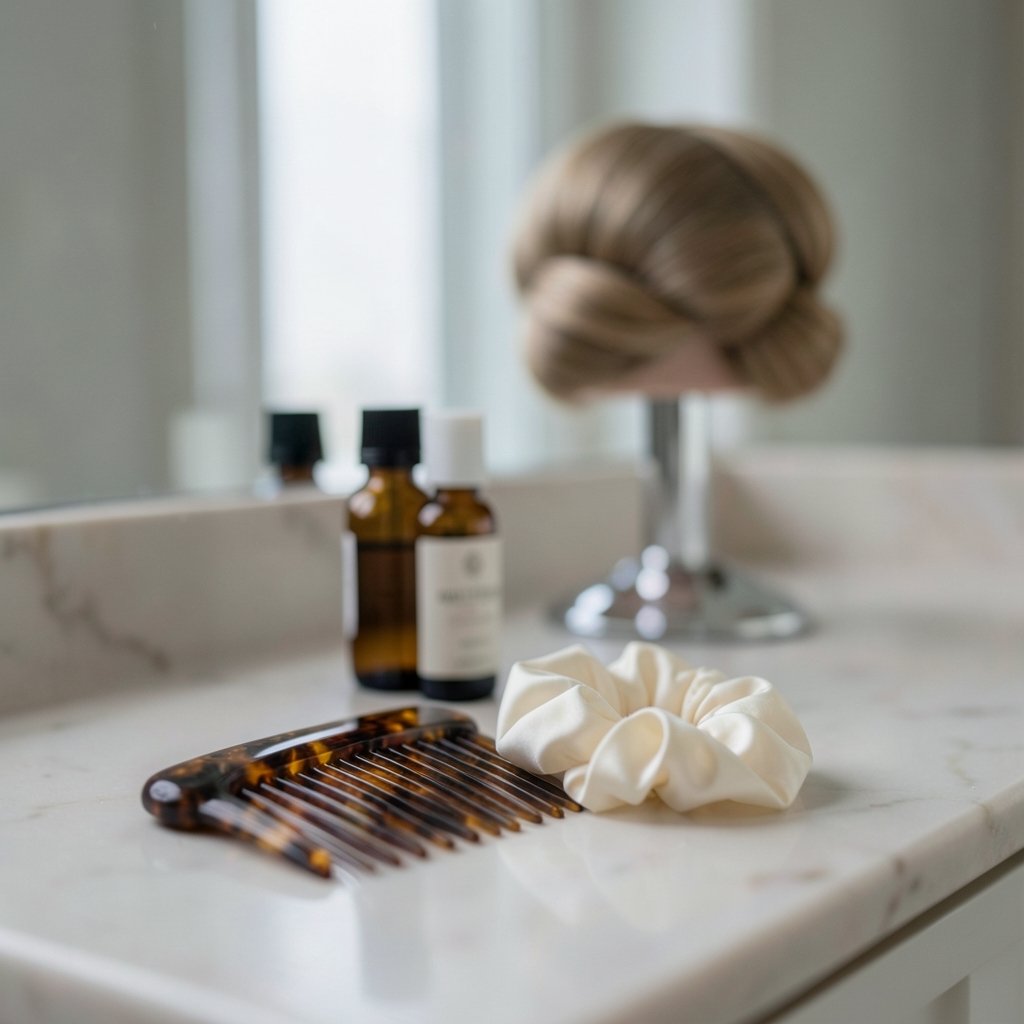
In 2023, Google searches for “quiet luxury” jumped by more than 600% in a matter of months, according to fashion trade coverage of the trend. The phrase described a way of dressing that whispered instead of shouted: no logos, no flash, just beautifully made clothes in neutral colors. It did not take long for the idea to move from wardrobes to vanity tables. Quiet luxury hairstyles are the same philosophy applied to hair, and they are quietly reshaping what clients ask for in salons from Stockholm to Seoul.
What Quiet Luxury Hairstyles Actually Are
The term quiet luxury describes an aesthetic built on quality, restraint, and longevity rather than visible branding. It is closely tied to the broader conversation around conspicuous consumption first mapped by economist Thorstein Veblen in 1899, who argued that the wealthy often signal status through subtle cues rather than obvious display. Quiet luxury hair follows that logic. It looks expensive without looking done.
In practice, quiet luxury hairstyles share a handful of traits:
- Low contrast color. Tones stay close to the natural base, with soft blending instead of sharp lightened sections.
- Healthy-looking texture. Shine comes from condition, not styling products piled on top.
- Simple, wearable shapes. Blunt bobs, soft layers, and long healthy lengths that hold their form between appointments.
- Minimal visible styling. No stiff spray, no obvious curl patterns, no heavy gel cast.
The look is less about a single cut and more about a standard. A quiet luxury hairstyle should look as good on day four as it did on day one, and it should survive a windy commute without a touch-up.
Why the Trend Moved From Fashion to Hair
Quiet luxury entered mainstream vocabulary largely through discussion of the HBO series Succession, whose characters dressed in logo-free cashmere and perfectly tailored neutrals. Fashion media picked the term up quickly, and by late 2023 it had become shorthand for understated wealth across clothing, interiors, and beauty.
Hair was a natural next step. The aesthetic depends on grooming that reads as effortless, and hair is the most visible grooming signal a person carries all day. It also fits a wider shift explored in coverage of the new language of modern luxury, where buyers increasingly value craft and quiet quality over loud status symbols.
There is a practical driver too. Salon clients who spent years chasing high-maintenance color and extensions are now asking for styles that need fewer appointments and less daily work. Quiet luxury hair is, in many ways, a budget-friendly philosophy dressed in expensive-looking clothes.
The Core Quiet Luxury Hairstyles
Most quiet luxury looks fall into a small number of categories. Each one prioritizes shape and condition over styling tricks.
The Polished Blowout
A smooth, bouncy blowout with a soft bend at the ends is the closest thing the trend has to a signature. The key is movement without crunch. Hair should hold a gentle curve and fall back into place when brushed, which comes from a good cut and a round-brush technique rather than heavy product.
The Sleek Low Bun
Pulled back cleanly at the nape with a center or soft side part, the low bun reads as elegant and deliberate. The common mistake is pulling it too tight, which flattens the crown and looks severe. A little volume at the front and a few loose face-framing strands keep it modern.
Soft, Undone Waves
Loose waves that look almost accidental are a staple. The trick is to avoid uniform barrel-curl patterns. Alternating curl directions and letting waves cool completely before brushing them out produces the relaxed finish the look depends on.
The Blunt Bob or Lob
A sharp, one-length cut just below the chin or at the collarbone is quietly luxurious because it demands excellent hair health. There are no layers to hide damage. For readers weighing length options, a practical guide to short haircuts that actually work covers how face shape and hair density affect which bob or lob suits whom.
Natural Texture, Well Cared For
For curly and coily hair, quiet luxury means definition without stiffness: a clean wash-and-go, a smooth twist-out, or a low puff with a neat hairline. The emphasis sits on moisture, shape, and a polished finish rather than on altering the natural pattern.
A Comparison: Quiet Luxury vs. Loud Hair Trends
| Feature | Quiet Luxury Hair | Loud, Trend-Led Hair |
|---|---|---|
| Color | Low contrast, close to natural | High contrast, visible roots or bright fashion shades |
| Cut | Simple, one-length or softly layered | Heavy layering, strong disconnection |
| Styling | Soft movement, minimal product | Sculpted, sprayed, highly structured |
| Maintenance | 8–12 weeks between appointments | 4–6 weeks, frequent refreshes |
| Cost over a year | Lower, fewer services | Higher, more salon visits |
| Best for | Busy schedules, professional settings | Editorial looks, short-term impact |
Neither column is “better.” The comparison simply shows the trade-off. Loud hair buys impact and variety; quiet luxury hair buys time and consistency.
How to Ask for It in the Salon
The most common mistake clients make is describing the trend by name. Many stylists know the term, but interpretations vary widely. Instead, bring two or three photos and describe the qualities you want: low maintenance, soft color, healthy ends, and a shape that grows out well.
A few practical tips that genuinely help:
- Ask for a grow-out plan. A good quiet luxury cut is designed so that week eight still looks intentional.
- Request a color that fades gracefully. Balayage or a root shadow blend better than all-over lightener, which shows a hard line as it grows.
- Book a consultation before the appointment. Ten minutes of discussion prevents an expensive mismatch.
- Be honest about your routine. If you will not blow-dry, say so. A cut that only works with styling is not quiet luxury; it is a subscription to your own bathroom.
Stylists also report that clients often overestimate how much product the look requires. In practice, a light oil on mid-lengths and ends plus a finishing cream does most of the work. Heavy pomades and strong-hold sprays are the usual culprits when a soft style turns stiff.
Color: The Quiet Luxury Palette
Quiet luxury color is defined by what it avoids: sharp lightened sections, visible banding, and high-contrast roots. Popular directions include:
- Soft brunette with a subtle face frame, blended so no line is visible.
- Warm honey blonde kept within two shades of the natural base.
- Glossy dark tones with a shine treatment rather than added lightness.
- Gray blending that works with natural silver instead of fighting it.
The through-line is low maintenance. A color that needs a root touch-up every three weeks contradicts the whole idea. For a broader look at how restrained palettes and craftsmanship define this aesthetic, Voozon’s coverage of luxury fashion houses and their legacy shows the same principle at work in clothing.
Hair Health Is the Real Luxury Signal
Here is the part most trend articles skip: quiet luxury hair is impossible without healthy hair. Shine, movement, and softness all come from the condition of the strand itself. No styling product convincingly fakes it.
That means the unglamorous basics matter most. Regular trims, gentle heat use, and a wash routine matched to scalp type do more for the look than any single product. Color-treated hair benefits from periodic bond-building treatments, and heat styling above 180°C should be the exception rather than the default.
There is a useful parallel in how the luxury sector itself has shifted. As explored in Voozon’s analysis of the future of luxury living, value is increasingly placed on durability and quiet quality over display. Hair follows the same arc: fewer, better interventions. (History of Hairstyles)
Common Mistakes That Break the Look
Even well-cut hair can lose the effect through small errors. The most frequent ones:
- Over-styling. Visible product, crunchy ends, or a helmet-like set instantly reads as high effort.
- Chasing trends too quickly. Layered “wolf” cuts and heavy curtain bangs date fast and grow out awkwardly.
- Skipping trims to save money. Split ends travel upward and undo months of good color work.
- Ignoring the hairline. A polished look depends on a neat perimeter, especially in updos.
- Choosing the wrong part. A part placed against the natural growth pattern fights the hair all day.
The fix in each case is the same: aim for hair that looks after itself, then let it.
What Actually Works in Practice
Practical experience from the salon floor points to a few reliable rules. First, the cut does the heavy lifting. A precise shape with clean lines looks expensive even on a rushed morning. Second, less color is more forgiving. Clients who move from full-head lightening to a blended, low-contrast approach typically report fewer appointments and less visible grow-out. Third, the right tools matter more than the number of products. A quality dryer, a round brush matched to hair length, and a light finishing oil cover most of what the look needs.
One more point deserves attention: the trend suits almost every hair type, but the expression changes. Straight hair leans on shine and blunt lines. Wavy hair leans on soft movement. Curly and coily hair leans on definition and a clean shape. Quiet luxury is a standard of finish, not a fixed hairstyle.
The Quiet Luxury Hair Routine in Seven Steps
- Wash with a sulfate-free shampoo suited to your scalp, two to three times a week.
- Apply conditioner from mid-lengths to ends, then rinse with cooler water to smooth the cuticle.
- Wrap hair in a microfiber towel instead of rubbing it with a terry towel.
- Apply a light leave-in or oil while hair is still damp.
- Rough-dry to about 80% before reaching for a brush.
- Finish with a round brush for smoothness, or scrunch and air-dry for texture.
- Use a small amount of finishing cream on ends only, and skip heavy spray.
Conclusion
Quiet luxury hairstyles are less a trend than a reset. They reward hair health, precise cutting, and restrained color over constant change, and they suit nearly every texture and lifestyle. The look is not about hiding effort; it is about spending effort in the right places, mainly on condition and cut, so that daily styling becomes almost optional. For anyone tired of high-maintenance appointments and products that promise more than they deliver, the quiet approach is a genuinely practical upgrade. Start with a good consultation, a realistic grow-out plan, and a routine you will actually follow, and the polished, understated result tends to take care of itself.
Frequently Asked Questions
What defines a quiet luxury hairstyle?
It is a look built on healthy hair, low-contrast color, simple shapes, and minimal visible styling. The goal is hair that appears naturally well kept rather than obviously styled, with a cut and color that still look intentional weeks after the appointment.
Do quiet luxury hairstyles work on curly or coily hair?
Yes. The aesthetic is a standard of finish, not one fixed shape. For curly and coily textures, that usually means defined, moisturized curls, a neat hairline, and a clean silhouette, achieved with a wash-and-go, twist-out, or smooth low puff rather than straightening.
How often do these styles need salon appointments?
Most cuts hold their shape for eight to twelve weeks, and low-contrast color can stretch to ten or twelve weeks before a refresh. That is noticeably less frequent than high-contrast lightening or heavily layered cuts, which often need attention every four to six weeks.
Is quiet luxury hair expensive to maintain?
It can be less expensive over a year than trend-led hair, because it relies on fewer services and simpler products. The upfront cost of a precise cut and a well-blended color may be higher, but the reduced frequency of appointments usually offsets it.
How do I ask a stylist for this look?
Bring two or three reference photos and describe qualities rather than naming the trend. Ask for low-maintenance color, clean lines, healthy ends, and a shape that grows out well. A short consultation before the appointment prevents most mismatches.
Can I achieve the look at home without salon color?
Partly. Cut and color are best handled professionally, but the finish is entirely achievable at home with a gentle wash routine, a light oil or leave-in, and limited heat. The biggest at-home gains come from consistent trims and avoiding heavy styling products.