
How to Become a Petite Model: Requirements & Agency Steps
 Abdul WadoodLast updated

Fashion has quietly widened its lens. Runway shows that once cast a single body type now mix in shorter models, and online retailers increasingly shoot petite lines on petite bodies because shoppers want to see clothes on a frame like their own. For anyone under roughly 5’7″, that shift matters. The path into petite modeling is real, but it rewards preparation over hope. Here is what actually moves an application forward, what gets it ignored, and how to avoid the expensive mistakes that catch newcomers.
What “Petite” Actually Means in Modeling
In everyday language, petite describes a shorter woman. In the modeling industry, it is a fit category tied to garment sizing and proportions, not a separate licensing body. Agencies and brands use the term loosely, and thresholds vary by market, so treat any single number as a guideline rather than a rule.
| Market | Typical cited petite range | What brands usually want |
|---|---|---|
| Womenswear editorial | Roughly 5’2″ to 5’7″ | Strong proportions, expressive face |
| Petite commercial and e-commerce | Often 5’0″ to 5’5″ | Relatable look, consistent measurements |
| Petite fit and size modeling | No fixed height rule | Measurements matching a specific size grade |
| Teen and junior lines | Age-appropriate height bands | Youthful look, valid work permits |
The practical takeaway: shorter models are not competing for the same jobs as 5’10” runway models. They compete in a different lane, and that lane is growing as retailers invest in petite-specific fit.
Why Petite Modeling Is Growing
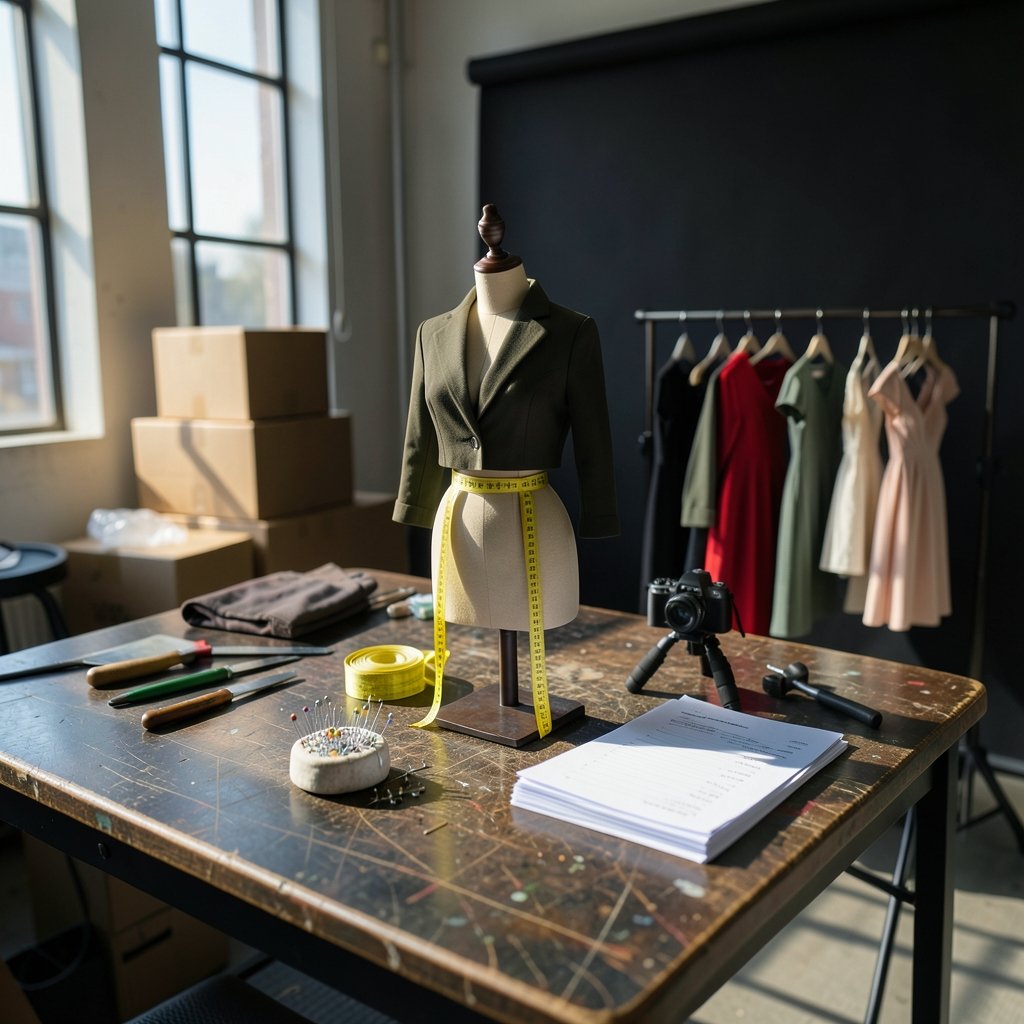
Retail economics explain most of it. If a brand sells petite sizing, photographing those garments on a taller model misrepresents the fit and drives returns. Shooting on a shorter model reduces that mismatch and gives customers a clearer picture. The same logic applies to fit modeling, where a model’s body is used to test how a garment sits during development rather than to appear in a finished campaign.
That has created steady demand in three areas:
- E-commerce and catalog work, where volume is high and the look must be consistent.
- Fit and technical modeling, where exact measurements matter more than camera presence.
- Commercial and lifestyle campaigns, where relatability often beats height.
None of these require a traditional runway physique. They do require reliability, accurate measurements, and a portfolio that shows the right kind of work.
The Realistic Requirements Before You Apply
Agencies are not looking for perfection. They are looking for potential, plus evidence that you understand the job. Before sending anything, a candidate should be able to answer these questions honestly.
Height and measurements
Know your height without shoes, plus your bust, waist, and hip measurements in inches or centimeters. Measure over light clothing, keep the tape level, and repeat the measurement twice. Inconsistent numbers on an application read as carelessness, and they will be checked at a meeting.
Age and eligibility
Most agencies sign adults for commercial and fashion divisions. Teen applicants usually need a parent or guardian involved, and younger models often require work permits and hour limits that vary by jurisdiction. Anyone under 18 should confirm local rules before accepting paid work, because enforcement falls on the employer and the guardian, not the model alone. (Model (person)))
Presentation basics
Clear skin, healthy hair, and a neutral look are enough. Agencies routinely ask for no makeup or minimal makeup, hair down, and simple clothing in digitals. Heavy styling hides the face they are trying to assess.
The portfolio question
Here is where beginners lose the most money. A professional portfolio is useful once you have direction and a defined market. It is nearly useless as a first step, because you do not yet know what to shoot. Start with clean digitals, get representation or bookings, then invest in targeted test shoots. The reverse order is how people spend four figures on images nobody asked for.
Step-by-Step: How to Apply to Agencies
The application process is less mysterious than it looks. Most agencies publish submission instructions, and following them precisely is half the battle.
- Shortlist agencies that actually represent petite models. Check their roster pages for models in your height range. If nobody on the board is under 5’7″, your application is unlikely to land.
- Read the submission instructions twice. Some agencies want a specific form, some want an email with a set subject line, and some want digitals only. Ignoring these details signals that you will ignore booking details too.
- Take proper digitals. Use natural light, a plain wall, and a phone camera at chest height. Shoot a headshot with a neutral expression, a profile, a three-quarter turn, and full-body front and back in fitted clothing. No filters, no heavy editing, no sunglasses.
- Write a short, factual introduction. Include your name, age, height, measurements, location, and contact details. Two or three sentences of relevant background is plenty. Long life stories get skimmed.
- Submit and wait. Agencies receive enormous volumes of applications. A polite follow-up after two to three weeks is reasonable; daily emails are not.
- Prepare for the meeting. If invited in, expect to walk, turn, and talk briefly. Bring the same simple clothing you wore in digitals and be ready to state your measurements without hesitation.
A common mistake at this stage is applying to dozens of agencies at once with a generic email. A shorter, better-researched list produces more replies. It also helps to see how agencies present their talent, which is why browsing a curated board such as Voozon Models — profiles, fashion & industry can clarify what a professional profile looks like before you build your own.
Building a Portfolio That Works for a Shorter Frame
Once an agency is interested, portfolio building becomes strategic. The goal is not a wall of glamorous images. It is proof that you can deliver the specific work your market buys.
Prioritize fit and proportion. Clothing that swamps a shorter frame reads as a styling failure, not a modeling one. Test shoots should show outfits that fit properly at the shoulder, waist, and hem.
Shoot the categories you want to book. If e-commerce is the target, shoot clean catalog-style images with even lighting. If commercial lifestyle is the goal, shoot images with movement and expression. A portfolio of editorial mood pieces will not convince a retail client.
Keep the edit ruthless. Six to ten strong images beat thirty average ones. Agencies and clients scan quickly, and a weak image drags down the whole set.
Refresh regularly. Hair changes, measurements shift, and skills improve. A portfolio that is two years stale misrepresents you at the meeting.
Practical tips that make a visible difference
- Practice your walk on camera. Most people are surprised by how they look on video versus in a mirror.
- Learn to hold a pose without locking your joints; locked knees read as tension.
- Bring a small kit with the basics: neutral heels, fitted jeans, a plain top, and blotting papers.
- Arrive early, and treat every interaction on set as part of the audition.
Avoiding Scams and Costly Mistakes
Modeling attracts predators because the dream is powerful and the entry bar looks low. The most reliable warning sign is a request for money upfront for representation, mandatory classes, or a portfolio the agency insists on selling you. Legitimate agencies earn commission from bookings; they do not build their revenue from applicants.
Other patterns worth recognizing:
- Pressure to decide immediately. Real opportunities survive a night’s sleep.
- Guaranteed work claims. No agency can promise bookings before a client has seen you.
- Unclear contracts. Anything you sign should specify commission rates, contract length, and exit terms. If it does not, ask, and get the answer in writing.
- “Discovery” at a shopping mall or online DM with an immediate fee. Verification first, payment never.
Consumer protection bodies in several countries publish guidance on talent and modeling scams, and reading one page of it is a better investment than any paid seminar. If a contract feels wrong, a short consultation with a local lawyer is money well spent.
Working as a Petite Model: What the Job Is Really Like
The day-to-day reality is less glamorous and more professional than most newcomers expect. A typical e-commerce shoot involves arriving early, multiple outfit changes, repetitive posing, and long stretches of standing. Fit modeling is quieter but demands precision: you try garments in development, report how they feel and where they pull, and your feedback shapes the final product.
Reliability is the trait that keeps models booked. Being on time, knowing your measurements, following direction, and treating crew members well all matter more than a perfect jawline. Clients rebook people they trust, and in a niche like petite modeling, reputation travels fast.
It also helps to understand the business side. Track your bookings, keep receipts, understand how commission works, and set aside money for taxes. Models are self-employed in most markets, and the paperwork surprises people who only planned for the photoshoot. (Eating Disorders)
Conclusion
Becoming a petite model is less about hitting a magic height and more about matching yourself to the right market. Know your measurements cold, take honest digitals, apply only to agencies that actually represent shorter models, and build a portfolio that proves you can do the specific work clients buy. Skip the paid shortcuts, read every contract, and treat reliability as your competitive advantage. The petite lane is narrower than the mainstream one, but it is real, growing, and full of steady work for people who prepare properly.
Frequently Asked Questions
What height counts as petite for modeling?
There is no universal number. Agencies and brands set their own ranges, and commonly cited petite bands run from roughly 5’0″ to 5’7″, depending on the market and the type of work. Commercial and e-commerce clients often accept a wider range than editorial clients. Always check the specific agency’s roster and requirements rather than relying on a general figure.
Can you become a petite model without professional photos?
Yes, and it is usually the right first step. Agencies typically ask for simple digitals taken in natural light with minimal makeup, not a professional portfolio. Investing in a paid shoot before you have representation or a clear market often wastes money. Build the portfolio after you understand which categories you are targeting.
Do petite models need to be a specific size?
Not a single size, but measurements matter enormously. Fit and e-commerce work depends on matching a brand’s size grade, so accurate bust, waist, and hip measurements are part of the job. Editorial and commercial clients may be more flexible about size while caring more about proportion and presence. Know your numbers precisely and keep them current.
How much do petite models earn?
Earnings vary widely by market, client, and experience, ranging from modest day rates for early catalog work to much higher fees for established commercial models. Most agencies take a commission from each booking, so the model’s net pay is lower than the client’s invoice. There is no reliable single figure, and anyone promising a specific income upfront should be treated with caution.
Should I pay an agency to represent me or to build my portfolio?
No. Legitimate agencies earn money from commissions on bookings, not from fees charged to applicants. Requests for upfront payment for representation, mandatory classes, or an agency-mandated portfolio are a well-documented warning sign. If a contract or fee structure is unclear, ask for it in writing and consider a brief legal consultation before signing.
What should I wear and bring to a first agency meeting?
Keep it simple and fitted: jeans, a plain top, and neutral heels, with hair down and minimal makeup. Bring your measurements written down, a small kit with basics, and any existing digitals. Arrive early, be ready to walk and turn, and expect a short conversation about your experience and availability.