
Sora Choi Model: The Korean Runway Star’s Career
 Abdul WadoodLast updated
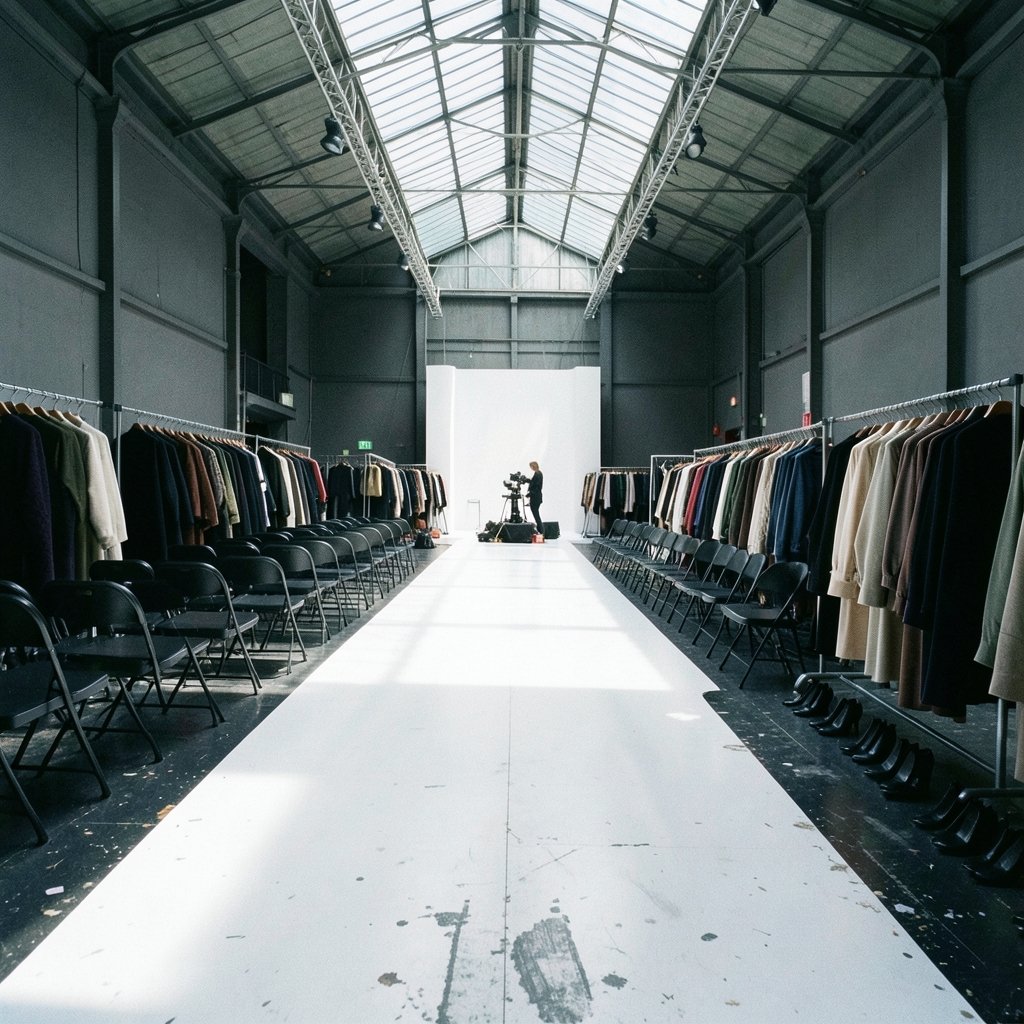
When a model walks more than 30 shows in a single fashion month, the industry notices. When that same model does it season after season across New York, London, Milan, and Paris, she stops being a newcomer and becomes part of the runway’s structural furniture. Sora Choi built her career on exactly that kind of volume: a relentless schedule of castings, fittings, and back-to-back shows that turned a Seoul-born teenager into one of the most-booked faces of her generation.
Her story is a useful case study for anyone trying to understand how modern modeling careers actually work. It is not a story about a single viral moment. It is a story about stamina, a distinctive look, and the unglamorous discipline of showing up.
Who Is Sora Choi?
Sora Choi is a South Korean fashion model who first gained international attention in the mid-2010s and rose to prominence through high-fashion runway work. She is known for a sharp, androgynous aesthetic, a strong bone structure, and a versatility that lets her move between avant-garde editorial shoots and commercial campaigns without looking out of place in either.
She was born in 1992 and grew up in Seoul before moving abroad as a teenager. That detail matters more than it might seem. Most successful Asian models of her generation entered the industry through agencies based in Tokyo, Seoul, or Shanghai and were then placed with European or American mother agencies. Choi’s path ran through the international circuit directly, and it shaped how she was positioned in the market.
Unlike actors or musicians, models rarely have a single “breakout role” that the public can point to. Their visibility is cumulative. A face becomes familiar because it appears in the same contexts repeatedly until editors, stylists, and casting directors treat it as a reliable choice. Choi’s career follows that logic almost perfectly.
The Path From Seoul to the International Circuit
The conventional route into high fashion runs through a scouting process. A scout spots a teenager in a shopping district, at a festival, or on social media, and an agency offers a development contract. From there comes a test shoot, a portfolio, and eventually a “mother agency” relationship that places the model with agencies in New York, Paris, Milan, and London.
Choi’s early career followed this broad pattern, but with an important difference in timing. She was scouted as a teenager and moved to the United States to pursue modeling seriously, which meant adapting to a new language and a new professional culture at an age when most people are still finishing school. That transition is one of the least discussed parts of a modeling career, and it is often the hardest.
Practical tip for anyone researching a model’s background: check the agency roster pages rather than relying on social media bios. Agency listings are maintained by people with a commercial interest in accuracy, and they usually state representation city by city. For a broader view of how the profession is structured, the Voozon models directory organizes working models by profile, which makes it easier to see how representation and credits fit together.
What Made Her Stand Out
Three factors explain Choi’s longevity better than any single credit.
A distinctive silhouette. Choi’s features read as strong and angular on camera, which is exactly what editorial photographers want. A face that photographs well in harsh light and unusual angles is worth more in high fashion than a conventionally pretty one.
Range without dilution. She could do a severe, minimal look for one designer and a soft, romantic one for another in the same week. Casting directors value models who can be reshaped by hair, makeup, and styling rather than models who only work in one register.
Reliability under pressure. Fashion month is a logistical nightmare. A model may do five castings and three shows in a single day, often across a city, sometimes on very little sleep. Models who handle that schedule without breaking down get rebooked. It is the least romantic explanation for success and probably the most accurate one.
There is also a cultural dimension worth naming. The 2010s saw a genuine shift in how Asian models were cast in European and American fashion. Where earlier decades often relegated them to a narrow set of “Asian-inspired” shows, the past fifteen years brought Korean, Chinese, and Japanese models into mainstream luxury casting at a scale that had not existed before. Choi’s career sits squarely inside that shift. For context on how the fashion industry has changed over the long term, the history of fashion design is a reasonable starting point.
Runway Volume: The Numbers That Define a Career
The clearest way to measure a runway model’s standing is show count per season. A model who walks 15 to 20 shows in a fashion month is doing well. A model who walks 30 or more is in the top tier and is almost certainly working with a major agency that can sequence her schedule.
Choi’s reputation rests on exactly this metric. Across multiple seasons in the mid-to-late 2010s, she appeared in a large number of shows across all four fashion capitals, working with both established luxury houses and younger, more experimental labels. That combination is telling. A model who only walks for big commercial brands is a different kind of professional from one who walks for avant-garde designers, and Choi did both.
| Career Marker | What It Signals |
|---|---|
| High show count per season | Consistent casting-director demand |
| Mix of luxury and independent labels | Versatility and editorial credibility |
| Repeat bookings across seasons | Reliability and good working relationships |
| Campaign and editorial work alongside runway | Commercial viability beyond the catwalk |
The repeat-booking column is the one to watch. Any model can have one good season. Getting called back by the same casting director two or three years running means the working relationship held up, which in a business built on personal recommendation is the real currency.
Editorial Work and Campaigns
Runway work builds a reputation inside the industry. Editorial and campaign work builds a public profile. Choi appeared in fashion editorials across a range of international publications, and her look translated well to the kind of stark, stylized photography that high-fashion magazines favor.
Campaign work follows a similar logic but pays better and reaches further. A luxury brand campaign can run for a full season across print, outdoor, and digital, which gives a model far more visibility than a single magazine spread. Choi’s campaign credits placed her in front of audiences who would never watch a livestreamed show.
It is worth being precise here about what can and cannot be verified. Specific campaign seasons, contract terms, and fee structures are rarely disclosed, and much of what circulates online about model earnings is speculation. What is documented is the pattern: sustained editorial presence, sustained runway presence, and a career that did not collapse after a single strong season.
The Business Side of a Modeling Career
Most people underestimate how much of modeling is administration. A working model manages a calendar that changes hourly, maintains relationships with multiple agencies in different time zones, and navigates contracts that can run from a single day to multiple years.
A few things that actually matter in practice, drawn from how the industry operates:
- Mother agency versus placement agencies. The mother agency develops a model and negotiates placements. Placement agencies handle local bookings. Confusing the two is a common mistake for people trying to understand a model’s representation.
- Exclusives are double-edged. A designer may pay for a model to walk only their show during a given fashion week. It raises prestige but limits exposure and income. Models and agencies weigh this carefully.
- Season timing is rigid. Castings for a season happen months before the clothes appear in stores. A model’s year is organized around a calendar the public never sees.
- Digital presence is now table stakes. Agencies increasingly expect models to maintain a professional social media profile, though high-fashion casting still weights in-person presence more heavily than follower counts.
For readers interested in the broader labor and business context of the fashion industry, the fashion industry overview covers the supply chain and market structure that sits behind the runway.
Common Misconceptions About Sora Choi
A few things get repeated online that are worth correcting.
She is not a one-season phenomenon. The most persistent myth about runway models is that a single viral season defines a career. Choi’s booking pattern across multiple years argues against that.
Her look is not accidental. The androgynous, angular aesthetic that defines her work is a professional asset that casting directors seek out deliberately. It is not a limitation she worked around.
Her career is not solely a Korean-market story. While her background is South Korean and that shaped her early positioning, her professional footprint was international from the start, spanning European and American fashion capitals.
Show count is not the same as influence. A model can walk 40 shows and remain anonymous to the public, while another walks 10 and lands a major campaign that makes her a household name in fashion circles. Choi’s career combined both runway volume and campaign visibility, which is rarer than either alone.
What Her Career Teaches About Breaking Into Fashion
For anyone studying how a modeling career gets built, Choi’s trajectory offers a few practical lessons that hold up beyond her specific case.
Volume beats perfectionism early on. New models who take only the “right” castings often stall. Taking a wide range of work builds relationships with casting directors, and those relationships compound.
A distinct look is a business asset. Trying to look like everyone else is the fastest way to get lost in a market with thousands of applicants per open slot.
Stamina is a skill. The models who last are the ones who can do the sixth show of the day with the same energy as the first. That is trainable, and it is underrated.
Representation matters more than followers. A strong agency relationship opens doors that social media metrics cannot. For a structured look at how professional profiles are presented in the industry, browsing model profiles on Voozon gives a sense of how credits, representation, and specialties are typically organized.
The comparison to other sustained runway careers is instructive. Models who build long careers tend to share three traits: a recognizable physical signature, an ability to work across very different creative directions, and a reputation for professionalism that travels through word of mouth. Choi’s career checks all three.
Conclusion
Sora Choi’s career is a reminder that fashion modeling is less about a single discovery moment and more about sustained execution. Her rise from Seoul to the international runway circuit followed a familiar structure, but the durability of her booking record is what separates her from the hundreds of models who have one strong season and then fade.
What makes her case worth studying is that it is legible. There is no mystery ingredient. A distinctive look, a wide range of casting, repeat relationships with the same designers and casting directors, and the physical and mental stamina to survive fashion month year after year. Those are the mechanics of a working high-fashion career, and her trajectory illustrates them clearly.
Frequently Asked Questions
Who is Sora Choi?
Sora Choi is a South Korean fashion model born in 1992 who rose to prominence in the mid-2010s through high-volume runway work across New York, London, Milan, and Paris, alongside editorial and campaign appearances.
What is Sora Choi known for?
She is best known for a sharp, androgynous aesthetic, a strong bone structure, and an unusually high show count per fashion season, which made her a fixture in high-fashion casting across multiple years.
How did Sora Choi start modeling?
She was scouted as a teenager in South Korea and moved abroad to pursue modeling, following the standard path of test shoots, portfolio development, and agency placement before breaking into international runway work.
How many shows does a top runway model walk in a season?
There is no fixed number, but a model walking 15 to 20 shows in a single fashion month is doing well, and 30 or more places her in the top tier. Sustained counts across multiple seasons matter more than any single season’s total.
Is runway work more important than campaign work for a model’s career?
They serve different purposes. Runway builds industry reputation and relationships with casting directors, while campaigns build public visibility and pay better. Most durable careers combine both rather than relying on either alone.
What does a mother agency do for a model?
A mother agency develops a model’s portfolio, manages her career strategy, and negotiates placements with agencies in other cities. It is distinct from local placement agencies, which handle bookings in their own market.