
Tyra Banks Victoria’s Secret Runway Return in 2026
 Abdul WadoodLast updated
When Tyra Banks stepped back onto the Victoria’s Secret Fashion Show runway in 2024, it had been roughly twenty years since her last walk for the brand. For a generation of viewers who grew up watching her command that stage in the late 1990s and early 2000s, the return wasn’t just a casting note. It was a full-circle moment that tied the lingerie giant’s glossy past to its uncertain, reinvented present.
Banks was one of the brand’s most prominent Angels during its original peak, and her comeback arrived at a moment when Victoria’s Secret was actively trying to rebuild its image. Understanding why her return mattered requires looking at both halves of the story: the supermodel era that made her famous, and the corporate reset that brought her back.
The Original Supermodel Era
Victoria’s Secret built its cultural dominance in the 1990s and early 2000s on a specific formula: big budgets, televised spectacle, and a small roster of highly recognizable faces. Tyra Banks was central to that formula. She walked in multiple Victoria’s Secret Fashion Shows across that period and became one of the brand’s marquee Angels, appearing alongside figures like Heidi Klum, Adriana Lima, and Gisele Bündchen.
That era turned models into mainstream celebrities in a way that had not happened before at this scale. The show was less a retail event than a pop-culture broadcast, complete with musical performances and elaborate wings. Banks fit the moment perfectly. She had the runway presence, the personality, and the crossover appeal that the brand wanted, and she later built an even bigger platform through television hosting and producing.
What is worth remembering, though, is that the supermodel era was also exclusionary. The casting was narrow, the beauty standards were rigid, and the show’s appeal depended partly on that narrowness. Any honest look at the brand’s history has to hold both truths at once: it created genuine stars, and it shut many people out. That tension is exactly what the 2024 return was responding to.
Why the 2024 Return Mattered
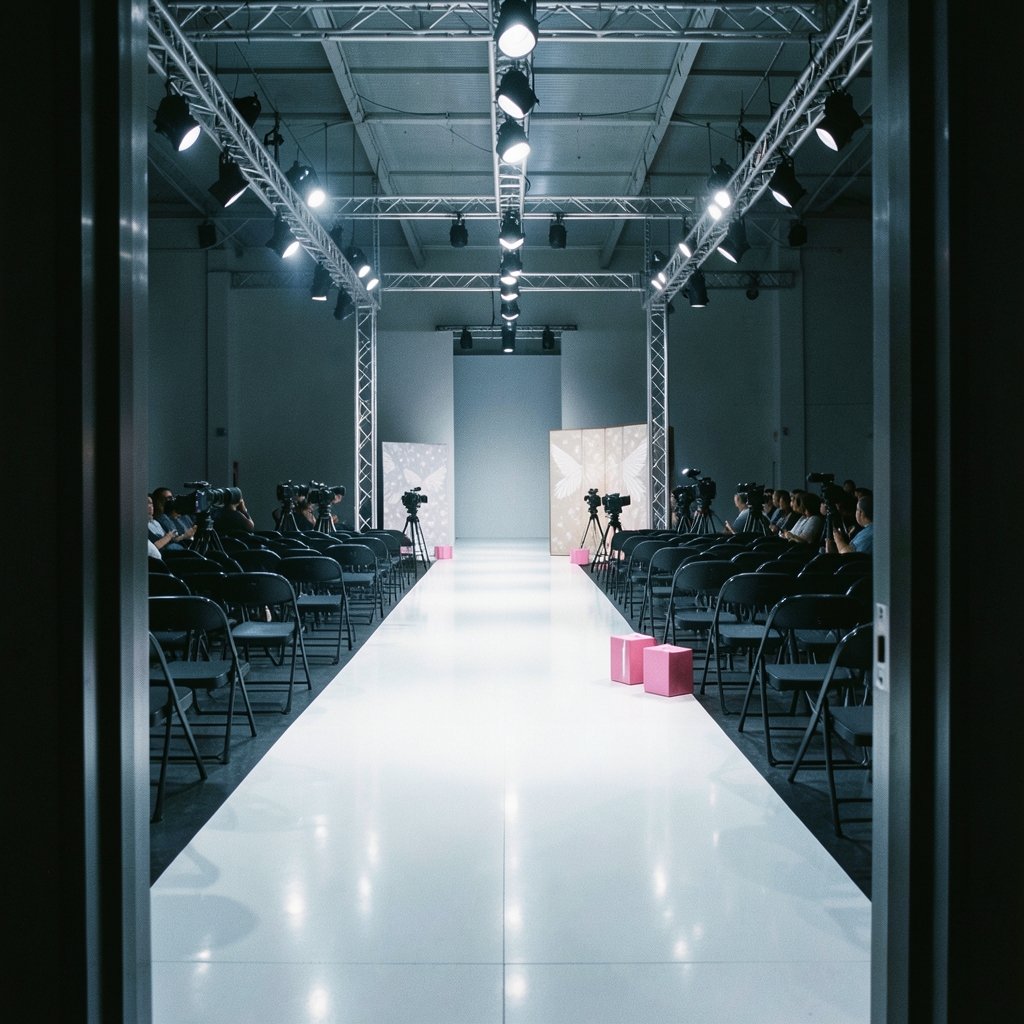
By the time Banks returned, the landscape had changed dramatically. Victoria’s Secret had spent years facing criticism over its narrow casting and its association with a very specific, very limited idea of what a model should look like. The brand canceled the televised show in 2019, then spent several years rethinking its approach before bringing the runway back in a different form.
Banks’ return carried symbolic weight for several reasons:
- Continuity. She connected the new, more inclusive show to the brand’s original golden age, giving longtime viewers a familiar face.
- Reinvention. Her presence signaled that the brand was willing to revisit its own history rather than pretend it never happened.
- Nostalgia as strategy. In a crowded attention economy, a genuine comeback story travels further than a standard casting announcement.
It also mattered that Banks was not a newcomer being slotted into a diversity checkbox. She was a veteran returning on her own terms, which gave the moment a different texture than a simple casting decision. The fashion world’s ongoing conversation about who gets to walk the runway, and why, has been covered closely by outlets tracking new model talent, including the new faces redefining the runway. Banks’ return sits right at the intersection of that old guard and new guard. (Tyra Banks)
How the Runway Has Changed Since Her First Walk
The Victoria’s Secret runway of the 1990s and the runway of the 2020s are almost different institutions. The original show was built around a fantasy of glamour that assumed a very particular audience and a very particular body type. The revived show has, at least in its stated intentions, tried to widen that frame.
| Element | Original era (1990s–2000s) | Revived era (2020s) |
|---|---|---|
| Casting | Narrow, highly uniform roster of Angels | Broader range of body types, ages, and backgrounds |
| Format | Televised network spectacle | Streaming and digital-first presentation |
| Messaging | Fantasy and glamour above all | Attempted blend of glamour and inclusivity |
| Star power | Small core of supermodels | Mix of returning veterans and new faces |
That table is a simplification, but it captures the shift. The brand’s challenge is that it cannot fully abandon the fantasy that made it famous, because that fantasy is the product. At the same time, it cannot return to the exact formula that drew criticism. Banks’ return sits right in that awkward middle ground, and that is precisely why it was such a useful piece of casting. She belongs to the old fantasy and to the story of a brand trying to grow up.
The broader fashion industry has been having the same conversation. Coverage of the second edition of the runway’s new faces shows how quickly the definition of a runway model has shifted, with talent drawn from a much wider set of backgrounds than the original Angel era ever allowed.
What Actually Works When You Study a Comeback Like This
For readers who follow fashion, marketing, or brand reinvention, the Banks return offers some practical lessons. These are the things that tend to separate a comeback that lands from one that falls flat.
- Anchor the nostalgia in a real person, not a slogan. A returning veteran with genuine history reads as authentic in a way that a manufactured “heritage” campaign never does.
- Let the returning figure have agency. Banks was not presented as a prop. She was presented as someone choosing to return, which changes how the audience reads the moment.
- Acknowledge the past honestly. Brands that pretend their earlier era had no problems tend to get called out. Brands that nod to the shift tend to be given more room.
- Pair the veteran with new talent. A comeback works best when it bridges generations rather than replacing one with the other.
- Do not over-explain. The strongest moments are usually the ones the brand lets breathe rather than narrating to death.
The most common mistake in this kind of campaign is treating a returning star as a quick fix for a deeper problem. A single runway moment can generate headlines, but it cannot by itself change how a brand is perceived. What it can do is buy attention and set a tone, which is exactly what a well-timed comeback is for.
The Business Logic Behind the Casting
Victoria’s Secret is a retail company, and casting decisions are business decisions. Bringing back a figure like Banks accomplishes several things at once. It generates earned media, gives longtime customers a reason to pay attention again, and connects the brand’s archived glory with its current positioning.
There is also a demographic logic. The audience that grew up watching the original shows is now older, with more disposable income, and more skeptical of brands that ignore their history. A familiar face can re-engage that group without the brand having to pretend it never changed. Meanwhile, newer audiences get introduced to a figure they may only know by reputation.
The risk is that nostalgia can read as a retreat. If a brand leans too hard on returning stars, it can look like it has run out of ideas. The balance is delicate, and it depends on whether the returning figure is framed as part of a forward motion or as a substitute for one. In Banks’ case, the framing leaned toward continuity rather than replacement, which is a big part of why the moment was received as warmly as it was.
What the Return Says About Age and Longevity in Fashion
One of the quieter points the return made concerns age. Fashion has historically been brutal to women as they get older, pushing them out of the spotlight at an age when male counterparts are still considered at their peak. A supermodel returning to the same runway two decades later pushes back against that pattern, at least a little.
That does not mean the industry has solved its age problem. It has not. But visible returns like this one create space for a different narrative, one in which experience and presence are treated as assets rather than liabilities. For readers who care about how the fashion world treats women over time, the Banks return is a useful data point, even if it is only one.
Conclusion
Tyra Banks’ return to the Victoria’s Secret runway is more than a nostalgic photo op. It is a case study in how a legacy brand tries to reconnect with its past without repeating its mistakes, and in how a veteran performer can reclaim a stage on her own terms. The moment worked because it was anchored in a real person with real history, because it acknowledged the gap between then and now, and because it let the audience feel the weight of two decades rather than explaining it to them.
Whether Victoria’s Secret can convert that goodwill into a lasting reinvention is a separate question, and one that will not be answered by a single walk. But as a piece of brand storytelling, the return did its job: it made people look, it made them feel something, and it reopened a conversation about who belongs on a runway. In a fashion cycle that moves faster every year, that is no small thing.
Frequently Asked Questions
When did Tyra Banks return to the Victoria’s Secret runway?
She returned in 2024, roughly two decades after her last appearance for the brand. The exact show date and segment details have been widely reported but are best confirmed against the brand’s own announcements and contemporaneous fashion coverage.
Was Tyra Banks an original Victoria’s Secret Angel?
Yes. Banks was one of the brand’s most prominent Angels during the late 1990s and early 2000s, walking in multiple shows during that era alongside other major supermodels of the period.
Why did the return get so much attention?
Because it bridged two very different eras of the brand. Banks connected the glossy supermodel age to a revived show that was trying to be more inclusive, and that contrast made the moment newsworthy beyond the fashion press.
Did the brand change its casting approach for the revived show?
Yes, at least in its stated intentions. The revived show has aimed for a broader range of body types, ages, and backgrounds than the original televised era, though critics continue to debate how much has actually changed.
What can other brands learn from this kind of comeback?
That nostalgia works best when it is anchored in a real person with genuine history, paired with new talent, and paired with an honest acknowledgment of what has changed. A returning star can generate attention, but it cannot substitute for a deeper strategy.
Does this mean the original supermodel era is back?
Not exactly. The revived show borrows the star power of that era without fully returning to its narrow casting or its network-television format. It is a hybrid, and how that hybrid evolves is still an open question.
The Banks moment also demonstrated something subtler: that a single, well-chosen return can reframe an entire conversation without a brand having to issue a manifesto. Audiences read the casting itself as a statement, which is more persuasive than any press release. That is the real lesson for anyone studying brand reinvention—symbols carry further than slogans when they are backed by genuine history. As the industry continues to debate who belongs on the runway and on what terms, the Banks return will likely be cited as a template: a veteran, a stage, and a story that let the audience draw its own conclusions. Its ultimate value will be measured not by the headlines it generated, but by whether the doors it nudged open stay open for the next generation of models.