
Greek Tattoos: Myth, Meaning & Modern Designs 2026
 Abdul WadoodLast updated

Somewhere between a 2,500-year-old vase painting and a Tuesday afternoon at a tattoo studio, Greek tattoos became one of the most requested design families in the world. Search data consistently places Greek mythology themes among the top categories in tattoo interest surveys, and it’s easy to see why. The imagery is dramatic, the stories are violent and human, and the visual language of meanders, laurel wreaths, and marble statues translates beautifully to skin. But here’s the catch most people discover too late: Greek tattoo design is full of traps. Scale problems, meaning mix-ups, and a few myths that simply refuse to die. (Tattoo)
This guide walks through what actually works, what doesn’t, and how to get a Greek tattoo you’ll still love in twenty years.
Why Greek Imagery Dominates Tattoo Culture
Greek art was built for permanence. The same qualities that let marble statues survive two millennia make Greek motifs work as tattoos: strong silhouettes, clean geometry, and figures designed to read from a distance.
The meander (also called the Greek key) is the clearest example. It’s a continuous geometric border that appears throughout ancient Greek pottery and architecture, and it works as a band, a frame, or a subtle filler. Because it’s built from straight lines and right angles, it holds up exceptionally well over time. Fine detail blurs as skin ages; bold geometry doesn’t.
Then there’s the narrative pull. Greek mythology offers a cast of characters with genuinely complicated stories, which is why it appeals to people who want a tattoo with depth rather than decoration. A Nike figure isn’t just a winged woman; she’s a specific idea about victory. A Labyrinth pattern isn’t just a maze; it’s a story about finding a way through.
The Real History of Tattooing in Ancient Greece
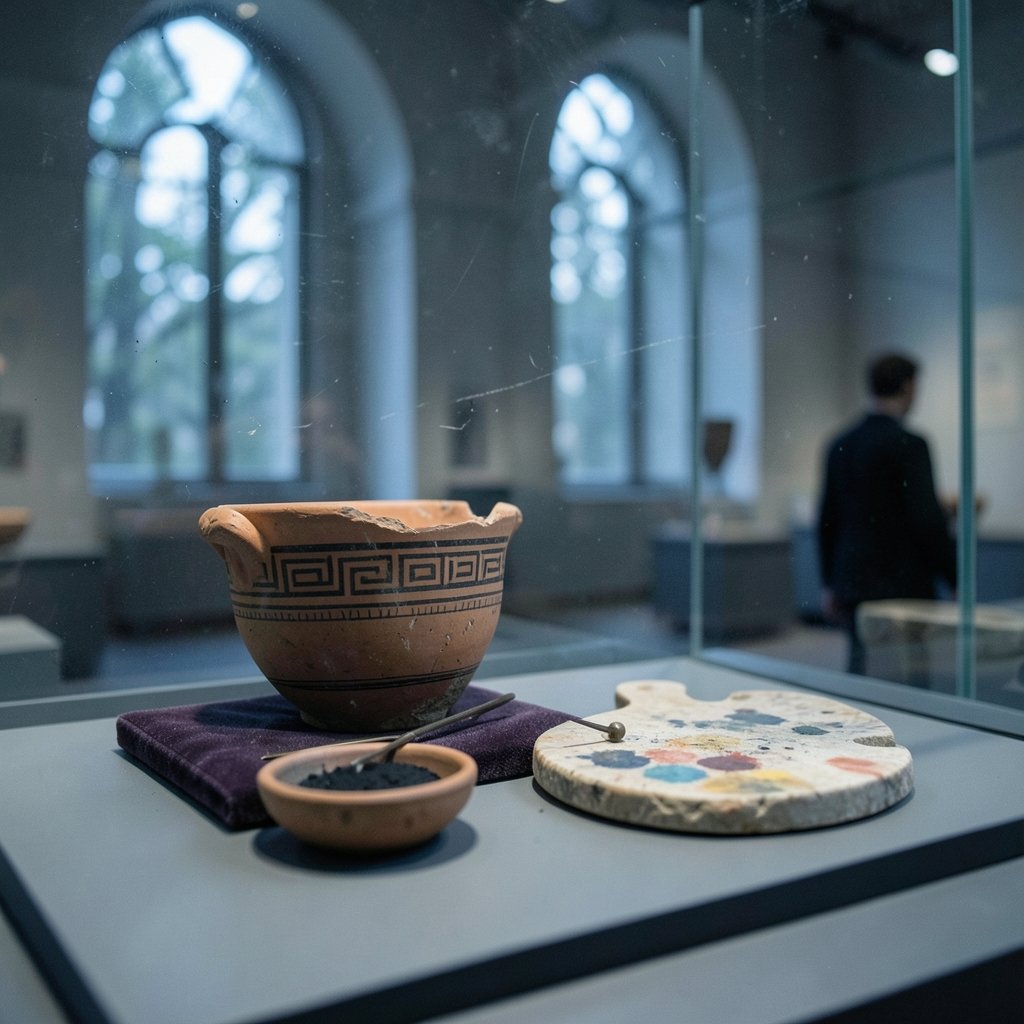
Here’s where popular tattoo content usually gets it wrong. A quick search will tell you ancient Greeks tattooed themselves with mythological figures. The evidence says something more complicated, and more interesting.
Ancient Greek attitudes toward tattooing were, by most scholarly accounts, largely negative. Tattoos, often referred to as stigmata, were frequently associated with slaves and with non-Greek peoples the Greeks labeled “barbarians.” Being tattooed could function as a punishment or a mark of ownership. Some Greek communities, and neighboring cultures such as the Thracians, used tattoos more positively, and the practice shifted over time, particularly in Ptolemaic Egypt. The dating and interpretation of specific evidence remain debated among historians.
The practical takeaway: if someone tells you their Greek mythology tattoo is “ancient Greek tradition,” that’s a romantic story, not a historical one. The designs are inspired by ancient Greek art, which is a different and perfectly good thing. Understanding that distinction actually makes for a better-informed tattoo choice.
The Most Popular Greek Tattoo Themes
Greek Gods and Goddesses
Zeus, Athena, Poseidon, Apollo, and Aphrodite lead the requests. The strongest versions avoid the full-face portrait problem by focusing on one attribute: Zeus’s lightning bolt, Athena’s owl or helmet, Poseidon’s trident, Apollo’s lyre or sun, Aphrodite’s shell.
Mythological Creatures
Medusa is arguably the single most requested Greek figure in tattoo studios. Pegasus, the Minotaur, Cerberus, and the Hydra all appear regularly. Medusa deserves special attention because her meaning has shifted: she’s been reclaimed as a symbol of protection and survival, which is very different from her classical role as a monster.
Heroes and Epics
Achilles, Hercules, Odysseus, and Icarus. Icarus is a favorite for a reason: the falling figure gives designers a dynamic vertical composition that fits forearms and calves naturally.
Symbols and Ornament
The laurel wreath, the Greek key, the evil eye (mati), the owl of Athena, and the lyre. These are the workhorses of Greek tattoo design because they scale down cleanly and pair well with lettering.
Statues and Busts
The “broken statue” aesthetic, inspired by classical sculpture, has become its own genre. It’s striking when done well and muddy when done cheaply, because it relies entirely on the artist’s skill at rendering stone texture.
A Practical Comparison: Which Greek Motif Fits Which Placement
| Motif | Best placements | Works small? | Ages well? | Watch out for |
|---|---|---|---|---|
| Greek key / meander | Forearm band, wrist, ankle, ribs | Yes | Excellent | Uneven linework shows instantly |
| Laurel wreath | Bicep, thigh, shoulder, chest | Yes | Very good | Leaves need consistent spacing |
| Medusa | Thigh, upper arm, back, sternum | No | Good | Faces need large scale to stay readable |
| Full god portrait | Back, thigh, chest | No | Fair | Detail blurs at small sizes |
| Icarus falling figure | Forearm, calf, ribs | Medium | Good | Wings need bold contrast |
| Owl of Athena | Forearm, shoulder, hand | Yes | Very good | Too much detail kills it small |
| Statue bust | Upper arm, thigh, back | No | Fair | Texture work requires real skill |
The pattern is obvious once you see it: geometric and symbolic motifs scale down; figurative and portrait work needs room. Choosing a placement that fights your design is the single most common mistake in this category.
Blackwork, Fine Line, and the Style Question
Greek tattoo design splits into two broad style camps, and the choice matters more than most people expect.
Blackwork and neo-traditional approaches suit Greek subjects best for longevity. Bold outlines, high contrast, and limited shading mean the tattoo still reads clearly after a decade of sun exposure and skin changes. This is why so many strong Medusa and statue pieces are blackwork.
Fine line Greek tattoos look stunning on day one. Delicate laurel wreaths, thin meander bands, and whisper-light line portraits photograph beautifully. The honest trade-off is durability: very fine lines can soften and spread over time, and small lettering in ancient Greek script becomes illegible faster than almost any other element.
A balanced approach that works in practice: use fine line for ornamental elements and bold blackwork for the focal figure. Mixing weights deliberately gives the piece hierarchy, so the eye knows where to land.
Mistakes That Undermine Greek Tattoos
Mistranslated Greek lettering. This is the big one. Ancient Greek script is not a one-to-one letter swap with the Latin alphabet, and machine translation handles it poorly. People end up with characters that spell nothing, or spell something unintended. Get any Greek text verified by someone who actually reads the language before it goes on your body permanently.
Copying a famous statue photo directly. Classical sculpture is full of dramatic lighting and complex drapery. A tattoo artist translating a photograph literally often produces a muddy grey mass. Good artists simplify aggressively.
Ignoring the myth’s actual content. Medusa’s story is not a straightforward empowerment narrative in the original sources. Icarus is not a story about ambition being rewarded. Knowing what the myth actually says prevents the awkward conversation later.
Going too small. A full Athena portrait on a two-inch wrist area will not work. No amount of artist skill fixes physics.
Skipping the reference conversation. Bring references, but bring them as direction, not as a copy-paste order. The best Greek tattoos come from artists who understand the source material and then redesign it for skin.
What Actually Works in Practice
Experienced collectors tend to converge on a few habits that consistently produce better Greek tattoos.
First, choose the attribute over the face. A trident, an owl, a lightning bolt, or a laurel wreath reads instantly and avoids the uncanny-valley problem of rendering a deity’s face. Second, commit to scale. If the design needs eight inches, don’t squeeze it into four. Third, plan for contrast. Ask your artist directly how the piece will look in ten years, and listen to the answer. Fourth, verify any text. Fifth, let the composition breathe. Greek art used negative space deliberately, and crowded designs lose the clarity that makes the style work.
There’s also a research angle worth using: looking at how classical motifs were actually composed on pottery and architecture teaches you what makes them visually strong. Museum collections and classical art archives are free, searchable, and far more useful than scrolling tattoo hashtags for an hour.
For broader context on tattoo culture, design trends, and how to research an artist before booking, resources like Voozon Media cover the practical side of the industry. (Hepatitis B)
Conclusion
Greek tattoos work best when the design respects two things at once: the visual logic of ancient Greek art and the physical reality of skin. Bold geometry, strong silhouettes, and deliberate contrast survive; tiny detail and copied photographs don’t. The history is more nuanced than the internet suggests, and that nuance is actually useful, because it pushes you toward designs built on real artistic sources rather than recycled assumptions.
Pick a motif with a silhouette that reads from across a room. Scale it honestly. Verify every letter. Then let a skilled artist translate it. Do that, and a Greek tattoo becomes what it should be: a piece of classical design that still looks deliberate a decade from now.
What does a Greek tattoo symbolize?
It depends entirely on the motif. Gods and goddesses usually represent specific qualities: Athena for wisdom, Poseidon for power over chaos, Apollo for art and light. Creatures carry different weight, with Medusa now widely used as a protection symbol and Icarus as a warning about excess. Ornamental elements like the laurel wreath suggest victory or honor, while the Greek key is primarily decorative and geometric.
Did ancient Greeks actually have tattoos?
Mostly not in the way people assume. Scholarly accounts describe ancient Greek attitudes toward tattooing as largely negative, with tattoos often associated with slaves and non-Greek peoples. Some neighboring cultures, including the Thracians, used tattoos more positively, and practices varied by region and period. Modern Greek mythology tattoos draw on ancient Greek art, not on a widespread ancient Greek tattoo tradition.
Which Greek tattoo design ages the best?
Bold geometric and symbolic designs age best. The Greek key, laurel wreath, owl, and trident all use strong shapes and clear contrast, which hold up as skin changes. Large portrait work and very fine line detail soften faster. The general rule: the bolder the silhouette, the longer the tattoo stays legible.
Is Medusa a good tattoo choice?
Medusa is one of the most requested Greek figures, and she works well when the design is given enough space. Her face needs scale to stay readable, so thigh, upper arm, back, and sternum placements suit her best. It’s worth knowing that her modern association with protection and survival is a reinterpretation, not her classical role.
How do I avoid a mistranslated Greek tattoo?
Never rely on machine translation for ancient Greek script. Letter-by-letter swaps produce nonsense, and the alphabet doesn’t map cleanly to Latin characters. Have any Greek text verified by someone who reads the language, and ask your artist to show you the exact characters before the stencil is applied.
Where should I place a Greek mythology tattoo?
Match placement to design weight. Small symbols like the owl, trident, or meander band work on forearms, wrists, and ankles. Figurative work such as Medusa, full deities, or statue busts needs larger areas: thigh, upper arm, chest, or back. Choosing a spot too small for the design is the most common reason Greek tattoos end up looking muddled.
Finally, ask about the artist’s portfolio as well as their style. A tattooer who has never drawn classical figures may still produce an excellent Greek key band, but a Medusa or statue bust demands someone who has studied anatomy, drapery, and stone texture. Request healed photos rather than fresh ones — a piece photographed minutes after completion hides the flaws that matter. Reputable artists will share them, and their willingness to do so tells you as much as the images themselves.