
Outer Forearm Tattoos for Men: 2026 Design & Pain Guide
 Abdul WadoodLast updated
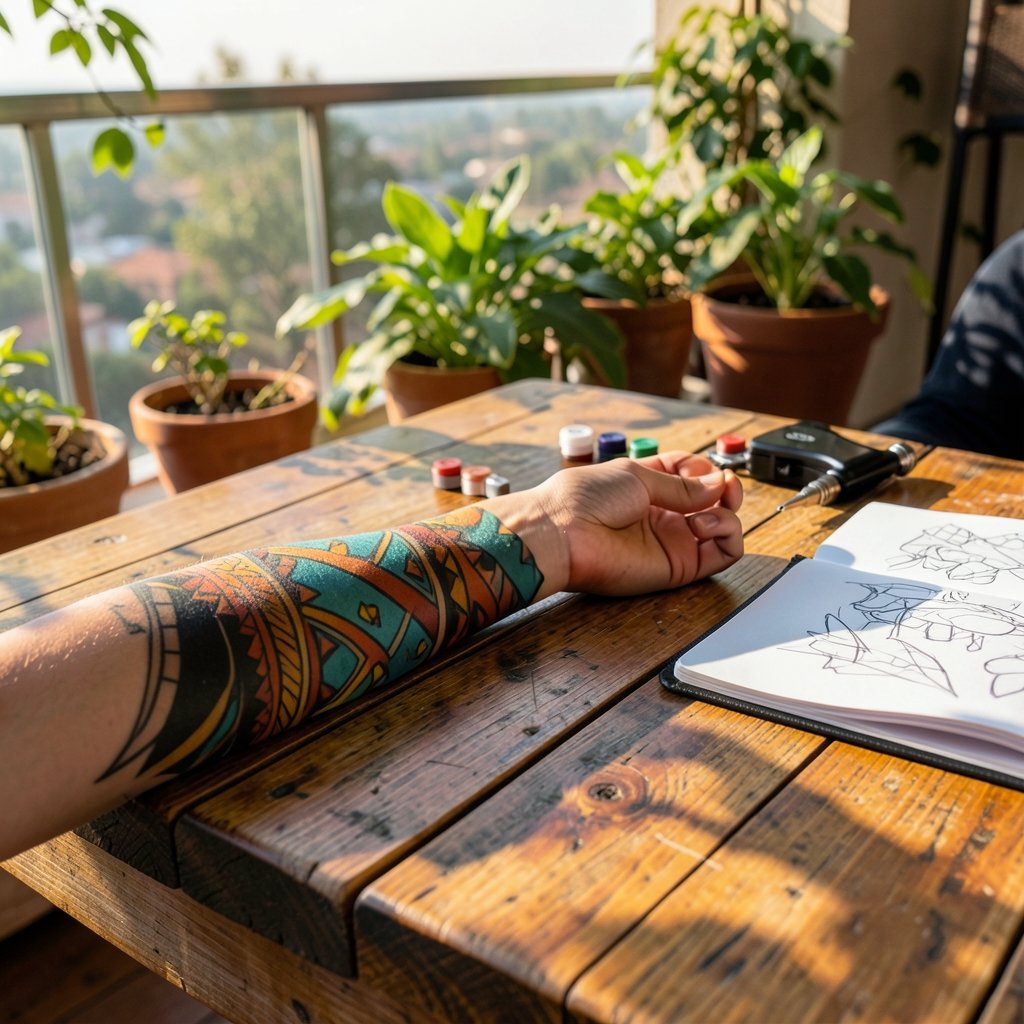
Roughly one in four American adults now has at least one tattoo, and the forearm has quietly become one of the most requested spots on the body. For men in particular, the outer forearm sits in a sweet spot: visible enough to show off, easy enough to hide under a sleeve, and flat enough that most artists can work quickly and cleanly. It is no accident that so many first-time clients and seasoned collectors alike point to that strip of skin when they sit down in the chair.
This guide breaks down what actually matters when planning an outer forearm piece. It covers why the placement works, how much it hurts, which designs hold up over time, what to ask an artist, and how to heal the thing without wrecking it. Along the way, it flags the mistakes that show up again and again in studios, so the finished tattoo looks as sharp in five years as it did on day one. (Tattoo)
Why the Outer Forearm Works So Well for Men
The outer forearm, sometimes called the lateral or dorsal forearm, is the flat, slightly convex surface that faces away from the body when the arms hang at the sides. It has three practical advantages that make it a favorite.
First, it is visible on demand. Roll up a sleeve and the tattoo shows; button the cuff and it disappears. That flexibility matters for men in office jobs, client-facing roles, or any workplace where visible ink is still a sticking point.
Second, the skin there is relatively stable and flat. It does not crease the way the inner elbow does, and it does not stretch the way the stomach or upper arm can with weight changes. Flat surfaces give artists an easier canvas, which usually means cleaner lines and better saturation.
Third, it is a natural anchor for larger compositions. Many men start with a single outer forearm piece and later extend it into a half sleeve or a full sleeve. Because the outer forearm connects visually to the upper arm, a design placed there can grow upward without looking patched together.
One caveat worth naming: the outer forearm is also one of the most public places to get tattooed. Strangers will comment on it. If a design is deeply personal or tied to a memory, some men prefer to keep it somewhere more private. There is no wrong answer, but it is worth thinking through before the needle touches skin.
How Much Does an Outer Forearm Tattoo Hurt?
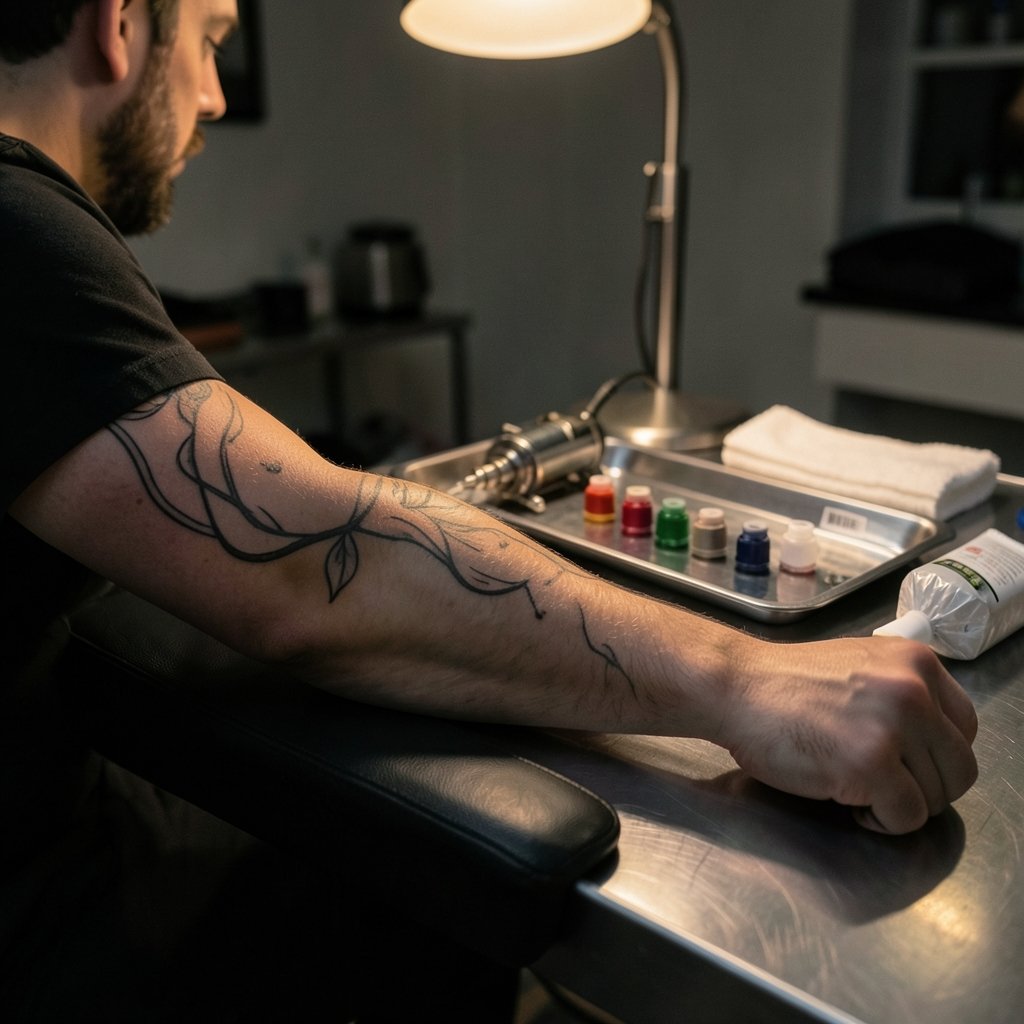
Honest answer: less than most people fear. On the standard tattoo pain scale, the outer forearm sits toward the lower-middle end. The skin is thick enough to cushion the needle, there are few nerve-dense spots, and the muscle underneath absorbs a lot of the vibration.
The uncomfortable zones nearby are the inner wrist, the inner elbow (the ditch), and the bony ridge near the elbow itself. If a design wraps from the outer forearm around toward the wrist or elbow, expect the pain to climb as the needle crosses those areas.
A few practical notes from how sessions actually go:
- Line work tends to feel like a hot scratch; shading and color packing feel more like a sunburn being rubbed.
- Sessions on the outer forearm are often shorter than clients expect, because the flat surface lets artists work efficiently.
- Numbing cream can take the edge off, but it can also change how the skin takes ink. Ask the artist before applying anything.
- Pain tolerance varies wildly by person, by day, and by how much sleep and water the client had beforehand.
Anyone who has sat through a rib or foot tattoo usually describes the outer forearm as a relief by comparison.
Design Styles That Hold Up on the Outer Forearm
The outer forearm rewards bold, readable designs and punishes fussy, tiny detail. Because the surface is curved and viewed from a slight distance most of the time, fine detail can blur into a smudge over the years. The styles that age best tend to have strong outlines and clear contrast.
| Style | Why It Works on the Outer Forearm | Watch-Outs |
|---|---|---|
| American traditional | Bold lines, limited palette, ages beautifully | Needs space; tiny versions lose impact |
| Blackwork and geometric | High contrast, reads clearly from a distance | Large solid fills can be intense to sit through |
| Script and lettering | Vertical orientation fits the arm’s shape | Small text blurs; keep it large and simple |
| Realism and portrait | Flat surface supports shading and depth | Demands a specialist; ages faster than bold styles |
| Tribal and Polynesian-inspired | Flows with the muscle and wraps naturally | Research cultural meaning and pick a respectful artist |
| Minimalist line work | Clean and modern, quick to apply | Fades faster; may need touch-ups |
A common mistake is cramming a detailed design into too small a space. On the outer forearm, bigger is almost always better. A design that fills the flat area between wrist and elbow reads as intentional; the same design shrunk to palm size often looks like a sticker.
Another frequent misstep is ignoring flow. The forearm has a natural direction, and designs that follow the length of the arm look more integrated than ones that fight it. A good artist will rotate the stencil and check it in a mirror before committing.
Choosing the Right Artist and Asking the Right Questions
Not every tattooer is the right tattooer for every piece. Style matters more than geography. Someone who specializes in fine-line florals may not be the best fit for heavy blackwork, and a portrait specialist may not want to do script.
Before booking, it helps to ask a short list of questions:
- Can I see healed work in this style? Fresh tattoos always look crisp. Healed photos show how the artist’s work settles into the skin.
- How do you price? Some artists charge hourly, others by the piece. Get a range before the deposit.
- How many sessions will this take? A full outer forearm panel may need two sittings; a small script piece may take under an hour.
- What is your deposit and cancellation policy? Deposits are standard and usually non-refundable.
- Do you have a minimum age and ID policy? Most studios require government ID and 18+, with stricter rules in some regions.
It also pays to check that the studio follows basic hygiene standards: single-use needles, fresh gloves, sealed ink caps, and a clean workstation set up in front of the client. Anyone squeamish about asking should remember that a good artist expects the question and will happily answer it.
Placement Details Most People Overlook
A few small decisions shape how an outer forearm tattoo looks for years.
Distance from the wrist and elbow. Leaving a small gap of clear skin at each end keeps the design from looking like it runs off the arm. Some men prefer the tattoo to sit centered between the two joints; others want it to start right at the wrist bone.
Direction of the design. Tattoos read differently depending on whether the top of the image points toward the hand or the elbow. There is no universal rule, but most people orient a design so it reads correctly when the arm is relaxed at the side.
Future sleeve plans. If a half sleeve is even a possibility, mention it up front. Artists can design the outer forearm piece so it leaves room to extend later without awkward gaps.
Symmetry. Men who plan matching pieces on both arms should book them close together. Skin tone, sun exposure, and healing can vary, and a single artist working both sides keeps the style consistent.
Aftercare: What Actually Protects the Tattoo
Healing advice online is noisy, and much of it contradicts itself. The basics that studios and dermatologists generally agree on are simple.
Keep the tattoo clean with mild, fragrance-free soap and lukewarm water. Pat it dry with a clean paper towel rather than rubbing with a cloth. Apply a thin layer of recommended ointment or unscented lotion; a thick layer traps moisture and can cause problems. Avoid soaking in baths, pools, hot tubs, or the ocean for the first couple of weeks, and keep the area out of direct sun. Do not pick or scratch at flaking skin, even when it itches.
The outer forearm is exposed to sunlight more than almost any other part of the body, so sun protection is not optional. Once healed, a high-SPF sunscreen on the tattoo keeps lines crisp and stops colors from fading. This single habit does more for long-term appearance than any fancy aftercare product.
Signs of trouble worth a call to a doctor include spreading redness, heat, pus, fever, or a rash that appears days after the session. Most tattoos heal without issue, but infections and allergic reactions do happen and are easier to treat early.
Common Mistakes to Avoid
A handful of errors come up so often that they are worth naming directly.
- Going too small. Detail needs room. Shrinking a design to save money usually costs more in touch-ups later.
- Skipping the consultation. A five-minute chat about placement and size prevents most regrets.
- Bargain hunting. Price matters, but the cheapest quote is rarely the best value for permanent work.
- Ignoring the stencil. Ask for adjustments before the needle starts, not after.
- Poor sun habits. A great tattoo ruined by years of unprotected sun exposure is one of the most common disappointments artists see.
- Rushing healing. Picking scabs or scratching flaky skin pulls ink out and leaves patchy spots.
Conclusion
The outer forearm remains one of the smartest placements in tattooing for men, and for good reason. It balances visibility with discretion, offers a flat and forgiving canvas, and works with nearly every major style, from bold traditional pieces to clean geometric blackwork. The decisions that matter most are not complicated: choose an artist whose healed work matches the style you want, size the design generously, respect the natural flow of the arm, and treat sun protection as part of the tattoo rather than an afterthought. Get those right, and an outer forearm piece becomes the kind of tattoo that still looks deliberate and sharp a decade down the line. For more practical guidance on design, placement, and studio culture, explore the resources at voozon.media.
Frequently Asked Questions
How much does an outer forearm tattoo typically cost?
Cost varies widely by artist, city, size, and complexity. Small script pieces can start at a studio minimum, while a large custom panel may run into several sessions and a much higher total. Most artists quote hourly rates or a flat price after seeing the design, and a deposit is standard to hold the appointment.
Is the outer forearm a good spot for a first tattoo?
Yes, for most people. The area is relatively low on the pain scale, easy to keep clean during healing, and simple to cover with clothing if needed. The main thing first-timers should watch is size: going too small is a more common regret than going too big.
How long does an outer forearm tattoo take to heal?
Surface healing usually takes about two to four weeks, while the deeper layers of skin can take a few months to fully settle. Flaking and itching are normal in the first two weeks. Keeping the area clean, lightly moisturized, and out of the sun supports faster, cleaner healing.
Can an outer forearm tattoo be covered up later?
Often, yes, but it depends on the original design. Dark, bold tattoos are harder to cover than light or small ones, and a cover-up usually needs to be larger and darker than the original piece. Discussing this possibility with the artist before the first tattoo keeps options open.
Will an outer forearm tattoo affect getting a job?
It depends on the employer and the region. Many workplaces have relaxed their tattoo policies, but some client-facing, healthcare, military, and uniformed roles still have rules about visible ink. Because the outer forearm can be covered by a long sleeve, it is generally considered a safer choice than the hands, neck, or face.
How do I keep an outer forearm tattoo from fading?
Sun exposure is the biggest cause of fading. Once the tattoo is fully healed, apply a high-SPF sunscreen whenever the arm is exposed, moisturize regularly, and avoid prolonged direct sun. Touch-ups every few years can also refresh lines and color if needed.