
Butterfly Tattoos: Meaning, Best Placements & Styles
 Abdul WadoodLast updated
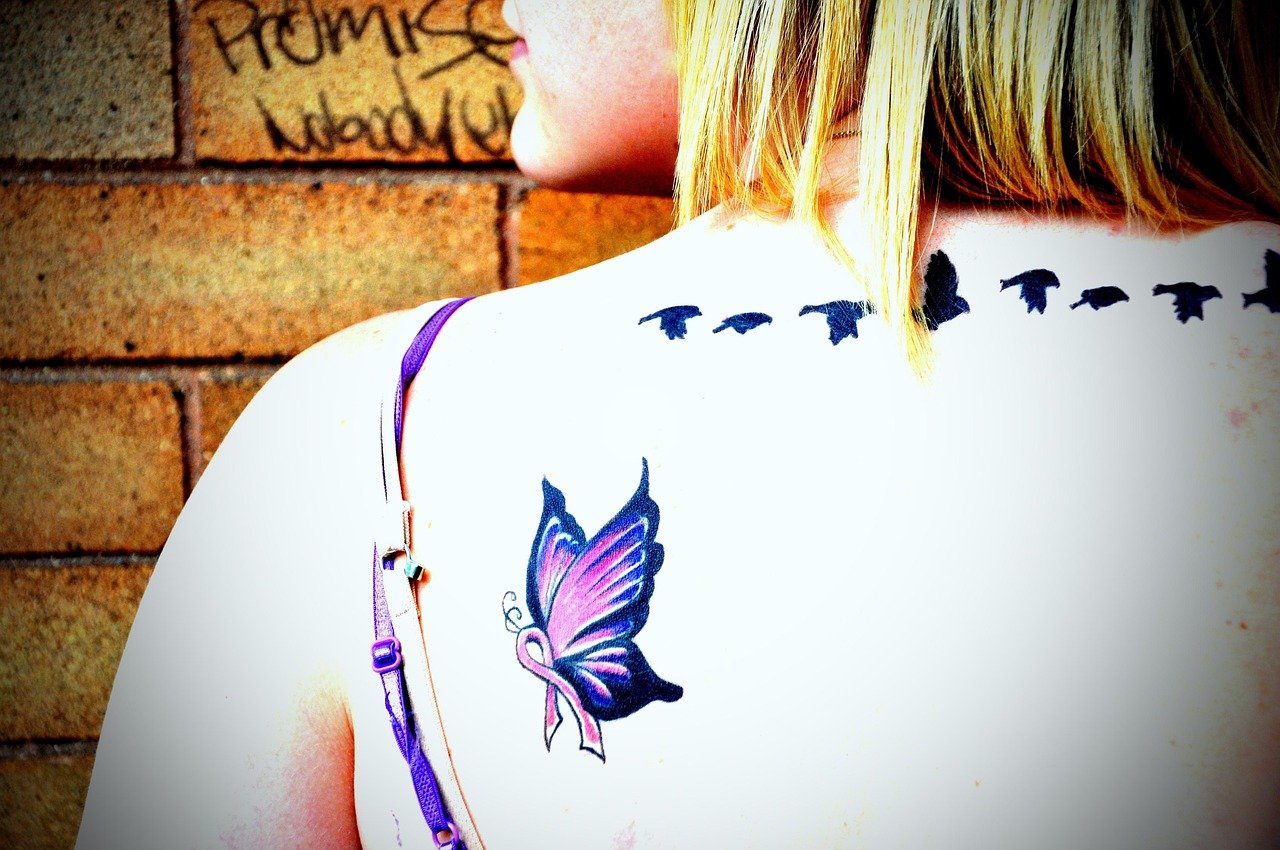
A butterfly can taste with its feet. It also drinks through a straw-like proboscis, navigates by polarized light, and lives most of its adult life measured in weeks rather than years. That short, brilliant arc is exactly why so many people choose butterfly tattoos: the design compresses transformation, fragility, and freedom into a shape that fits almost anywhere on the body.
But that same flexibility is the problem. Butterfly tattoos are among the most requested designs in Western tattoo shops, which means they are also among the most often regretted. Size chosen too small. Placement picked on impulse. Meaning left vague. This guide covers what the symbol actually carries, which styles hold up over time, where the design sits best on the body, and the practical decisions that separate a tattoo you keep from one you cover up. (Butterfly)
Why the Butterfly Carries So Much Symbolic Weight
Across cultures, the butterfly shows up as a symbol of the soul, of change, and of brief beauty. Greek mythology used the word psyche for both the soul and the butterfly, and the connection survived into Christian art, where butterflies appear on tombstones as emblems of resurrection. In Japanese tradition, butterflies are associated with the spirit of a person and with the cycle of rebirth, and they appear frequently in family crests and kimono patterns.
That layered history matters for tattoo design because it explains why the motif feels familiar even to people who have never studied symbolism. A butterfly tattoo does not need a caption. The image already arrives loaded.
In contemporary tattoo culture, the meanings people attach tend to cluster into a few broad categories:
| Meaning | Common design cue |
|---|---|
| Transformation or recovery | Emerging from a cocoon, half-open wings |
| Remembrance | Butterfly paired with a name, date, or birth flower |
| Freedom and independence | Single butterfly in flight, no frame |
| Femininity and grace | Fine-line wings, soft shading, floral accents |
| Growth through hardship | Wings with visible damage or asymmetry |
The mistake many people make is assuming the meaning is fixed. It is not. A butterfly on a wrist can mean grief for one person and a fresh start for another. The design works because the viewer brings their own reading to it. If you want the tattoo to carry a specific message, build that meaning into the composition rather than relying on the insect alone.
The Real-World Design Styles, Ranked by How They Age
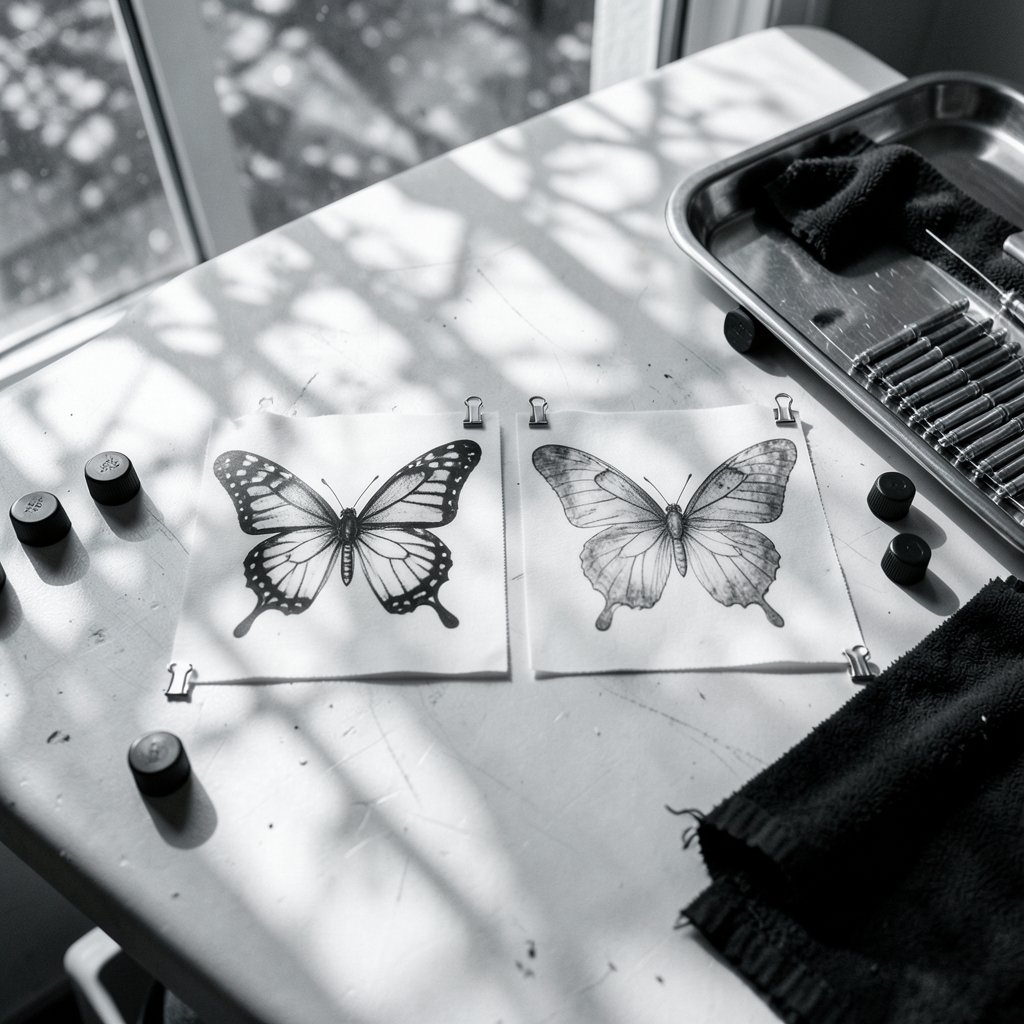
Style choice matters more than most first-timers realize. A butterfly drawn with delicate single-needle lines looks stunning in a fresh photo and can blur into a gray smudge within a decade. Here is how the main approaches actually behave on skin over time.
Fine-line and single-needle. Crisp and elegant at first. The lines are thin, so they spread and soften faster than bold work. Fine-line butterflies work best when they are small, placed on areas that see little sun, and touched up every few years.
Blackwork and bold traditional. Heavy outlines and solid black fill. These hold their shape for decades because the line weight resists ink spread. A bold butterfly reads clearly from across a room, which is why traditional tattooers have used the motif for generations.
Realism and color. Photorealistic butterflies, often monarchs, with layered color and soft edges. These depend heavily on the artist’s skill and on skin tone. Color fades faster than black, especially on areas exposed to sun, and pale yellows and oranges are the first to go.
Geometric and ornamental. Butterflies built from symmetrical linework, dotwork, or mandala elements. The symmetry is the appeal and also the risk: any distortion in the original drawing becomes obvious once it is on a curved body part.
Watercolor. Soft washes of color with no hard outline. Beautiful in the chair, but without an outline to hold it, the color tends to spread and lose definition. Many artists now add a light line structure to watercolor designs specifically to slow that decline.
A useful rule of thumb: the smaller and finer the design, the more often it will need maintenance. If you want a tattoo that looks the same in fifteen years, choose bold lines and black ink.
Placement: Where Butterfly Tattoos Actually Work
The butterfly’s shape is forgiving, which is why placement decisions get made too quickly. The wings create a natural horizontal line, and the body creates a vertical one, so the design can be oriented to flatter almost any body part. But some spots are far better than others.
Forearm and upper arm. Large enough for detail, easy to show or cover, and less prone to distortion than joints. A strong choice for a first butterfly.
Shoulder blade and upper back. The curve of the scapula suits open wings. This area also stays out of direct sun more often than an arm.
Wrist and ankle. Popular for small fine-line pieces, but these are high-friction, high-sun areas. Expect faster fading and more frequent touch-ups.
Ribs and sternum. Dramatic and personal, but painful and prone to stretching with weight change. The ribs are a poor choice for a first tattoo.
Hands, fingers, and neck. These are “job-stopper” placements. Many artists will not tattoo them on clients without substantial existing work, and some employers still treat visible hand and neck tattoos as a barrier.
Behind the ear. Small and discreet, but the skin is thin and the area is awkward to heal. Fine detail here tends to blur quickly.
One practical tip that saves a lot of regret: place the design on the body part you can cover with a short-sleeve shirt if you ever need to. You keep the option to be private without giving up the tattoo.
Size, Detail, and the Blurring Problem
Skin is not paper. Ink sits in the dermis, and the body’s immune response gradually breaks it down and spreads it. Over years, fine details close up and thin lines thicken. This is not a flaw in the artist’s work; it is biology.
The practical consequence is that detail has a minimum size. A butterfly with intricate wing veins, delicate antennae, and tiny dots needs enough surface area to hold that information. Shrinking a detailed design to fit a two-inch space means the details will merge into a dark patch within a few years.
What actually works in practice:
- Bring reference images, not a finished design. Show your artist three or four butterflies you like and explain what draws you to each. Let them redraw it for your body.
- Ask the artist to draw it at final size on paper. Hold it against the placement site. If the details look cramped at that size, the design is too complex for the spot.
- Choose a size that leaves room for the wings to breathe. Most butterfly designs look better slightly larger than the client’s first instinct.
- Discuss the ten-year version. Ask directly: “How will this look in ten years?” A good artist will tell you which elements will blur first.
The most common mistake is choosing a design from a screen and asking for it “a bit smaller.” Scale changes everything about how a tattoo reads.
Color, Symbolism, and the Monarch Question
Color choice carries meaning for many people, and there is no wrong answer, but the associations are worth knowing.
Monarch orange and black. The monarch is the most recognizable butterfly in North America, and its migration is one of the great natural spectacles. It has also become a conservation symbol. The monarch’s status has been debated and revised by scientific bodies in recent years, and the population faces real pressure from habitat loss. A monarch tattoo often signals an environmental commitment as much as a personal one.
Blue. Frequently read as calm, loyalty, or spirituality. Blue pigment is also one of the harder colors to keep vivid long-term.
Purple. Associated with intuition and transformation in many popular readings, and a favorite for memorial pieces.
White and pale tones. Striking on deep skin tones and on fresh tattoos, but the least stable pigments. White ink can yellow over time and pale shades fade fastest.
Black only. The most durable choice and increasingly popular. A black butterfly will outlast a colored one by years.
If a specific butterfly species matters to you, say so. A skilled artist can render a swallowtail, a morpho, or a monarch accurately, and the specificity makes the tattoo more personal than a generic winged shape.
Working With an Artist: What to Ask Before You Book
Most disappointing butterfly tattoos are not the result of bad luck. They come from a mismatch between what the client wanted and what the artist was told.
Ask these questions before you put down a deposit:
- Can I see healed photos of your work? Fresh tattoos flatter everyone. Healed photos show how the artist’s lines and color actually settle.
- Do you specialize in this style? Fine-line, realism, and bold traditional are different skill sets. Do not assume every artist does all three well.
- What is your minimum size for this level of detail? This question alone prevents most blurring problems.
- How do you handle touch-ups? Policies vary widely, and a clear answer tells you a lot about how the shop operates.
- What is your aftercare protocol? Follow it exactly. Infection and poor healing damage tattoos far more than time does.
Also confirm the practical basics: licensing, age requirements, and hygiene standards vary by country and region, and reputable shops will answer these questions without hesitation. A shop that dodges questions about sterilization is a shop to walk away from.
For a broader look at how tattoo culture and visual storytelling intersect, resources like VOOZON cover design and media trends that inform how symbols like the butterfly circulate online.
Common Mistakes That Lead to Regret
A few patterns show up again and again in cover-up work.
Choosing meaning before choosing design. The symbol is the easy part. The composition is what you live with. Start with placement and size, then layer in meaning.
Going too small. The single most common regret. Small butterflies with fine detail do not age well.
Copying someone else’s tattoo exactly. A design pulled from a stranger’s photo was drawn for a different body, a different skin tone, and a different scale.
Skipping the consultation. A fifteen-minute conversation with the artist prevents most problems.
Ignoring sun protection. Ultraviolet light is the single biggest cause of tattoo fading. Sunscreen on healed tattoos is not optional if you want the work to last.
Rushing the healing phase. Picking, scratching, or over-washing during the first two weeks damages the final result permanently.
Conclusion
Butterfly tattoos endure because they are genuinely flexible: they suit almost any placement, scale, and style, and they carry meaning without needing to explain themselves. That flexibility is also the trap. The people happiest with their butterfly tattoos are the ones who treated the decision like a design project rather than an impulse. They chose a placement they could live with, sized the design to hold its detail, picked an artist who works in that style, and accepted that skin changes over time.
If you take one thing from this guide, make it this: decide what the tattoo needs to look like in a decade, then work backward to the design. The butterfly will still mean what it meant. The question is whether the ink still reads clearly enough to show it.